Writing and Defamation

defamation suitsI haven’t posted for a while because I’ve been engaged in a horrible torture which I hadn’t at all expected. No, it’s not another medical procedure, it’s a legal issue, and it’s resulted in weeks of inability to move forward, more drastic editing, and the emergence of a totally new and unexpected project which I can say nothing at all about here, now or ever, well, for the forseeable future anyway.

I have to thank Karl Ove Knausgaard once again.

220px-Karl_Ove_Knausgård

Karl Ove Knausgaard 2011

I’ve said before how important his work has been to my thinking about my memoirs, but lo and behold, his amazing final book, appropriately titled The End, appeared at the exact moment that I finished the first round of edits of my first memoirs book. I thought I was long-winded, but this book is 1100 pages or so. I’ve only managed to read 250 so far and I am desperate to get on with it but because it’s only in print (no e-book format) and because it weighs so much I can’t read it in bed at night which is when I do most of my reading, so I have to read it sitting up in a well-lit room, a few pages at a time. It also has no chapters, breaks or internal subdivisions so if you lose your place it’s damned hard to find it again.

It was published in Norway/Europe in 2011/2012 but English speaking readers had to wait until now – SEVEN YEARS LATER – to read it.

This makes the whole experience very bizarre because he is writing in the present of what is now a long-ago life. A little research reveals that after The End was published he broke up with his wife Linda who has been or still is suffering from a mental illness, he sees his four children in Sweden for a week at a time and lives mainly in London with a new wife, where he is lionized and presumably now very wealthy. All of this is not just aimless gossip, it goes to the heart of what he reveals in Book Six about his entire writing project and where it leads him, how it makes him reconsider who he actually is and what it means to be a writer, and even though he doesn’t know that this will be the outcome while he is writing the words you are reading.

There is so much to say about the Knausgaard effect, about truth and recollection and representation and writing and publishing in the twenty-first century but the thing I have to thank him for is making me truly aware of what can happen when you write about living people using their real names. As is famously known, his Uncle Gunnar, who he thought loved and supported him, went ballistic when an early book in the series appeared. Uncle Gunnar threatened to take him, his publishers and his mother as well to court. It is still not clear to me whether the court case actually took place or only existed in his own imagination, or whether he responded by radically changing his text to meet Uncle Gunnar’s objections. In any case, it was a traumatic irruption of another person’s truth into his creative project which he continues to call a “novel” even though he never claims the people he writes about are fictional and there are no disclaimers at the front of his books.

I have spent weeks now looking into the legal situation of writers of memoirs. The outcome is very sobering. Although laws are different in different countries, there are many commonalities. People who are written about by name in a memoir can object to the publication of the work on various grounds, including the invasion of privacy. “Truth” is not necessarily a defence. Writers are told they should send pre-publication copies to everyone who appears significantly in the book and ask them to indicate in writing that they agree to appear in it. If they ask to be left out altogether, or have their names and identities changed, the author apparently needs to go along with that or face potential consequences. I have been looking at some  recent cases to see how the law has been applied. I understand now why so many apparently autobiographical writings are labeled “fiction” and have vigorous disclaimers at the front.

One of my motivating factors in writing my memoirs has always been to be as much aligned with “the Truth” as possible. Of course I know everyone’s truth is different, but it has seemed to me that writers have not just the right but the duty to avoid the constant hiding-away and dissimulation and self-indulgence which accompanies so much personal narrative.  I am amazed to discover that it’s more or less a legal requirement and my mother was right to say “If you can’t say something nice about someone don’t say anything at all”. Who knew?

Then I found out that defamation suits are being brought against writers of  fiction. Dan Brown is famous for his world-wide best-seller The Da Vinci Code. In his latest book, Origin, he suggests that an Irish cult-monitoring group took money to fight a sect of the Catholic Church. His publisher is being sued. It’s a fascinating case, and also highlights that the mere fact of publication can result in a court case, even if the book was written somewhere else altogether by someone of another citizenship.

Dan Brown Defamation

https://www.thetimes.co.uk/article/anti-cult-group-sues-over-claims-in-da-vinci-code-author-s-book-08c3t9pnn

So what are you supposed to do? I guess the best thing is to write about life forms on interplanetary galaxies with no resemblance to humans. But I suppose your great-aunt could still take offence and claim that pus-dripping hydra-headed monster you wrote about was “really” her. As if copyright isn’t enough of a nightmare!

Hydra-mythical-creatures-28582631-1134-709

A two-speed economy: How traditional publishers are benefiting from Amazon.

I’ve mentioned before the way Amazon publication has entered new territory since the Big Five managed to get their own way about e-book pricing. It’s become increasingly apparent that conventional publishers have worked out how the maximise their gains from e-books and distributors, and while still bemoaning their existence have seized on the new opportunities now available.

There is no doubt that a traditional publishing deal remains the aim of most writers. Other than genre fiction of a certain kind (explicit erotica, shape-shifters, Space Opera romance and so on) every serious writer still wants a deal with a “real” publisher. But a lot of readers don’t want to buy physical books, and want to buy e-books online.

Now the traditional publishers have worked out that they can offer e-books at the same time as they publish print books, and preserve the powerful traditional ecosystem. By ensuring the price of the e-book version is not far from the print version (which may indeed be available in bookshops and will receive traditional marketing, recognition and publicity) they can make profits from e-books which are virtually cost-free since they only need to prepare the files once, there are no publication costs, distribution costs, warehousing costs or any other costs to speak of. The writers meanwhile have presumably signed contracts for the standard royalties, like 10% or whatever, and the publishers are pocketing the difference. And keeping the e-book costs high for the readers.

So a newly published book, like Liane Moriarty’s Nine Perfect Strangers (2018) is selling on Kindle for $14.99 and in paperback on Amazon.au for $16.00.  And Sydney-based author Shirley Barrett’s The Bus on Thursday (2018) – a most unusual read about a woman who has breast cancer by an author who learns that she does in fact have breast cancer after she has finished writing the book – is published by well-known Australian publisher Allen and Unwin on Kindle for $14.99 and in paperback at $22.99. I have no idea whether these authors have made special royalty deals with their publishers regarding the e-book version, maybe they have and good luck to them.

This process is pushing the distinction between self-published books and books from traditional publishers further and further apart, so most indie books on Kindle are $2.99 or even less and the trad pub books are now well above $10.00.  Do readers know, or care? Well, they probably don’t care about that, as such, but they DO get to hear about the books because the publishers have established methods of publicity which benefit the e-book sales in a way that the randomised chaos of Amazon Kindle at present cannot equal. So the traditional publisher sells lots and lots of e-books but makes the reader pay almost as much as they would for a paperback even though they don’t get to actually “own” the book, can’t lend it to anyone or do anything else with it. But somehow still think they are getting a good deal because it costs less than the paperback they saw in the store.

What a mess it has become. I wish some clever statistical analysis was going on right now to clarify what the effects of all this are. You can glean a bit from services like Alex Newton’s K-Lytics and Data Guy at the Author Earnings Report, but I haven’t found anyone who is tackling the divergent effects of the way traditional publishers are now using the e-book market to enhance their reach while re-consolidating their influence over publishing and pushing independent authors back down to where they think they belong. Is genuine independent publishing doomed? Does anyone know of any updates on this?

Opportunism and opportunity: on building a writing career

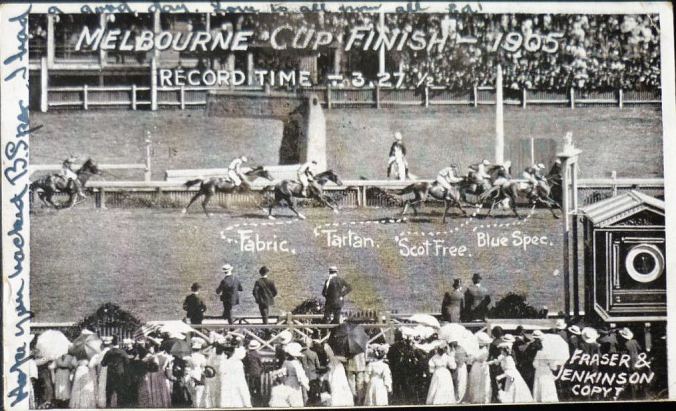
Only a bit over three months left of 2018 and the silly season is almost upon us. Everyone in Australia knows that the country shuts down in early November with the Melbourne Cup and doesn’t start up again until the end of January.

Melbourne_Cup_Finish,_Melbourne,_Vic._-_1905_(31511457514)

As I don’t go to the races, have no travel plans for the summer and don’t drink alcohol this annual idiocy-fest should not affect me. But I am filled with fear and trepidation because I have so many writing projects which were going to be released “by the end of the year”. Score so far: NIL.

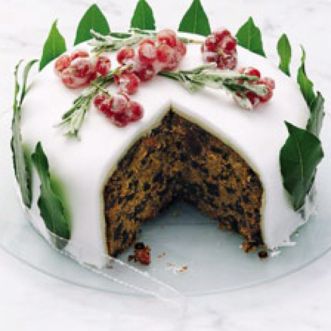
It’s not as if I haven’t written them. Almost all have been through several edits, I have a production method in hand, cover artists lined up … one final edit each, I say to myself, and they will be ready to go. I so much want to do this, because there are new writing projects I want to start. Sure, there are lots of things that get in the way of finishing books, ordinary life stuff. That’s bad enough. But now I am suffering a crisis of confidence. Maybe I should just embrace the silly season and forget about writing altogether, apart from dumb “Season’s Greeting” cards. Or I should take a leaf out of my own (unpublished) cook book and get going on the cakes and puddings. At least I could sell them at a cake stall!

christmascakes

A few short years ago  independent publishing seemed so clearly the way to go. But it seems more and more difficult to get any purchase at all with the reading (buying) public without a huge effort in marketing strategy and general non-writing activity. Writing itself takes second place. I need to get serious, not about writing, but about the “writing career”.

Everyone says you have to do it, and lots of people tell you how. Using the Internet strategically is obviously top of the list these days. Don’t get me wrong, I love the Internet and have done ever since it debuted back in prehistory, well, the early 90s or whenever it was. I love my blogs, both the writing and art sites, it feels truly creative putting them together, but I do that because I love it, not to build a following or expand an email list. I am a member of the Alliance of Independent Authors and they put out some great stuff. but tweeting is troppo mucho and Facebook gives me a kind of hysterical indigestion, yes, I know, I shouldn’t have subscribed to those I-Love-Cats sites but there was a reason for that, believe it or not, although I won’t go into it here.

writing books is like military strategy

No, the real problem is I can’t wholly see myself as someone “building a writing career”. I am a writer, I love to write, writing is what I do. If I have any time at all, like those precious two or so hours before the world wakes up in the morning, I want to spend it writing or editing or thinking about better turns of phrases for titles or thinking about how to improve a story or how to introduce some new themes. I don’t want to spend it building my email list or tweeting or whatever. It’s bad enough that I have had to go through so much time just working out how to produce a workable manuscript which will go through the publication process smoothly, and identifying useful information sites to follow. But now I see I have to see I have to Put Myself Out There as well.

This morning I came across an article by Wendy Jones called How Being an Opportunist Helps Build Your Writing Career (republished 5 September 2018) here.

This article really made me realise that I just didn’t have the right frame of mind to be a successful Independent Author. Just not opportunistic enough. Read it and weep!

On the other hand maybe I should go to the Melbourne Cup and hand out leaflets urging punters to buy my books! Now that’s an opportunity.

Melbourne_cup_1881


Amazon creates NoSpace for Australian authors: Ingram Spark to the rescue?

In my previous post I mentioned the problems Australian authors are having under the new KDP publication model. I wanted to offer a couple of observations based on personal experience.

I have used KDP, CreateSpace and Ingram Spark in my experiments with publishing to date. I found Ingram Spark quite problematic – this was a couple of years ago – it didn’t seem at all friendly and had difficult protocols which had to be followed exactly for it to work successfully. IS charged a set-up fee (unlike CreateSpace/KDP) and you had to re-pay every time you changed anything eg because of errors you discovered only after the first files had been set up. I had problems with a colour shift in one of my covers and when I asked IS why this was so they were completely unhelpful, and didn’t want to engage in any discussion about it. They said the problem was in my files, but they came out perfectly on Create Space. If you have published ANYTHING on Kindle in the previous year, IS cannot distribute to Kindle, ditto Apple. There were heaps of others to whom they distributed though, and this became important when I realized that Australian readers could order my books through sellers like Book Depository and Angus and Robertson online. Booksellers could, if they wished, order them too. Amazon didn’t offer anything like it and seemed to have no Australian outlets. If someone in Australia wanted to buy a print copy through Amazon they had to pay a huge postage fee.

Now Australian readers can’t even buy from the US site. If they want a print copy of a book by an Australian author who has published with Amazon they have to order from the Australian site and pay the A$ price and the postage from the US as well. What’s worse for authors, they can’t access their own books for review copies or place bulk orders as they used to be able to do from CreateSpace. So the need for an alternative becomes compelling.

Ingram Spark has printing facilities in Australia, in Melbourne to be precise. So they can print one copy, or multiples, and ship them to the author directly. Their printing costs are higher in some cases than CreateSpace used to be, but having local access more than compensates. Ingram Spark seems to be making a much more active effort to engage with the self-publishing community. If you belong to the Alliance of Independent Authors IS was offering free set-up, for instance. Not sure if that is still the case, but will find out in a few weeks when I set up two of my new publications and will report back.

Now to the option of local printing. I have checked out two Sydney-based printers and am about to see what a service in my local regional area can do. This is not old-time offset printing, but Print on Demand suitable for short runs. One printer offered quick service and lovely-quality print (including good quality covers based on the CreateSpace files I provided) but the cost was so far in excess of what IS or CreateSpace offered and you had to arrange your own pick-up and obviously storage. Another couldn’t work with the type of files I had at all and said they weren’t going to be compatible with their machines.

Once you go to the commercial printing universe you are in a world of pain. Here’s why: https://graphicdesign.stackexchange.com/questions/58921/which-file-format-is-best-for-printing

Printers have their own expectations and facilities. I had a professional designer do both interior layout and covers for my previous books but local printers still had problems. Now I’m looking at using either Pressbooks or Vellum for the interiors and getting a professional designer for the covers. Whether this would work with the local printer, we shall see. Anyway, if you do go the local printer route, you have to be able to pick up and store your books, and forward/deliver them to the customer. And charge a much higher price. I am thinking of doing some locally printed good quality paperbacks for my own sales (through the website and maybe some local bookshops) as well as using Ingram Spark AND KDP. Steep learning curves all around.

Trads vs. Indies: Will This War Ever End?

Reposted: Traditional publishing and the issue of editing – we need to look more closely at this.

lgould171784's avatarThe Let's Play Ball Blog

0601161425Traditional publishers will probably never embrace independent authors as equals. They will be loath to admit that the terms of engagement in this ongoing battle are changing, that the combatants are becoming more equal, and that some authors even find a way to go “hybrid.” It’s becoming increasingly clear that the trads are losing the high ground they once held in the area of editorial standards.
Examples of bad editing crop up more and more in the traditional world. For example, there are few authors more successful at traditional publishing than Anne Rice. She also specializes in the hottest subjects in fiction, vampires and werewolves. Yet Floyd Orr, editor of the long-running review site PODBRAM, and a rabid Rice fan, reports: “Anne Rice’s 34th book contains more errors than I have ever seen in a top-selling, traditionally published hardback! There are errors of every kind: repeated common words, misused spellings…

View original post 922 more words

Is there really a future for independent publishing in Australia?

Ever get the feeling that independent publishing, which promised so much, is heading down the vortex, especially for Australian authors? When it all started rolling it seemed like writers would be able to reach readers without all the intermediaries deciding who and what would be allowed through the hallowed gates of author-dom.

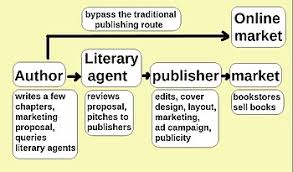
selfpub diagram wikiIt looked as if new technology would link writers and readers all over the world and open up the artificial geographic zones which for half a century had been creating unnecessary boundaries around the best new writing. Readers were forced to pay absurdly high prices in some areas, including Australia, to accommodate the outdated business model. You might have thought the response would have been to change the business model, but no, that didn’t happen, and now things seem to be in some kind of weird spiral.

In the US E-books are still selling, and selling well. In number they far outweigh trad pub titles, and just recently they have superseded print books in dollar value. Of course many of these sales are for traditionally published books from established publishers, who bring out an e-book edition along with their print editions. It is very hard to get accurate figures separating the different market components out.

US eBook_Sales_to_Surpass_Printed_Book_Sales_in_2017_n

When Indie publishing took hold, a network of new support mechanisms evolved to help authors bring their work to an eager public. Traditional publishers went on doing exactly as they had been doing (but added in e-book versions) and everyone else was free to try things out in all kinds of ways while Amazon  provided the all-important technological platform.

For a while Amazon set the prices of the e-books from the traditional publishers. But after a legal case spear-headed by global giant Hachette Amazon was forced to raise the prices of the e-book versions  so they did not  compete with print books: take a look at the price box next to the Big Five published book you want to buy on your Amazon site and you will see “The price was set by the publishers”. This has pushed e-book prices higher for “good” books from all the global players who have eaten up the smaller niche publishers at least in the English-language market.

BigFivePublishers

Meanwhile millions of other books are left wallowing about at the lowest possible end of the price scale in the hope that someone, anyone, will buy a copy. The unregulated indie market has turned out to be a ghastly place full of bad writing, creepy fantasies, idiotic space-nonsense, buff six-packs and bizarre arrays of erotica. There are many notable exceptions, of course, but anyone who takes a close look at what is going on in the Amazon indie market better not be a serious reader who thinks books have something to do with improving society and culture.

In Australia, the e-book revolution hardy took hold although Australians are known as early adopters of new technologies. Try asking around among friends and workmates and see how many actually have and use a Kindle. The answer, if you are an indie author, is super-depressing. It seems everyone longs for the olden days.

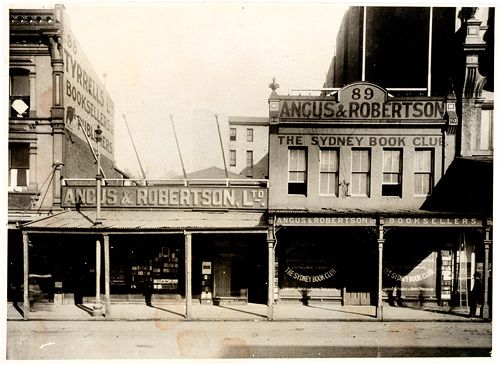
old Angus and Robertson

But there’s more to it than persistent nostalgia. It’s not just that people like going to physical bookshops, or buying physical books (often as presents for others), it’s that the guardians of Australian culture mounted an incredibly successful campaign against Amazon among booklovers. They were readily convinced that anything coming out of a corporate US giant like Amazon was automatically going to be a Bad Thing. This impression was shored up among the writers’ groups, in publishing circles, among academics and general literati, the local press, the network of book clubs and whatever other areas of public communication had anything at all to say about books and writing. Indie authors did not appear at Writer’s Festivals. Nobody mentioned them on the TV book shows (all now defunct); everybody interested in books and writing in Australia knew that good writing only appeared through a reputable publisher. The books by Australian authors hailed by the literati sold in modest to low numbers. Books written by Australian indie authors had to succeed in the US market, or not at all. There has never been an identifiable market for Australian independent authors in Australia.

Now things are even worse. Amazon won’t let Australians buy e-books – or any books for that matter – from it’s American site. This is supposedly because the Australian government didn’t like it that e-books were being bought by Australians who weren’t paying GST on them. Now the reader is forced back to the .au site, no option. Add the GST to the cost of the e-book and it looks a lot more expensive than when it was $2.99 on the US site. Previously, readers who wanted to order a print version could do so from the US site and pay horrendous postage. It seems that hardcover versions of Big Five published books are available through the Australian site, but still have to be sent at a high postage rate from the US. So guess what? You might as well buy a print copy of the book from your local bookshop, or by ordering online. Who needs Kindles and e-books after all? Somehow all this seems to have shored up the ultra-conservative elements in the Australian book world.

E-book author earnings are still very substantial, and when you consider that many authors identify themselves with a self-managed publishing imprint, the result is even more impressive. But of course this is happening in the US, not in Australia.

ebook-author-earnings-1m-201605

Australian authors often made print versions through CreateSpace and ordered fifty or a hundred or whatever copies to distribute themselves in Australia, sell through their own website or send out as freebies. Now CreateSpace has closed down and everyone is supposed to use KDP for their print books. But nobody, not even the author, can order print books from their US-based Amazon account, and Amazon is not going to be printing books in Australia anytime soon. You can’t even order a proof copy of your new e-book from KDP, apparently, because that would involve sending it at the US price. I believe this issue is currently being looked at by Amazon, but the bulk print copies will never be available again. So it’s back to the Australian traditional publishers.tradpub cartoon

Several correspondents have asked why authors don’t just have their own books printed locally, instead of worrying about the whole Amazon/e-book experience? Well, there are three good reasons. Firstly, local printers quote for a paperback version around two-three times the cost CreateSpace used to be able to supply them at, even with shipping from the US. They can look a lot better with much nicer paper but the price needs to be set very high if the bookseller gets the 40-50% discount they expect. The author may finish up getting even less than the miserable payout from a book priced at $2.99 on Amazon. Second, local bookshops are very reluctant to stock books from independent authors unless there is some local reason to do so – like a book about riding bicycles along back paths here in the Blue Mountains, which sells well from just two or three bookshops. The author supplies the copies personally when the bookshops run out. But if you are trying to sell more widely it means you have to keep stocks of your printed books somewhere – in your garage, or in your bedroom, or in a warehouse-type space, then you have to post or send or courier copies to whoever wants them, then pick them up again if they aren’t sold.

There is no simple answer, obviously.

BTW I  want to thank Anna Castleton for her recent comment (August 31st) which prompted me to write this post sooner rather than later. I also should mention that my e-books, such as they are to date, have been illustrated and cover-designed and the interiors formatted by a well-regarded professional (in Mexico, as it happens) and the colour shift problems  I had with my children’s book The Priceless Princess when print copies were made on Ingram Spark were the result of the Ingram Spark presses not “reading” the PDF files correctly.  Ingram Spark seems much more responsive these days and  is making a significant push into the space being vacated by Amazon. And it prints in Melbourne.  More on this in a later post.


So what’s next? Priorities, projects and self-pity.

Some lucky people simply write one book at a time and publish it. Others, especially in Sci-fi or Crime, may have one or more books in one or more series going at any one time, but at least they’re working in a single genre. What happens when you are working across several genres at once?

My children’s book The Priceless Princess is at last readily available in the print version for Australian customers and it is definitely time to make more of a marketing push with it. But everyone who reads it wants to know what is coming next? I have the next Priceless Princess adventure in the wings, but should I take time out from other projects right now to pursue it?

My main focus this year has been on the Memoirs. Two volumes are finished but both need re-editing and a third volume is half-way written. Every new volume seems to mean the others have to be changed in some significant ways. And writing Memoirs is so psychologically punishing. Will write more about this soon. Suffering perilous bouts of self pity and sometimes self-loathing, it is not surprising that I keep on wanting to run with the Cat Chronicles again.

Suburban Gigolo was the lead-in but the whole project will involve at least three more volumes, all around 20,000 words or more. Have been having fun drafting some cover-art for the first one. There are so many options but I need to get my Photoshopping done.


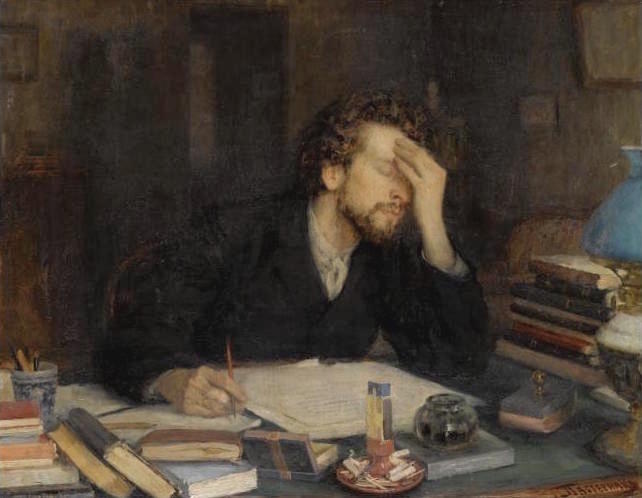
Writing’s not for sissies: what happens when you just can’t finish a story?

Leonid_Pasternak_-_The_Passion_of_creation

Leonid Pasternak 1862-1945 The Passion of Creation

Advice for writers always includes something about how to deal with writer’s block, as if it’s something like the common cold or a pernicious case of athlete’s foot. I have never really understood this, as most of my life I have been unable to stop writing even when I should know better.

However I think I have just developed a case of something like it and I don’t know how it has happened or what to do about it. I am as usual writing and writing – for instance, I am writing this very piece – and I am doing research for various projects I am in the middle of and I have started revising a lot of stuff on my blogs but I am definitely avoiding the one thing I really need to write, the thing I need to finish so I can actually get on with the next thing and then start something absolutely fresh. It must mean something … but what?

I have been working on a book of short stories, some of which were written years ago while others are brand new or radically revised. Some are quite long, almost novella length, others are super-short. I’m planning both e-book and paperback releases through Amazon and Ingram Spark. Maybe I’ll get a local printer to do a quality small run for the Australian market. Everything is ready for a final assembly and edit BUT there’s this one story I just can’t finish. It’s been through several versions, the main character has had several names and a variety of backstories, the key issues have changed several times, the narrative has shifted, her late husband has oscillated between being a stuffy idiot, a self-important moron and an OK kind of guy … and now I have her in the middle of the story and something really dramatic has to start happening to her and I just can’t get it moving.

So I wake up first thing in the morning determined to finish the story but instead I start looking at note I was writing about something else and then I’m looking at emails or trying to upload a pdf or whatever and two hours pass and then I have to start doing something else and my quality writing time is over so I say I’ll get back to it later in the day but it doesn’t happen, and then it’s night time and tomorrow is another day and I am sure I will finish it then but guess what? No luck …

Yes, it’s procrastination but something more as well. Is it some deep-seated psychological resistance to actually finishing this book and actually publishing it? Do I doubt the value of this story in particular, or the collection as a whole?

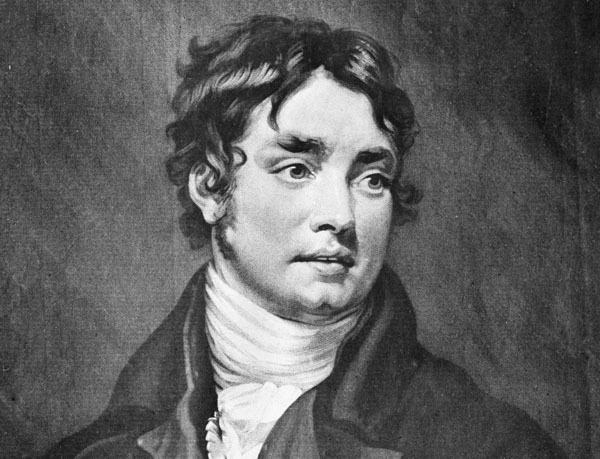
Samuel Taylor Coleridge in 1802, the year his daughter, Sara, was born.

English poet Samuel Taylor Coleridge first described his “indefinite indescribable terror” at not being able to produce work he thought worthy of his talent. I certainly don’t feel anything like indescribable terror. I’m just cross with myself for having constructed what feels like a wall between myself as a writer and the end of this story. Meanwhile Louisa, my character, is stranded in her luxurious hotel room in Bangkok waiting for her cosmetic surgical scars to heal. Poor thing.


Check out some good suggestions at Psychology Today: https://www.psychologytoday.com/blog/prime-your-gray-cells/201510/five-reasons-youre-experiencing-writer-s-block


Createspace vs Ingram Spark: Print/Ship Shocks, Body and Consciousness

In recent posts I have been lamenting the problem of not being able to get printed copies of books from Createspace produced in Australia. If you want your own copies eg to sell from your website (or car boot) or to use for publicity you have to ship them in from the US.

seriously

So I thought I’d try Ingram Spark since they print in Australia.

Good idea – but the Createspace files were not compatible. Resave in a different PDF format please! OK, but you can’t do that yourself unless you are working on a PC. On a Mac, you have to do it through Adobe. So long-suffering Keith my illustrator did it for me but when it was loaded to Ingram Spark the colour went red, the result of saving in the PDF X-1a format and/or their colour and printing machines. Sorry, they said, you’ll have to modify the files. But the problem doesn’t show up when we open them!

So being a strong supporter of “act local” I found a printer and asked for a quote to produce  the same product but on better paper and in the original colour format using the Createspace PDFs. It has taken more than a week and still I haven’t found a way to get the original PDF for the cover to go to this printer. I send the file by email and it turns into a jpeg. I send it in what I think is the original PDF version from my Mediafire site and he says it won’t let him access it. I change the settings on the Mediafire site and send directly from that and he still doesn’t get it. How much more of this can I take?

rage on computer

So I go back and take another look at the costs of ordering the books from Createspace vs Ingram Spark. And guess what? For The Priceless Princess the printing cost from Ingram Spark is higher than the cost from Createspace. Ingram Spark printing cost per unit is A$3.47, CS printing cost per unit is US$2.15 = A$2.91. So the saving as a result of lower shipping costs is undercut by the higher printing costs. Mind you, if the covers were as good as the Create Space ones it would still have been a worthwhile saving.

Going nuts, as I really need print copies in my hand, I just decided to order from Createspace and pay the extra shipping costs. At least the covers will come out right. And I’ll press on with the local printer and see if he can come up with a better better quality book for around the same total price. If I could just get the damn file to him! The problem is, I thought I was supposed to write all day, not do all this whatever you call it. My body, my feelings, my consciousness … now I’m dreaming about PDFs.

about writing

Once more with irritation: high e-book pricing does no-one any favours.

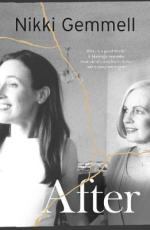
Sometimes books appear and you know right away you want to read them. Nikki Gemmell is already a very well-known writer, with a lively career as a magazine journalist as well as ten plus full-length books, the best known being her first, The Bride Stripped Bare. I have to confess it is the only one I have read. I’m not quite sure why.  Her books seem to fall between a few stools: genre fiction, literary fiction, self-help, essay.

the bride stripped

But her new book, After,  is definitely in my territory. Memoir, true story, traumatic experience, mothers and daughters. I’ve already written my own version, about the death of my mother and my ex-husband within three weeks of each other back in 2008. I wrote it not long after but haven’t been able to bring myself to go back and edit it, let alone publish it. But it is on my list and should be finished by mid-year. I don’t think it will be much like Nikki’s book.

after

Nikki’s mother chose to die; mine didn’t. My mother never intended to die, ever, and the stupid accident which killed her could easily have been avoided. She was 93; she might conceivably even be alive today if she hadn’t lost her dentures. But that is my story, this is about Nikki’s, sort of, but not really, because I haven’t read it.

Tomorrow we are going to hear her talk about her book at a “meet the author” event in Katoomba, courtesy of the wonderful Gleebooks in Blackheath and Varuna Writer’s Centre. I have been looking forward to it. It’s so much better when you have read the book being discussed. So I did what I always do, and looked for it in a Kindle version from Amazon.  Yes, it was there, so that was good, until I looked at the price. $14.99.  In hardcover it’s $22.50. There doesn’t seem to be a paperback. What? Yes, it’s Harper Collins’ strategy to get you to buy the hardcover, or at least to stop you buying the e-book. Who would pay $15, even if it’s a great book and you really want to read it? And who is getting the lion’s share of the inflated e-book price? You can bet it’s not Nikki. No, for those who do pay for the e-book, Harper Collins will get the major part of it, even though their production cost for putting it up on Amazon as an e-book is probably near zero, since all the editing was done for the print version, the marketing costs cover both, and tweaking an already existing cover design for Kindle is so easy a kindergarten child could do it these days.

Nikki Gemmell

Sorry, Nikki, but I guess I won’t be reading your book for quite a while. I can put my name down for it at the local library, or maybe I will find some friend who has bought the hardcover. But I will not buy any more hardcover (or print) books unless they absolutely cannot be obtained any other way and I really really need them. And although I’m sure your book will be great, I just won’t support greedy publishers who expect readers to cough up absurdly high prices just to keep their existing legacy business model going. Just a reminder: when you “buy” an e-book you don’t really “buy” it in the traditional sense. It isn’t yours. The company who release it can remove it at any time. You can’t lend it to anybody else. You can’t give it away as a present. You are just hiring it. A price above $10.00 is wholly unjustifiable.