WHY PUBLISH? THE DASH AND DOLLY EFFECT.

I have reached a point in my writing and publishing activities where I must seriously ask: why publish at all? I haven’t published much yet but I have a lot of plans and proposals in the mix and several are at the point of fulfilment. Various things have held me up – some in the “real world” but others in that weird interior zone where the writer actually feels most alive but also most threatened and alarmed and fearful and excited, something which I suspect only other similarly benighted souls will understand. There really should be psychiatric services for writers, to help them work out what they are doing and why.

But as time passes, and especially with the impact of AI, the question becomes more acute than ever. There are 32.8 million published titles on Amazon now and more every day. It is possible that AI written books are flooding the market, although there seems to be no way to work out if this is true or not. Amazon now will only allow you to publish something like THREE BOOKS A DAY. Can this be true? Nobody can write three books a day. However the various online writers forums I participate in do seem to have members who think nothing of writing a book in two or three or four weeks: that is from start to finish, including editing, proofreading and maybe designing the covers as well. The fans of these writers are passionate and apparently faithful. They expect the writer’s new books ASAP and pre-order slavishly, or so it seems.

THE DASH AND DOLLY EFFECT

I just finished watching a mystery drama mini-series on Netflix, The Perfect Couple, starring Nicole Kidman as a popular writer, Greer Garrison Winbury, whose books are about the endless romance of Dash and Dolly. The readers imagine these are the writer herself and her husband Tag, played by Liev Schreiber, who in real life is alcoholic, louche, unfaithful and most unattractive. Based on a 2018 novel of the same name by Elin Hildebrand, the story is about the interpenetration of fictional and real life, and its negotiation in contemporary culture. [It’s what my favourite analytic writer of the moment, Hans-Joachim Maaz calls “Die Falsche Leben” – FALSE LIFE. If you speak German there are interviews with him on Youtube: https://www.youtube.com/watch?v=KN6i6MYBbjI but only one of his books has been published in English.]

A brilliantly disturbing scene takes place at the launch of Greer’s 32nd novel in the series, when the “real world” life of Dash and Dolly comes to a crashing end in a bookstore full of passionate fans. As the truth of their relationship emerges – and a horrible truth it is – the fans fall into despair and horror, worse than anything they ever imagined. The scenario of this story emerges from the very peculiar intersection right now between writers and readers, amidst the technical possibilities of rapid production where fictions drawn out into endless series of almost identical stories, become the source of recognition and success for glamorous lady writers in particular, and sites of identity for readers obviously deprived of whatever it is they crave in the way of success, love, happiness and recognition. Readers’ identification with fictional characters is at the heart of this process.

WHY DON’T I WANT TO WRITE BOOKS ABOUT DASH AND DOLLY?

It’s called “writing to market” in online writing circles, and ever since I was first introduced to this term around a decade ago at a seminar at the Australian Society of Authors I have been wrestling with the concept from many angles. It’s the baked beans problem again. The fact is, I want to use the agency and freedom of independent publishing but I don’t want to “write to market”.

I know this raises almost terminal issues. What I write isn’t any of the popular genres which work so well on Amazon. I can’t even work out what genre I am writing in. Some is memoir, yes, and maybe some is literary fiction. most of my books will appeal mainly to “classic” readers, that is, women of a certain age who buy books in book-shops and go to literary events and festivals, but they don’t buy independently published print-on-demand books and they all hate Amazon. My “take” on things doesn’t quite fit the mould either. My perspectives are too diverse, the experiences I draw on are far from the “normal” life, let alone the “false” one which prevails today. I will put a Paypal button on these books for Australian/New Zealand readers who want paperback versions and see if that works for those who don’t or won’t buy through Amazon. The independent bookshops’ prices are absurd: my book Revolutionary Baby finished up costing those who ordered it from their favourite independent bookshop over $30.00, even though I know the cost of production in Australia is in the order of $7.00.

Should I bother going on and publishing the other three novels I have written? They are all set in the 1980s which now feels like a hundred centuries ago. The memoirs are set even earlier: 1960s, 1970s. But I guess that makes them historical. There is a special category for that on Amazon.

As for doing something completely different: I have written the first volume of a series which I plan to publish under a pen name. It is a post-apocalyptic narrative set in 2050 and “stars” two female characters, young women with distinctive talents and histories. It needs a final edit. I don’t plan to spend money on Amazon or Facebook ads.

All I can be sure of is that the books I have written will exist in print and/or electronic copies in a few libraries, and a few will receive them as gifts from me and maybe want to pass them on. Is that enough?

Why review? … and the Tentacle Romance.

Over the past several months – say, six or so – I have been reading an inordinate amount as I’ve been ramping up my production schedule. Not that I’ve met it, but I’ve been trying. Several almost complete works just waiting for that semi-final edit, two new stories from my Other Identity swirling around, and here I am in Paris struggling with what feels like a covid cough – oh, wait! Covid doesn’t exist any more … at least nobody tests for it and a whole plane load of coughing passengers on their way from Singapore (nobody masked) was just due to general unspecified viruses. Anyway when I finally called the brilliant SOS Medicins service – can you believe a doctor does a home visit at 11 at night after being called just an hour before ?- he didn’t express any interest in speculating about viral sources and was just very reassuring about cough mixture and the benefits of Paracetomol.

So, back to reading. As part of the effort to better define what ‘genre’ I am writing in, I have been gulping down all kinds of stuff. I joined Kindle Unlimited so I could read lots of books of completely unknown quality really quickly and send them back if I couldn’t stand them. And I did send back a lot. You can only have twelve out at one time. I was sending back two a day at one point. The contemporary writing and reading market is so peculiar. I discovered genres I could never have dreamt up. Well, maybe they are subgenres, whatever. Tentacle Aliens was pretty bizarre.

Their technical identity on Amazon is:
Tentacle Aliens and Monsters Erotic Short Stories

I really liked Rita Indiana’s book, although to be fair, it wasn’t a tentacle romance and it did not evolve within the Amazon ecosystem, being published as an actual book, ie a printed volume, by that excellent British publisher And Other Stories. Check them out!

Here’s what Rita’s blurb says: Plucked from her life on the streets of post-apocalyptic Santo Domingo, young maid Acilde Figueroa finds herself at the heart of a Santería prophecy: only she can travel back in time and save the ocean – and humanity – from disaster. But first she must become the man she always was – with the help of a sacred anemone. Tentacle is an electric novel with a big appetite and a brave vision, plunging headfirst into questions of climate change, technology, Yoruba ritual, queer politics, poverty, sex, colonialism and contemporary art. Bursting with punk energy and lyricism, it’s a restless, addictive trip: The Tempest meets the telenovela.

The real tentacle romances are a different kettle of fish, so to speak – slightly disguised erotic, but some weren’t bad.

I quite enjoyed

Nepenthe: A Tentacle Alien Space Fantasy (We Are Nepenthe Book 1)

by Octavia Hyde

I was cross that she had preempted my intended use of the name Nepenthe as a sub-division of Blackwing Press for experimental and off-the-wall writing. In the light of all this, I have cancelled Nepenthe Books as a concept altogether now. It seems far too tame, given what is out there already.
Moving on from Tentacles, I found that many male writers (at least persons writing under sturdy male-identified names) have been writing about catastrophic colonies on Mars or elsewhere in a decaying universe. Lots of (ditto) girl-sounding people are writing filth about billionaires and dom/sub desires, Mafia romances and Reverse Harem (that is when one woman has three or more men living/playing with her, some of them are bikies and some are cowboys, take your pick).

Paying special heed to post-apocalyptic themes I found a couple of (I think) young players writing not bad series. I downloaded a couple of Kyla Stone’s stories and followed on her blog-site and she was doing a very good marketing job. Sadly I just got completely bored with the stories which all seemed the same. Another was a New Zealand writer who seemed appealing when I watched her on one of the many talk programs run by one of the various online “how to be an author” groups, but I lost interest after realising that although she seemed like a very nice young lady, what she was writing was just too horrible for me.

So these are low-budget Kindle ebooks designed for the Amazon ecosystem. In most cases I didn’t have any compunction about returning the books with only a few pages read. (On Kindle Unlimited the author is paid according to how many pages are read). In a couple of others I could sense a good writer struggling to come out. One in particular was writtten by a Melbourne person (girl/woman self-presentation) and it was very well written and quite gripping in places although the key plot element was obvious from early on and in my view rather ridiculous. I finished it, and for a brief moment considered writing a proper actual review with real words – as against the silly five stars which now appear at the end of each Amazon ebook, uselessly as far as I can see – I never ever click them. But I hesitated. It’s a slippery slope.

Revolutionary Baby: views and reviews

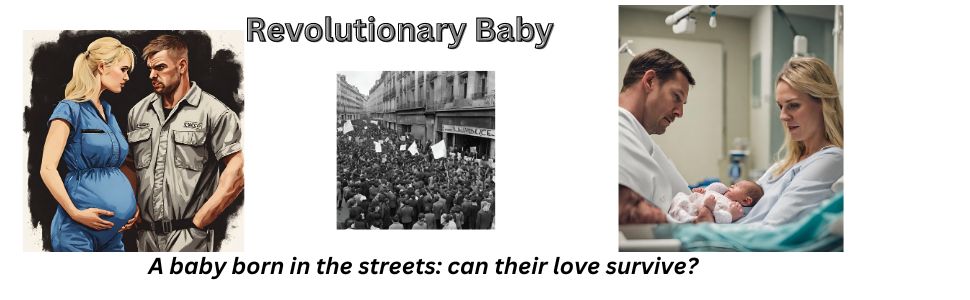
Having a kind of fun experimenting with different ways to let people know this book is out now and available to buy as a paperback or download as an e-book. Experimented with making reels or vdos using the images above which were AI generated. Seems lie MP4s using AI images on Canva won’t download to Instagram. No idea why.

Turns out also that Amazon reviews written by readers in the UK don’t show up on the Amazon pages for other Amazon sites. To get a review to show up on Amazon.com it needs to be loaded by someone in the US using a .com account, The whole Amazon ecosystem is so US focussed. I suppose we shouldn’t be surprised, there isn’t anywhere else in the world really. I don’t think my video can be posted here either, but I’ll give it a try.

Feeling super frustrated about the use of social media as it is now. Used to be people following you saw whatever you posted. Now algorithms determine everything and each individual gets things the algorithm thinks they want. Presumably this is to encourage paid advertising on the social sites, which has now become a deluge. There doesn’t seem to be any community or collective environment left any more except in Groups, and there you get kicked out if you try to “advertise” without a commercial account. The immutable logic of the system forces everyone into a straitjacket with $$$$$$$ signs on all sides.

Reviews can be posted on websites, but then only those following the website already can see them. But if you’d like to post a review anyway, positive or otherwise, use the Contact form on this site and I’ll put it up on the Book page.

Experiments in AI: A+ Content files for Revolutionary Baby on KDP: the Thumbnail Narrative.

Although I share the general anxiety in the publishing world about the impact of AI, I have to say experimenting with AI images has been rewarding. Amazon’s KDP allows authors/publishers to include quite expansive materials on their book pages. The question is, what to use as the basis for the content?

When the book is a collection of short stories, like Revolutionary Baby, this give an opportunity to give some visual clues as to what some of the stories are about. Brief text-based summaries on the back of the book amount to not much more tha a Table of Contents. In an experimental spirit, I spent a lot of time this week seeing what I could come up with to give some better visual presentation of the narratives. The A+ content also allows the creation of one kind of module with text to go with a set of images, so that is what I have submitted. Whether or not it is accepted is another matter.

Meawhile, here are the three examples I am hoping to use as the visual clues on the book page. They seem to have transferred well using the preferred pixel size recommended by KDP.

If it works out on the Amazon book page each image will have a brief text below it. I chose to paraphrase some of the actual writing from the stories. Some of it could be used verbatim but with condensation and re-expression it became a lot better. It called for a different kind of editing.

Now to find some other ways to circulate these thumbnail narratives.

Fake Classics Out of Copyright: Bot-writing Jack London

I read all kind of books all the time but this one was even more of an outlier than usual. I won’t go into why but I wanted to read the original text of Jack London’s The People of the Abyss, about life in the slums of East London in the early 1900s. Jack London is one of those writers who people over fifty think they might have heard of. His books were mostly published between 1903 and 1914, and are remarkable for being based on the author’s first hand research in the places he wrote about. He is an early populist anthropologist who mostly used his fact for fiction.  People loved his sensationalist stories serialised in newspapers and later published as books. Probably his best known is The Call of the Wild (1903). London spent over a year living in the Yukon to research his story. Set during the 1890s Klondike gold rush its central character is a dog named Buck. Buck was stolen from his comfortable home and forced to become a sled dog in Alaska.

First edition cover of The Call of the Wild, New York, Macmillan Company, 1903. cover art by Paul Bransom (1885-1979) or possibly Charles Bull (1874-1932) –

I don’t recall reading this book as a child but it would have been right up my alley. It certainly has echoes in my own novelette Suburban Gigolo, about a cat stolen from his home in Sydney’s Inner West in order to become a Facebook model. Sadly it’s never had the popularity of The Call of the Wild but you can order it from Amazon.

Remember if you are in Australia you need to order from the amazon.com.au site: see brief extract and link at the end of this post.

I would like to write more about Jack London but that will have to wait. This post is about what I found when I tried to locate The People of the Abyss online. Like The Call of the Wild it is out of copyright (1923 is the current cut-off) and early editions are rare and expensive. But I thought someone might have rescued it so off to Amazon I went and there I found several editions mostly with el cheapo dodgy covers. Luckily I used the Look Inside feature and discovered that this book which seemed to be Jack London’s was a fake.  I think it has been translated from some other language into English by a bot (automated translation program) and some enterprising scammer(s) have put it on sale for around $5.00. It is almost completely unreadable. Here is a sample sentence from near the beginning of the book:

“And they waved their palms vaguely inside the route where the sun on rare activities can be visible to upward thrust”.

Yes, I agree there is a certain beauty and poetic wonder to be had from reading these bot translations. It is another form of emerging literature, perhaps. But that’s not what one expects when paying $5 for a Kindle download of an English-language classic. There is no publisher credited. I then discovered the whole original text is available for free from Project Gutenberg.

I’ve already suggested to Amazon that this book should be taken down at once. It is a horrible misrepresentation of an important original text. If there is any way of checking on these republications of out-of-print works it should be implemented immediately. I imagine Amazon and other e-book publishers/distributors will be flooded by this kind of rip-off as more and more books come out of copyright. In the meanwhile, make sure to check the text before you hit the Pay button.

POSTSCRIPT: (6th June 2020) A couple of days after sending a review notice to Amazon I discovered that the offending text was no longer available there. But there were several other versions and as I started to check them it was apparent that some were also mock-ups or distorted versions of the original text, each issued under a different cover, none credited with publishers. The flood of fakes and distortions makes it almost impossible for a purchaser to know what they are buying.

Buy this version

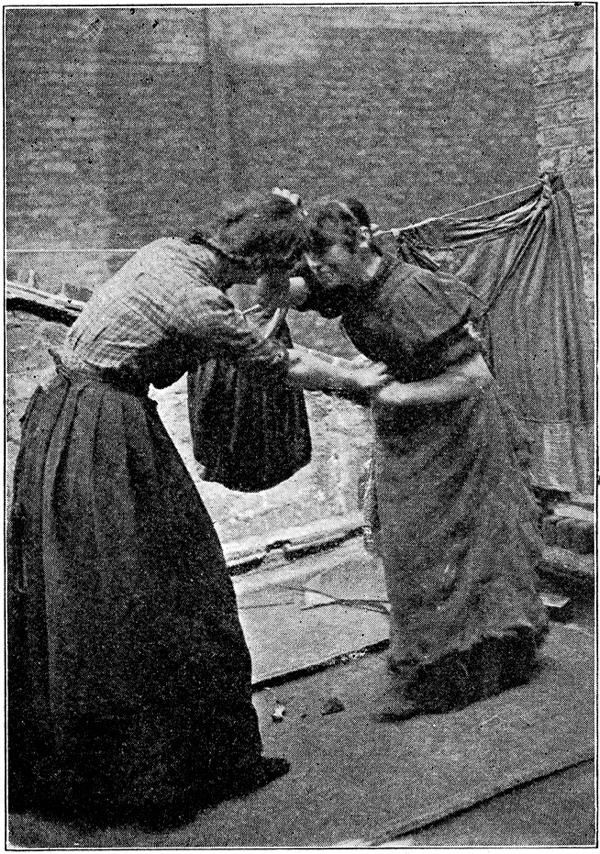
There is one genuine reproduction of the original text with notes and wonderful photographic illustrations, for $A3.95, and it is a real bargain. Here are a couple of images from the book. Apparently Jack London himself took his own photographs. He was even more of a pioneering ethnographer than I originally imagined.

Locals of East London
Not sure what this image refers to: needs closer reading/research
Two drunken women fighting: I am sure this is a staged photo
An engraving – possibly used for a newspaper article based on an original Jack London photograph
Here’s the link for Australian buyers: a bargain at A$1.35
https://www.amazon.com.au/Suburban-Gigolo-Bad-Around-Town-ebook/dp/B071FY6V4Z/ref=sr_1_1?dchild=1&keywords=suburban+gigolo&qid=1591404965&s=digital-text&sr=1-1

Kindle Create: how much easier can it get?

When I first started learning how to publish on Kindle it was such a struggle. I wrote quickly and fluently, I was a great typist and could use Word with my eyes shut, but the next steps – getting the manuscript right for the various platforms, understanding how to format, what was involved in covers – not to mention ISBNs and uploading and getting manuscripts to conform to arcane and mysterious requirements proved baffling, frustrating and humbling. I was just getting the hang of it when life threw a curved ball and the almost finished books had to languish for most of 2018. Back in action now and I discover everything has suddenly got so much easier. Ingram Spark are falling over backwards now to help the self-publishing author (as well as those micropublishing through their own companies), there are many new cover services available, new international players have appeared in unexpected places (Italy, Finland!), Draft2Digital is flourishing and best of all (for Mac users) Vellum came along with fantastic options for interior designing and trying-out on different platforms.

Amazon closed down Create Space, that was a surprise, and started its own print arm, which didn’t help Australian authors since there was no way to get printed books to Australia and Amazon wasn’t planning to print them here. Local readers in Australia are still wedded to print books and the local publishers/booksellers/reviewers are resolutely set on ignoring self-publishers, so without a print book presence of some kind the Australian market is very hard to reach.

But never mind, Ingram Spark is a very good alternative, prints in Melbourne and has great international distribution.  The print version of my experimental children’s book (The Priceless Princess) can be ordered now through Book Depository, Angus and Robertson and others. It is also available in print from Amazon, although nobody in the US is buying it.

But even with all the alternatives, publishing on Kindle remains a necessity although the market is now so hugely competitive. The good old .mobi file was easy enough to produce but it generally looked pretty ordinary and the placement of images was a pain.  BUT today Amazon announces a new service called Kindle Create. Seems to have purloined some of the best features of Vellum, for no cost. So I’m going to have a go with it for my two books of short stories, ready to come out early next year, although I’ll still get epub and pdf versions for Ingram Spark made through Vellum. I feel like I might be onto it at last.

I guess the only thing easier would be if Amazon wrote your books for you. Ghostwriting is already a big business – celebrities and rappers use ghostwriters all the time. But if Amazon could guarantee a good book written from your plot outline, and then marketed it where the old “Other Purchases” used to be, it would raise the career of writing to a whole new level.

How do you get this gig?

Paid Reviews? Who knew?

Recently my small publication company had offers from several sources to arrange reviews for its Kindle books for an unspecified price. “At least forty reviews” one promised. This is unconscionable. Reviews have become a major element in the success or otherwise of Kindle books, especially those of otherwise unknown authors. I’ve often wondered at the frequently inane and disconnected reviews that turn up for many new titles giving them five stars. Obviously these are not validated purchasers although who knows? When books only cost 99 cents it may work out financially in the end to get the recruited reviewers to buy the books while the author/publisher shells out however much they pay to the review company. No wonder there is so much rubbish around. But given the difficulties now with getting in front of readers’ eyes – why on earth Amazon decided to give up on the “Also Boughts” – it’s not surprising that people will come up with scams of various kinds. Book reviewing itself is a weird business. Check out the comments below by TIME reviewer Lev Grossman from a while back.

Reviewing before Kindle

A two-speed economy: How traditional publishers are benefiting from Amazon.

I’ve mentioned before the way Amazon publication has entered new territory since the Big Five managed to get their own way about e-book pricing. It’s become increasingly apparent that conventional publishers have worked out how the maximise their gains from e-books and distributors, and while still bemoaning their existence have seized on the new opportunities now available.

There is no doubt that a traditional publishing deal remains the aim of most writers. Other than genre fiction of a certain kind (explicit erotica, shape-shifters, Space Opera romance and so on) every serious writer still wants a deal with a “real” publisher. But a lot of readers don’t want to buy physical books, and want to buy e-books online.

Now the traditional publishers have worked out that they can offer e-books at the same time as they publish print books, and preserve the powerful traditional ecosystem. By ensuring the price of the e-book version is not far from the print version (which may indeed be available in bookshops and will receive traditional marketing, recognition and publicity) they can make profits from e-books which are virtually cost-free since they only need to prepare the files once, there are no publication costs, distribution costs, warehousing costs or any other costs to speak of. The writers meanwhile have presumably signed contracts for the standard royalties, like 10% or whatever, and the publishers are pocketing the difference. And keeping the e-book costs high for the readers.

So a newly published book, like Liane Moriarty’s Nine Perfect Strangers (2018) is selling on Kindle for $14.99 and in paperback on Amazon.au for $16.00.  And Sydney-based author Shirley Barrett’s The Bus on Thursday (2018) – a most unusual read about a woman who has breast cancer by an author who learns that she does in fact have breast cancer after she has finished writing the book – is published by well-known Australian publisher Allen and Unwin on Kindle for $14.99 and in paperback at $22.99. I have no idea whether these authors have made special royalty deals with their publishers regarding the e-book version, maybe they have and good luck to them.

This process is pushing the distinction between self-published books and books from traditional publishers further and further apart, so most indie books on Kindle are $2.99 or even less and the trad pub books are now well above $10.00.  Do readers know, or care? Well, they probably don’t care about that, as such, but they DO get to hear about the books because the publishers have established methods of publicity which benefit the e-book sales in a way that the randomised chaos of Amazon Kindle at present cannot equal. So the traditional publisher sells lots and lots of e-books but makes the reader pay almost as much as they would for a paperback even though they don’t get to actually “own” the book, can’t lend it to anyone or do anything else with it. But somehow still think they are getting a good deal because it costs less than the paperback they saw in the store.

What a mess it has become. I wish some clever statistical analysis was going on right now to clarify what the effects of all this are. You can glean a bit from services like Alex Newton’s K-Lytics and Data Guy at the Author Earnings Report, but I haven’t found anyone who is tackling the divergent effects of the way traditional publishers are now using the e-book market to enhance their reach while re-consolidating their influence over publishing and pushing independent authors back down to where they think they belong. Is genuine independent publishing doomed? Does anyone know of any updates on this?

Amazon creates NoSpace for Australian authors: Ingram Spark to the rescue?

In my previous post I mentioned the problems Australian authors are having under the new KDP publication model. I wanted to offer a couple of observations based on personal experience.

I have used KDP, CreateSpace and Ingram Spark in my experiments with publishing to date. I found Ingram Spark quite problematic – this was a couple of years ago – it didn’t seem at all friendly and had difficult protocols which had to be followed exactly for it to work successfully. IS charged a set-up fee (unlike CreateSpace/KDP) and you had to re-pay every time you changed anything eg because of errors you discovered only after the first files had been set up. I had problems with a colour shift in one of my covers and when I asked IS why this was so they were completely unhelpful, and didn’t want to engage in any discussion about it. They said the problem was in my files, but they came out perfectly on Create Space. If you have published ANYTHING on Kindle in the previous year, IS cannot distribute to Kindle, ditto Apple. There were heaps of others to whom they distributed though, and this became important when I realized that Australian readers could order my books through sellers like Book Depository and Angus and Robertson online. Booksellers could, if they wished, order them too. Amazon didn’t offer anything like it and seemed to have no Australian outlets. If someone in Australia wanted to buy a print copy through Amazon they had to pay a huge postage fee.

Now Australian readers can’t even buy from the US site. If they want a print copy of a book by an Australian author who has published with Amazon they have to order from the Australian site and pay the A$ price and the postage from the US as well. What’s worse for authors, they can’t access their own books for review copies or place bulk orders as they used to be able to do from CreateSpace. So the need for an alternative becomes compelling.

Ingram Spark has printing facilities in Australia, in Melbourne to be precise. So they can print one copy, or multiples, and ship them to the author directly. Their printing costs are higher in some cases than CreateSpace used to be, but having local access more than compensates. Ingram Spark seems to be making a much more active effort to engage with the self-publishing community. If you belong to the Alliance of Independent Authors IS was offering free set-up, for instance. Not sure if that is still the case, but will find out in a few weeks when I set up two of my new publications and will report back.

Now to the option of local printing. I have checked out two Sydney-based printers and am about to see what a service in my local regional area can do. This is not old-time offset printing, but Print on Demand suitable for short runs. One printer offered quick service and lovely-quality print (including good quality covers based on the CreateSpace files I provided) but the cost was so far in excess of what IS or CreateSpace offered and you had to arrange your own pick-up and obviously storage. Another couldn’t work with the type of files I had at all and said they weren’t going to be compatible with their machines.

Once you go to the commercial printing universe you are in a world of pain. Here’s why: https://graphicdesign.stackexchange.com/questions/58921/which-file-format-is-best-for-printing

Printers have their own expectations and facilities. I had a professional designer do both interior layout and covers for my previous books but local printers still had problems. Now I’m looking at using either Pressbooks or Vellum for the interiors and getting a professional designer for the covers. Whether this would work with the local printer, we shall see. Anyway, if you do go the local printer route, you have to be able to pick up and store your books, and forward/deliver them to the customer. And charge a much higher price. I am thinking of doing some locally printed good quality paperbacks for my own sales (through the website and maybe some local bookshops) as well as using Ingram Spark AND KDP. Steep learning curves all around.

Trads vs. Indies: Will This War Ever End?

Reposted: Traditional publishing and the issue of editing – we need to look more closely at this.

lgould171784's avatarThe Let's Play Ball Blog

0601161425Traditional publishers will probably never embrace independent authors as equals. They will be loath to admit that the terms of engagement in this ongoing battle are changing, that the combatants are becoming more equal, and that some authors even find a way to go “hybrid.” It’s becoming increasingly clear that the trads are losing the high ground they once held in the area of editorial standards.

Examples of bad editing crop up more and more in the traditional world. For example, there are few authors more successful at traditional publishing than Anne Rice. She also specializes in the hottest subjects in fiction, vampires and werewolves. Yet Floyd Orr, editor of the long-running review site PODBRAM, and a rabid Rice fan, reports: “Anne Rice’s 34th book contains more errors than I have ever seen in a top-selling, traditionally published hardback! There are errors of every kind: repeated common words, misused spellings…

View original post 922 more words