In my last post here I confessed to some serious doubts about the effects of “selling” your books for free, not just on the individual author, but on the indie ecosystem as a whole. Since then I have entered a NWOP (and it ain’t Fifty Shades). What to do with that second white square at the end of your ISBN barcode?
I published my children’s book The Priceless Princess with Kindle and Createspace just a couple of months ago. I had already purchased my own ISBNs which I used correctly, one on each version. Book came out, very cute, set a low price for the print version thinking of my Australian readers who would have to pay the US dollar price. Dumb me only then realised that Amazon in Australia does not sell any print versions. Australian readers would have to go to the US site, purchase in US$ and then pay a fortune to have the book posted to Australia. Or buy copies from my website. So I order a bunch of copies from Createspace and lo! I am paying dollars per copy just to have them posted to me in Australia by the only postage option available through Createspace.
Don’t want to do that again, so I would have to do what everybody recommended and get the print version onto Ingram Spark, who do print in Australia. I download their nifty Cover Generator and it asks do I want to set a price in the barcode. What? So I go back to my Createspace version and notice for the first time that there is a code adjacent to the ISBN, and it is Code 90000. For a minute or three I am diverted by the idea that this could be a great title for a thriller, although Code 9000 would be better. But back to matters at hand! This code turns out to mean that no price has been set. Should I set a price? What price should it be – the same as the Createspace one on the Amazon site? But that is in US$ and obviously for people who are in the US. I need these books asap, so to save time I decide to use the Amazon price in the barcode so I send the Cover Generator to my illustrator who is putting the files together. But I am uneasy about it, and go into research mode. Should I have put the price in the barcode, or not?
Of course there is no clear answer. I email Ingram Spark, they email back almost immediately (great service by the way) to recommend that no price be put in the barcode because if you ever change your price then you have to reprint the cover and upload the new one, decommissioning the previous one. But other sources say bookshops won’t stock books that don’t have prices in the barcode. Codes begin with a number indicating where the book is published and priced. 5 is for the US. 3 is for Australia. If for some reason a store outside Australia wants to stock your book it won’t be able to sell it if the code starts with 3 because its stock system won’t be able to read it.
Some say it is another covert way to tell whether or not a book comes from a “real” publisher as against one of those pretend publishers who are really just some idiot typing something up in Word and using wicked Amazon to hide behind, people like me. You need that numbered price code to show you are the real deal. Others say it used to be important but not any more because booksellers stick their own codes over those on the book and charge whatever they fancy anyway.
I go to my bookshelves and check my physical books. Some have a price code but a lot of recently published books from “real” publishers only have the 90000 code. Many writer/bloggers say the likelihood of getting anything into a physical bookstore is so low you might as well forget about that anyway, go with the “no price” option. So I decide to do that but my illustrator has already done the cover for Ingram Spark and now I have to download a new Template and get him to do it over.
Every step of the way there is something mysterious and new to discover. Books and writing used to be a world of pleasure. Now it’s a mystery tour and nothing too magical about it either. Maybe not quite the Haas of Pain, but still!
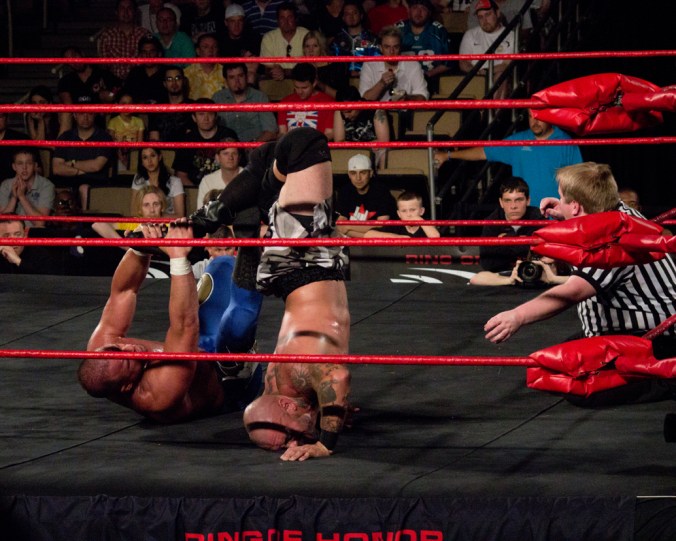
The Haas of Pain: Charlie Haas performing his finishing submission move, 31/3/2012 Wikimedia Commons.
 Australian traditional publishers don’t want authors who haven’t gone through the secret accreditation process which dominates the business. Australian agents won’t represent them. They can write books and publish them on Amazon but Amazon won’t sell the print copies in Australia. Australian booksellers stick with the traditional imprints, mostly from the Big Five international houses. Many dedicated Australian readers can’t or don’t do e-books and/or hate Amazon because they’ve been told that Amazon is the enemy.
 Annette Hamilton - Writer