The Perils of Publishing

It’s been a while and I’ve gone through a lot in the writing and publishing world lately. I’ve been thinking about new strategies, doing a lot of re-editing, and working on the Memoirs. This has led to a long silence on the blog, for which I apologise.

But I was moved  to write today by yet another story about a writer who wanted to be published and parted with a lot of money thinking it was to a “real” publisher, only to discover that although her book – an illustrated children’s book – was lovely, no bookstores would stock it.

Ever since I launched myself into this world I have become aware of the many people who want to be writers and are determined to do it. Social media has made it so much easier to get in touch with these people and get to know them online. So many are looking for support and advice, but almost everything they can learn about the process leads them to part with their money. Advice to self-publishers is everywhere but so much of it is motivated by someone offering a service. It is obvious that a huge market exists and a lot of writers have discovered that there’s more money to be made by “helping” others publish their books than by publishing their own.

IF YOU ALREADY KNOW ALL ABOUT THIS STUFF, DON’T BOTHER READING ON. But if you are pretty confused about what is involved in getting your book out into the world, you might find a bit of clarity here. It is based in part on my own experience, as well as looking into the minefield of services on offer to would-be authors which are getting more difficult to understand by the day.
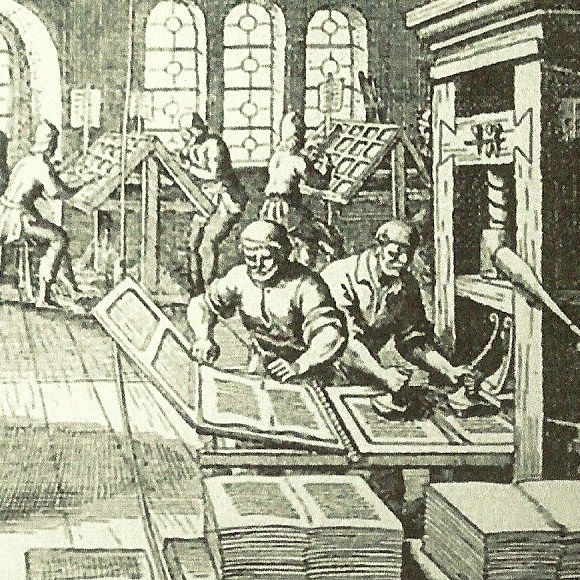
engraving publishing

You can get your book published entirely by yourself, if you have the skills. You start with a manuscript you have written. It will have to be written on a computer in a recognised program such as Word which is the standard. If you are still writing by hand on a yellow note-pad, you’ll have to pay to have it typed up.

What you need at the end of the day is a set of files in multiple formats. In theory you can do all of this yourself and it will cost you nothing, or almost nothing (some distributors such as Ingram Spark require a payment for each book being uploaded to your account). The files have to be laid out in particular ways and conform to certain requirements. If you only want ebooks they can be loaded one by one to different distributors or you can use an aggregator service. Your ebook can become a print book using Amazon’s Create Space or another print on demand service. Once the files are ready and in an acceptable form, you have a book all ready to go, it has cost you nothing to produce, you load your files onto the sales site and sit back and wait for someone to buy it online through Amazon, Kobo, I-Books or some other site.

You may have ordered some print copies for your friends and family and be happy to hold your real printed book in your hands. Does it look as good as the book you paid $30 for at the bookshop? Probably not. The paper will be thinner, the interior layout may be boring or clunky, and looking at the cover it doesn’t look quite how you expected. But still, it does look like a book and you know it’s great. But it won’t get into the bookshop, it won’t be reviewed in the paper, and nobody will get to hear about it unless you yourself undertake a crash course in Internet marketing because that is the only way it will actually exist for your readers.

Some people think that bookshops won’t take books printed by POD technologies. Print on Demand (POD) means a copy is made only when it is ordered. This is a huge advantage since there is no need to print multiple copies in advance, to store and ship them. Traditional publishers may use POD technologies for books which do go into bookshops, and it is not use of that technology which makes it unacceptable to bookshops.
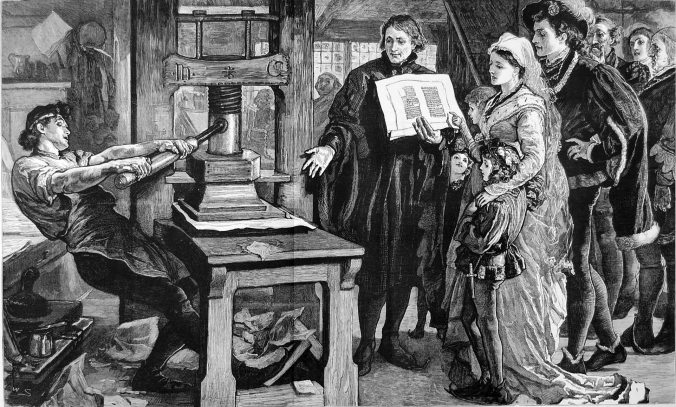
Caxton self publishing

It is the fact that the book has not entered the circulatory system of traditional publishing which was designed a hundred years ago and has hardly changed since.  This requires a manuscript to pass through multiple selection channels. Most publishers won’t take a book unless it has been referred to them by an agent. Even where they will accept a submission, it will be read by someone very low down the totem pole. Some say that 90% of manuscripts are rejected by the end of the first page, and 98% by the end of the first chapter. There is a network of connections which create mutually agreed standards or expectations for what kind of book is worth publishing, when and by whom.

Self-publishing has been seen as a way to get around the archaic and outdated structures which still prevail. But it’s damned hard to do on your own. Not surprisingly many authors seek help to get their manuscript into an acceptable form. There are all kind of services to help you. They may offer to edit, to create your book cover, get all the files into the correct formats and then they may actually upload the files for you. You can engage and pay a different professional to help with any of these tasks, or you can find a single company who outsources the work or does it in-house. Most of them offer several options, or packages, which get more expensive as they include more items. It’s easy to see why many choose to go with the company which offers a comprehensive service even if it costs them up to several thousands of dollars.

But when you do it this way, you are still a self-publisher.

Hang on! That’s not what you had in mind. You want a publisher! Here is where the real danger lies. There are an increasing number of organisations which call themselves publishers and will accept your manuscript for publication. They have a name, Suchansuch Publishers or Ifonly Books. They will produce print and often ebook versions as well. They advertise on the web, you will find them whenever you Google “Publishers”. Wow, you think, I have a publisher. The catch is, they will ask you for money. A lot of money. They may produce a near-perfect book, far better than the book you can produce on Create Space or through Ingram Spark. They may even offer to market your book for extra money. But still your book will not appear in the bookshops.

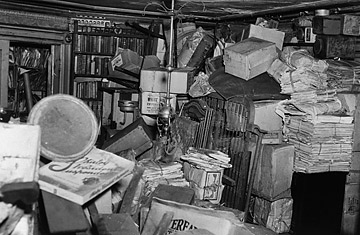
Because you paid for it. The entire structure of book publishing prevents these kinds of books from entering into commercial circulation. The publisher has to pay you – usually what’s known as an advance, which used to commonly be between $5000 and $10000 (if you are lucky). You don’t get any royalties back until that full cost has been recovered by the publisher. If a publisher offers to publish you for money they are by definition not a “real” publisher and you won’t ever get your money back. Most people who publish this way finish up with a garage full of printed books which they cannot sell.
360_hoarders_0423

The rise of self-publishing has meant that anybody who wants to publish a book can do so. But that does not mean that anybody can be a recognised author whose books will be found in a bookshop. The many inexperienced writers who don’t realise this are easy prey for those who can convince them otherwise. Almost all the books by self-published authors are sold on Amazon, mostly for $2.99 or less. Some cover their costs and make some profit but many don’t. Becoming a best-selling author on Amazon has become ever more difficult. There are two or more million titles now and each year thousands more are added.

A recent phenomenon is the way traditional publishers issue expensive ebook versions of their conventionally published books through Amazon Kindle and others. At one time, the Kindle versions only turned up a year or more after the print books came out. Now the are issued more or less at the same time, but the publishers set a very high price, way above anything normally found on Kindle. This happened after a bitter court case brought by international giant Hachette against Amazon. The authors of the books don’t make any more out of it than they do from the print book – say, 10% in royalty payments – and the publishers keep the rest. So a two-tier structure is emerging in the e-book market where self-published ebooks are super cheap, or even free, while Kindle versions of recognised publishers’ print books are available at grossly inflated prices, often around the same price as a paperback. Meanwhile buyers who go to bookshops or order through companies like Booktopia are purchasing conventionally published print books since the ebook version won’t be much of a saving. This reinforces the power of traditional publishers and makes self-published writers very much second (or third? or fourth?) class citizens.

Without extensive marketing using all the bells and whistles of the Internet (Facebook groups, Good Reads, BookBub, paid review sites, email groups, increasingly Twitter and Instagram) very few self-published authors make it. There are spectacular exceptions which I will write about in another post. But the thousands of would-be authors who don’t know better, especially older people who don’t have much idea of how the new digital landscape works, are easy marks for those who offer the hope of authorship, especially the dream of “real” publishing.

So no matter how much you want to be an author, don’t part with any money until you fully understand what is being offered. Just because someone says they are a publisher and can send you good quality printed copies of your masterwork does not mean you are on an even footing with those who have benefited from the system of preferment and patronage so common in the publishing world today. You still won’t get into the bookshops, or be distributed to libraries, or reviewed in the newspaper, or invited to speak at a Writer’s Festival. If you want to get your work into circulation somehow, anyhow, you’ll do best to DIY or find someone you can absolutely trust to do the technical stuff for you.


Writing’s not for sissies: what happens when you just can’t finish a story?

Leonid_Pasternak_-_The_Passion_of_creation

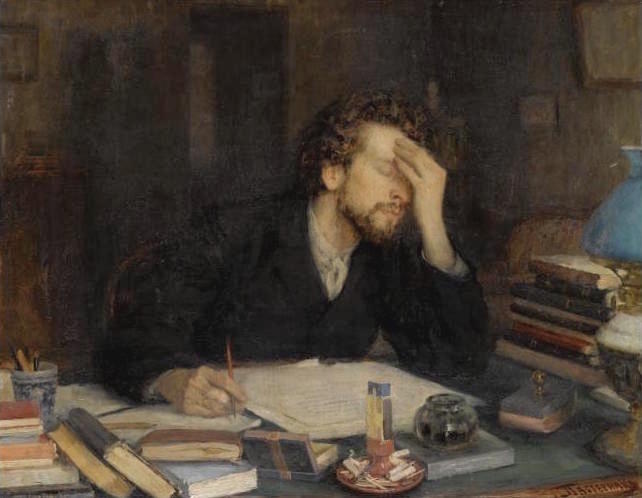
Leonid Pasternak 1862-1945 The Passion of Creation

Advice for writers always includes something about how to deal with writer’s block, as if it’s something like the common cold or a pernicious case of athlete’s foot. I have never really understood this, as most of my life I have been unable to stop writing even when I should know better.

However I think I have just developed a case of something like it and I don’t know how it has happened or what to do about it. I am as usual writing and writing – for instance, I am writing this very piece – and I am doing research for various projects I am in the middle of and I have started revising a lot of stuff on my blogs but I am definitely avoiding the one thing I really need to write, the thing I need to finish so I can actually get on with the next thing and then start something absolutely fresh. It must mean something … but what?

I have been working on a book of short stories, some of which were written years ago while others are brand new or radically revised. Some are quite long, almost novella length, others are super-short. I’m planning both e-book and paperback releases through Amazon and Ingram Spark. Maybe I’ll get a local printer to do a quality small run for the Australian market. Everything is ready for a final assembly and edit BUT there’s this one story I just can’t finish. It’s been through several versions, the main character has had several names and a variety of backstories, the key issues have changed several times, the narrative has shifted, her late husband has oscillated between being a stuffy idiot, a self-important moron and an OK kind of guy … and now I have her in the middle of the story and something really dramatic has to start happening to her and I just can’t get it moving.

So I wake up first thing in the morning determined to finish the story but instead I start looking at note I was writing about something else and then I’m looking at emails or trying to upload a pdf or whatever and two hours pass and then I have to start doing something else and my quality writing time is over so I say I’ll get back to it later in the day but it doesn’t happen, and then it’s night time and tomorrow is another day and I am sure I will finish it then but guess what? No luck …

Yes, it’s procrastination but something more as well. Is it some deep-seated psychological resistance to actually finishing this book and actually publishing it? Do I doubt the value of this story in particular, or the collection as a whole?

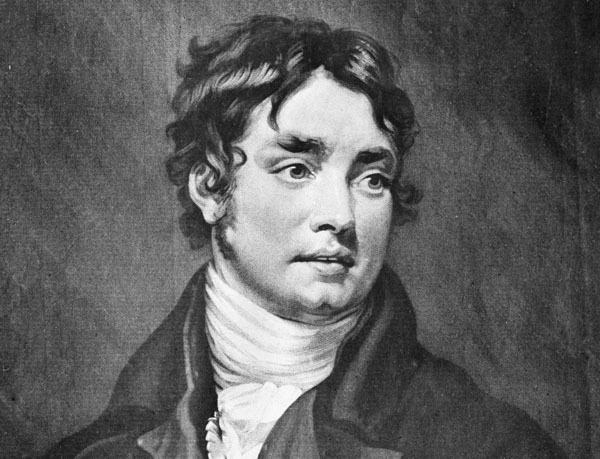
Samuel Taylor Coleridge in 1802, the year his daughter, Sara, was born.

English poet Samuel Taylor Coleridge first described his “indefinite indescribable terror” at not being able to produce work he thought worthy of his talent. I certainly don’t feel anything like indescribable terror. I’m just cross with myself for having constructed what feels like a wall between myself as a writer and the end of this story. Meanwhile Louisa, my character, is stranded in her luxurious hotel room in Bangkok waiting for her cosmetic surgical scars to heal. Poor thing.


Check out some good suggestions at Psychology Today: https://www.psychologytoday.com/blog/prime-your-gray-cells/201510/five-reasons-youre-experiencing-writer-s-block


Nightmare on the Red Spectrum

Red Priceless Princess small

THE PRICELESS PRINCESS IS RED-FACED

The Priceless Princess has been available for sale through Amazon for several months now. It was my first venture into self-publishing and I knew it would be a learning experience. And how! As I lamented earlier, I enrolled it in KDP Select, which means the e-book can’t be distributed outside the Amazon Kindle environment. Because it was in Select it meant that people with a subscription could download it as part of their service. All good, except that now authors are paid by the page read and the book is only 106 pages long – it is after all a children’s book. Quite a few readers have chosen it but being paid by the page it’s made almost nothing in dollar terms. Books stay in KDP Select for 90 days and I missed the deadline to get it off there so now I’m stuck with it until June and can’t use any other e-book distributor.

What about a print book? Would anybody buy that? I had a Create Space version printed and it came out beautifully. No sales, because it was free in KDP Select I guess, or maybe it was too expensive. Nobody in Australia would pay the postage. I ordered 50 copies for my own distribution purposes but that cost a small fortune in freight from the US which is the only way to get the books to Australia.

Amazon’s Create Space has no presence in Australia: you can’t get books printed here. If Australian readers want a print copy they have to pay the exorbitant cost of postage from the US. Amazon’s Australian Site: Authors Beware

Why didn’t I know this? It is obvious that most people in Australia, especially when buying children’s books, only want printed copies. Nobody here buys their kids a Kindle for Christmas (they do in the US apparently). I wanted to be able to distribute the print version through my website, put copies into schools as donations and do various other things so people in Australia could buy it.

So I followed everyone’s advice and went with Ingram Spark since they print in Australia and I could get print copies from them in bulk for a lower freight cost. And they distributed everywhere. But they wouldn’t use the same Create Space PDF files, the files had to be saved in a different PDF form, the very early x-1A or whatever it is. Finally got Keith to redo/resave the files, they were accepted by IS, then I had to pay $15 to get one copy to examine (by courier – what is wrong with using Australia Post?) and then I discover that the front cover in printing has shifted to the red spectrum and the Priceless Princess’s gorgeous face is now extremely flushed.

So I ask IS why this is since the art work is identical with what went to CS and I receive a prompt reply saying all printing machinery is different and they cannot guarantee any particular colour outcome or that it will match that printed elsewhere and I have to get the files redone to compensate for their machines.

But how? Nobody can see what the problem is on the artwork files, which look identical on both PDFs.

So now I have a very red-faced Priceless Princess circulating around the world, a very frustrated illustrator who doesn’t know how to help, and a particularly irritated author who is now trying to find a local printer who can use the original Create Space files and hopefully provide a better quality paper at the same time for a reasonable price so I can do my own local distribution.

Online technology obviously doesn’t combine well with legacy printing. The online world doesn’t mesh with traditional reader behaviour. A lot more work needs to be done to find some better alternatives. Meanwhile everyone under 30 is reading free books on their mobile phones. Is this a losers’ game or what?

Authors, Editors and the Ethics of Publishing

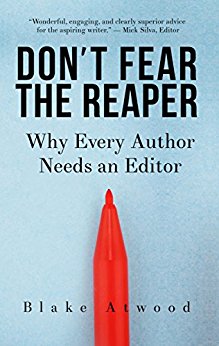
Came across a book yesterday which brought into focus something that has been bugging me for ages. Blake Atwood’s Don’t Fear the Reaper: Why every author needs an editor is squarely aimed at the new writer, especially the new Indie writer – although any writer who has an editor will be enlightened by it.

ReaperIt is a seriously good book, with lots of recommendations about how authors and editors can get on better together. But it made me feel very weird.
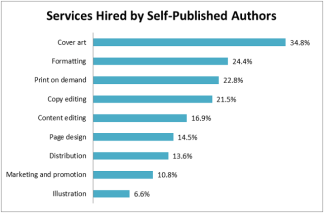
There are hundreds of books on Kindle right now and maybe thousands of blog posts directed at the emerging author who plans to self-publish. All this advice should help the publishing process and make the written work as good as it can be and therefore produce sales and success. Two recommendations stand out: get a professional cover designer! get a professional editor!

Cover designer, for sure. Unless you are great with Photoshop or comfortable with digital design software such as Canva, it’s not easy to get a great-looking cover. Of course there are now many automated genre cover services, where you buy a standard design and put your title and name on the front. Fair enough, as long as everyone else hasn’t chosen the same design. As time goes by and the competition on Kindle gets more intense, authors are feeling pressured to hire more and more services.  Is it really making a difference to the quality of self-published books?

services hired

Source: Digital Book World- Team Publishing 1

Editing? It’s obvious that many new indie writers haven’t followed that piece of advice. I download and read book after book by new or unknown (to me) indie authors. It’s pretty clear that the book hasn’t been edited properly or at all. My first reaction is always irritation, even exasperation. A good premise self-destructs in an incoherent plot. Not just one or a few but scores of grammatical errors make the book unreadable. A few typos? OK. But one or two on every page? No thanks. This book joins the others in my library with the dreaded “30%” score (or less). Just couldn’t be bothered finishing it. Why does this happen?

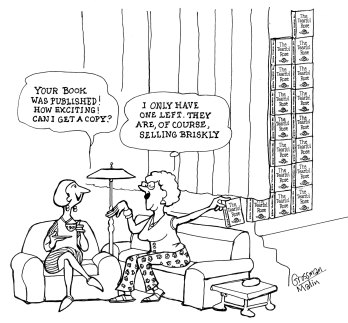
only one left

There are three kinds of editing: developmental, which picks up on structural flaws and can result in a total rewrite; copyediting, attending closely to grammar, expression and sentence structure to make the work “correct”; and proofreading to pick up those last typos or whatever. Great! But soon the penniless hopeful discovers that an editor expects to be paid separately for each of these and some only specialize in one. Atwood is mainly a copyeditor. Editing costs seem incredible. Over a thousand dollars for just one of these edits is common.

But hang on a minute. Why aren’t the authors writing their books properly in the first place? Why can’t they edit themselves? Is it that many writers can’t in fact write? And if editors do as much on a manuscript as they claim to do, who is really the author?

I was amazed when I realized the extent to which fiction was edited. Having published around one hundred academic papers, I was used to a certain level of editorial intervention, usually to provide clarity or reduce jargon or introduce some additional analytic viewpoint in a footnote. But the idea that someone would virtually re-write your whole paper, changing your intention, re-organizing the flow of argument, removing whole sections, deleting punctuation marks and in effect taking over the construction of your work was unthinkable. You were the writer. Anyone who hired someone else to do all that made the work fraudulent. It just wasn’t your work any more.  If your journal editor, having accepted your paper, chose to use an editor to make significant changes, that was an acceptable cost of being published in prestigious journals. But paying for it yourself?

The world of commercial publishing seems to take a high level of editorial intervention for granted. One of the first things in traditional publishing was to assign an editor to an author. Sometimes authors mention their editor by name, more often than not the existence of that person is completely hidden. Why? If an editor has had so much input into your work, then why isn’t that person acknowledged as a kind of author – if not a co-author, perhaps a writing associate? While it is obvious that proof-reading and minor corrections will always be required, how can the interventions of a copyeditor, let alone a developmental editor, entirely unacknowledged, be justified?

There are a set of conventions about writing which increasingly determine what will be accepted as “good” in its field. Genre fiction is one thing, literary fiction another. The hidden truth is that literary fiction is largely for people with a better education. Hundreds of Amazon reviews moan and whinge about “big words” or books being “too hard to read”. I just last night read a review which gave one star to a book because of the long words in it. The writer complained that it claimed to be a thriller but really it was a book for the “literary elite”.

literary cocktail party

A literary cocktail party at George Plimpton’s Upper East Side apartment, 1939.

Traditional publishing kept control over writing and reading by maintaining a reasonable level of quality control over what was published. And editing was key to this process. Even popular thrillers and romances were edited to maintain something like an acceptable standard of literacy. Indie publishing has thrown that out the window. Anyone can write and publish anything. This seems powerfully democratic. But is there a necessary standard for writing? Shouldn’t books be literate, even if they are not literary?

What if authors don’t agree with their editors? Blogs and forums are full of horror stories about new writers paying editors thousands of dollars only to find their recommendations unacceptable. If you have a contract with a publisher then the editors is likely to be the winner in a catfight. If the author is paying the editor directly, what then?

If you look closely at the advice to new writers, the people who write about how badly you need an editor are almost always editors themselves. It seems that they are right. Like Atwood, many have also published books on how to publish books. That is a good marketing strategy, especially with the bottomless pit of would-be authors filling up by the day. But new writers don’t want to spend money. They just want to write their books and publish them. Hmm. A problem: nobody wants to buy them. Read the forums where countless authors complain that nobody has bought their books. So they are encouraged to give their books away free, or almost so. What kind of product is this?

You can get ultra-cheap editing, of course. Thanks to the internet someone on the other side of the world can be your editor. So what if their English isn’t too great! They can do your “updation”, your Head-Noting and even write your blog!

sodhanis

It’s a minefied. I don’t want to read books which have been radically altered by an editor. I want to read what that particular author says, and to see exactly how she or he says it. It’s part of the fun of reading. If the writing is bad, so bad that I can’t enjoy the book, then I won’t buy anything from that author again. On the other hand, so many new authors write such bad books. They have awful holes in the plot or drag on too long or have blatant unexplained contradictions, and I know how much better the book could have been if someone had “edited” – in effect re-written – it.

I feel sorry for these authors. I don’t want to discourage them, so I don’t leave negative reviews. Neither does anyone else. Without an editor, or some form of independent feedback, how are authors to know their books are just not good enough? Then again, I feel sorry for their editors, if they are eventually hired. Working on badly written manuscripts, toiling over silly or boring or pompous or pointless stories and trying to make them better must be one of the most soul-destroying forms of employment imaginable – a marriage made in purgatory. [Hey, there’s a concept: a writer and an editor locked up in some horrific warehouse, in a remote derelict landscape (think Tarkovsky), going to suffer a  gruesome fate if they can’t agree on final edits. If you want to develop it, let’s collaborate!]

House-of-Purgatory_03

Proofreading is another thing. Everyone needs a proof-reader. Errors creep in, typos happen and the malign influence of the spell-checker has to be remedied. I don’t know how necessary it is to hire a professional proof-reader. Maybe any two or three people who are good readers would do.

What do you think? Should editors be acknowledged, perhaps by name, when they have been hired to work on a book? Or should writers just learn to write better in the first place?


Should writers pay their readers?

chicken_house_wikicommons_wide

Indie writers at work

Writers are born, or so they say.  Problem is, publishers don’t have room for them all.  They have weird criteria about what they are willing to publish. They hate the slush pile. Then along comes self-publishing. The freedom to write what you want at the length you want to write it, to publish it to a potentially world-wide audience and to control every aspect of the process! Perfect. And when the writing is finished – voila! A few fiddles on the computer, a cover of some kind and that should be it, right?

Well, we know now how wrong that is. The labyrinth of self-publishing discloses itself  with consummate cruelty. Soon the writer’s brain is entirely occupied with technical issues, spending sleepless nights scouring the internet as the poor sap slowly learns that the actual writing is both the most and least important element in this process. Moreover there are hundreds of thousands of others all doing the same.

As self-publishing has exploded the author has to become an author-preneur and master a thousand arcane skills. The easiest method is to hire someone else to do it all and pay them. That way your book will definitely be published, in e-version and print version, and you have become a “real” author. There are hundreds of agencies now offering these services, with all kinds of bells and whistles: editing, covers, conversions to different formats, uploading. But it costs! So there is your book but now nobody is buying it. What to do? Marketing…. Oh, that costs more again! And here are more agencies willing to take your money to do it for you. Or you can do it yourself at minimal cost but it still costs. Professional reviews at $500? (Biggest ripoff of all – that’s Kirkus).

Very few authors ever reveal what the whole process actually costs them and what income it produces. One recent exception is US indie author Joynell Schulz who has generously shared through her blog everything she has been going through to get her first book out there. Find her at http://www.joynellschultz.wordpress.com

In her most recent post she sadly recounts what it has cost her so far, and what her sales have been. Short answer: nothing like enough to recover costs. So now she is investing more in various marketing approaches. Good luck with that Joy!

One author who has shared his writing costs and income is Jim Chimes. He has put up his figures for several years now. It is worth noting that he is a hybrid author, with an agent and a traditional publisher. He also publishes short works and some other stuff as an indie. His income has increased steadily over the years and he is now making a good-enough living from his writing to give up other employment. What a reassuring message!

http://www.jimchines.com/2016/01/2015-writing-income/

His most recent posts analyse the results of a survey he carried out among a variety of writers – indie, trad and hybrid. They all wrote novels: non-fiction and short fiction was not included, although of course if a novelist had also published shorter writing that income would have been presumably included. This makes very interesting reading. It shows a huge variation in the annual income from his respondents. The most surprising finding is that indie authors even after deducting their costs have the highest median income – higher than authors publishing through both large and small presses. Eight novelists made more than a million dollars last year and some of them were indie authors. The average income across all the respondents was around $17,000. Overall authors publishing with large publishing houses and indie authors made around the same average income.

A key to being a successful indie author, though, is to be able to manage the thousand tasks which a traditional publisher would otherwise manage. Here is where much of the expense comes in, and the strategies required to be a successful author require a lot more than writing. But what happens when all the strategies are followed but the writing itself just isn’t all that great? Every author who is self-publishing has to ask hard questions, ultimately about their books. And their audience, genre, style, look – and how fast they can work. Jim Chimes’ figures clearly show that full-time authors – those who do nothing professionally other than manage their writing career – make many times more than those writing part time. But the books have to be good enough, and there have to be a lot of them. It’s a bit like a production line. But if your books aren’t selling, then there’s no alternative to writing part-time. Chickens and eggs!

Maybe it’s better to think of writing books as a kind of personal entertainment, an expensive pastime like owning a race-horse. You might never get your investment back, but if you enjoy the thrill of the track, go for it! Or, if you disapprove of racing, maybe yachting or flying would be an appropriate analogy. Either way, you can spend all your time doing something that engages you even if it costs. So many writers on their blogs and in comments say that they don’t want to make money from their writing, but they don’t say they are happy to lose it. But maybe that’s what it takes to be a successful writer these days. Next thing the writers will be paying the readers to read their books. Hmmm. That definitely has potential!


https://joynellschultz.wordpress.com/2017/02/16/lessons-learned-60-days-of-selfpublishing/


2015 Writing Income

The Indie publishing community – and some thoughts on pricing your e-book.

One of the real pleasures of the Indie publishing world is coming across new writers and publishers you might never have found without the burgeoning online community. I love hearing from new authors and finding out what they are doing,  and really appreciate the amazing inventiveness and generosity so many show.

I just found a great post by one of my visitors, Joynell Schultz. Joynell writes speculative fiction, something I’ve never tried. In her most recent post she describes all of the techniques and strategies she tried to get her first Kindle book “out there”, what worked and what didn’t. Read her post here and take a look at her book. love-liesYou can buy it on Amazon at the current price of $2.99 (she started at 99c) and you can download six chapters free – she will tell you where in her post.

I do want to make a bit of a demurral here. While publishing free chapters may be a good way to get readers interested in your work I am not so sure about the wisdom of selling books on Amazon for 99c, or worse, making them “free”.  If you think that is what your work is worth, why would I want to read it? If you write purely to find readers, put your work on your website or one of the sharing sites such as Wattpad but don’t put  it up on Kindle. Amazon is a commercial site where people who want to sell their work meet other people who want to buy it. I can see an argument for 99c short stories or novelettes – maybe – but novel length work which has been invested with love and care, edited properly, with a good cover and hopefully a good story MUST be worth more than one dollar or worse, zero. I guess the next step is to pay people to download your book!

At the other extreme, traditional publishers are getting way with murder, pricing their e-book versions at absurdly high prices to artificially prop up the print book market. Don’t think you are doing the authors a favour by buying their e-books – the contract will ensure that the publisher still gets most of it just as if it was a print book, even though it costs them nothing to make available in digital form, so it’s all more profit for them.

There are millions of readers in the world. A lot of them want to read for free, so good, let them, give it to them however you like but don’t call it a published book. Others want to buy books for their collection. I have bought hundreds and hundreds of ebooks for my Kindle collection over the years and I don’t plan to stop. But I’m not going to clutter it up with cheap stuff. Sometimes I’ve tried something for a couple of dollars and usually I can’t be bothered reading it past the first chapter or so. If it’s annoying enough I might delete it altogether.  Until recently I didn’t write reviews of books I thought were bad, but I think the time has come when those of us who buy Kindle books call them out when they are terrible. Amazon reviews seem to determine which books succeed by getting noticed in the first place. Amazon itself has tightened up on the review process. Now they could tighten up even more by banning full-length books priced below $2.99.

If you’ve written a good book, price it properly to reflect that. Good on you, Joynell, for raising your price. You’ve got good reviews and  your second book should have eager readers waiting.