I have had occasion recently to review my own book of short stories, Revolutionary Baby. There was a suggestion that it might be serialised on a literary/writing platform currently gaining popularity. Some people still like reading and writing old-fashioned stories which reflect life in a pre-digital pre-influencer pre-Trumpian world, dwindling though this number might be. In this process I received some rather surprising feedback: my stories were accused of “man-bashing”. I was taken aback. As far as I was aware, my stories had been written from a ordinary female viewpoint and reflected an awareness and consciousness which any woman of my era would share.
None of my male characters were vicious or evil or deliberately cruel. They certainly were not violent or criminal or sadistic, unlike a high percentage of male characters who now occupy the fictional arena in ever-increasing numbers, thank you Bret Easton Ellis. If they displayed unkindness, self-obsession, lack of awareness or a failure to understand the women they were involved with, this was nothing remarkable. They, too, were creatures of their time. I feel fond of all of my male characters, in different ways, but I did need to convey the impact that their often thoughtless behaviour had on the women in my stories. In some cases they hardly connected with women at all and mainly hurt themselves.
It occurred to me that before considering any kind of serialization I should write an analysis of what happens in each of the stories and insert a trigger warning or even an apology for any misunderstanding that a male reader might experience as a forward. But on the other hand, there is no obvious evidence that any men have actually read the book, so perhaps that would be entirely superfluous.
This led me to ponder the fragmentation now occurring in literary and even more so popular fiction. Many of literary women of my acquaintance, most of whom would describe themselves as feminists, make a point of not reading books written by men. The question of the gender identity of the author, and ditto of the audience, has become a sore point among many commentators online, in literary magazines, in articles on book prizes and awards. There seems to be emerging a kind of gender-ghetto mentality where each identity is writing for others who share it. The striking emergence of queer fiction is an example. Some of the most interesting writing is coming from authors inhabiting a distinctively queer identity world. Is everyone reading this? Or mainly others similarly self-identified? I noted that women writers are mainly read by other women. No doubt there are exceptions today in strictly literary circles. But what is actually going on here? Does anybody know? Is anyone keeping track of these questions?
I have been struggling for years with a problem which has held me back from my literary destiny (ha ha). Fortunately, Joan Didion suddenly if posthumously stepped onto the dancefloor of the writers’ parlour. She died in December 2021, aged 87. Her raw diaries are about to be cooked in April. A segment of her unpublished work, consisting of journal entries addressed to her late husband John Gregory Dunne, will be published. There is a history to the discovery of these diaries and the decision to publish them without further edits but I won’t go into it here. The book titled Notes to John include reflections on her experiences as she attempts to make sense of her husband’s sudden death, her weird and frustrating relationship with her daughter Quintana Roo and her difficulties with work, alcohol, depression and anxiety. Her interactions with her psychiatrist reflect on this.
She left these diaries perfectly arranged so it is reasonable to assume she wanted them to survive and therefore to be read. Don’t we all who keep diaries secretly hope there is some enduring place for them? For many writers, especially women, diaries have been an inseparable part of their identity. Quite a few writers now publish their own diaries, or extracts from them, or cite them in their memoirs.
I know there are “issues” with Joan Didion. She is seen as conservative, pro-Republican, reliant on men, ideologically suspect. I’ve been seeing her more clearly through Lili Anolik’s book Didionand Babitz (2024) and will probably write more about it shortly. For now, though, it is something in Joan Didion’s early work that is on my mind – something I read once and then forgot about, which has just resurfaced.
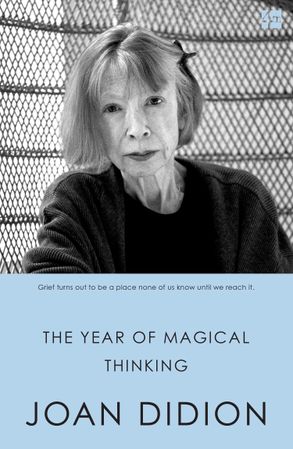
Mostly it was her book The Year of MagicalThinking (2005) which became important to me. She wrote it after the sudden death by heart attack of her husband, at a time when her adult daughter was suffering a severe illness. The atmosphere of her book enfolded me when I first began to write my own mortality memoir Regret Horizon (still unpublished). My mother died in 2008. She didn’t die suddenly but weakened slowly and defiantly until passing away in hospital at 93 after an accident with her dentures. My book turned out nothing like Didion’s: I surprised myself by writing an almost ethnographic account of my mother’s final year of life, my own mismanagement of it, and the immediate consequences of her death.
Later her book Blue Nights (2011) reflected on her life with her daughter, who was born at almost exactly the same time as my first child (in early 1966) and died in 2005 aged 39. I was still trying to draft my book. I didn’t want to go into my relationship with my own children, although that necessarily suffused the story and I couldn’t repress it altogether.
In the recent burst of pre-publicity surrounding her diaries I came across reference to something which hit me with one of those “OMG yes” moments.
Her first collection, Slouching Towards Bethlehem, was published in 1968. In her essay “On Keeping a Notebook” she talked about writing not as a means of recording facts but a way of capturing moments in all their specificity, giving a kind of enduring existence to the flickering and pulsing of emotion and impression before they disappeared altogether. She wrote about the need to recognize the people we used to be.
I read that essay around 1970 while trying to deal with the notebooks I had written while “in the field” doing research in First Nations communities in remote Arnhem Land, carrying out a project for a higher degree. The topic of my research was supposed to be “the women’s point of view” in an indigenous community still closely embedded in the pre-invasion way of life. I tried to do the right thing, to keep accurate accounts of behaviour and conversation, to find out what women thought about traditional marriage arrangements and social organization and struggled to find a way to write that was somehow scientific and objective and academically acceptable. Given that there were no existing examples of such a project that I knew of, I had no guidelines to follow.
I very soon discovered I could not possibly write this kind of thing. Instead, I was writing notes which were more like diaries because of the way I experienced the events I needed to write about. My two-year-old son was with me. I was a mother. There was no way around that, no “objective” position available. The things that happened as day followed day and the dry season became the wet season and I slowly learnt the indigenous language and spent most of my time with other mothers and children created a personal life for us in that community, and outside it as well. This existence seemed to have nothing to do with the “professional” persona through whom I was supposed to be demonstrating my academic and objective research capacities which was the reason for us being there in the first place.
Any anthropologist who did old-school fieldwork in those times experienced something like this, but it was particularly powerful for me, a very young woman, a mother with a small child. Moreover not long I arrived “in the field” I discovered I was pregnant with a second child, conceived just before I left Sydney where my husband was pursuing his own activities. In “researching” women’s lives in that community I became a different self. I was given an identity, with people assigned as my kinfolk and expectations of my behaviour arising from those relationships. My “fieldnotes” became more and more a diary, and I realised that the writer was neither the person living in that community in those moments, nor the person who came from a prestigious University far away in the city. The actual writer was an intermediary being who came into existence at night as the cockroaches scuttled across the concrete floor in the flickering light of a kerosene lamp and my son slept in the old caravan next door.
Time passed, my pregnancy progressed, I had to go back to Sydney for the birth.
Later, trying to make sense of this writing which was neither and both field-notes and diary, a new and different writer emerged. This person had to reflect on the embodied feelings, the conditions of daily existence, the conversations, the rituals shared, the moments remembered, an entirely discontinuous reality which now lay bizarrely in the past. It seemed almost impossible that this was the same person now writing an academic thesis in sunny Sydney, a new baby in a basket and a husband dealing with his own traumas.
What I finally wrote was very distant from the original research proposal. It turned out to be about child-bearing and child-rearing, something most professional anthropologists were completely uninterested in. It was published to almost complete silence. In the confusing times which followed, I wrote academic works. I went to a different “field”, this time with my husband and two young children, and the problem of writing and identity was even worse, capped off by the fact that my son set fire to our tent and caravan, thus incinerating eight months of fieldnotes and diaries.
Much much later my academic career was nearing its end. My mother was dying, and so was my ex-husband. I had to write about, that year and its aftermath. I wrote bits and pieces, draft after draft, various chapters, discarded, rewrote, but couldn’t bring the project to an end. I began a final edit and still didn’t like it. I needed the book to change. I didn’t know who this writer was either and didn’t like any of the versions of her who came forward as “author”.
Then suddenly I rediscovered this quote from Joan Didion’s “On Keeping a Notebook”, from the 1968 collection Slouching Towards Bethlehem.
“I think we are well advised to keep on nodding terms with the people we used to be, whether we find them attractive company or not. Otherwise, they turn up unannounced and surprise us, come hammering on the mind’s door at 4 a.m. of a bad night and demand to know who deserted them, who betrayed them, who is going to make amends.”
I’d had so many bad nights but had not considered that it was those irritating people I used to be hammering at the door. These entities all seemed to have a hand in my book, toiling over paragraphs, edited out superfluities, then put more in. They were all trying to write my book. Outlook and expression and desire, indeed the very reasons for the writing, seemed to be constantly changing. All writers understand that the “author” is not the ”writer”, but what if there are several of them vying for dominance? Perhaps all “authors” suffer from MPD. Except for writers of rapid release genre fiction, who will now be the instruments of AI. But that is another topic.
I had turned it all outwards: I thought it was the real people in my life making demands on me, and I was trying to write this memoir to make amends to them. But it wasn’t them I had to make amends to, it was the old entities who had occupied the placeholder “me”. How Joan Didion, at such an early age (she would she would have been 34 in 1968), could have come to this blasting insight seems amazing. Now Joan is back in my life I am re-reading her with different ears and eyes and maybe I will find out. And if I can keep on good enough terms with those other denizen/components of the authorial entity, I will be able to finally let the book go – publish it, or let it perish.
Some recent notes on Joan Didion:
Nathan Heller. “What we get wrong about Joan Didion”. The New Yorker, 25 Jan 2021.
Karina Longworth (Substack podcast): “Lili Anolik on Joan Didion + John Wayne”. 30Jan 2025.
Cerys Davies. “Joan Didion’s diary of post-therapy notes is going to be published”. LA Times, 5 February 2025.
Daniel Lavery. “A Sneak Peek at the Upcoming and Never-Before-Read Joan Didion Diaries”. The Chantner. Substack. 18 February 2025.
Marissa Vivian. “Hemingway: What Her Words Reveal About the Ethics of Publishing her own Diary”. Substack. 8 February 2025.
On various writers’ sites it is suggested that one should self-tether to a regular writing schedule to produce, let’s say, a thousand words a day. This routine is recommended so that the current work might be finished some time before the arrival of the Four Horsemen of the Apocalypse (I think at least one of them is here already, but I diverge). As it is, I write at least a thousand words a day before breakfast in diaries, notebooks and Word files and on Evernote, generally in response to my reading during the 3.00 am Insomnia Shift. Or to incessant Nietzschian nightmares of the Eternal Return (the ghost of some book I tried to write years ago but abandoned). These words don’t count though.
Just once did I try this recommendation. It was late 2023 and early 2024. I wrote one thousand words first thing each day for Book One of a new series. I couldn’t believe how effective this strategy was. The words piled up quickly and a complete manuscript appeared. The author didn’t seem to be the same “me” as the previous incarnation and undoubtedly needed a new name. What would it be? Before that could be decided I had to pause because I had neglected so much else (having pressed the “hold” button so firmly) and then I was sucked into the usual vortex. The book, and the series, have languished since.
In fact none of my grand projects is ever really finished. Some almost achieve line honours but fall because I can’t stand doing yet more edits or I have found a new angle I want to put into Chapter X or something requiring extensive research has inserted itself into my consciousness at the very moment I was opening the edits file.
I am sick of my own unfinished books, and this means I am sick of their author as well, I want to shut her up and move forward into new scenarios which I can feel shaping themselves through various still incoherent images. They suggest to me a space far more appropriate than this merry-go-round posthuman nightmare dominated by nostalgic and anemoiac hangovers. (This observation led me to consider the appropriate cocktails for this condition, leading to the development of the FORLORN NOSTALGIA and the RAISETHE ALARM – see forthcoming Cocktail Post).
In the meantime I decided to bring these almost-finished projects to an end and gave myself a deadline of the end of summer (this is Australia, so that is around February) after which I would totally devote myself to my my futuristic post-apocalyptic picaresque adventure/thriller/romance series.
But the effort of finishing old stuff feels insuperable and pointless. It is like trying to complete a very complex piece of embroidery on a linen tablecloth you inherited from your grandmother. You promised you would do it, but now your grandmother is dead and so is your mother and nobody is even vaguely interested in embroidery and who uses linen tablecloths anyway they would only get filthy from the takeaway juices dripping through the cardboard box you now eat from after the food is delivered in a paper bag by some anonymous person who leaves it at the front door. You don’t even need to pay by credit card anymore.
So you won’t need a ladies’ reticule to keep your credit cards in.
Lady’s Embroidered Reticule: English Public Domain Media Search
I guess my question is: is it a waste of time to keep going on the old stuff? Or should it be put aside somewhere on a USB stick in a plastic box where it will be forgotten and ultimately sent to the tip leaving no trace anywhere in the sentient universe? At least if these various blocks of narrative turn into “books” they might live on for a while in a library – maybe. Thus do I console myself for all these years of wasted effort.
(From International Association of Literary Journalism Studies)
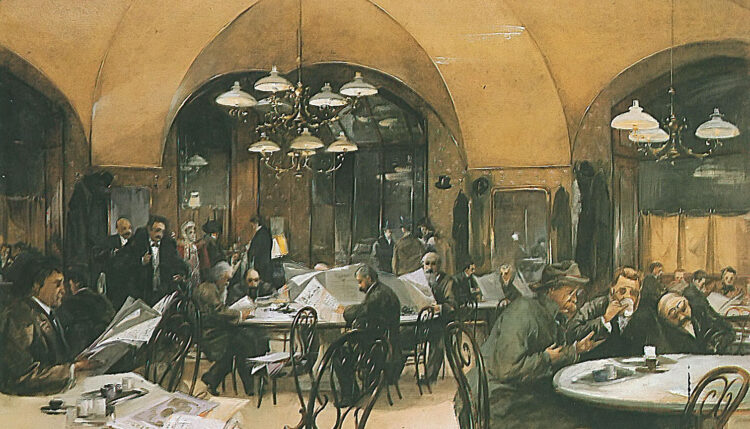
As mentioned I have been thinking about inserting the odd Feuilleton here, mainly because I keep finding myself contemplating some strange or remarkable facet of contemporary culture and society which defies inclusion into any other kind of writing I do. By calling it a Feuilleton I hope to indicate that it is a passing phenomenon not of any great social or political importance in itself, although I may be flirting with the Zeitgeist or capturing the temper of the times. My Feuilletons are not about literary culture or contemporary writing or the Kindle or the role of reviewers in the Internet age. But they are not entirely frivolous or meaningless either.
The term Feuilleton comes from French and means something like “little leaf”. Originally it was a small item at the bottom of the literary section of a newspaper, often providing a critique of popular theatre, but in many cases it grew to have its own page. By the 1840s the term roman-feuilleton described a serialized novel published in newspapers, something like today’s internet novelizations, but paid for, not for free. I mean the readers bought the newspapers and the newspapers paid the writers. [Now we barely have newspapers and people publish their writing for free all the time, which seems counterproductive]. The term was used in English by 1845, in the Atheneum.
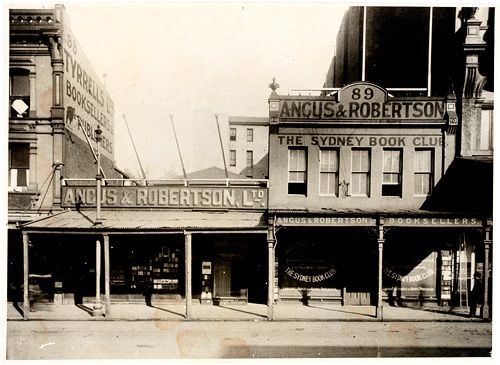
The term was also handy to refer to small one-page advertisements, like handbills, which might be handed out in the street to encourage consumers to visit suppliers, as in this advertisement for a delicious lunch venue the like of which sadly no longer exists.
If that all sounds cheery and familiar, we must pause at what Hermann Hesse had to say about it in The Glass Bead Game, regarded as the first and only science fiction novel to win the Nobel Prize (in 1946). He was writing against the decline of humanistic culture brought about by “feuilletonism”, which he saw as the antithesis to true writing, and lampooned viciously. His master-work, The Glass Bead Game, was on the Must-Read list of myself along with almost every other proto-boho-intello in the 1960s, and describes the life of future intellectuals living in a cloistered community trying to circumvent the excesses of the age. Thanks to Huxley for bringing the Feuilleton into the present time as another object of knowledge. (https://huxley.media/en/the-feuilleton-era-we-live-in/)
Hesse described the Feuilleton, printed widely in newspapers and magazines, as a source of “mental pabulum” for readers hoping to soak up culture but unable to actually do so due to the lack of education and motivation, and of course being too busy and far too important to sit down and read actual books.
He said:
Among the favorite subjects of such essays were anecdotes taken from the lives or correspondence of famous men and women. They bore such titles as «Friedrich Nietzsche and Women’s Fashions of 1870,« or «The Composer Rossini’s Favorite Dishes», or «The Role of the Lapdog in the Lives of Great Courtesans» and so on.
Another popular type of article was the historical background piece on what was currently being talked about among the well-to-do, such as «The Dream of Creating Gold Through the Centuries» or «Physico-chemical Experiments in Influencing the Weather» and hundreds of similar subjects… we feel surprise that there should have been people who devoured such chitchat for their daily reading; but what astonishes us far more is that authors of repute and of decent education should have helped to «service» this gigantic consumption of empty whimsies. Significantly, «service» was the expression used; it was also the word denoting the relationship of man to the machine at that time.”
Good heavens! This is exactly the flavour of the endless parade of pablum from our own Machine, the Internet, much of which we now call “clickbait”. But Feuilletonism goes so much deeper than trying to persuade people to buy stuff they don’t need from people they don’t know manufactured by unspecifiable techniques at places which don’t exist. The Age of the Feuilleton is completely dominant today, ever more so with the consequences of AI development and universal internet access on every phone – the mastery of the Machine indeed.
I don’t see my contributions to the Age of the Feuilleton as necessarily despicable, as Hesse might have done. By proposing to include a few remarks under the heading of a Feuilleton, I am going with the diverse flow of contemporary knowledges, and playing a little with the scary bizarritude of the fragments flowing through the ever-open channels of our time. It is true that there may be an academic flavour to the analysis, but maybe that is a necessary correlate of talking about anything in modern culture at all, rather than just participating in it. And a rich and full array it is.
So in my occasional Feuilleton I will remark on various ephemeral incidences, moments or events, usually conveyed in media, sometimes in performance. I notice things as I trawl through my reading and writing. Someone, generally much younger than myself, draws my attention to something I have never thought of before, and didn’t know existed. Or I am struck by some change in the discourse and behaviour in the everyday world around me. Often these moments are so peculiar in flavour and signification that I am reminded of my old father’s frequent exclamation: “Well blimey, you just wouldn’t read about it”. Now, these days, it turns out he was plain wrong. We can read about it, and moreover see it, all the time, every hour of every day. By adding a little more to it I hope to do no harm. I will identify those pieces which belong in the Feuilleton category, so you can skip over them altogether if you like.
Check out Stoddard Martin’s essays, with insights from the old and new literatures of several countries – aesthetics, musicology, mythology, philosophy, poetry, politics, and psychology.
Monstrous Century: Essays in ‘the Age of the Feuilleton’ Paperback – October 15, 2016
Insights from the old and new literatures of several countries jostle for space in this work – not to mention aesthetics, musicology, mythology, philosophy, poetry, politics, and psychology. The subjects, even when unsympathetic in themselves, are viewed in the round, and judged with humanity (from the publisher’s blurb).
«THE GLASS BEAD GAME». FRAGMENT FROM THE WORK
«We must confess that we cannot provide an unequivocal definition of those products from which the age takes its name, the feuilletons. They seem to have formed an uncommonly popular section of the daily newspapers, were produced by the millions, and were a major source of mental pabulum for the reader in want of culture. They reported on, or rather «chatted» about, a thousand-and-one items of knowledge. It would seem, moreover, that the cleverer among the writers of them poked fun at their own work. Ziegenhalss, at any rate, contends that many such pieces are so incomprehensible that they can only be viewed as self-persiflage on the part of the authors.”
Ever get the feeling that independent publishing, which promised so much, is heading down the vortex, especially for Australian authors? When it all started rolling it seemed like writers would be able to reach readers without all the intermediaries deciding who and what would be allowed through the hallowed gates of author-dom.
It looked as if new technology would link writers and readers all over the world and open up the artificial geographic zones which for half a century had been creating unnecessary boundaries around the best new writing. Readers were forced to pay absurdly high prices in some areas, including Australia, to accommodate the outdated business model. You might have thought the response would have been to change the business model, but no, that didn’t happen, and now things seem to be in some kind of weird spiral.
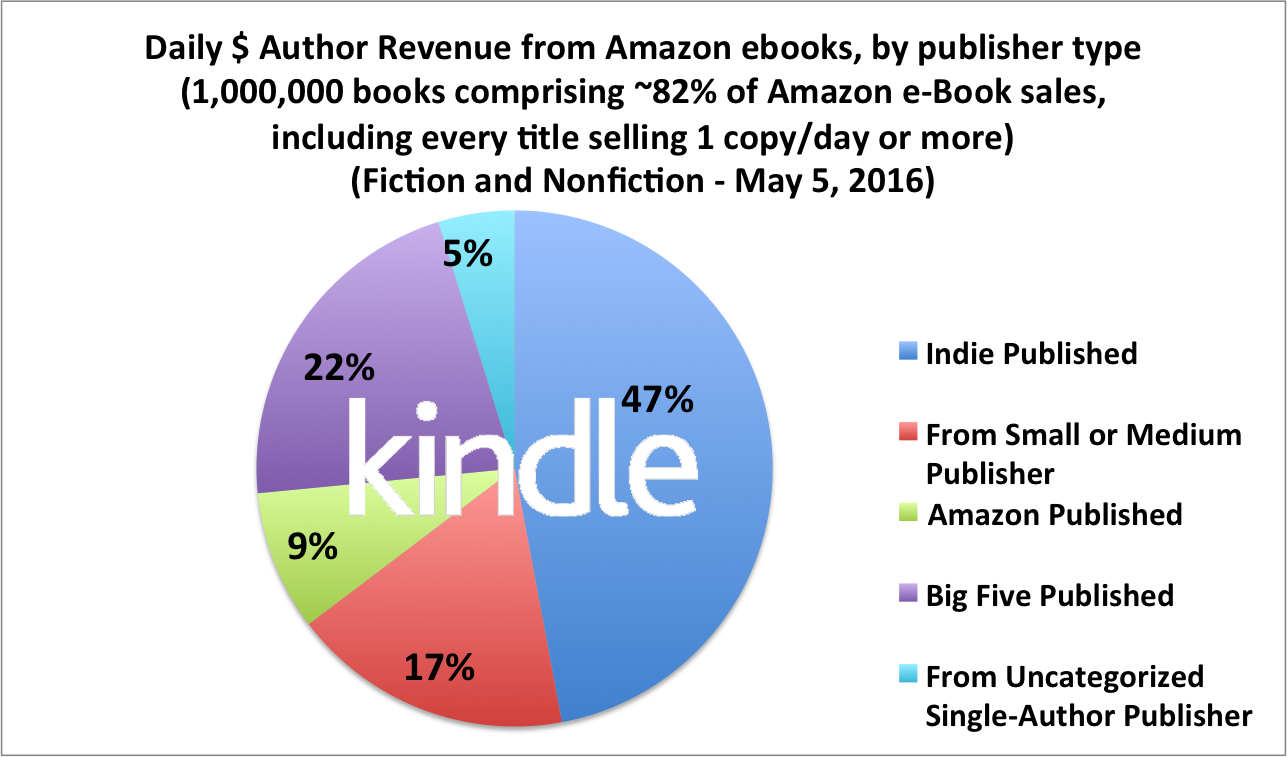
In the US E-books are still selling, and selling well. In number they far outweigh trad pub titles, and just recently they have superseded print books in dollar value. Of course many of these sales are for traditionally published books from established publishers, who bring out an e-book edition along with their print editions. It is very hard to get accurate figures separating the different market components out.
When Indie publishing took hold, a network of new support mechanisms evolved to help authors bring their work to an eager public. Traditional publishers went on doing exactly as they had been doing (but added in e-book versions) and everyone else was free to try things out in all kinds of ways while Amazon provided the all-important technological platform.
For a while Amazon set the prices of the e-books from the traditional publishers. But after a legal case spear-headed by global giant Hachette Amazon was forced to raise the prices of the e-book versions so they did not compete with print books: take a look at the price box next to the Big Five published book you want to buy on your Amazon site and you will see “The price was set by the publishers”. This has pushed e-book prices higher for “good” books from all the global players who have eaten up the smaller niche publishers at least in the English-language market.
Meanwhile millions of other books are left wallowing about at the lowest possible end of the price scale in the hope that someone, anyone, will buy a copy. The unregulated indie market has turned out to be a ghastly place full of bad writing, creepy fantasies, idiotic space-nonsense, buff six-packs and bizarre arrays of erotica. There are many notable exceptions, of course, but anyone who takes a close look at what is going on in the Amazon indie market better not be a serious reader who thinks books have something to do with improving society and culture.
In Australia, the e-book revolution hardy took hold although Australians are known as early adopters of new technologies. Try asking around among friends and workmates and see how many actually have and use a Kindle. The answer, if you are an indie author, is super-depressing. It seems everyone longs for the olden days.
But there’s more to it than persistent nostalgia. It’s not just that people like going to physical bookshops, or buying physical books (often as presents for others), it’s that the guardians of Australian culture mounted an incredibly successful campaign against Amazon among booklovers. They were readily convinced that anything coming out of a corporate US giant like Amazon was automatically going to be a Bad Thing. This impression was shored up among the writers’ groups, in publishing circles, among academics and general literati, the local press, the network of book clubs and whatever other areas of public communication had anything at all to say about books and writing. Indie authors did not appear at Writer’s Festivals. Nobody mentioned them on the TV book shows (all now defunct); everybody interested in books and writing in Australia knew that good writing only appeared through a reputable publisher. The books by Australian authors hailed by the literati sold in modest to low numbers. Books written by Australian indie authors had to succeed in the US market, or not at all. There has never been an identifiable market for Australian independent authors in Australia.
Now things are even worse. Amazon won’t let Australians buy e-books – or any books for that matter – from it’s American site. This is supposedly because the Australian government didn’t like it that e-books were being bought by Australians who weren’t paying GST on them. Now the reader is forced back to the .au site, no option. Add the GST to the cost of the e-book and it looks a lot more expensive than when it was $2.99 on the US site. Previously, readers who wanted to order a print version could do so from the US site and pay horrendous postage. It seems that hardcover versions of Big Five published books are available through the Australian site, but still have to be sent at a high postage rate from the US. So guess what? You might as well buy a print copy of the book from your local bookshop, or by ordering online. Who needs Kindles and e-books after all? Somehow all this seems to have shored up the ultra-conservative elements in the Australian book world.
E-book author earnings are still very substantial, and when you consider that many authors identify themselves with a self-managed publishing imprint, the result is even more impressive. But of course this is happening in the US, not in Australia.
Australian authors often made print versions through CreateSpace and ordered fifty or a hundred or whatever copies to distribute themselves in Australia, sell through their own website or send out as freebies. Now CreateSpace has closed down and everyone is supposed to use KDP for their print books. But nobody, not even the author, can order print books from their US-based Amazon account, and Amazon is not going to be printing books in Australia anytime soon. You can’t even order a proof copy of your new e-book from KDP, apparently, because that would involve sending it at the US price. I believe this issue is currently being looked at by Amazon, but the bulk print copies will never be available again. So it’s back to the Australian traditional publishers.
Several correspondents have asked why authors don’t just have their own books printed locally, instead of worrying about the whole Amazon/e-book experience? Well, there are three good reasons. Firstly, local printers quote for a paperback version around two-three times the cost CreateSpace used to be able to supply them at, even with shipping from the US. They can look a lot better with much nicer paper but the price needs to be set very high if the bookseller gets the 40-50% discount they expect. The author may finish up getting even less than the miserable payout from a book priced at $2.99 on Amazon. Second, local bookshops are very reluctant to stock books from independent authors unless there is some local reason to do so – like a book about riding bicycles along back paths here in the Blue Mountains, which sells well from just two or three bookshops. The author supplies the copies personally when the bookshops run out. But if you are trying to sell more widely it means you have to keep stocks of your printed books somewhere – in your garage, or in your bedroom, or in a warehouse-type space, then you have to post or send or courier copies to whoever wants them, then pick them up again if they aren’t sold.
There is no simple answer, obviously.
BTW I want to thank Anna Castleton for her recent comment (August 31st) which prompted me to write this post sooner rather than later. I also should mention that my e-books, such as they are to date, have been illustrated and cover-designed and the interiors formatted by a well-regarded professional (in Mexico, as it happens) and the colour shift problems I had with my children’s book The Priceless Princess when print copies were made on Ingram Spark were the result of the Ingram Spark presses not “reading” the PDF files correctly. Ingram Spark seems much more responsive these days and is making a significant push into the space being vacated by Amazon. And it prints in Melbourne. More on this in a later post.
Jenny Sages Portrait of Helen Garner. National Portrait Gallery, Canberra.
The best thing about getting older is realising that others are getting older at the same rate, especially your favourite writers. They’ve been writing for years and years, and you’ve been reading away alongside. In traditional publishing it means that they write and you read at different moments of the Zeitgeist, so you experience them in different ways according to where you both are. Helen’s recent book of essays Everywhere I Look felt both familiar and dazzlingly fresh. Preoccupied with my current volume of memoirs, this and the publication of Bernadette Brennan’s study of Helen’s work (more on which in another post), sent me scurrying off to rediscover her work in the present moment, 2017.
A lot is now available on Kindle. I had purchased her print books over many years but most had gone off into the mysterious places books go when you move your stuff around a lot. Now I could repurchase and reread all at once. Yes, it is a Kindle binge. A wonderful short novella about a trip to the Antarctic was the first surprise: I had never heard of it before. I reread The First Stone and This House of Grief and The Spare Room and then I came to Joe Cinque’s Consolation, which I had never read before..
What can I say? Absolutely riveting, so moving, so saturated with a personal truth which is at the same time a collective experience of being “us”, people in Australia, experiencing things in different ways, and it is these differences which Helen tries to clarify and explore but in the end the mysteries of human behaviour defeat explanation or even understanding.It is great that Helen is getting the praise she deserves in the US at last. Reading some of the reviews on Kindle is sobering, though. They are not negative, rather, puzzled, a bit confused. Why is it that some writing travels seamlessly through English-language markets while other books falter? Why was The Dry such a hit in the US? Why does Liane Moriarty work everywhere?
I hope a lot of people discover and rediscover Helen Garner now. Nobody could have guessed back in Monkey Grip days what she would become. If you could give a medal to an Australian writer, Helen should be first on the dais.
Well it took six long days but I finally unpacked my new Kindle Fire HD 2016 8 inch and after the usual struggles with passwords and buttons and chargers it lit up, and what a pretty ***** it is. Actually I am not sure what it is – a thing? a device? a machine? Just another object? Yes, it is an object, but an object which reaches into the very depths of a writer’s being – this one’s, anyway.
Ridiculous, I know, but the whole time I didn’t have a Kindle I couldn’t seem to write a word. I carried around the print-out of latest version of Suburban Gigolo wherever I went, thinking I could start the next round of edits, but there was just something wrong. Didn’t even take it out of its brown paper bag. Night after night I re-tilted my bedside lamp and focussed my eyes on the printed pages of Emmanuel Carrere’s Liminov. I am really enjoying this book, in a strange abstract way, but the process of reading doesn’t feel the same. And if I can’t read, it seems I can’t write.
While I was recently in hospital I couldn’t read either, not because I didn’t have my Kindle – I did, it goes everywhere with me – but because I was so knocked out by the drugs and the pain and the numbing routine and the astonishing reality of having a metal knee now embedded and growing in my bones and flesh there seemed no mind-space left over for reading books.
New right knee is under there somewhere.
However I became addicted to that enlightening TV show “Diagnosis Murder” about how a doctor (a spritely white-haired Dick van Dyke) helps his detective son (played by Dick van Dyke’s own real-life son Barry) solve strange criminal cases which embrace medical issues.
Dick and Barry in Diagnosis Murder, 1994-5
This was on every afternoon and I lay on my back gazing at the TV screen up on the wall and felt both cheered and reassured by the ability of doctors and detectives to solve all human problems, as they were still able to do in the early 1990s, unlike today where the crimes are so much more hideous and the main role for the medical specialists is scraping up samples from torn fingernails and cutting cadavers open with wryly humorous remarks.
Dick van Dyke falls victim to poison in his own hospital!
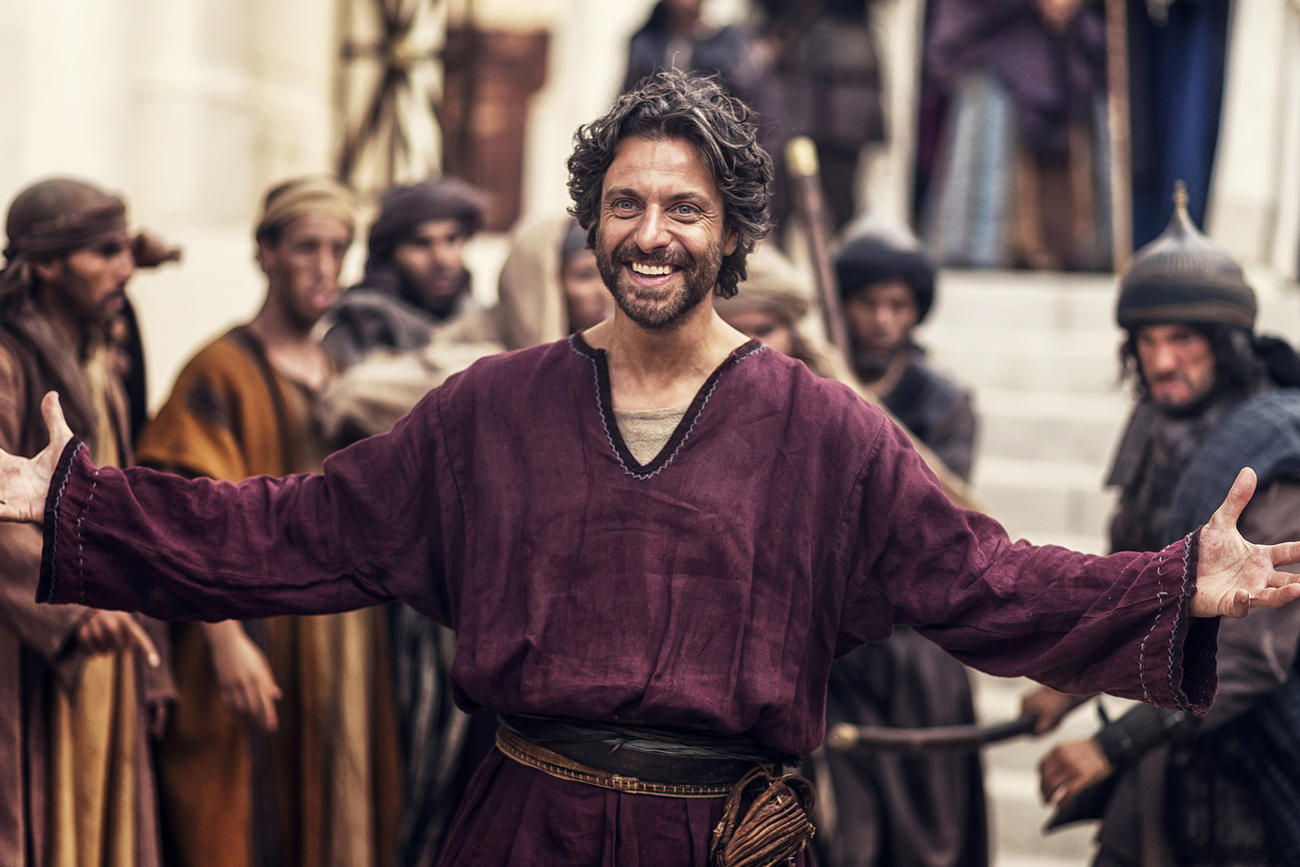
But TV in the end is no substitute for reading, and now I have a Kindle again I can read all the books I recently downloaded just before it finally died. These include the only book by Carrere which I can find on Kindle, The Kingdom, yet another excursus into the world of the first Christians, a theme which seems to have been trending recently, no doubt due to the near universal perception of imminent apocalypse. I even started watching A.D. the Bible Continues (2015) on Stan but that otherworldly gleam in Peter’s eyes is really getting me down. Actually I thought the first three episodes were excellent, but it became a bit repetitive after that.
Adam Levy as Peter
The thing is, you live with stories, and it matters how they reach you. TV has become a wonderful medium now that you can watch series the same way you read a book … you don’t have to wait until next week’s broadcast, you can just keep on and on and on until you absolutely have to get up and go to Aldi or clean up the cat vomit. Then the clever TV knows exactly where you got up to, and takes you directly back there. Just like the Kindle does.
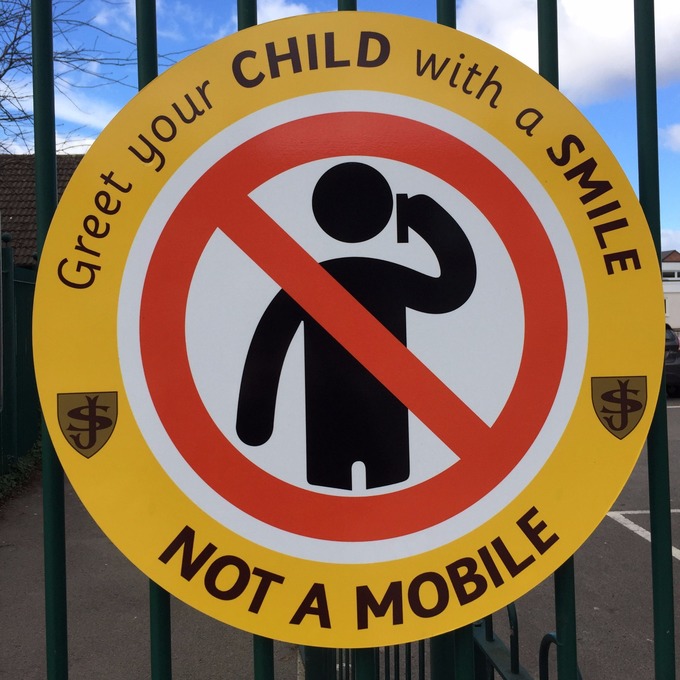
I can feel myself falling in love with my new Kindle, even though I’ve hardly even turned it on yet. What creates this powerful attraction? A lot of people have it with their mobile phones, almost unable to be diverted from them even by great moments in the Real World such as picking up your children from school. The recent campaign in Britain to get parents to actually look at their child when they pick the poor little thing up at the school gate marks just one moment in the process of human alienation we are in the midst of.
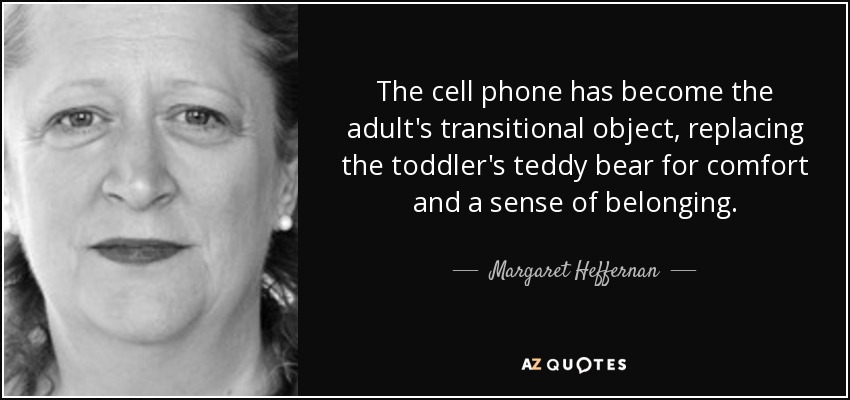
How to think about these object-obsessions? To cut a long psychoanalytic story short, it is a kind of transitional object. You know, the blanket the child carries around until it decays, the beaten up teddy bear, the Thing your little one just can’t be without. Some clever evil genius worked out that we never grow up, we humans, we go on looking for the comforts of childhood, and these days they’ve given us an electronic item instead of Blanky. I’m not the first to think of this, although I did feel disappointed when I found this quote:
The thing about electronic objects though is that they just don’t feel the same . How about making Kindle or phone cases out of woven feathers? I had a kind of feathered scarf when I was a small child and yes, obviously it came from my mother, and I needed it in the same way I seem to need my Kindle now. I just can’t go to bed without it, and if that happens then I can’t seem to write anything the next day. What The ????





 It looked as if new technology would link writers and readers all over the world and open up the artificial geographic zones which for half a century had been creating unnecessary boundaries around the best new writing. Readers were forced to pay absurdly high prices in some areas, including Australia, to accommodate the outdated business model. You might have thought the response would have been to change the business model, but no, that didn’t happen, and now things seem to be in some kind of weird spiral.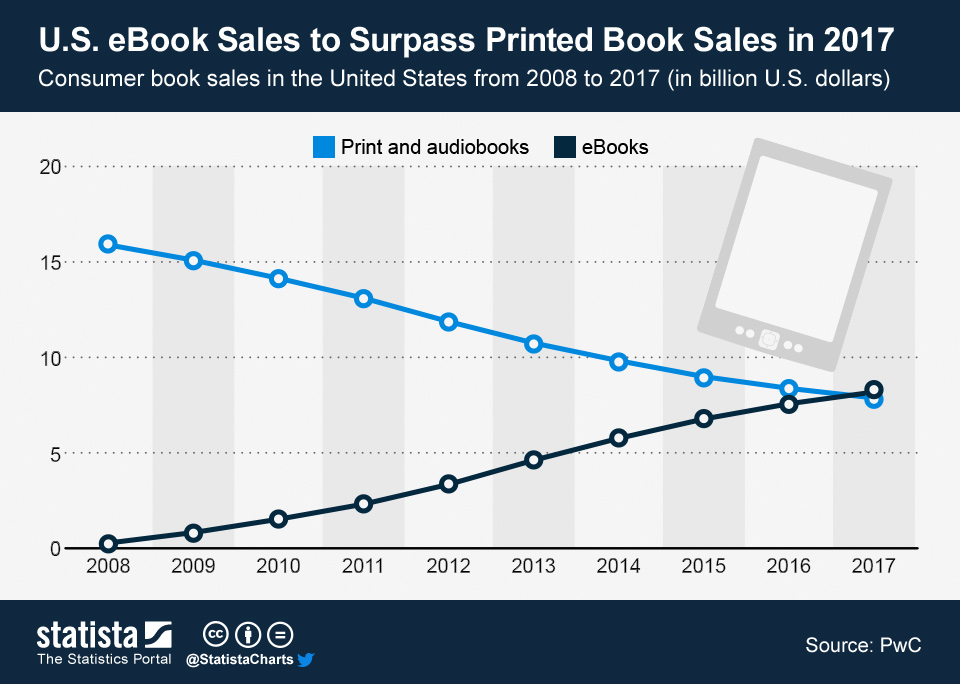



 Annette Hamilton - Writer