Authors, Editors and the Ethics of Publishing

Came across a book yesterday which brought into focus something that has been bugging me for ages. Blake Atwood’s Don’t Fear the Reaper: Why every author needs an editor is squarely aimed at the new writer, especially the new Indie writer – although any writer who has an editor will be enlightened by it.
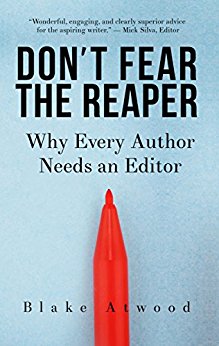
ReaperIt is a seriously good book, with lots of recommendations about how authors and editors can get on better together. But it made me feel very weird.

There are hundreds of books on Kindle right now and maybe thousands of blog posts directed at the emerging author who plans to self-publish. All this advice should help the publishing process and make the written work as good as it can be and therefore produce sales and success. Two recommendations stand out: get a professional cover designer! get a professional editor!

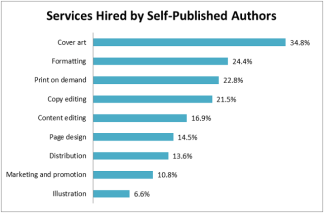
Cover designer, for sure. Unless you are great with Photoshop or comfortable with digital design software such as Canva, it’s not easy to get a great-looking cover. Of course there are now many automated genre cover services, where you buy a standard design and put your title and name on the front. Fair enough, as long as everyone else hasn’t chosen the same design. As time goes by and the competition on Kindle gets more intense, authors are feeling pressured to hire more and more services.  Is it really making a difference to the quality of self-published books?
services hired

Source: Digital Book World- Team Publishing 1

Editing? It’s obvious that many new indie writers haven’t followed that piece of advice. I download and read book after book by new or unknown (to me) indie authors. It’s pretty clear that the book hasn’t been edited properly or at all. My first reaction is always irritation, even exasperation. A good premise self-destructs in an incoherent plot. Not just one or a few but scores of grammatical errors make the book unreadable. A few typos? OK. But one or two on every page? No thanks. This book joins the others in my library with the dreaded “30%” score (or less). Just couldn’t be bothered finishing it. Why does this happen?
only one left

There are three kinds of editing: developmental, which picks up on structural flaws and can result in a total rewrite; copyediting, attending closely to grammar, expression and sentence structure to make the work “correct”; and proofreading to pick up those last typos or whatever. Great! But soon the penniless hopeful discovers that an editor expects to be paid separately for each of these and some only specialize in one. Atwood is mainly a copyeditor. Editing costs seem incredible. Over a thousand dollars for just one of these edits is common.

But hang on a minute. Why aren’t the authors writing their books properly in the first place? Why can’t they edit themselves? Is it that many writers can’t in fact write? And if editors do as much on a manuscript as they claim to do, who is really the author?

I was amazed when I realized the extent to which fiction was edited. Having published around one hundred academic papers, I was used to a certain level of editorial intervention, usually to provide clarity or reduce jargon or introduce some additional analytic viewpoint in a footnote. But the idea that someone would virtually re-write your whole paper, changing your intention, re-organizing the flow of argument, removing whole sections, deleting punctuation marks and in effect taking over the construction of your work was unthinkable. You were the writer. Anyone who hired someone else to do all that made the work fraudulent. It just wasn’t your work any more.  If your journal editor, having accepted your paper, chose to use an editor to make significant changes, that was an acceptable cost of being published in prestigious journals. But paying for it yourself?

The world of commercial publishing seems to take a high level of editorial intervention for granted. One of the first things in traditional publishing was to assign an editor to an author. Sometimes authors mention their editor by name, more often than not the existence of that person is completely hidden. Why? If an editor has had so much input into your work, then why isn’t that person acknowledged as a kind of author – if not a co-author, perhaps a writing associate? While it is obvious that proof-reading and minor corrections will always be required, how can the interventions of a copyeditor, let alone a developmental editor, entirely unacknowledged, be justified?

There are a set of conventions about writing which increasingly determine what will be accepted as “good” in its field. Genre fiction is one thing, literary fiction another. The hidden truth is that literary fiction is largely for people with a better education. Hundreds of Amazon reviews moan and whinge about “big words” or books being “too hard to read”. I just last night read a review which gave one star to a book because of the long words in it. The writer complained that it claimed to be a thriller but really it was a book for the “literary elite”.

literary cocktail party

A literary cocktail party at George Plimpton’s Upper East Side apartment, 1939.

Traditional publishing kept control over writing and reading by maintaining a reasonable level of quality control over what was published. And editing was key to this process. Even popular thrillers and romances were edited to maintain something like an acceptable standard of literacy. Indie publishing has thrown that out the window. Anyone can write and publish anything. This seems powerfully democratic. But is there a necessary standard for writing? Shouldn’t books be literate, even if they are not literary?

What if authors don’t agree with their editors? Blogs and forums are full of horror stories about new writers paying editors thousands of dollars only to find their recommendations unacceptable. If you have a contract with a publisher then the editors is likely to be the winner in a catfight. If the author is paying the editor directly, what then?

If you look closely at the advice to new writers, the people who write about how badly you need an editor are almost always editors themselves. It seems that they are right. Like Atwood, many have also published books on how to publish books. That is a good marketing strategy, especially with the bottomless pit of would-be authors filling up by the day. But new writers don’t want to spend money. They just want to write their books and publish them. Hmm. A problem: nobody wants to buy them. Read the forums where countless authors complain that nobody has bought their books. So they are encouraged to give their books away free, or almost so. What kind of product is this?

You can get ultra-cheap editing, of course. Thanks to the internet someone on the other side of the world can be your editor. So what if their English isn’t too great! They can do your “updation”, your Head-Noting and even write your blog!

sodhanis

It’s a minefied. I don’t want to read books which have been radically altered by an editor. I want to read what that particular author says, and to see exactly how she or he says it. It’s part of the fun of reading. If the writing is bad, so bad that I can’t enjoy the book, then I won’t buy anything from that author again. On the other hand, so many new authors write such bad books. They have awful holes in the plot or drag on too long or have blatant unexplained contradictions, and I know how much better the book could have been if someone had “edited” – in effect re-written – it.

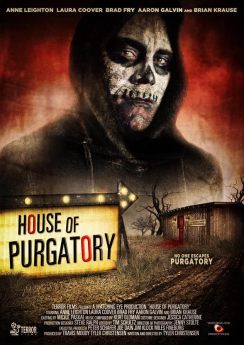
I feel sorry for these authors. I don’t want to discourage them, so I don’t leave negative reviews. Neither does anyone else. Without an editor, or some form of independent feedback, how are authors to know their books are just not good enough? Then again, I feel sorry for their editors, if they are eventually hired. Working on badly written manuscripts, toiling over silly or boring or pompous or pointless stories and trying to make them better must be one of the most soul-destroying forms of employment imaginable – a marriage made in purgatory. [Hey, there’s a concept: a writer and an editor locked up in some horrific warehouse, in a remote derelict landscape (think Tarkovsky), going to suffer a  gruesome fate if they can’t agree on final edits. If you want to develop it, let’s collaborate!]
House-of-Purgatory_03

Proofreading is another thing. Everyone needs a proof-reader. Errors creep in, typos happen and the malign influence of the spell-checker has to be remedied. I don’t know how necessary it is to hire a professional proof-reader. Maybe any two or three people who are good readers would do.

What do you think? Should editors be acknowledged, perhaps by name, when they have been hired to work on a book? Or should writers just learn to write better in the first place?




Should writers pay their readers?

chicken_house_wikicommons_wide

Indie writers at work

Writers are born, or so they say.  Problem is, publishers don’t have room for them all.  They have weird criteria about what they are willing to publish. They hate the slush pile. Then along comes self-publishing. The freedom to write what you want at the length you want to write it, to publish it to a potentially world-wide audience and to control every aspect of the process! Perfect. And when the writing is finished – voila! A few fiddles on the computer, a cover of some kind and that should be it, right?

Well, we know now how wrong that is. The labyrinth of self-publishing discloses itself  with consummate cruelty. Soon the writer’s brain is entirely occupied with technical issues, spending sleepless nights scouring the internet as the poor sap slowly learns that the actual writing is both the most and least important element in this process. Moreover there are hundreds of thousands of others all doing the same.

As self-publishing has exploded the author has to become an author-preneur and master a thousand arcane skills. The easiest method is to hire someone else to do it all and pay them. That way your book will definitely be published, in e-version and print version, and you have become a “real” author. There are hundreds of agencies now offering these services, with all kinds of bells and whistles: editing, covers, conversions to different formats, uploading. But it costs! So there is your book but now nobody is buying it. What to do? Marketing…. Oh, that costs more again! And here are more agencies willing to take your money to do it for you. Or you can do it yourself at minimal cost but it still costs. Professional reviews at $500? (Biggest ripoff of all – that’s Kirkus).

Very few authors ever reveal what the whole process actually costs them and what income it produces. One recent exception is US indie author Joynell Schulz who has generously shared through her blog everything she has been going through to get her first book out there. Find her at http://www.joynellschultz.wordpress.com

In her most recent post she sadly recounts what it has cost her so far, and what her sales have been. Short answer: nothing like enough to recover costs. So now she is investing more in various marketing approaches. Good luck with that Joy!

One author who has shared his writing costs and income is Jim Chimes. He has put up his figures for several years now. It is worth noting that he is a hybrid author, with an agent and a traditional publisher. He also publishes short works and some other stuff as an indie. His income has increased steadily over the years and he is now making a good-enough living from his writing to give up other employment. What a reassuring message!

http://www.jimchines.com/2016/01/2015-writing-income/

His most recent posts analyse the results of a survey he carried out among a variety of writers – indie, trad and hybrid. They all wrote novels: non-fiction and short fiction was not included, although of course if a novelist had also published shorter writing that income would have been presumably included. This makes very interesting reading. It shows a huge variation in the annual income from his respondents. The most surprising finding is that indie authors even after deducting their costs have the highest median income – higher than authors publishing through both large and small presses. Eight novelists made more than a million dollars last year and some of them were indie authors. The average income across all the respondents was around $17,000. Overall authors publishing with large publishing houses and indie authors made around the same average income.

A key to being a successful indie author, though, is to be able to manage the thousand tasks which a traditional publisher would otherwise manage. Here is where much of the expense comes in, and the strategies required to be a successful author require a lot more than writing. But what happens when all the strategies are followed but the writing itself just isn’t all that great? Every author who is self-publishing has to ask hard questions, ultimately about their books. And their audience, genre, style, look – and how fast they can work. Jim Chimes’ figures clearly show that full-time authors – those who do nothing professionally other than manage their writing career – make many times more than those writing part time. But the books have to be good enough, and there have to be a lot of them. It’s a bit like a production line. But if your books aren’t selling, then there’s no alternative to writing part-time. Chickens and eggs!

Maybe it’s better to think of writing books as a kind of personal entertainment, an expensive pastime like owning a race-horse. You might never get your investment back, but if you enjoy the thrill of the track, go for it! Or, if you disapprove of racing, maybe yachting or flying would be an appropriate analogy. Either way, you can spend all your time doing something that engages you even if it costs. So many writers on their blogs and in comments say that they don’t want to make money from their writing, but they don’t say they are happy to lose it. But maybe that’s what it takes to be a successful writer these days. Next thing the writers will be paying the readers to read their books. Hmmm. That definitely has potential!


https://joynellschultz.wordpress.com/2017/02/16/lessons-learned-60-days-of-selfpublishing/


2015 Writing Income

The Indie publishing community – and some thoughts on pricing your e-book.

One of the real pleasures of the Indie publishing world is coming across new writers and publishers you might never have found without the burgeoning online community. I love hearing from new authors and finding out what they are doing,  and really appreciate the amazing inventiveness and generosity so many show.

I just found a great post by one of my visitors, Joynell Schultz. Joynell writes speculative fiction, something I’ve never tried. In her most recent post she describes all of the techniques and strategies she tried to get her first Kindle book “out there”, what worked and what didn’t. Read her post here and take a look at her book. love-liesYou can buy it on Amazon at the current price of $2.99 (she started at 99c) and you can download six chapters free – she will tell you where in her post.

I do want to make a bit of a demurral here. While publishing free chapters may be a good way to get readers interested in your work I am not so sure about the wisdom of selling books on Amazon for 99c, or worse, making them “free”.  If you think that is what your work is worth, why would I want to read it? If you write purely to find readers, put your work on your website or one of the sharing sites such as Wattpad but don’t put  it up on Kindle. Amazon is a commercial site where people who want to sell their work meet other people who want to buy it. I can see an argument for 99c short stories or novelettes – maybe – but novel length work which has been invested with love and care, edited properly, with a good cover and hopefully a good story MUST be worth more than one dollar or worse, zero. I guess the next step is to pay people to download your book!

At the other extreme, traditional publishers are getting way with murder, pricing their e-book versions at absurdly high prices to artificially prop up the print book market. Don’t think you are doing the authors a favour by buying their e-books – the contract will ensure that the publisher still gets most of it just as if it was a print book, even though it costs them nothing to make available in digital form, so it’s all more profit for them.

There are millions of readers in the world. A lot of them want to read for free, so good, let them, give it to them however you like but don’t call it a published book. Others want to buy books for their collection. I have bought hundreds and hundreds of ebooks for my Kindle collection over the years and I don’t plan to stop. But I’m not going to clutter it up with cheap stuff. Sometimes I’ve tried something for a couple of dollars and usually I can’t be bothered reading it past the first chapter or so. If it’s annoying enough I might delete it altogether.  Until recently I didn’t write reviews of books I thought were bad, but I think the time has come when those of us who buy Kindle books call them out when they are terrible. Amazon reviews seem to determine which books succeed by getting noticed in the first place. Amazon itself has tightened up on the review process. Now they could tighten up even more by banning full-length books priced below $2.99.

If you’ve written a good book, price it properly to reflect that. Good on you, Joynell, for raising your price. You’ve got good reviews and  your second book should have eager readers waiting.


More cautions for Australian authors: Amazon reviews and a conspiracy theory.

I don’t know if I’ve missed something people have already commented on in other blogs or forums – should I have known this already?  – anyway, I have just grasped another big problem for Australian authors publishing on Amazon. If your Australian readers are in Amazon.com.au, buy your e-book and leave a review, that is where it will appear. Australian reviews will not appear on the US site. So unless you find a way to get  readers to leave reviews specifically on the US site, your book will languish unattended in the world’s biggest English-language market. Why don’t the Australian reviews appear on the US site? Why has Amazon apparently co-operated in recreating the kind of geo-restrictions which global digital communications was supposed to end?

I am generally not given to conspiracy theories, but it does look to me like some kind of deal was done when Amazon first made a push to enter the Australian market. I recollect there was vast opposition from the regulation publishers and literary players – oh dear no, we don’t want that horrible Amazon behemoth here, we must preserve our national cultural authenticity – now it turns out that the only books available through Amazon here in Australia are Kindle versions.  Since Australian readers have been brainwashed to believe that print books purchased through bookshops are far more worthy than e-books anyway, this ensures that traditional print publishers retain a dominant position in the market.

I worked this out just recently when I was reminded to get hold of the late Bob Ellis’s collected/curated writings, posthumously published in late 2016. bob-ellis-book-coverIt is a collection of previously published articles and personal memoirs, many going back to the 1970s, assembled by his wife Anne Brooksbank as a kind of memorial volume.
Googling, there were plenty of paperback copies available from different booksellers in Australia. The price was uniformly above $30.00. Booksellers’ sites listed only the print version. Kinokuniya in Sydney listed the on-line price at $34.99. At first I thought this referred to an e-book version but no, that was the price if you ordered the print book online as against through the bookstores “card members” price.

As far as I could see, there was NO e-book version available through any of the Australian booksellers. As I have a firm policy of never ever buying a print version if there is an e-version available, I thought I would try Amazon.  I have always kept the Amazon.com US site as my main site. So there it was: Bob Ellis In His Own Words at $11.87.  That is pretty high for a Kindle book, but way better than $34 or $35. And yes, there is a Kindle version on the Australian site, at $16.14. It is also available on Kindle Unlimited in Australia, for subscribers. But the US paperback is priced at US$34.99, which would make it over $40 for an Australian purchaser who would then also have to pay the very expensive postage.

So somehow Amazon is able to trade in Australia without significantly disturbing the traditional publishing ecology. Publishers and booksellers maintain the impression that there are no e-book versions. Amazon offers a Kindle version in Australia, but no print version, and in the US the print version is priced too high for any Australian purchaser to bother with it. A kind of cartel agreement, or just a happy accident to keep the Australian publishers happy? Whatever, the total effect is to disenfranchise Australian authors trying to write and publish outside the limits of the good-old-boys-and-girls publishing environment in Australia. So if you want to be a success at independent publishing, you really need to get up there on the US site and attract the  US readers. Your e-book will turn up on the Australian Amazon site but only if the reader knows to look for it there.  How this assists our national cultural authenticity I don’t know, especially when Australian publishers are unwilling to publish anything from new writers and are reducing their lists all the time.


by firstly deciding not to make any self-published Create Space books available in Australia

Amazon’s Australian Site: Authors Beware

skywind-1It’s hard to navigate the dangerous shoals of self-publishing. It took me the better part of a year just to get an already written story ready for the publishing process – editing, formatting,  negotiations over cover (and illustrations), first round of corrections, loading and reloading files, finding and correcting mistakes, reloading files yet again —2016 was coming to an end and I really wanted to get this book out. I had already decided publishing through Amazon was the obvious way to go.
It was my children’s book The Priceless Princess which was the test case. Things got complicated when I had to go into hospital for major knee surgery in early November so I was rushing to get the book ready for Christmas. My dear friends at Ciao Magazine in Sydney gave me some free publicity. The Kindle version went up through KDP, it was easy and gratifying once I worked it out.  There was my book online, with its great cover! I had a Facebook author page! The book had its own website! I had it up here on my main writing site! What could go wrong?

Time went by and suddenly there was a notification of a payment. It definitely wasn’t anything I expected, and not in a good way. I mean, yes, it was a payment, and that was welcome. But there were no sales!  Because the book was enrolled in Kindle Unlimited, US readers could read it and I was paid by the page. Well, it’s a pretty small book, and not many readers read it – and since it’s a children’s book, children themselves could not read it, unless their parents had given them Kindles, or let them read on their own. That’s why I published a print copy on Create Space, so they could order copies for their kids. They didn’t, so I thought they probably didn’t like it that much. Too exotic and scary?

But where were the Australian sales? None at all? It’s a very Australian story. Anyone who looked at the website on Amazon should realise this if only because of the bilbies and green snakes on the front cover. Australians aren’t so into Kindles, and they don’t buy them for their kids. They ought to go for the print version. I thought I’d priced it pretty well for the Australian market. This stuff is all about marketing, the elephant on the keyboard in the new writing world. Hidden traps, a thousand perils, it can make you pretty narky.

I thought I knew what I was doing, but I didn’t. It took weeks to get myself back in gear enough to work out what was happening. Today I discovered for the first time that AMAZON DOES NOT MAKE ANY CREATE SPACE  BOOKS AVAILABLE TO AUSTRALIAN CUSTOMERS  using the Amazon.com.au site.  Since they have been very actively persuading Australian customers to switch to the Australian site, this means that Australian authors who have published on Create Space will not even have the availability of their books noted on the Australian website!  And presumably potential readers are not going to know this, and so will assume there is no print version. Apparently the same has been the case in Canada, another place where I thought customers might like the book.

In the process of checking this out, I then discovered that the Kindle version, which I had originally put at US$2.99 had somehow magically transformed in the Australian Kindle store into something over $6.00. Nobody is going to pay that for a short children’s e-book. I have no idea what made them set that price, but I see that they are in fact at liberty to set any price they like.

So no wonder there haven’t been any sales. Well, there was one, but it was returned. I don’t know what to make of that. Meanwhile I got a batch of copies sent over from Create Space, at considerable expense, and I gave lots away for Christmas presents. Great feedback from the readers who especially enjoy that great cover and the way the illustrations worked with the text. I am not so happy with the internal layout, it is printed too close to the binding, but it’s fine for this first print version. If you happen to read this and want a copy of the book to give your kids, click on the tab above “Children’s Stories” and you will see how to get a real-life print copy of this version for the great price of $A5.50 posted anywhere in Australia. There will be Paypal option soon too.

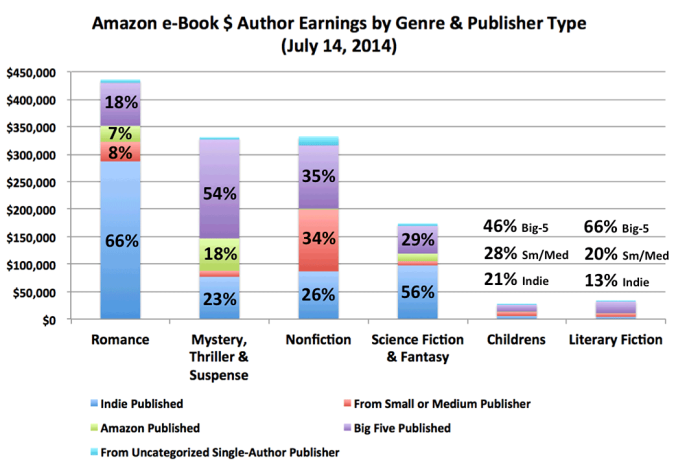
So this is all about learning. Am working now towards getting my first book of short stories ready in the next month or two, and I won’t make the same mistakes this time. I do wish there was a comprehensive site or book specifically for Australian authors wanting to go the self-publishing route. The domination of Amazon in the US and international e-book field has made it pretty much inevitable that writers will go with them more-or-less automatically, but there are a lot of traps there and the complications are vast. And of course the demand for children’s books is infinitesimal anyway, at least beside those staggering Indie romance figures. Even less than literary fiction!

author-earnings-by-genre-and-publisher-type-5

Indie publishing and the Amazon Maelstrom of Doom

derelict-books

I was a very early adopter of Amazon e-books. I opened an account straight away and I still have a collection of ancient Kindles with their grey screens and clunky keyboards. Once I realised the possibilities of self-publishing through Amazon I thought that might be for me. I knew a lot about conventional publishing especially in the academic field. But I had also looked into commercial publishing and knew some well-known published writers. Drusilla Modjeska is a kind of relation (my second husband’s first wife) and we had talked about the literary scene since the 1970’s. Still talking in the naughties, I tried to persuade her that Indie publishing was the way of the future but she, like most Australian literary figures, considered it completely unacceptable and infra-dig. I couldn’t persuade her of its virtues no matter what I said. Of course she already had a publisher and a secure literary reputation, so I can see why it wouldn’t have appealed.

By the time I was getting ready to publish my fiction and memoirs, it was another scene altogether. Traditional publishing had become almost impossible. The old literary circles were dying off and the Big Five international publishers had swallowed up one after another of the smaller presses. Agents at least in Australia just wouldn’t look at debut authors unless they seemed like literary prize material or were writing self-improvement texts or cookbooks and even then they had to have a profile on TV.

Self-publishing, or publishing through small presses, had indeed picked up the baton and become not merely successful but a huge industry with an entire infrastructure of its own.The demands on the independent writer now included the ability to manage all the things the old trad publishers had done, and as standards increased so did the expenses. And as the number of services for self-published authors bloomed, so did the number of titles, all neatly divided into nifty genres and subgenres which often bore little relevance to the actual book the author had written. There seemed increasing pressure to write to distinctive niches: alpha billionaire S and M, historical vampire fiction, sweet Amish romance, a whole submarket in stories about Mormon polygamy. Marketing became the watchword, but how to achieve it without paying for a marketer, with no guarantee of ever getting your investment back. The old days when the writer handed over a bundle of typed pages and received a cash advance began to look halcyon.

The Amazon publishing ecology is fantastic and offers every support to the writer, except the crucial one, namely, how to persuade readers to buy your book. The rise of Amazon’s own imprints is having another kind of impact, more on that later.

The glories of self-publishing are looking increasingly tarnished right now. In late 2016 the graphs of sales and income for Amazon self-publishers began to drift downwards for the first time in five years. Millions of e-books are washing around on Amazon and a few other platforms. Some estimates suggest that there are 5,000 new books published on Amazon each day. It’s almost impossible for readers to find good quality writing, the kind of book which is not repetitive trash genre fiction. Not to mention the ghastly low standard editing and typos in so much of it.

There is a huge market of people who love to read and appreciate the e-book format and like the low prices knowing most of it is going to the author but they want to read real stories with a certain kind of “truth”.  The enormous success of Sydney writer Liane Moriarty is an example. Liane is a really good Australian writer who tells well-crafted stories about real lives which readers can recognize. I found it at first unbelievable that her stories, set in Australia, were being snapped up by legions of American fans. She is almost completely unknown in Australian literary circles and certainly will never turn up on a literary prize listing. Her readers are not necessarily  part of the cultural elite, but they are still serious readers, who  get lost fast in the wilds of Amazon and will be generally turned off by the oceans of junk and rubbish now swirling about in the maelstrom. It was good luck as well as a good product which brought Liane to her readers at a time when Amazon/Kindle hadn’t reached the stage of terminal bloat and ultimate Doom.

We urgently need some method of curation which doesn’t go through the conventional route and can open a space for e-book publishing for serious readers and writers who want to engage with the new world of online publishing. That’s the number one challenge now, it seems to me.

200px-doom_3_maelstrom