Kindle Interruptus

Regarding Kindle, I was a very early adopter. In spite of the endless anti-e-book raves from all sides in Australia when the first Kindles came on the market I couldn’t wait to get one. Even those old clunky grey things with weird counter-intuitive buttons here and there were just great. oldkindle 1I could take big chunks of my library anywhere. I was never without a book. I could buy something at 3.00 am in a steamy Bangkok hotel-room where the reading light was 30 watts or didn’t exist at all. I could read on a plane or in a restaurant. So what if every new and important “real” book didn’t exist on Kindle. It meant I would read things I otherwise would never even know about.

kindle-fire-lineup

And so it has been. Kindle #4  died and Kindle #5 has just arrived. All I have to do is set it up. I was really p****d off at the death of #4. It was still relatively new and in perfect condition but that stupid battery thing happened and after all kinds of different recommendations it was clear that the battery just wasn’t taking any new charges thank you very much. It had had it. Everything else is perfect, there isn’t a mark on it, and I just don’t know what to do with it – such a waste to just throw it away. Maybe there is a Kindle Re-Purposing program somewhere.

I dithered about what to replace it with. There are so many choices now and the latest and best seems to be incredibly expensive and it is a read-only device, it doesn’t operate as a tablet, which the Fire HD did perfectly well. What to do? The 2016 Fire model seems to be pretty much exactly the same as the old one which no doubt means it too will have the dead battery problem in no time. But if you get the read-only device you have to go to bed with an I-pad or use your I-phone to connect to the internet every time you want to find out what year some book by the same author was written, or whether or not some historical detail in your tartan romance is in fact true or even vaguely so. This is the kind of thing I do at 3.00 am most days.

bed book and kindle

And in my indecision I didn’t order anything and next thing I was ordering real actual books. In my Kindle Interruptus phase I bought a collector’s edition hardback of Marilla North’s Yarn Spinners (gorgeous, but big and fat and so heavy) and two paperbacks from new darling French literary figure, creative nonfiction writer Emmanuel Carrere. Had to order these from Book Depository, they got here in no time. Of course none of these books are available on Kindle. I probably would have ordered Carrere’s books anyway since he is said to be a pareil with Michel Houellebecq, supposedly a fiction writer, although the line between them is pretty fine. Started reading Limonov by the pale and feeble bed lamp and then I couldn’t put it down and finished up with a big headache and not enough sleep. This reminded me why I can’t stand “real” books. They are so hard to manage in bed and that is where I do all my reading.  But I’m glad I found Carrere. I’ll write something about his stuff shortly.

Meanwhile I ordered a 2016 Kindle Fire HD. Am about to set it up. It’s like the start of a whole new intimate relationship, and I feel quite scared about it. Not just because I hate setting up electronic gizmos anyway but mainly because I fear this might be my last Fire and soon ahead of me lies an even more bizarre tangle of chargers and wires as I go to bed each night with a read-only Kindle, a mobile phone and some kind of I-Pad device. Just as well I have a large bed!

wires-tangled


Snobs, the Canape Set and the Dummy Spit

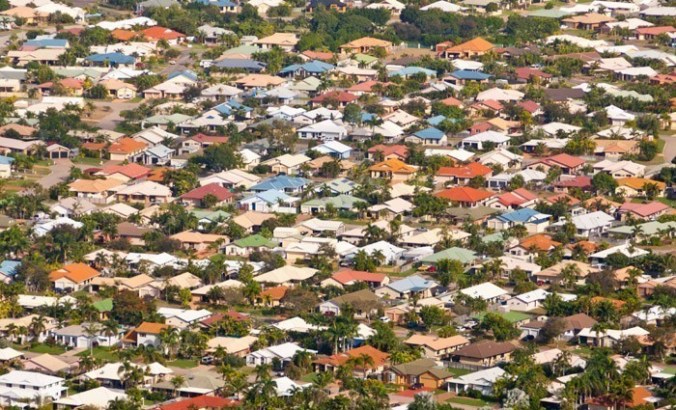
Cindy Fazzi’s recent post “Six Signs of a Literary Snob” here reminded me of the vehement debate around the effects of cliques formed around creative writing courses and literary journals in Australia which erupted in 2016 and resulted in a wild outburst from a young Australian author in that revered Melbourne literary journal Meanjin. Luke Carman has runs on the board. He has published short fiction in local journals (HEAT, Westside, Cultural Studies Review) and has been on the shortlist for a few recent prizes. He has published a book of short stories (An Elegant Young Man) and tutors in creative writing at the University of Western Sydney… but there are two strikes straight away. Short stories are considered somehow mildly deplorable and definitely not a mark of “real” literature, and Western Sydney – which means anywhere between Ashfield and Wentworth Falls – is by definition not a site from which worthwhile literary forms could possibly emerge.

australian-houses-aug-12

Luke spat the dummy in a big way. He said that Australian literary endeavour had been infiltrated by “wannabes” who were “dictating terms for an artform to which they contribute nothing but their lordly presence”. Luke was taking on the prevalent literary snobbery in Australia which seems to be flourishing more vigorously than ever, especially regarding the books that agents and publishers are permitting past the starting gate, and in the award of literary prizes and other marks of distinction.

Cindy’s go-to list for the literary snob:

  1. Reads only literary fiction; absolutely no commercial genres for this reader.
  2. Refuses to read self-published books.
  3. Refuses to read any best seller, even if it’s literary.
  4. Doesn’t like to read feel-good books or happy endings. The more depressing a book, the better for this reader.
  5. Doesn’t like to read “easy” books. The more incomprehensible, the better.
  6. Won’t read a novel published after a certain decade or period (e.g., nothing after the 1960s or after 19th century, etc.)

This fits the Australian scene perfectly, except for #6. The literary world here is mainly devoted to recently published works from authors who have already made their mark on the Ozlit scene. Debut authors need to have come through a Creative Writing program in one of the main universities and consequently enjoyed Fellowships and residencies in prestigious programs. They are usually championed by an important figure, preferably a famous writer, who refers them on to agents and publishers. Agents and publishers want books whose themes resonate with the current cultural obsessions – indigenous dispossession, gender-based suffering, migrant disaffection, the struggles of the repentant drug addict – and have no interest in books which engage the general popular audience, those which sell well because of their exciting plots and “easy” writing. As for the happy ending, who could take that seriously?

Sept_Liane_Moriarty_QA_700x400

A great example is the spectacular but largely culturally invisible writing career of Sydney author Liane Moriarty, recently dubbed “the most successful Australian author you’ve never heard of”. I came across her work entirely by accident, wandering about on Kindle as I do most nights, exploring new things to read. I couldn’t believe it. Here was a woman writer, offering great fiction about a Sydney I knew, so recognisable, real places and real (often horrible) Sydney people! I loved the first of her books and then bought and read all of them in quick succession. Now she can’t write fast enough to meet her reader’s demands. This is a writer who has sold six million books around the world. Her books are hardly light-weight. They address the dark side of Sydney suburban life in a way never written about before. Her endings aren’t “happy” although they aren’t necessarily tragic either. They are well-written, lovingly crafted and you can’t put them down. Now Nicole Kidman and Reese Witherspoon are starring in the movie adaptation of her smash-hit “Big Little Lies”. Oh, OK, there’s the problem right there! She is successful! People want to read her books! She’s sold the film rights! And she’s writing about Sydney suburbia. Not good among the Melbourne establishment which pretty much dominates the literary scene these days, or so everyone seems to agree.


luke carman 2

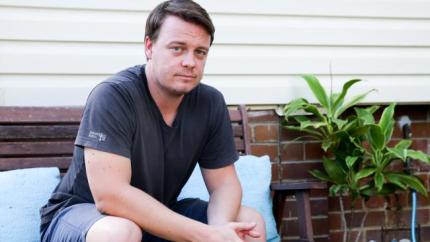
Meek and mild Luke Carman

So what about Luke Carman? He’s writing about Sydney too, but it’s a Sydney even Liane Moriarty’s fans won’t know much about. Set largely in his home-suburb of Liverpool, the characters in his stories reflect the turbulent and sometimes bizarre reality of contemporary life for the young in Western Sydney. They are addicts, poets, people who see ghosts, Lebbos, Grubby Boys, scumbag Aussies. His alter-ego writer loves Whitman and Kerouac and Leonard Cohen. The book is full of energy, edgy street-scenes and local voices, really INTENSE as the younger generation say. I loved his book, published by Giramondo, which  is a pretty respectable local publisher, and wondered what had led to his “spray” in Meanjin here. It’s a wonderful but complicated essay, full of rage and bile. Many would join me in saying, “Luke, I feel you”.

Luke2-4

Luke Carman in full flight

Without doubt the Australian literary scene is self-referential and highly conservative. Obsessed with its own preservation, denying the validity of the e-book, loathing self-publishing, there seems to be in a kind of retro-neo-colonial suspension going on here. New forms of expression and new kinds of stories are ignored or, more accurately, not even recognised.

The overlap and interplay between visual and written culture is at an exciting place. As long-form television is replacing the standard movie, new strategies of writing (the long-form literary equivalent, as practiced by Knausgaard for example) opens up a new trajectory reminiscent of Proust. Screen-writers write fiction and turn their fictions back into television series – thinking here of that fabulous 2016 series Good Behaviour – and “books” can be as long or as short as writers like and readers enjoy.

good behaviour 1

It’s become a terrible struggle for the conventional author trying to get “the book” published in print. The e-alternative is terrible as well, especially trying to find a market with the five million books now available online. But writers can’t help themselves, they like to write, and readers like to read, it’s a question of finding new ways for them to get together. The canapés and champagne Harbourside set may still be seeking their Bourdieuan distinction, but there is a lot more to the writing scene now, thank goodness!


Should writers pay their readers?

chicken_house_wikicommons_wide

Indie writers at work

Writers are born, or so they say.  Problem is, publishers don’t have room for them all.  They have weird criteria about what they are willing to publish. They hate the slush pile. Then along comes self-publishing. The freedom to write what you want at the length you want to write it, to publish it to a potentially world-wide audience and to control every aspect of the process! Perfect. And when the writing is finished – voila! A few fiddles on the computer, a cover of some kind and that should be it, right?

Well, we know now how wrong that is. The labyrinth of self-publishing discloses itself  with consummate cruelty. Soon the writer’s brain is entirely occupied with technical issues, spending sleepless nights scouring the internet as the poor sap slowly learns that the actual writing is both the most and least important element in this process. Moreover there are hundreds of thousands of others all doing the same.

As self-publishing has exploded the author has to become an author-preneur and master a thousand arcane skills. The easiest method is to hire someone else to do it all and pay them. That way your book will definitely be published, in e-version and print version, and you have become a “real” author. There are hundreds of agencies now offering these services, with all kinds of bells and whistles: editing, covers, conversions to different formats, uploading. But it costs! So there is your book but now nobody is buying it. What to do? Marketing…. Oh, that costs more again! And here are more agencies willing to take your money to do it for you. Or you can do it yourself at minimal cost but it still costs. Professional reviews at $500? (Biggest ripoff of all – that’s Kirkus).

Very few authors ever reveal what the whole process actually costs them and what income it produces. One recent exception is US indie author Joynell Schulz who has generously shared through her blog everything she has been going through to get her first book out there. Find her at http://www.joynellschultz.wordpress.com

In her most recent post she sadly recounts what it has cost her so far, and what her sales have been. Short answer: nothing like enough to recover costs. So now she is investing more in various marketing approaches. Good luck with that Joy!

One author who has shared his writing costs and income is Jim Chimes. He has put up his figures for several years now. It is worth noting that he is a hybrid author, with an agent and a traditional publisher. He also publishes short works and some other stuff as an indie. His income has increased steadily over the years and he is now making a good-enough living from his writing to give up other employment. What a reassuring message!

http://www.jimchines.com/2016/01/2015-writing-income/

His most recent posts analyse the results of a survey he carried out among a variety of writers – indie, trad and hybrid. They all wrote novels: non-fiction and short fiction was not included, although of course if a novelist had also published shorter writing that income would have been presumably included. This makes very interesting reading. It shows a huge variation in the annual income from his respondents. The most surprising finding is that indie authors even after deducting their costs have the highest median income – higher than authors publishing through both large and small presses. Eight novelists made more than a million dollars last year and some of them were indie authors. The average income across all the respondents was around $17,000. Overall authors publishing with large publishing houses and indie authors made around the same average income.

A key to being a successful indie author, though, is to be able to manage the thousand tasks which a traditional publisher would otherwise manage. Here is where much of the expense comes in, and the strategies required to be a successful author require a lot more than writing. But what happens when all the strategies are followed but the writing itself just isn’t all that great? Every author who is self-publishing has to ask hard questions, ultimately about their books. And their audience, genre, style, look – and how fast they can work. Jim Chimes’ figures clearly show that full-time authors – those who do nothing professionally other than manage their writing career – make many times more than those writing part time. But the books have to be good enough, and there have to be a lot of them. It’s a bit like a production line. But if your books aren’t selling, then there’s no alternative to writing part-time. Chickens and eggs!

Maybe it’s better to think of writing books as a kind of personal entertainment, an expensive pastime like owning a race-horse. You might never get your investment back, but if you enjoy the thrill of the track, go for it! Or, if you disapprove of racing, maybe yachting or flying would be an appropriate analogy. Either way, you can spend all your time doing something that engages you even if it costs. So many writers on their blogs and in comments say that they don’t want to make money from their writing, but they don’t say they are happy to lose it. But maybe that’s what it takes to be a successful writer these days. Next thing the writers will be paying the readers to read their books. Hmmm. That definitely has potential!


https://joynellschultz.wordpress.com/2017/02/16/lessons-learned-60-days-of-selfpublishing/


2015 Writing Income

Bite Me on the Barcode: More on Pricing and POD for the Aussie author

In my last post here I confessed to some serious doubts about the effects of “selling” your books for free, not just on the individual author, but on the indie ecosystem as a whole. Since then I have entered a NWOP (and it ain’t Fifty Shades). What to do with that second white square at the end of your ISBN barcode?

I published my children’s book The Priceless Princess with Kindle and Createspace just a couple of months ago. I had already purchased my own ISBNs which I used correctly, one on each version. Book came out, very cute, set a low price for the print version thinking of my Australian readers who would have to pay the US dollar price. Dumb me only then realised that Amazon in Australia does not sell any print versions. Australian readers would have to go to the US site, purchase in US$ and then pay a fortune to have the book posted to Australia. Or buy copies from my website. So I order a bunch of copies from Createspace and lo! I am paying  dollars per copy just to have them posted to me in Australia by the only postage option available through Createspace.

Don’t want to do that again, so I would have to do what everybody recommended and get the print version onto Ingram Spark, who do print in Australia. I download their nifty Cover Generator and it asks do I want to set a price in the barcode. What? So I go back to my Createspace version and notice for the first time that there is a code adjacent to the ISBN, and it is Code 90000. For a minute or three I am diverted by the idea that this could be a great title for a thriller, although Code 9000 would be better. But back to matters at hand! This code turns out to mean that no price has been set. Should I set a price? What price should it be – the same as the Createspace one on the Amazon site? But that is in US$ and obviously for people who are in the US.  I need these books asap, so to save time I decide to use the Amazon price in the barcode so I send the  Cover Generator to my illustrator who is putting the files together. But I am uneasy about it, and go into research mode. Should I have put the price in the barcode, or not?

Of course there is no clear answer. I email Ingram Spark, they email back almost immediately (great service by the way) to recommend that no price be put in the barcode because if you ever change your price then you have to reprint the cover and upload the new one, decommissioning the previous one. But other sources say bookshops won’t stock books that don’t have prices in the barcode. Codes begin with a number indicating where the book is published and priced. 5 is for the US. 3 is for Australia. If for some reason a store outside Australia wants to stock your book it won’t be able to sell it if the code starts with 3 because its stock system won’t be able to read it.

Some say it is another covert way to tell whether or not a book comes from a “real” publisher as against one of those pretend publishers who are really just some idiot typing something up in Word and using wicked Amazon to hide behind, people like me. You need that numbered price code to show you are the real deal. Others say it used to be important but not any more because booksellers stick their own codes over those on the book and charge whatever they fancy anyway.

I go to my bookshelves and check my physical books. Some have a price code but a lot of recently published books from “real” publishers only have the 90000 code. Many writer/bloggers say the likelihood of getting anything into a physical bookstore is so low you might as well forget about that anyway, go with the “no price” option. So I decide to do that but my illustrator has already done the cover for Ingram Spark and now I have to download a new Template and get him to do it over.

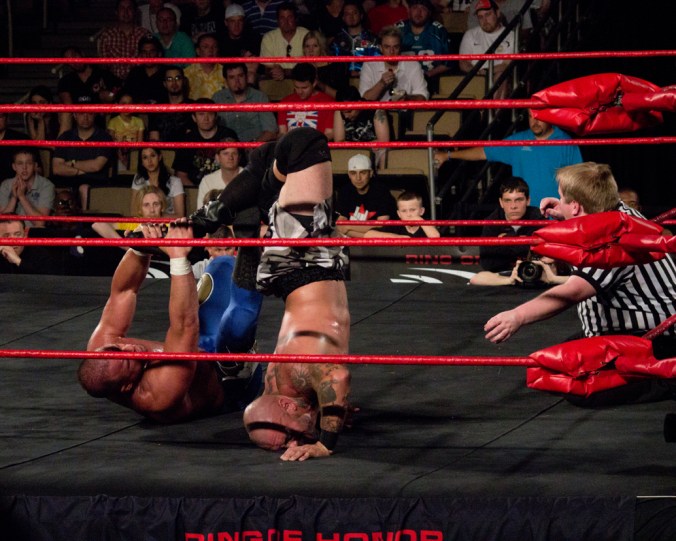
Every step of the way there is something mysterious and new to discover. Books and writing used to be a world of pleasure. Now it’s a mystery tour and nothing too magical about it either. Maybe not quite the Haas of Pain, but still!

the_haas_of_pain

The Haas of Pain: Charlie Haas performing his finishing submission move, 31/3/2012 Wikimedia Commons.

The Indie publishing community – and some thoughts on pricing your e-book.

One of the real pleasures of the Indie publishing world is coming across new writers and publishers you might never have found without the burgeoning online community. I love hearing from new authors and finding out what they are doing,  and really appreciate the amazing inventiveness and generosity so many show.

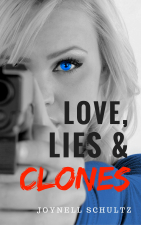
I just found a great post by one of my visitors, Joynell Schultz. Joynell writes speculative fiction, something I’ve never tried. In her most recent post she describes all of the techniques and strategies she tried to get her first Kindle book “out there”, what worked and what didn’t. Read her post here and take a look at her book. love-liesYou can buy it on Amazon at the current price of $2.99 (she started at 99c) and you can download six chapters free – she will tell you where in her post.

I do want to make a bit of a demurral here. While publishing free chapters may be a good way to get readers interested in your work I am not so sure about the wisdom of selling books on Amazon for 99c, or worse, making them “free”.  If you think that is what your work is worth, why would I want to read it? If you write purely to find readers, put your work on your website or one of the sharing sites such as Wattpad but don’t put  it up on Kindle. Amazon is a commercial site where people who want to sell their work meet other people who want to buy it. I can see an argument for 99c short stories or novelettes – maybe – but novel length work which has been invested with love and care, edited properly, with a good cover and hopefully a good story MUST be worth more than one dollar or worse, zero. I guess the next step is to pay people to download your book!

At the other extreme, traditional publishers are getting way with murder, pricing their e-book versions at absurdly high prices to artificially prop up the print book market. Don’t think you are doing the authors a favour by buying their e-books – the contract will ensure that the publisher still gets most of it just as if it was a print book, even though it costs them nothing to make available in digital form, so it’s all more profit for them.

There are millions of readers in the world. A lot of them want to read for free, so good, let them, give it to them however you like but don’t call it a published book. Others want to buy books for their collection. I have bought hundreds and hundreds of ebooks for my Kindle collection over the years and I don’t plan to stop. But I’m not going to clutter it up with cheap stuff. Sometimes I’ve tried something for a couple of dollars and usually I can’t be bothered reading it past the first chapter or so. If it’s annoying enough I might delete it altogether.  Until recently I didn’t write reviews of books I thought were bad, but I think the time has come when those of us who buy Kindle books call them out when they are terrible. Amazon reviews seem to determine which books succeed by getting noticed in the first place. Amazon itself has tightened up on the review process. Now they could tighten up even more by banning full-length books priced below $2.99.

If you’ve written a good book, price it properly to reflect that. Good on you, Joynell, for raising your price. You’ve got good reviews and  your second book should have eager readers waiting.


Would you want to be published by these people? Farewell to faux-Knausgaard …and what about his wife?

I suppose it is ethically dangerous, or at least raises certain issues, to introduce characters in a TV series who are so obviously based on “real people”. The super-famous Swedish writer who appeared on Younger, clearly based on Karl Ove Knausgaard, didn’t look like him and didn’t behave like him, or at least the version of him one can deduce from reading his books and watching his Youtube videos here or here. He is an altogether smoother, yet somehow more smarmy character. Did Kelsey just go for him because he was so famous?

kelsey-and-writer

Kelsey and the Swedish writer

Introducing his wife to the narrative was an interesting move, as a way of getting rid of him from the plot. They made her out to be old-looking, skinny and hysterical.  The real Mrs Knausgaard, Linda, is something else altogether.

linda-bostrom-knausgaard-1

Linda Bostrom Knausgaard

linda-and-karl

Linda and Karl Ove

She has written her own book, Welcome to America (but it is only in Swedish, no translation so far) and the only interview with her I could find was also in Swedish, without subtitles, here.  Wow! I really want to read this book. I love books written by authors’ (and artists’) wives. One of the weirdest is the book written by French ultrabad-boy Michel Houllebecq’s mother – another post on that shortly.

In “Younger” the Swedish writer’s fling  with Kelsey, one of the main girl-publisher characters in the series, is brought to a decisive end by the major tanty Mrs. False-Knausgaard  put on in a restaurant, even though she got it wrong and thought it was our heroine Liza who was doing the dirty deed- and exit stage left for both of them. Poor Kelsey was left with that hideously boring and repulsive Thad. It was a bit amusing when she decided to buy him a super-expensive (and ugly) watch as a kind of “I’m sorry” present, and even more amusing when she decided not to give it to him but he gave her a super-expensive bracelet which she oohed and aahed over until she grasped what it mean … that he’d been having a bit on the side too, although in his case it was with a lap-dancer. Much tackier than a tasteful Swedish author.

Still, it was a shame to see these character go. At least he seemingly wrote real and engaging literature, something the readers could really get into. And it would have been such a great sub-plot if the girls had discovered his wife wrote books too, and decided to publish hers instead of his.  Dream on … that is a step way too far for a popular US TV series.

The books the girls have been trying to deal with since have been less and less worthwhile. One, the plot of which covered intergenerational trauma, turned out to be completely plagiarised by a lady writer desperate to be published, no matter how, and after that the books have got worse and worse, the highpoint of tacky being the “list” of 69 things women supposedly think about when performing a certain deeply subordinate sexual act on men. Yuck! Why would Kelsey have championed that book?

For any frustrated and confused writer who can’t understand why they can’t find a traditional publisher for their work, this series is a godsend. How could anybody want to be published by people like these? If this is the publishing industry, no wonder actual writers can’t get published.

An extract from Last Patrol

While on the subject of Maralinga and the Royal Commission into British Nuclear Testing, I decided to put up a short extract from my novelette “Last Patrol”, which will be published in the story collection, Radiant Sands. You’ll find the extract by clicking on the “Fiction” tab on the front page of this website.cover-for-last-patrol

I hope the book will be ready for publication in 4-6 weeks. It will be published as an e-book on Amazon Kindle, available both through the Australian and US site.

Australian readers will be able to buy a print copy direct from this website using Paypal, or by ordering on-line. Print copies may be available on the shelves from good bookshops.

Once the release date is known, there will be some  pre-release copies available free from this site. If you’d like one, contact the publisher at PO Box 3, Katoomba NSW 2780. Although there is of course no obligation, a pre-release review on the Amazon site would be super-welcome.

Read more about Radiant Sands, Last Patrol and the extract, here.


Bob Ellis, Maralinga, me: fact, fiction and nuking the desert.

Writing my previous post about  pernicious publishing practices in the Amazon age, I found myself reflecting on that Australian literary and political figure Bob Ellis. Near the end of his life  (he died at his Palm Beach home in April 2016) he gave a radio broadcast about the things that really mattered.

His early life in small-town Lismore had, on reflection, been one of them, and he regretted the way he had lost contact with the tight-knit community-based world where families all knew each other back for generations, where collective events were celebrated and sins were forgiven. Of course we know it isn’t like that any more – the horrors of small-town and rural life are the stuff of legend – family murders, suicides, drug addiction, child abuse and the rest of it – any virtues seemingly eclipsed in the heady rush of late modernity. It surprised me that he expressed such nostalgia for a way of life he despised in his glory days.

I was a little disappointed in Bob’s book, not because the individual essays and articles weren’t interesting but because I had expected an autobiography or memoir, a reflection on earlier commitments and decisions. What seems self-evident at one time may turn out to seem very peculiar three decades later. Bob’s radio broadcast suggested he was in a state of reconsideration, and this book sometimes let you glimpse that, but more would have been welcome. As in life, Bob couldn’t stop himself namedropping. The reader is left in no doubt about how chummy he was with the great and good as well as the infamous not-so good. Bob Ellis was an Australian icon, but his legacy may disappear quickly. He was a genuinely strange person.

I knew Bob back in his Sydney Uni days, when he hung around with those two great poets Les Murray and Geoffrey Lehmann. Bob was generally long-haired and shabby. Les was fat and looked like a farmer, which in fact he was. Geoff was immaculately be-suited and always elegant and polite. They were an ill-assorted trio.  Les went on to become a right-wing identity and Poet Laureate, while Geoff remained a lawyer as well as a poet. Bob became ever more leftish, cultivated important connections and wrote many plays and screenplays as well as several books.
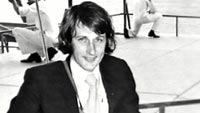
young-bob-ellis-abc
Young Bob Ellis (ABC)

I met him many times at pubs and parties, but he mostly ignored anybody who wasn’t important or political and was rarely cordial or even polite to those he deemed below him. I hadn’t seen him for over a decade, during which time I had spent two years as an anthropologist living among Aboriginal people in the desert. Then, to my amazement, there he was at Maralinga, at the Royal Commission into British Nuclear Testing, 1984. I had been asked to act as the Royal Commission’s anthropological advisor, reporting directly to the Commissioner. “Diamond Jim” McLelland was an august and controversial legal figure with his dapper suits and air of absolute superiority. Renowned as a supporter of Gough Whitlam and accused of extreme Leftism by various Australian rightists, he went on to front the Land and Environment Court.maralinga-sign1
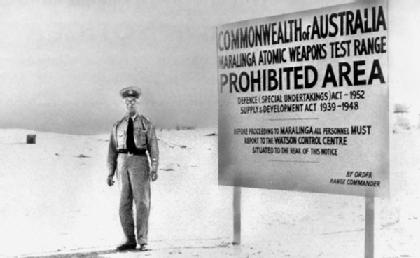


In the remote flyblown deserts of Northwest South Australia Diamond Jim fitted in with grace and good temper, sitting under flimsy shades among the Aboriginal witnesses, squatting around campfires, and walking unconcernedly through the plutonium fields. I went wherever he went and listened to all the evidence. I pointed out where translations to and from English seemed inadequate or wrong. Bob Ellis was there to write a book. He and Diamond Jim seemed to be best mates, and had been permitted to attend the desert hearings, a rare privilege. I don’t think any other writers or journalists were allowed to be there. Shambling, shuffling and disordered, Bob behaved with dismissive contempt to almost everyone. He did try to converse with the Aboriginal witnesses but they had no idea who he was and thought he was just another lunatic white man. He paid no attention to other white people, including me, so I never got to discuss his perceptions of what was happening, although I would have liked to.

I have finished a long story – novelette length – about Maralinga for my new collection of stories, Radiant Sands, which will be out soon. In Bob’s collected works was a long piece about Maralinga, which I had not been aware of previously. This essay seems to be all that remains of his intended book.

edie-milpudi

Edie Milipudi, one of the important witnesses at the Maralinga hearings. Bob writes about her horrific story in his article.

Bob seemed to have attended closely to the Aboriginal evidence and was able to convey the extraordinary quality of the desert hearings, although the details were sparse. It was a good piece, and I enjoyed it.

My fictionalised novelette, Last Patrol, is very different. The people Bob Ellis saw and heard during the Royal Commission were members of the the same groups of people whose story I tell in Last Patrol. I wanted to restore the realities that lay behind the formality and structured context of a legal hearing. I imagined events and invented composite characters. But I believed then, and still believe, that it was a true story. I had no reason to question the account of many people that their relatives had been living in the far bush and that some had perished in the bomb blasts.

I attempted to persuade the Counsel Assisting the Royal Commission to follow up this line of questioning. It is not possible to ask the Royal Commissioner directly to pursue such an issue himself, it has to go through arcane and indirect processes involving the introduction of evidence which can be challenged by others with the right to appear at the hearing. There were plenty of these.  Many Aboriginal witness statements agreed that there were people coming in from the far north-west at the time of the first tests, and that they had never been seen again. But there was no way of getting direct evidence since nobody had survived. To present this as evidence would require that the witnesses know exactly who they were, be able to name them, to state why and how they knew there were walking into the atomic test sits area at that time, and the basis on which they knew it. If they couldn’t do so, their words were just speculation and hearsay, or so I was told. The question opened up too great a can of worms, even for this enquiry

Aboriginal people had told each other stories which had passed along the chain of communication to the north and west and right around the desert. The criteria of “truth” in a legal case depends on a certain kind of evidence: this, but not that; here but not there. That’s not the way Aboriginal people think, nor is it the way their world is constructed. Even the “black cloud” evidence was not fully convincing to the judge and the legal team. The “missing relatives” story was even less so. The Australian legal process when applied to non-English speaking Aboriginal people is so totally misplaced and unable to penetrate into the “truth” of any situation. I was so completely disaffected and infuriated by the way the Royal Commission proceeded, and the minimal impact of its findings. It did result in clean-ups, and the local Aboriginal land-holders did get rights to their land eventually, but the deeper truth of what happened seemed to me to have been consistently glossed over and trivialised.

Memories and stories have their own rationale; memoirs and autobiographies move to a different rhythm and produce a different kind of truth. Writing about an historical event using  fictionalised reconstruction is a kind of knowledge-creation but it still makes me feel uneasy. Purely factual history makes the reader comfortable although there are so many different ways to construct it. Of the several factual books on Maralinga the recent prize-winner Atomic Thunder, by Elizabeth Tynan, is undoubtedly the best to date.

I don’t know what kind of book Bob Ellis would have written, or what he would have made of my story if he had lived to read it. I wrote Last Patrol well before Tynan’s book appeared. To what extent should one book influence another, where one is “fact” and the other is “fiction”? What value can we place on fictionalised narratives which rely on imagined events and composite characters? It’s an issue which needs far greater consideration than I can give it here, or probably ever.

All the injustice that the Aboriginal people of the desert experienced seemed wrapped up in the chain of events that motivated my story: their peremptory removal from their traditional lands, the contempt displayed towards anyone who protested, the absolute dismissal of their rights to life and liberty. It was ghastly but not surprising back in the days when the atomic testing program was established, but to find much the same attitudes expressed, even if covertly, in 1984 was truly shocking, and I couldn’t put it out of my mind. Was it wrong to use fiction to write about it? Wouldn’t a thorough analytic recounting using the detailed transcripts and thousands of pages of documents have been better?

Like Bob, I once thought I would write a book. I tentatively called it Maralinga: Memoirs of a Royal Commission. I still have cartons and cartons of material in storage. But it became clear as the decades passed that I was never going to do it. Is a fictional story any kind of substitute? All I can do is hope that readers are led to consider the possibility  that Aboriginal people in Central Australia are the only human beings on the planet ever to have been  nuked, other than the victims of of Hiroshima and Nagasaki. I am not sure I did the right thing in writing that story, but I felt it needed to be told and that seemed the only way to do it. I will leave it up to the reader to decide, when it finally appears.


More cautions for Australian authors: Amazon reviews and a conspiracy theory.

I don’t know if I’ve missed something people have already commented on in other blogs or forums – should I have known this already?  – anyway, I have just grasped another big problem for Australian authors publishing on Amazon. If your Australian readers are in Amazon.com.au, buy your e-book and leave a review, that is where it will appear. Australian reviews will not appear on the US site. So unless you find a way to get  readers to leave reviews specifically on the US site, your book will languish unattended in the world’s biggest English-language market. Why don’t the Australian reviews appear on the US site? Why has Amazon apparently co-operated in recreating the kind of geo-restrictions which global digital communications was supposed to end?

I am generally not given to conspiracy theories, but it does look to me like some kind of deal was done when Amazon first made a push to enter the Australian market. I recollect there was vast opposition from the regulation publishers and literary players – oh dear no, we don’t want that horrible Amazon behemoth here, we must preserve our national cultural authenticity – now it turns out that the only books available through Amazon here in Australia are Kindle versions.  Since Australian readers have been brainwashed to believe that print books purchased through bookshops are far more worthy than e-books anyway, this ensures that traditional print publishers retain a dominant position in the market.

I worked this out just recently when I was reminded to get hold of the late Bob Ellis’s collected/curated writings, posthumously published in late 2016. bob-ellis-book-coverIt is a collection of previously published articles and personal memoirs, many going back to the 1970s, assembled by his wife Anne Brooksbank as a kind of memorial volume.

Googling, there were plenty of paperback copies available from different booksellers in Australia. The price was uniformly above $30.00. Booksellers’ sites listed only the print version. Kinokuniya in Sydney listed the on-line price at $34.99. At first I thought this referred to an e-book version but no, that was the price if you ordered the print book online as against through the bookstores “card members” price.

As far as I could see, there was NO e-book version available through any of the Australian booksellers. As I have a firm policy of never ever buying a print version if there is an e-version available, I thought I would try Amazon.  I have always kept the Amazon.com US site as my main site. So there it was: Bob Ellis In His Own Words at $11.87.  That is pretty high for a Kindle book, but way better than $34 or $35. And yes, there is a Kindle version on the Australian site, at $16.14. It is also available on Kindle Unlimited in Australia, for subscribers. But the US paperback is priced at US$34.99, which would make it over $40 for an Australian purchaser who would then also have to pay the very expensive postage.

So somehow Amazon is able to trade in Australia without significantly disturbing the traditional publishing ecology. Publishers and booksellers maintain the impression that there are no e-book versions. Amazon offers a Kindle version in Australia, but no print version, and in the US the print version is priced too high for any Australian purchaser to bother with it. A kind of cartel agreement, or just a happy accident to keep the Australian publishers happy? Whatever, the total effect is to disenfranchise Australian authors trying to write and publish outside the limits of the good-old-boys-and-girls publishing environment in Australia. So if you want to be a success at independent publishing, you really need to get up there on the US site and attract the  US readers. Your e-book will turn up on the Australian Amazon site but only if the reader knows to look for it there.  How this assists our national cultural authenticity I don’t know, especially when Australian publishers are unwilling to publish anything from new writers and are reducing their lists all the time.


by firstly deciding not to make any self-published Create Space books available in Australia

Create Space and Australian Authors: Amazon replies -“Expanded Distribution”

After finally getting that Australian author’s titles printed on Create Space would not be available in the Amazon Australian store, I decided to ask why not. Here’s the answer:

“We do not currently distribute to Amazon.au. We welcome future opportunities for new international marketplaces helping you reach more customers worldwide.

“We offer an option to enroll eligible titles in the Expanded Distribution Channel at no cost.  Enrolling can allow your book to appear on Amazon Australia or on any of the other sites not directly supported through us at the moment. The availability of your books on these sites is at the discretion of retailers who purchase your books through the Expanded Distribution Channel. We cannot guarantee your book(s) will appear on Amazon Australia.

Once you have successfully enrolled your title in Expanded Distribution, it may take up to six to eight weeks for your title to begin populating in the distribution channels you have selected.”

Right, so even if I do enrol in Expanded Distribution that doesn’t guarantee that my book will be on the Australian Amazon site, and it may take two months to turn up on any of the distribution channels which may decide to list the book.  WHAT???

I have read lots of threads on forums and blogs trying to explain what all this means and I already knew that there was a very important reason why you SHOULDN’T enrol your Create Space printed book with Amazon’s Expanded Distribution. No booksellers or libraries will buy it. I found some old notes I’d made to myself months ago explaining why you should print through Ingram Spark if you want to reach these wider channels. I already knew this was a recommended strategy but it still didn’t mean your book would be available at any booksellers in Australia. Ingram Spark doesn’t guarantee your print books will be on bookshelves. It does mean a reader who has already heard of your book can order it from a bookshop. But just in case a bookseller DOES want to stock it you have to set the price for all copies with around a 50% discount.

I someone has already heard of your book, why can’t they buy it from your author website? They can,  but you have to have a Paypal button and then post it to them. That’s a nuisance especially if the books start selling well. You should be so lucky!

The real problem is that most dedicated and enthuiastic Australian readers only find out about books from places like Arts TV shows (yes, Jennifer Byrne et al) or from national newspapers and magazines who only ever talk about trad pub books so they are not going to hear about your book or find your website in the first place. Unless you are writing about golf, or fishing, and advertise your book in specialist magazines. I hear that can work really well.

But if you are writing literary fiction or at least decent genre fiction you are out on a flimsy limb.hawk_out_on_a_limb_at_lake_woodruff_-_flickr_-_andrea_westmoreland Australian traditional publishers don’t want authors who haven’t gone through the secret accreditation process which dominates the business. Australian agents won’t represent them. They can write books and publish them on Amazon but Amazon won’t sell the print copies in Australia. Australian booksellers stick with the traditional imprints, mostly from the Big Five international houses. Many dedicated Australian readers can’t or don’t do e-books and/or hate Amazon because they’ve been told that Amazon is the enemy.
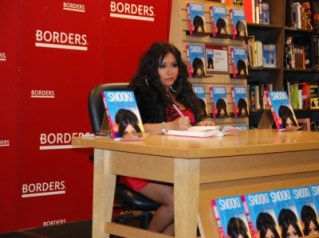
In the US, the large chain bookstores are in trouble: Borders closed, and Barnes and Noble is struggling. Lonely authors wait for someone – anyone – to come and buy their books.

borders

“Snooki” Polizzi: a reality TV star turned author – actually she is doing quite well even if Borders is no longer with us

Small independent publishing seems the way to go, but how to get the books into the bookshops where Australian readers still want to shop for books? Dedicated readers seem to love their bookshops here. But booksellers needs books which are in some way curated for quality:  you can be sure they don’t want badly written junk with naked alpha billionaires on the cover. Whichever way you look, it’s a minefield.