Copyright: for and against

In my last post I mentioned that I was seeking permission to use two lines from a country and Western song sung by Ernest Tubb in 1959 as an opener for my memoir. I still haven’t heard anything back from the copyright holders, a large transnational organisation which holds copyright on a huge number of songs.

This has led me to further musings on copyright as a concept and practice. There are many countries in the world which appear to have no copyright laws or if they do, they don’t enforce them especially if the writing being used comes from somewhere else. Imagine my surprise a couple of decades ago to find my book Nature and Nurture published in a Third World country, in English and pretty much in full although without the photographs and someone else’s name on the cover. But somehow there seemed a rightness to that. The book is unobtainable anywhere as the Australian publishers never republished it, and made no effort to make it available anywhere outside Australia. Practically no libraries in the world hold it. This of course was before self-publishing. If people somewhere else want to read my book, this was a way of doing it, and did it matter that much who was the author?

These libertarian thoughts are very much outside the frame today. Everyone is so precious about their rights over a few sentences that whole books can be pulped for some minor bit of plagiarism. You are legally vulnerable even where the copyright holders don’t answer queries or have gone out of business. This, in an era when visual and written information can be circulated as never before.

Copyright is an issue quite apart from libel and privacy breaches. My inability to finish Regret Horizon is in large part due to my anxieties over privacy issues which remain unresolved.

I wonder how much one would have to change the text to claim that those two lines were no longer subject to copyright? I’ll play with that idea, but somehow it just wouldn’t be the same.

The River of Regret with Ernest Tubb

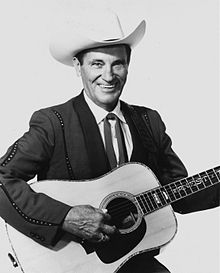
Ernest Tubb sang “River of Regret” in 1959.

For reasons only a psychoanalyst could clearly state, I don’t seem able to get this book finished. I have promised to send it out to the family members who are mentioned in it for their comments and permission to use their real names. I have asked the designer to stand by to do the covers. I have promised myself it is #1 on the priorities list. But no matter what I do I just can’t get it to a point where I can send it out.

The biggest issue has been endlessly rewriting the first chapter. I realise this is because I don’t really know what I want to project in this so-important introductory bit. I have been struggling between two positions: a kind of grovelling excuse-seeking for having been such a dreadful mother and partner and sister and daughter (and probably everything else) all my life and not having realised it, and the desire to say look here, you guys, I was doing my best! I came from another era! I had a miserable confused childhood just like everybody else who was born close to World War 2! And I think I worked incredibly hard and tried everything to keep the show on the road. If it didn’t turn out so well for you all, I am sorry, but I can’t go to my afterlife taking all the blame! I couldn’t be a perfect person. What a surprise! But I guess I am still regretting that.

If my emotions throughout 2018 seemed unstable, the beginning of 2019 has been even worse. Maybe writing a memoir was not the best idea, under the circumstances. A part of me wants to just forget about it right now, today, put the project aside and go back to painting my landscapes and writing about art. Of course none of it makes the slightest bit of difference and it is dawning on me that nobody, I mean nobody, cares in the least what I write or don’t write. It is, to follow my perpetual aqua-marine metaphorical inclination, all just water under the bridge. Or to quote my recent favourite ballad:

And instead of being someone with the world to win
I’m just driftwood on the river of regret.

This is from a song sung by Ernest Tubb in 1959. The original version is on Youtube here – I think I worked out how to embed a song in a post – always something new to learn!

As this song seems so completely apposite to my memoir I set about finding out how to get permission to use these two lines as opening quote in Regret Horizon. What a fascinating business this copyright stuff is. I will write a post about it when I have an outcome.

Meanwhile I’ll just keep on drifting with Ernest Tubb and try to take the deeper philosophical meanings on board.

Regret Horizon: the Memoir

So my memoir of the year my mother and my ex-husband died is almost finished. Procrastinating about sending it out to the family and trying to do the final edits. Every time I open the file I find myself making changes, not just a few, but a lot. I still don’t feel clear about it. And the question of the title has been holding things up. From the start, the working title was A Dying Year. Feedback? Oh, that sounds so sad/distressing/upsetting. And who is dying? Is it you? Is this yet another PityParty by someone on the way out? No, no, not that! Well, what then?

So it got a new title, and a new slant, because I realised by the time I had finished the penultimate draft that my main feeling about everything was my awfulness, and how much I still don’t understand, and how much I feel regret for what I had done and not done in those last few months.

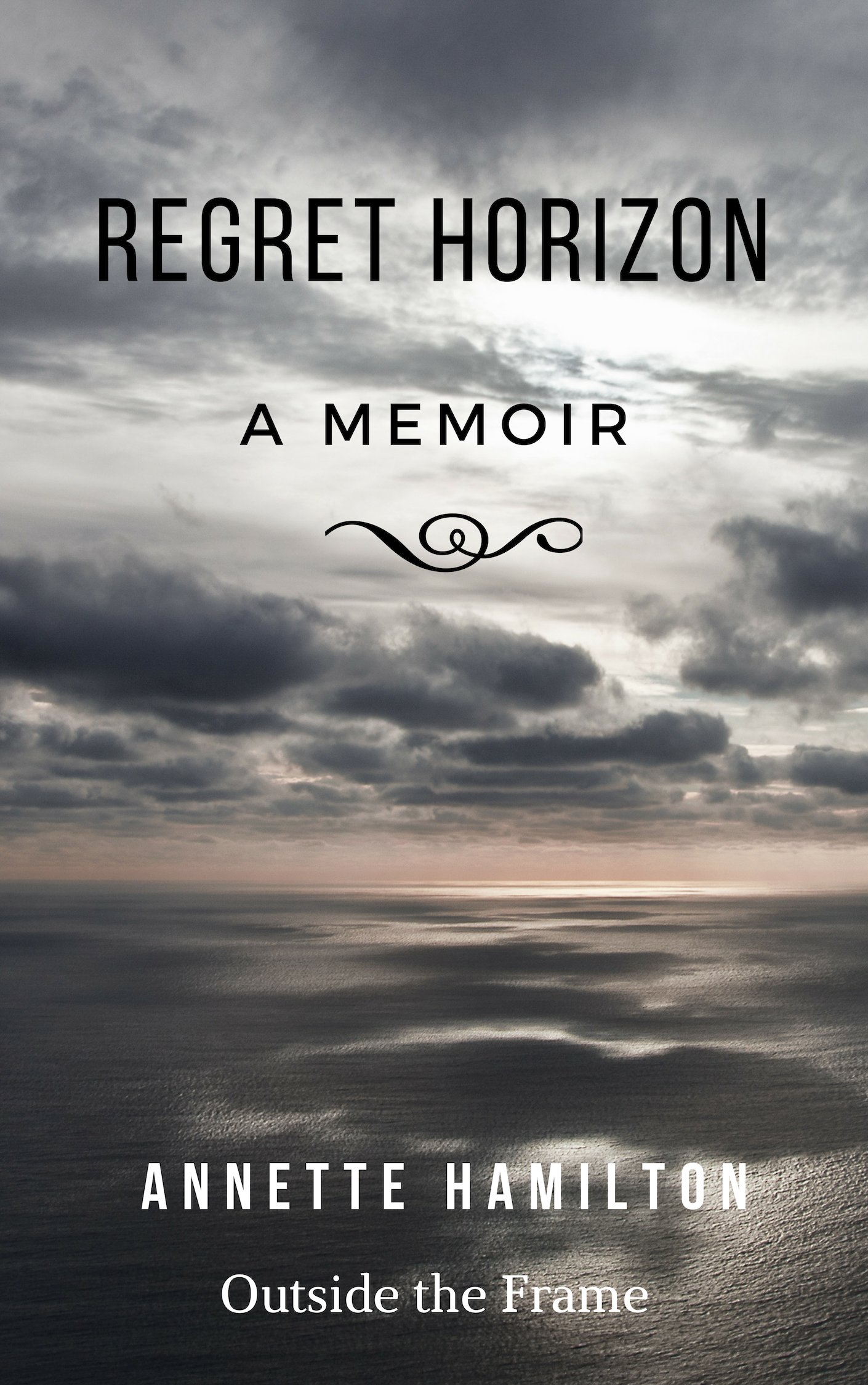
Somehow water, rivers and seas, threaded through everything I felt throughout the process of writing this book. So when I found Jordan Cantelo’s wonderful photograph, “Ocean Horizon”, it spoke to me profoundly. Jordan gave me permission to use it for the cover, and asked for no payment, which was truly generous of him. I love his work. I will write something more about it later.

Draft cover: Regret Horizon.

More on opportunism: hire an actor!

Since my last post – and thanks so much to everyone who liked it – I have been giving more thought to my writing career.

I realise that I shied away from confronting one of the core realities about the writing career today: namely, who are you? If you have to Put Yourself Out There to Reach Your Readers you have to first work out who those readers might be and then consider what kind of author they want you to be, which means, you have to look like that writer. Once upon a time a writer looked like him/herself, no matter what he/she looked like. Shirley Jackson (below) wrote Gothic horror stories about life in small New England towns. Her publicist would never have let this photo into the public realm if it was today. Actually her story is very interesting, see the link below.

shirley jackson

More on Shirley Jackson

And then there is Charles Bukowski. OK, this is a cheap shot, but hard to resist.

Bukowski Sam Cherry 1970

Cbarles Bukowski, 1970 portrait by Sam Cherry.

Actually when you look at photographs of famous writers going right back to the early twentieth century you can see already the aesthetics of writerly fame were already at work, in parallel with the growth of photography. There are profound existential questions here, but let’s skip them for the moment and go right back to Square One!

Everyone in this game accepts that Marketing involves being someone marketable. These days the author is a product, and like all products it does matter what she/he/they look(s) like and whether or not they fit the current paradigm for successful writers. There are countless guides to how to ensure a successful author photo. I like this one, especially for its analysis of specific published author photos. A certain look, a physically attractive or interesting persona, a hesitant smile that looks great on the back cover,  a certain age, an air of reserve and mystery – possibly the hint of the exotic – that will work. But the thing is, if that is the author in their photo, then it has to be the author in real life as well, in the unlikely event they get asked to appear in public somewhere, like at the Podunk Valley Writers’ Festival.

What do you do when you don’t even dimly resemble any of the persons identified as successful writers in their photos? It has occurred to me that it might be helpful to hire someone. Good training for a budding actor! Hire a young person, able to manage the Internet, look great and make public appearances, that might be a good alternative. After all, the gig economy demands people work in all kinds of different careers so there must be hundreds or thousands of young people who’d love to be writers without having to write any books. As for the writer,  if you can use a pen name, why can’t you use a pen body? There are ghost writers, why not writers’ ghosts?

Is this a good plot or what? I don’t think it’s been done before although back in 1976 Martin Ritt directed a very young Woody Allen in a movie, The Front, about a writer manqué who signs his name to scripts by real writers blacklisted during the darkest days of Hollywood, when J Edgar Hoover determined what would and would not be acceptable from writers and movie makers according to his own warped ideologies.

The Front 1976

And there has been at least one movie about Ghost Writers – Ghost Writer, directed by Roman Polanski, starring Ewan McGregor, 2010.

ghost writer 2010

Maybe there are other movies with similar plots, and that great little series Younger, currently in Season 5 on Stan, takes up the issue of ageism in the publishing world, and the extent to which millenials are currently determining what is published and what isn’t – in tradpubland of course. Incidentally in researching this blog post I came across a list of films about writers  here. I’d love to watch all of them in one big binge! That’s the only thing I might enjoy more than actually writing the stories myself.


Is there really a future for independent publishing in Australia?

Ever get the feeling that independent publishing, which promised so much, is heading down the vortex, especially for Australian authors? When it all started rolling it seemed like writers would be able to reach readers without all the intermediaries deciding who and what would be allowed through the hallowed gates of author-dom.

selfpub diagram wikiIt looked as if new technology would link writers and readers all over the world and open up the artificial geographic zones which for half a century had been creating unnecessary boundaries around the best new writing. Readers were forced to pay absurdly high prices in some areas, including Australia, to accommodate the outdated business model. You might have thought the response would have been to change the business model, but no, that didn’t happen, and now things seem to be in some kind of weird spiral.

In the US E-books are still selling, and selling well. In number they far outweigh trad pub titles, and just recently they have superseded print books in dollar value. Of course many of these sales are for traditionally published books from established publishers, who bring out an e-book edition along with their print editions. It is very hard to get accurate figures separating the different market components out.
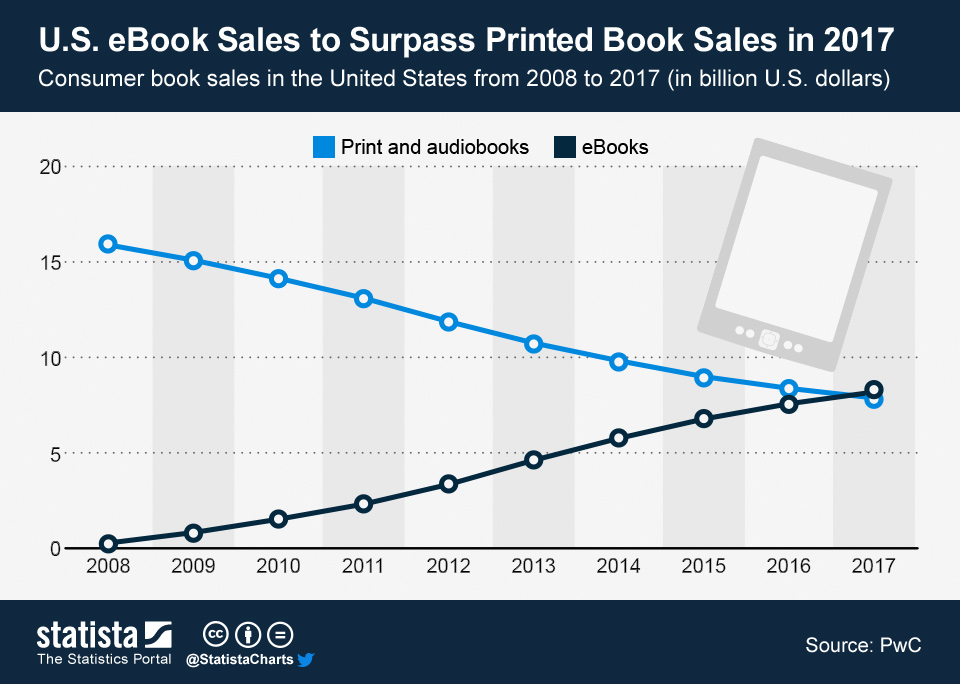
US eBook_Sales_to_Surpass_Printed_Book_Sales_in_2017_n

When Indie publishing took hold, a network of new support mechanisms evolved to help authors bring their work to an eager public. Traditional publishers went on doing exactly as they had been doing (but added in e-book versions) and everyone else was free to try things out in all kinds of ways while Amazon  provided the all-important technological platform.

For a while Amazon set the prices of the e-books from the traditional publishers. But after a legal case spear-headed by global giant Hachette Amazon was forced to raise the prices of the e-book versions  so they did not  compete with print books: take a look at the price box next to the Big Five published book you want to buy on your Amazon site and you will see “The price was set by the publishers”. This has pushed e-book prices higher for “good” books from all the global players who have eaten up the smaller niche publishers at least in the English-language market.
BigFivePublishers

Meanwhile millions of other books are left wallowing about at the lowest possible end of the price scale in the hope that someone, anyone, will buy a copy. The unregulated indie market has turned out to be a ghastly place full of bad writing, creepy fantasies, idiotic space-nonsense, buff six-packs and bizarre arrays of erotica. There are many notable exceptions, of course, but anyone who takes a close look at what is going on in the Amazon indie market better not be a serious reader who thinks books have something to do with improving society and culture.

In Australia, the e-book revolution hardy took hold although Australians are known as early adopters of new technologies. Try asking around among friends and workmates and see how many actually have and use a Kindle. The answer, if you are an indie author, is super-depressing. It seems everyone longs for the olden days.
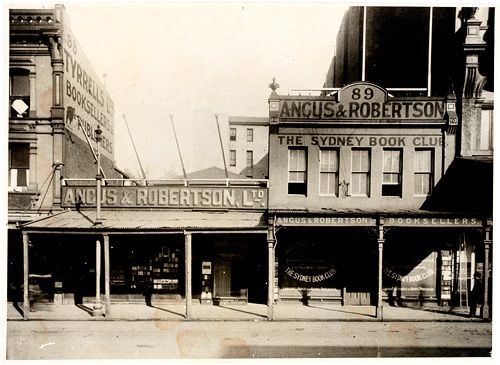
old Angus and Robertson

But there’s more to it than persistent nostalgia. It’s not just that people like going to physical bookshops, or buying physical books (often as presents for others), it’s that the guardians of Australian culture mounted an incredibly successful campaign against Amazon among booklovers. They were readily convinced that anything coming out of a corporate US giant like Amazon was automatically going to be a Bad Thing. This impression was shored up among the writers’ groups, in publishing circles, among academics and general literati, the local press, the network of book clubs and whatever other areas of public communication had anything at all to say about books and writing. Indie authors did not appear at Writer’s Festivals. Nobody mentioned them on the TV book shows (all now defunct); everybody interested in books and writing in Australia knew that good writing only appeared through a reputable publisher. The books by Australian authors hailed by the literati sold in modest to low numbers. Books written by Australian indie authors had to succeed in the US market, or not at all. There has never been an identifiable market for Australian independent authors in Australia.

Now things are even worse. Amazon won’t let Australians buy e-books – or any books for that matter – from it’s American site. This is supposedly because the Australian government didn’t like it that e-books were being bought by Australians who weren’t paying GST on them. Now the reader is forced back to the .au site, no option. Add the GST to the cost of the e-book and it looks a lot more expensive than when it was $2.99 on the US site. Previously, readers who wanted to order a print version could do so from the US site and pay horrendous postage. It seems that hardcover versions of Big Five published books are available through the Australian site, but still have to be sent at a high postage rate from the US. So guess what? You might as well buy a print copy of the book from your local bookshop, or by ordering online. Who needs Kindles and e-books after all? Somehow all this seems to have shored up the ultra-conservative elements in the Australian book world.

E-book author earnings are still very substantial, and when you consider that many authors identify themselves with a self-managed publishing imprint, the result is even more impressive. But of course this is happening in the US, not in Australia.
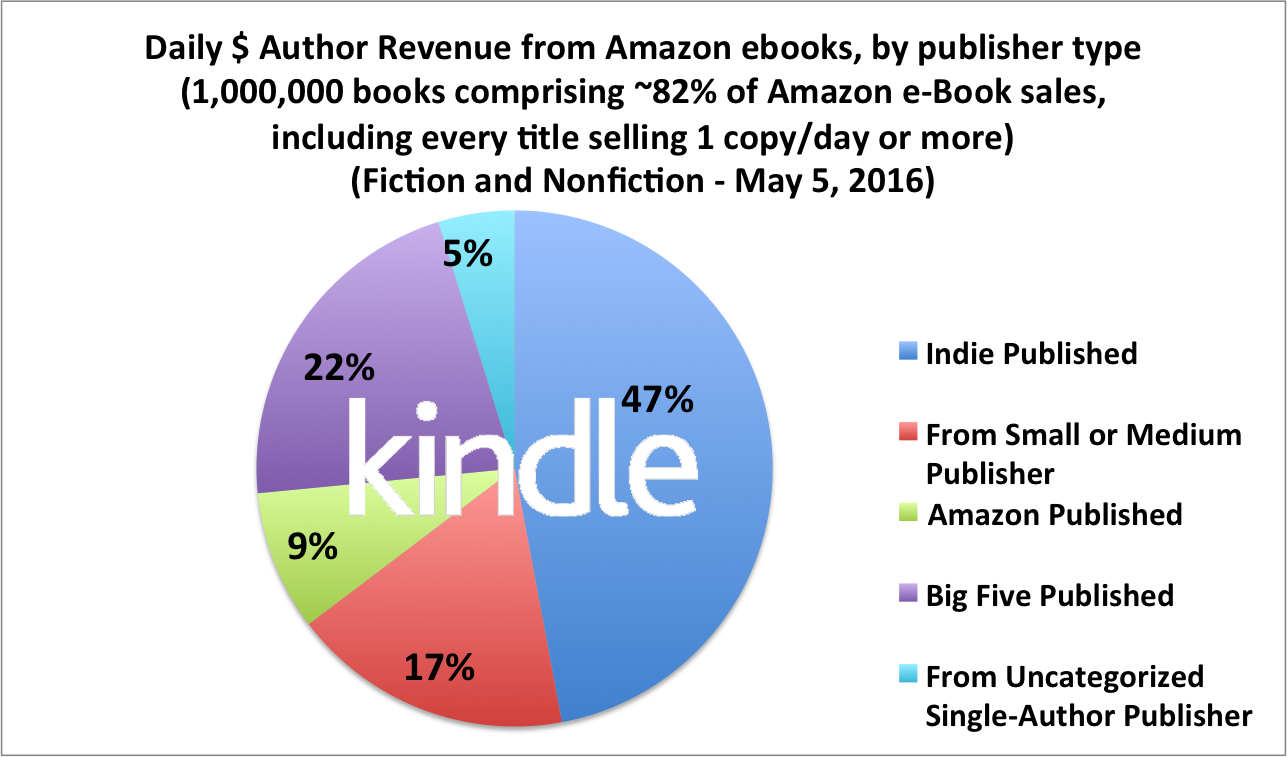
ebook-author-earnings-1m-201605

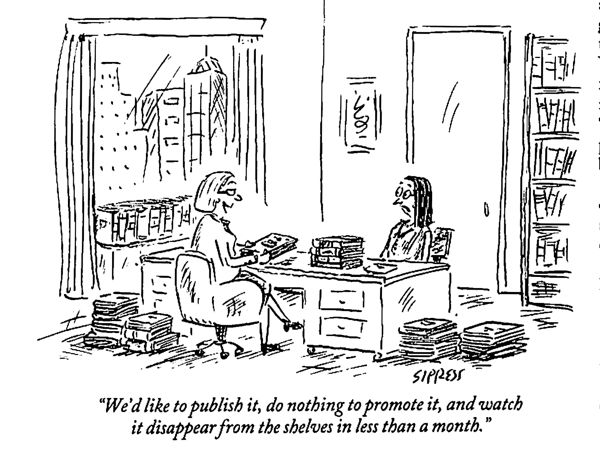
Australian authors often made print versions through CreateSpace and ordered fifty or a hundred or whatever copies to distribute themselves in Australia, sell through their own website or send out as freebies. Now CreateSpace has closed down and everyone is supposed to use KDP for their print books. But nobody, not even the author, can order print books from their US-based Amazon account, and Amazon is not going to be printing books in Australia anytime soon. You can’t even order a proof copy of your new e-book from KDP, apparently, because that would involve sending it at the US price. I believe this issue is currently being looked at by Amazon, but the bulk print copies will never be available again. So it’s back to the Australian traditional publishers.tradpub cartoon
Several correspondents have asked why authors don’t just have their own books printed locally, instead of worrying about the whole Amazon/e-book experience? Well, there are three good reasons. Firstly, local printers quote for a paperback version around two-three times the cost CreateSpace used to be able to supply them at, even with shipping from the US. They can look a lot better with much nicer paper but the price needs to be set very high if the bookseller gets the 40-50% discount they expect. The author may finish up getting even less than the miserable payout from a book priced at $2.99 on Amazon. Second, local bookshops are very reluctant to stock books from independent authors unless there is some local reason to do so – like a book about riding bicycles along back paths here in the Blue Mountains, which sells well from just two or three bookshops. The author supplies the copies personally when the bookshops run out. But if you are trying to sell more widely it means you have to keep stocks of your printed books somewhere – in your garage, or in your bedroom, or in a warehouse-type space, then you have to post or send or courier copies to whoever wants them, then pick them up again if they aren’t sold.

There is no simple answer, obviously.

BTW I  want to thank Anna Castleton for her recent comment (August 31st) which prompted me to write this post sooner rather than later. I also should mention that my e-books, such as they are to date, have been illustrated and cover-designed and the interiors formatted by a well-regarded professional (in Mexico, as it happens) and the colour shift problems  I had with my children’s book The Priceless Princess when print copies were made on Ingram Spark were the result of the Ingram Spark presses not “reading” the PDF files correctly.  Ingram Spark seems much more responsive these days and  is making a significant push into the space being vacated by Amazon. And it prints in Melbourne.  More on this in a later post.


A Kindle binge with Helen Garner …

Jenny Sages portrait

Jenny Sages Portrait of Helen Garner. National Portrait Gallery, Canberra.

The best thing about getting older is realising that others are getting older at the same rate, especially your favourite writers. They’ve been writing for years and years, and you’ve been reading away alongside. In traditional publishing it means that they write and you read at different moments of the Zeitgeist, so you experience them in different ways according to where you both are. Helen’s recent book of essays Everywhere I Look felt both familiar and dazzlingly fresh. Preoccupied with my current volume of memoirs, this and the publication of Bernadette Brennan’s study of Helen’s work (more on which in another post), sent me scurrying off to rediscover her work in the present moment, 2017.

A lot is now available on Kindle. I had purchased her print books over many years but most had gone off into the mysterious places books go when you move your stuff around a lot. Now I could repurchase and reread all at once. Yes, it is a Kindle binge. A wonderful short novella about a trip to the Antarctic was the first surprise: I had never heard of it before. I reread The First Stone and This House of Grief and The Spare Room and then I came to Joe Cinque’s Consolation, which I had never read before..

What can I say? Absolutely riveting, so moving, so saturated with a personal truth which is at the same time a collective experience of being “us”, people in Australia, experiencing things in different ways, and it is these differences which Helen tries to clarify and explore but in the end the mysteries of human behaviour defeat explanation or even understanding.It is great that Helen is getting the praise she deserves in the US at last. Reading some of the reviews on Kindle is sobering, though. They are not negative, rather, puzzled, a bit confused. Why is it that some writing travels seamlessly through English-language markets while other books falter? Why was The Dry such a hit in the US? Why does Liane Moriarty work everywhere?

I hope a lot of people discover and rediscover Helen Garner now. Nobody could have guessed back in Monkey Grip days what she would become. If you could give a medal to an Australian writer, Helen should be first on the dais.

everywhere_i_look

Writing’s not for sissies: what happens when you just can’t finish a story?

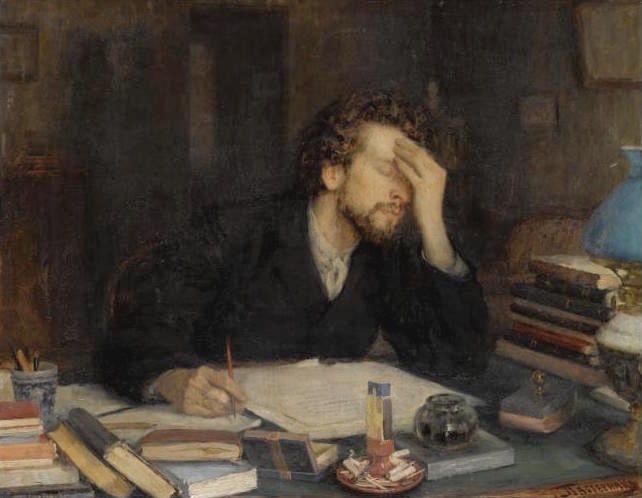
Leonid_Pasternak_-_The_Passion_of_creation

Leonid Pasternak 1862-1945 The Passion of Creation

Advice for writers always includes something about how to deal with writer’s block, as if it’s something like the common cold or a pernicious case of athlete’s foot. I have never really understood this, as most of my life I have been unable to stop writing even when I should know better.

However I think I have just developed a case of something like it and I don’t know how it has happened or what to do about it. I am as usual writing and writing – for instance, I am writing this very piece – and I am doing research for various projects I am in the middle of and I have started revising a lot of stuff on my blogs but I am definitely avoiding the one thing I really need to write, the thing I need to finish so I can actually get on with the next thing and then start something absolutely fresh. It must mean something … but what?

I have been working on a book of short stories, some of which were written years ago while others are brand new or radically revised. Some are quite long, almost novella length, others are super-short. I’m planning both e-book and paperback releases through Amazon and Ingram Spark. Maybe I’ll get a local printer to do a quality small run for the Australian market. Everything is ready for a final assembly and edit BUT there’s this one story I just can’t finish. It’s been through several versions, the main character has had several names and a variety of backstories, the key issues have changed several times, the narrative has shifted, her late husband has oscillated between being a stuffy idiot, a self-important moron and an OK kind of guy … and now I have her in the middle of the story and something really dramatic has to start happening to her and I just can’t get it moving.

So I wake up first thing in the morning determined to finish the story but instead I start looking at note I was writing about something else and then I’m looking at emails or trying to upload a pdf or whatever and two hours pass and then I have to start doing something else and my quality writing time is over so I say I’ll get back to it later in the day but it doesn’t happen, and then it’s night time and tomorrow is another day and I am sure I will finish it then but guess what? No luck …

Yes, it’s procrastination but something more as well. Is it some deep-seated psychological resistance to actually finishing this book and actually publishing it? Do I doubt the value of this story in particular, or the collection as a whole?

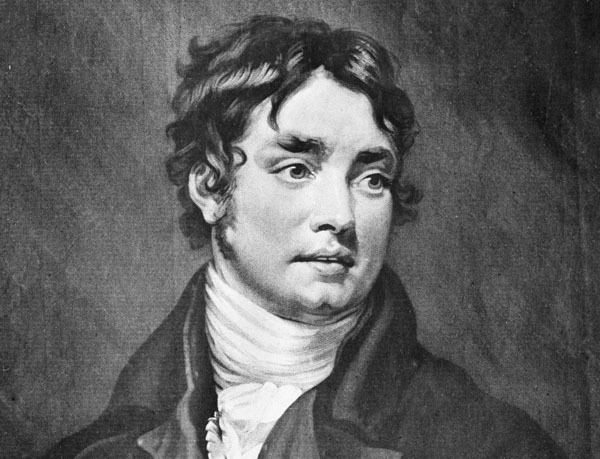
Samuel Taylor Coleridge in 1802, the year his daughter, Sara, was born.

English poet Samuel Taylor Coleridge first described his “indefinite indescribable terror” at not being able to produce work he thought worthy of his talent. I certainly don’t feel anything like indescribable terror. I’m just cross with myself for having constructed what feels like a wall between myself as a writer and the end of this story. Meanwhile Louisa, my character, is stranded in her luxurious hotel room in Bangkok waiting for her cosmetic surgical scars to heal. Poor thing.


Check out some good suggestions at Psychology Today: https://www.psychologytoday.com/blog/prime-your-gray-cells/201510/five-reasons-youre-experiencing-writer-s-block


My new Kindle! Reading, writing and the transitional object (a brief diversion into psychoanalysis).

Well it took six long days but I finally unpacked my new Kindle Fire HD 2016 8 inch and after the usual struggles with passwords and buttons and chargers it lit up,  and what a pretty ***** it is.  Actually I am not sure what it is –  a thing? a device?  a machine?  Just another object? Yes, it is an object, but an object which reaches into the very depths of a writer’s being – this one’s, anyway.

Ridiculous, I know, but the whole time I didn’t have a  Kindle I couldn’t seem to write a word.  I carried around the print-out of latest version of Suburban Gigolo wherever I went, thinking I could start the next round of edits, but there was just something wrong. Didn’t even take it out of its brown paper bag. Night after night I re-tilted my bedside lamp and focussed my eyes on the printed pages of Emmanuel Carrere’s Liminov. I am really enjoying this book, in a strange abstract way, but the process of reading doesn’t feel the same. And if I can’t read, it seems I can’t write.

While I was recently in hospital I couldn’t read either, not because I didn’t have my Kindle – I did, it goes everywhere with me – but because I was so knocked out by the drugs and the pain and the numbing routine and the astonishing reality of having a metal knee now embedded and growing  in my bones and flesh there seemed no mind-space left over for reading books.

knee in hospital

New right knee is under there somewhere.

However  I became addicted to that enlightening TV show “Diagnosis Murder” about how a doctor (a spritely white-haired Dick van Dyke) helps his detective son (played by Dick van Dyke’s own real-life son Barry) solve strange criminal cases which embrace medical issues.

diagnosis-murder

Dick and Barry in Diagnosis Murder, 1994-5

This was on every afternoon and I lay on my back gazing at the TV screen up on the wall and felt both cheered and reassured by the ability of doctors and detectives to solve all human problems, as they were still able to do in the early 1990s, unlike today where the crimes are so much more hideous and the main role for the medical specialists is scraping up samples from torn fingernails and cutting cadavers open with wryly humorous remarks.

dick van dyke sick

Dick van Dyke falls victim to poison in his own hospital!

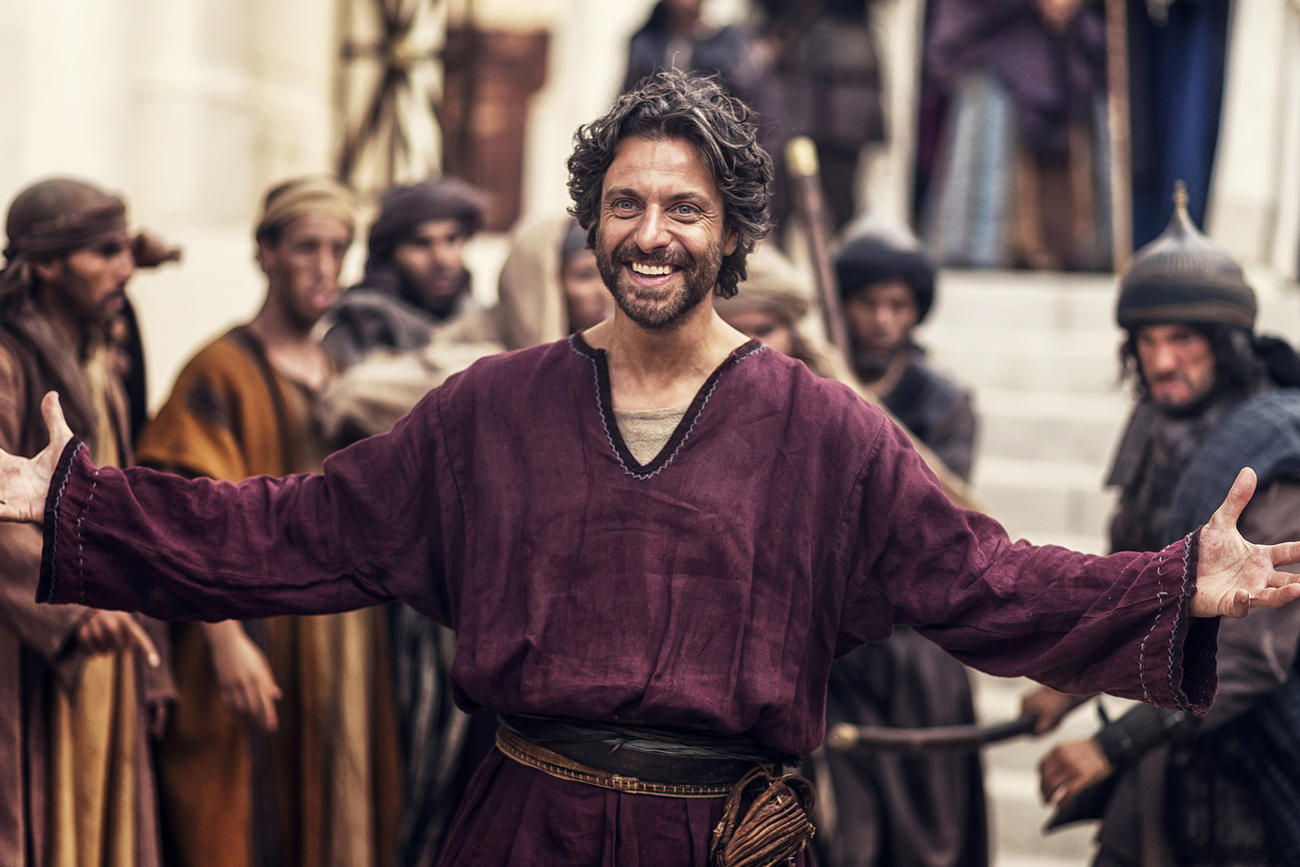
But TV in the end is no substitute for reading, and now I have a Kindle again I can read all the books I recently downloaded just before it finally died. These include the only book by Carrere which I can find on Kindle, The Kingdom, yet another excursus into the world of the first Christians, a theme which seems to have been trending recently, no doubt due to the near universal perception of imminent apocalypse. I even started watching A.D. the Bible Continues (2015)  on Stan but that otherworldly gleam in Peter’s eyes is really getting me down. Actually I thought the first three episodes were excellent, but it became a bit repetitive after that.

Peter in AD Bible

Adam Levy as Peter

The thing is,  you live with stories, and it matters how they reach you. TV has become a wonderful medium now that you can watch series the same way you read a book … you don’t have to wait until next week’s broadcast, you can just keep on and on and on until you absolutely have to get up and go to Aldi or clean up the cat vomit. Then the clever TV knows exactly where you got up to, and takes you directly back there. Just like the Kindle does.

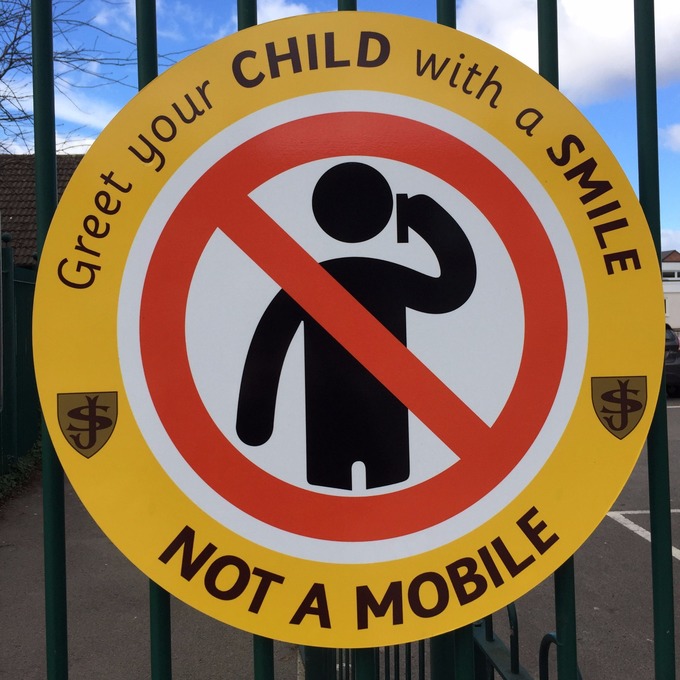
I can feel myself falling in love with my new Kindle, even though I’ve hardly even turned it on yet. What creates this powerful attraction? A lot of people have it with their mobile phones, almost unable to be diverted from them even by great moments in the Real World such as picking up your children from school. The recent campaign in Britain to get parents to actually look at their child when they pick the poor little thing up at the school gate marks just one moment in the process of human alienation we are in the midst of.

Greet child

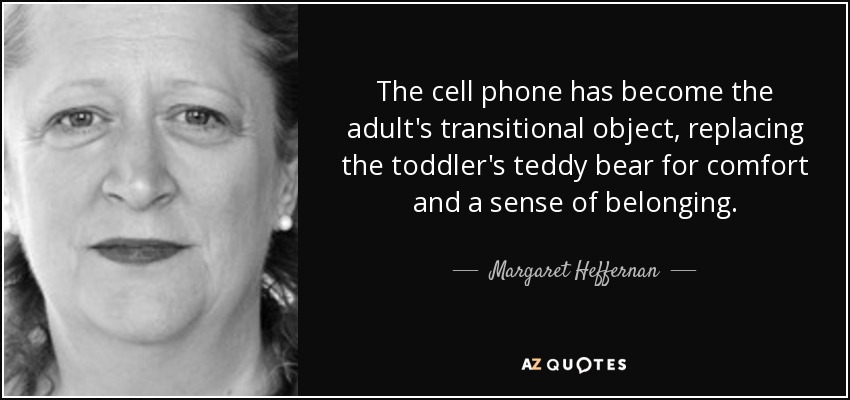
How to think about these object-obsessions? To cut a long psychoanalytic story short, it is a kind of transitional object. You know, the blanket the child carries around until it decays, the beaten up teddy bear, the Thing your little one just can’t be without. Some clever evil genius worked out that we never grow up, we humans, we go on looking for the comforts of childhood, and these days they’ve given us an electronic item instead of Blanky. I’m not the first to think of this, although I did feel disappointed when I found this quote:

quote-the-cell-phone-has-become-the-adult-s-transitional-object-replacing-the-toddler-s-teddy-margaret-heffernan-33-29-01

The thing about electronic objects though is that they just don’t feel the same . How about making Kindle or phone cases out of woven feathers? I had a kind of feathered scarf when I was a small child and yes, obviously it came from my mother, and I needed it in the same way I seem to need my Kindle now. I just can’t go to bed without it, and if that happens then I can’t seem to write anything the next day. What The ????

Snobs, the Canape Set and the Dummy Spit

Cindy Fazzi’s recent post “Six Signs of a Literary Snob” here reminded me of the vehement debate around the effects of cliques formed around creative writing courses and literary journals in Australia which erupted in 2016 and resulted in a wild outburst from a young Australian author in that revered Melbourne literary journal Meanjin. Luke Carman has runs on the board. He has published short fiction in local journals (HEAT, Westside, Cultural Studies Review) and has been on the shortlist for a few recent prizes. He has published a book of short stories (An Elegant Young Man) and tutors in creative writing at the University of Western Sydney… but there are two strikes straight away. Short stories are considered somehow mildly deplorable and definitely not a mark of “real” literature, and Western Sydney – which means anywhere between Ashfield and Wentworth Falls – is by definition not a site from which worthwhile literary forms could possibly emerge.

australian-houses-aug-12

Luke spat the dummy in a big way. He said that Australian literary endeavour had been infiltrated by “wannabes” who were “dictating terms for an artform to which they contribute nothing but their lordly presence”. Luke was taking on the prevalent literary snobbery in Australia which seems to be flourishing more vigorously than ever, especially regarding the books that agents and publishers are permitting past the starting gate, and in the award of literary prizes and other marks of distinction.

Cindy’s go-to list for the literary snob:

  1. Reads only literary fiction; absolutely no commercial genres for this reader.
  2. Refuses to read self-published books.
  3. Refuses to read any best seller, even if it’s literary.
  4. Doesn’t like to read feel-good books or happy endings. The more depressing a book, the better for this reader.
  5. Doesn’t like to read “easy” books. The more incomprehensible, the better.
  6. Won’t read a novel published after a certain decade or period (e.g., nothing after the 1960s or after 19th century, etc.)

This fits the Australian scene perfectly, except for #6. The literary world here is mainly devoted to recently published works from authors who have already made their mark on the Ozlit scene. Debut authors need to have come through a Creative Writing program in one of the main universities and consequently enjoyed Fellowships and residencies in prestigious programs. They are usually championed by an important figure, preferably a famous writer, who refers them on to agents and publishers. Agents and publishers want books whose themes resonate with the current cultural obsessions – indigenous dispossession, gender-based suffering, migrant disaffection, the struggles of the repentant drug addict – and have no interest in books which engage the general popular audience, those which sell well because of their exciting plots and “easy” writing. As for the happy ending, who could take that seriously?

Sept_Liane_Moriarty_QA_700x400

A great example is the spectacular but largely culturally invisible writing career of Sydney author Liane Moriarty, recently dubbed “the most successful Australian author you’ve never heard of”. I came across her work entirely by accident, wandering about on Kindle as I do most nights, exploring new things to read. I couldn’t believe it. Here was a woman writer, offering great fiction about a Sydney I knew, so recognisable, real places and real (often horrible) Sydney people! I loved the first of her books and then bought and read all of them in quick succession. Now she can’t write fast enough to meet her reader’s demands. This is a writer who has sold six million books around the world. Her books are hardly light-weight. They address the dark side of Sydney suburban life in a way never written about before. Her endings aren’t “happy” although they aren’t necessarily tragic either. They are well-written, lovingly crafted and you can’t put them down. Now Nicole Kidman and Reese Witherspoon are starring in the movie adaptation of her smash-hit “Big Little Lies”. Oh, OK, there’s the problem right there! She is successful! People want to read her books! She’s sold the film rights! And she’s writing about Sydney suburbia. Not good among the Melbourne establishment which pretty much dominates the literary scene these days, or so everyone seems to agree.


luke carman 2

Meek and mild Luke Carman

So what about Luke Carman? He’s writing about Sydney too, but it’s a Sydney even Liane Moriarty’s fans won’t know much about. Set largely in his home-suburb of Liverpool, the characters in his stories reflect the turbulent and sometimes bizarre reality of contemporary life for the young in Western Sydney. They are addicts, poets, people who see ghosts, Lebbos, Grubby Boys, scumbag Aussies. His alter-ego writer loves Whitman and Kerouac and Leonard Cohen. The book is full of energy, edgy street-scenes and local voices, really INTENSE as the younger generation say. I loved his book, published by Giramondo, which  is a pretty respectable local publisher, and wondered what had led to his “spray” in Meanjin here. It’s a wonderful but complicated essay, full of rage and bile. Many would join me in saying, “Luke, I feel you”.

Luke2-4

Luke Carman in full flight

Without doubt the Australian literary scene is self-referential and highly conservative. Obsessed with its own preservation, denying the validity of the e-book, loathing self-publishing, there seems to be in a kind of retro-neo-colonial suspension going on here. New forms of expression and new kinds of stories are ignored or, more accurately, not even recognised.

The overlap and interplay between visual and written culture is at an exciting place. As long-form television is replacing the standard movie, new strategies of writing (the long-form literary equivalent, as practiced by Knausgaard for example) opens up a new trajectory reminiscent of Proust. Screen-writers write fiction and turn their fictions back into television series – thinking here of that fabulous 2016 series Good Behaviour – and “books” can be as long or as short as writers like and readers enjoy.

good behaviour 1

It’s become a terrible struggle for the conventional author trying to get “the book” published in print. The e-alternative is terrible as well, especially trying to find a market with the five million books now available online. But writers can’t help themselves, they like to write, and readers like to read, it’s a question of finding new ways for them to get together. The canapés and champagne Harbourside set may still be seeking their Bourdieuan distinction, but there is a lot more to the writing scene now, thank goodness!


Should writers pay their readers?

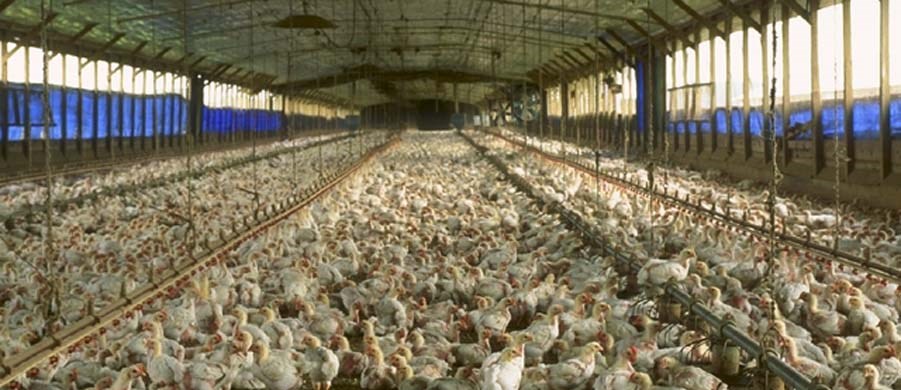
chicken_house_wikicommons_wide

Indie writers at work

Writers are born, or so they say.  Problem is, publishers don’t have room for them all.  They have weird criteria about what they are willing to publish. They hate the slush pile. Then along comes self-publishing. The freedom to write what you want at the length you want to write it, to publish it to a potentially world-wide audience and to control every aspect of the process! Perfect. And when the writing is finished – voila! A few fiddles on the computer, a cover of some kind and that should be it, right?

Well, we know now how wrong that is. The labyrinth of self-publishing discloses itself  with consummate cruelty. Soon the writer’s brain is entirely occupied with technical issues, spending sleepless nights scouring the internet as the poor sap slowly learns that the actual writing is both the most and least important element in this process. Moreover there are hundreds of thousands of others all doing the same.

As self-publishing has exploded the author has to become an author-preneur and master a thousand arcane skills. The easiest method is to hire someone else to do it all and pay them. That way your book will definitely be published, in e-version and print version, and you have become a “real” author. There are hundreds of agencies now offering these services, with all kinds of bells and whistles: editing, covers, conversions to different formats, uploading. But it costs! So there is your book but now nobody is buying it. What to do? Marketing…. Oh, that costs more again! And here are more agencies willing to take your money to do it for you. Or you can do it yourself at minimal cost but it still costs. Professional reviews at $500? (Biggest ripoff of all – that’s Kirkus).

Very few authors ever reveal what the whole process actually costs them and what income it produces. One recent exception is US indie author Joynell Schulz who has generously shared through her blog everything she has been going through to get her first book out there. Find her at http://www.joynellschultz.wordpress.com

In her most recent post she sadly recounts what it has cost her so far, and what her sales have been. Short answer: nothing like enough to recover costs. So now she is investing more in various marketing approaches. Good luck with that Joy!

One author who has shared his writing costs and income is Jim Chimes. He has put up his figures for several years now. It is worth noting that he is a hybrid author, with an agent and a traditional publisher. He also publishes short works and some other stuff as an indie. His income has increased steadily over the years and he is now making a good-enough living from his writing to give up other employment. What a reassuring message!

http://www.jimchines.com/2016/01/2015-writing-income/

His most recent posts analyse the results of a survey he carried out among a variety of writers – indie, trad and hybrid. They all wrote novels: non-fiction and short fiction was not included, although of course if a novelist had also published shorter writing that income would have been presumably included. This makes very interesting reading. It shows a huge variation in the annual income from his respondents. The most surprising finding is that indie authors even after deducting their costs have the highest median income – higher than authors publishing through both large and small presses. Eight novelists made more than a million dollars last year and some of them were indie authors. The average income across all the respondents was around $17,000. Overall authors publishing with large publishing houses and indie authors made around the same average income.

A key to being a successful indie author, though, is to be able to manage the thousand tasks which a traditional publisher would otherwise manage. Here is where much of the expense comes in, and the strategies required to be a successful author require a lot more than writing. But what happens when all the strategies are followed but the writing itself just isn’t all that great? Every author who is self-publishing has to ask hard questions, ultimately about their books. And their audience, genre, style, look – and how fast they can work. Jim Chimes’ figures clearly show that full-time authors – those who do nothing professionally other than manage their writing career – make many times more than those writing part time. But the books have to be good enough, and there have to be a lot of them. It’s a bit like a production line. But if your books aren’t selling, then there’s no alternative to writing part-time. Chickens and eggs!

Maybe it’s better to think of writing books as a kind of personal entertainment, an expensive pastime like owning a race-horse. You might never get your investment back, but if you enjoy the thrill of the track, go for it! Or, if you disapprove of racing, maybe yachting or flying would be an appropriate analogy. Either way, you can spend all your time doing something that engages you even if it costs. So many writers on their blogs and in comments say that they don’t want to make money from their writing, but they don’t say they are happy to lose it. But maybe that’s what it takes to be a successful writer these days. Next thing the writers will be paying the readers to read their books. Hmmm. That definitely has potential!


https://joynellschultz.wordpress.com/2017/02/16/lessons-learned-60-days-of-selfpublishing/


2015 Writing Income