Why review? … and the Tentacle Romance.

Over the past several months – say, six or so – I have been reading an inordinate amount as I’ve been ramping up my production schedule. Not that I’ve met it, but I’ve been trying. Several almost complete works just waiting for that semi-final edit, two new stories from my Other Identity swirling around, and here I am in Paris struggling with what feels like a covid cough – oh, wait! Covid doesn’t exist any more … at least nobody tests for it and a whole plane load of coughing passengers on their way from Singapore (nobody masked) was just due to general unspecified viruses. Anyway when I finally called the brilliant SOS Medicins service – can you believe a doctor does a home visit at 11 at night after being called just an hour before ?- he didn’t express any interest in speculating about viral sources and was just very reassuring about cough mixture and the benefits of Paracetomol.

So, back to reading. As part of the effort to better define what ‘genre’ I am writing in, I have been gulping down all kinds of stuff. I joined Kindle Unlimited so I could read lots of books of completely unknown quality really quickly and send them back if I couldn’t stand them. And I did send back a lot. You can only have twelve out at one time. I was sending back two a day at one point. The contemporary writing and reading market is so peculiar. I discovered genres I could never have dreamt up. Well, maybe they are subgenres, whatever. Tentacle Aliens was pretty bizarre.

Their technical identity on Amazon is:
Tentacle Aliens and Monsters Erotic Short Stories

I really liked Rita Indiana’s book, although to be fair, it wasn’t a tentacle romance and it did not evolve within the Amazon ecosystem, being published as an actual book, ie a printed volume, by that excellent British publisher And Other Stories. Check them out!

Here’s what Rita’s blurb says: Plucked from her life on the streets of post-apocalyptic Santo Domingo, young maid Acilde Figueroa finds herself at the heart of a Santería prophecy: only she can travel back in time and save the ocean – and humanity – from disaster. But first she must become the man she always was – with the help of a sacred anemone. Tentacle is an electric novel with a big appetite and a brave vision, plunging headfirst into questions of climate change, technology, Yoruba ritual, queer politics, poverty, sex, colonialism and contemporary art. Bursting with punk energy and lyricism, it’s a restless, addictive trip: The Tempest meets the telenovela.

The real tentacle romances are a different kettle of fish, so to speak – slightly disguised erotic, but some weren’t bad.

I quite enjoyed

Nepenthe: A Tentacle Alien Space Fantasy (We Are Nepenthe Book 1)

by Octavia Hyde

I was cross that she had preempted my intended use of the name Nepenthe as a sub-division of Blackwing Press for experimental and off-the-wall writing. In the light of all this, I have cancelled Nepenthe Books as a concept altogether now. It seems far too tame, given what is out there already.

Moving on from Tentacles, I found that many male writers (at least persons writing under sturdy male-identified names) have been writing about catastrophic colonies on Mars or elsewhere in a decaying universe. Lots of (ditto) girl-sounding people are writing filth about billionaires and dom/sub desires, Mafia romances and Reverse Harem (that is when one woman has three or more men living/playing with her, some of them are bikies and some are cowboys, take your pick).

Paying special heed to post-apocalyptic themes I found a couple of (I think) young players writing not bad series. I downloaded a couple of Kyla Stone’s stories and followed on her blog-site and she was doing a very good marketing job. Sadly I just got completely bored with the stories which all seemed the same. Another was a New Zealand writer who seemed appealing when I watched her on one of the many talk programs run by one of the various online “how to be an author” groups, but I lost interest after realising that although she seemed like a very nice young lady, what she was writing was just too horrible for me.

So these are low-budget Kindle ebooks designed for the Amazon ecosystem. In most cases I didn’t have any compunction about returning the books with only a few pages read. (On Kindle Unlimited the author is paid according to how many pages are read). In a couple of others I could sense a good writer struggling to come out. One in particular was writtten by a Melbourne person (girl/woman self-presentation) and it was very well written and quite gripping in places although the key plot element was obvious from early on and in my view rather ridiculous. I finished it, and for a brief moment considered writing a proper actual review with real words – as against the silly five stars which now appear at the end of each Amazon ebook, uselessly as far as I can see – I never ever click them. But I hesitated. It’s a slippery slope.

A REVIEW OF REVOLUTIONARY BABY: from Chris Stevenson, artist and avid reader.

REVIEW: REVOLUTIONARY BABY: Strange Tales from the Twentieth Century

Born in the same year as the author I found some of these stories echoed my own confusion when the personal coincided with the political. These “strange tales” are sometimes gripping, at times nostalgic and always thought-provoking.

Women’s liberation is just one of the “revolutions” addressed in Revolutionary Baby. The author is careful not to side with women only. When Max in the first story attempts to seduce an unwilling young Judith, she is rescued by Gabro who is, perhaps unsurprisingly, European.

As the first female in my family to attend university, I recognised Judith’s mother’s description of university study as “sham-work, not real work” in the first story, “Beyond Engagement”.

Having participated in the anti-Vietnam protest marches, I particularly enjoyed the second story “Revolutionary Baby”. The single-mindedness of a heavily pregnant woman’s insistence on taking part in a violent demonstration is counterpointed by the confusion of her solicitor husband contending with different voices: his father “you can’t let women talk to you like that” or his mother “you shouldn’t have married her, she’s a slut” (p. 42). Hamilton is empathetic with the perspective of both genders ensuring that her book will appeal to both male and female readers.

Locations for the stories are varied and vitally important to the narrative. Hamilton describes the jacarandas “bursting into purple on the Birchgrove waterfront” (p. 68). And evoking Bangkok in another story, “Rain falls in October, the gutters fill, the laneways overflow”. (p 145).

The stories that are most poignant are those set in various Sydney suburbs – or is this bias on my part because I grew up in Sydney? The following passage encapsulates an attitude shared by many women of my generation: “She wanted a revolution all right but it wasn’t one with slogans and arguments and men fighting each other over who was top dog in the park. She wanted a revolution where people looked out for each other … where people took care of the weak … gave each other what they needed”. (p. 37).

I strongly recommend this book to the Baby Boomer generation and the one following it. I’d like to think that the next generation would appreciate learning more about the revolutions both in Australia and abroad that simultaneously stimulated and confused the generations of their parents.

My Three Favourite Books in 2023

Some of you may have heard of the Shepherd project. It is a new initiative from book-loving genius Ben Fox.

Here’s what he has to say about the project: https://shepherd.com/bboy/2023

“I believe that books build better humans, and I am on a mission to help everyone find the book they didn’t know they were looking for. 

I created Shepherd to add magic and serendipity to online book discovery. 

When I look for a new book online, it feels soulless. Online bookstores sell books like toothpaste or powdered gravy mix. Something about that is profoundly wrong. 

Books are magic.

Books are imagination fuel. 

Books change how we see the world.

Books change the direction of our lives.

Books transport us across time and space. 

Books let us see the world through another person’s eyes and emotions. 

I believe they are one of the biggest net positives in the world. “

I was one of the authors contacted by Ben, invited to contribute to the “three favourite books” of 2023. The Shepherd project aims to provide a new way to help readers find books they otherwise might not come across, using the usual digital approaches eg via an Amazon search. But the Shepherd project aims to be much more than that. Check out the website at shepherd.com and follow the various links on the site. Ultimately, this book discovery site should enable a much richer mix of possible book-searches and the discovery of all kinds of new and exciting writing from an unlimited variety of sources: traditional, independent, online only via a website, and others. Click below to see my three book choices.

https://shepherd.com/bboy/2023/f/annette-hamilton

I found it very hard to decide which books were my favourites. I have very eclectic tastes, obviously, and the choices I ultimately made reflected some of my reading practices during 2023. This was a difficult year for my own writing, trying to do final edits on Revolutionary Baby, to make decisions about whether or not to publish Radiant Sands, who to send the final draft of my memoir Regret Horizon to, and other issues I was wrestling with. I realised I had read well upwards of thirty books during that year, including quite a few paperbacks from Australian authors published by Australian publishers. Then there were the very many books I dipped into thanks to my membership of Kindle Unlimited. I found it very hard to finish most of these. In part, I joined Kindle Unlimited to get a sense of what the contemporary indie writers were doing. I will write a post soon about what I discovered, if I have the heart for it.

Meantime, I am supporting Shepherd as a financial member, although you don’t have to do this to use its program, as I think anything which will re-open the wide world of books and writing beyond the current restrictions imposed by Amazon algorithms and such must be a Very Good Thing!

The American Horror Show: OJ Modjeska’s Happy Land.

As readers will know I have been grappling with several volumes of memoirs over the past few years. Most of my reading has been in the same genre and I’ve written a few reviews of books I have enjoyed (and some I haven’t). However with the current horror show I have been drawn to some other works which seem prescient of what is happening now.

Cover: Happy Land 2020

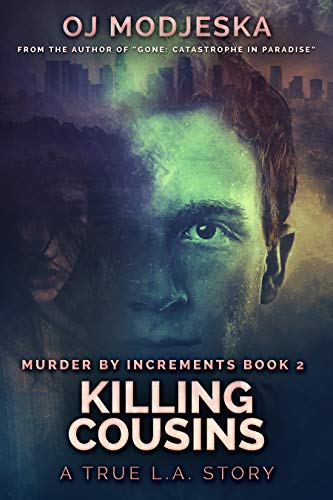
OJ Modjeska writes narrative non-fiction about horrible things. She is best know for her aircrash book Catastrophe in Paradise and the two-volume study of serial killers the Hillside Stranglers, set in the gritty LA underground. This was the decade where the contemporary horror-show really got started. Here is another gripping true crime account from this highly skilled writer.

OJ Modjeska 2020

A historian and legal scholar, with an uncanny ability to unfold a story and get right into its interstices, Modjeska opens up a more recent yet less familiar world, the bursting energetic immigrant life in the West Bronx in the 1990s. The topic is mass murder, not the familiar lone- gunmen-goes-crazy version but murder-by-arson, a deliberately lit fire aimed at just one woman which resulted in the death of 87 victims in a crowded nightclub. Julio Gonzalez’s target was his ex-girlfriend Lydia Feliciano who had rejected him. She survived, but the rest were collateral damage. This was the largest single-incident death-toll from a single perpetrator in the US up to that time. The victims were from a highly diverse local community, mostly immigrants from Puerto Rico, Honduras, Ecuador and Mexico.

People were poor but life was not all miserable and was certainly better than the grisly oppressions they had left behind. Modjeska summons up the powerful currents throbbing in these often undocumented and hand-to-mouth communities, with their hip-hop and reggae beats, local crafts and homestyle Latin and Carribean food. Thousands flooded into the area and filled the nightclubs where cheap alcoholic drinks were served and the fun went on long after midnight.

One such club was Happy Land, operating in cramped and definitely unsafe premises. But who cared? They were just immigrants, the landlords made plenty, why bother with stupid regulations about fire-safety and evacuation plans? And who could have imagined that a single, unhappy, traumatised Cuban man who had arrived on the Mariel boatlift in 1980 would take this terrifying course in order to kill his ex-girlfriend. Lydia was a middle-aged woman who had formed a strange love relationship with this much younger, insecure and unprepossessing man, and then discovered he was morbidly jealous, soon unemployed, and definitely no fun. Humiliated and enraged by her kicking him out, he took the only revenge that came to his mind.

As always with Modjeska’s highly skilled narrative technique the story unfolds in unexpected ways. It is never a “who-dun-it” because we know the identity of the arsonist right from the beginning. But the “why-did-he-dun-it?” becomes an unwinding of the whole framework of US urban history, of the flight of desperate people from the failed states of the South, of their uneasy occupation of decaying urban areas and the toleration afforded by the dominant powers towards their presence, as long as the only people they harm are themselves. It is an interrogation of the Two Americas, the uneasy accommodation developed between those who are marginal to the dominant narrative, the profound disconnect between everyday life in the immigrant ghettos and the dislocations that result.

Low income and marginal people are the most vulnerable. Unsafe buildings, appalling physical conditions, dangerous constructions, poor implementation of regulations: all these are the lot of the drifting immigrant populations embedded in rich urban cities especially in “free market” economies. They risk disaster because they don’t have funds, resources or civic recognition.

As is the case especially with her Hillside Strangler books, Modjeska depicts the inner life of the perp, a weak and fearful man unsure of his masculinity and desperate to keep “his woman” in a society where men’s ownership of women was no longer absolute and where women had enough power of their own to make their own complicated but definite decisions.

Modjeska’s great skill is to bring the reader into a sense of deep connection with the time and place when the crimes she discusses are committed. This is rare in popular true crime ficition. In the case of Happy Land, we learn not only what caused the murderous fire, but what happened afterwards.

Rapid gentrification has pushed more and more of the immigrant communities out of familiar spaces and into even worse conditions. Homelessness is obviously one of them. Now even the South Bronx is being bought up by wealthy white professionals, and the places left for the immigrant communities to go are dwindling.

Reading Happy Land is like being introduced to a whole era of recent American life through the desperate actions of one distraught man and his personal struggles which illuminate a far bigger whole. From scattered journalistic and some epidemiological reports it seems these are among the people being worse affected by the Virus at least in New York. The implications are really horrific.

One always learns so much from Modjeska’s books, and they open up questions about this rapidly emerging horror-show society which one day soon must surely be faced.  I wrote this review a week or so ago (end of May 2020). Unbelievably and suddenly, America is facing these questions in the most terrifying way imaginable, today, now, in early June.

Paid Reviews? Who knew?

Recently my small publication company had offers from several sources to arrange reviews for its Kindle books for an unspecified price. “At least forty reviews” one promised. This is unconscionable. Reviews have become a major element in the success or otherwise of Kindle books, especially those of otherwise unknown authors. I’ve often wondered at the frequently inane and disconnected reviews that turn up for many new titles giving them five stars. Obviously these are not validated purchasers although who knows? When books only cost 99 cents it may work out financially in the end to get the recruited reviewers to buy the books while the author/publisher shells out however much they pay to the review company. No wonder there is so much rubbish around. But given the difficulties now with getting in front of readers’ eyes – why on earth Amazon decided to give up on the “Also Boughts” – it’s not surprising that people will come up with scams of various kinds. Book reviewing itself is a weird business. Check out the comments below by TIME reviewer Lev Grossman from a while back.

Reviewing before Kindle

THE WORST REVIEWS EVER?

Imagine writing a thousand page novel which everybody hates.

Following my long-standing interest in German art, especially my work on Neo Rauch and Gerhard Richter, I decided to see what had been going on in the German novel lately. I cruised through a few lists looking for something that piqued my interest. I chose and ordered a few from Book Depository which has a great European language selection. Being hasty and lazy, I based my choice on review comments and catalogue descriptions without looking carefully into details. I can read in German, but slowly. I came across one which was highly praised – by the publishers, as it turned out. It won the German Book Prize in 2008. Der Turm (The Tower) by Uwe Tellkamp offers a “monumental panorama” of the former DDR (East Germany) across three generations in decaying Dresden. Sounded good to me, if a bit intense. I put it with the order, which will arrive in a week or so. I discovered that there is an English translation, published by Penguin in 2014, but I wanted to do the German thing. Why not?

Der Turm Germ cover

Cover of the German edition of Der Turm

Well, one reason might be that the book is around 1000 pages long, and that’s in paperback. I hadn’t realized that when I bought it. Since I read mostly in bed, this is exactly the kind of book I vowed and declared I would never buy again, once the miracle of Kindle turned up. (German books aren’t available on Kindle, or if they are I can’t work out how to buy them). I can’t even imagine how to physically manage reading a book of this size in bed. I realized I had made a stupid and expensive mistake, but by then it was too late.

Dresden Gasometer

Decaying Dresden: the Gasometer

A day or so later I realized this simple purchasing episode clarified some things about myself which annoy me so much, the stuff in my auto-critique basket. Lack of careful attention to what I am doing. Impulsiveness. Ordering things online at midnight. Ignoring my own resolutions. And because I have been reading obsessively in the genre of subjective non- or semi-fiction (Knausgaard and now Carrère) I kept finding myself composing paragraphs about how this was actually a signal to me about myself, something I really should pay attention to, a message from the Great Beyond or maybe it’s the Deep Inside, the Unconscious.

Finally, though, I realized that my biggest mistake was not reading any actual reviews before I bought the damn thing. Cripes! It seems to be the most incredibly boring book that anyone has ever come across. Although the publisher’s blurb and remarks by a few London-based literati suggested it was an “epic” exploration, on the English-language Goodreads site there were 56 reviews and all of them were one star, which is the lowest you can give. And several of these were in German. I have never before seen such revulsion and disdain. Here’s what some said: “I just can’t get past the ridiculous writing style and overblown descriptions in this book … spurious, convoluted and self-congratulatory”. “A thousand-page cringe fest, arid scenes from the lives of the lifeless”. “Absolutely terrible!” Lots of people left no comment, only their voluble single star.

How would you feel, writing a book so unbelievably long, which all your readers seemingly hate? I mean it’s hard enough to get people to review your books in the first place, but what if they’re all totally negative? Is it better to be ignored or condemned? Then again, how does such a book even get published? There are thousands of writers all over the world, struggling along day after day, approaching agents and publishers with panting enthusiasm, only to be rejected time and again, consigned to the slush pile and thence to the Kindle quagmire, if they can even get that far. And here is someone who writes and writes and writes in a turgid prose with achingly dull detail and not only is he published in both English and German but he wins a prize. Go figure!

Uwe_Tellkamp_Worms

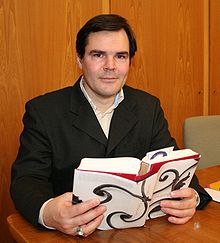
Uwe Tellkamp


Leipziger_Factory

More DDR decay: abandoned Leipzig factory