Planned for publication in November 2023, this is a project I have been working on for several years. It has changed over the time of writing, and I have changed along with it.
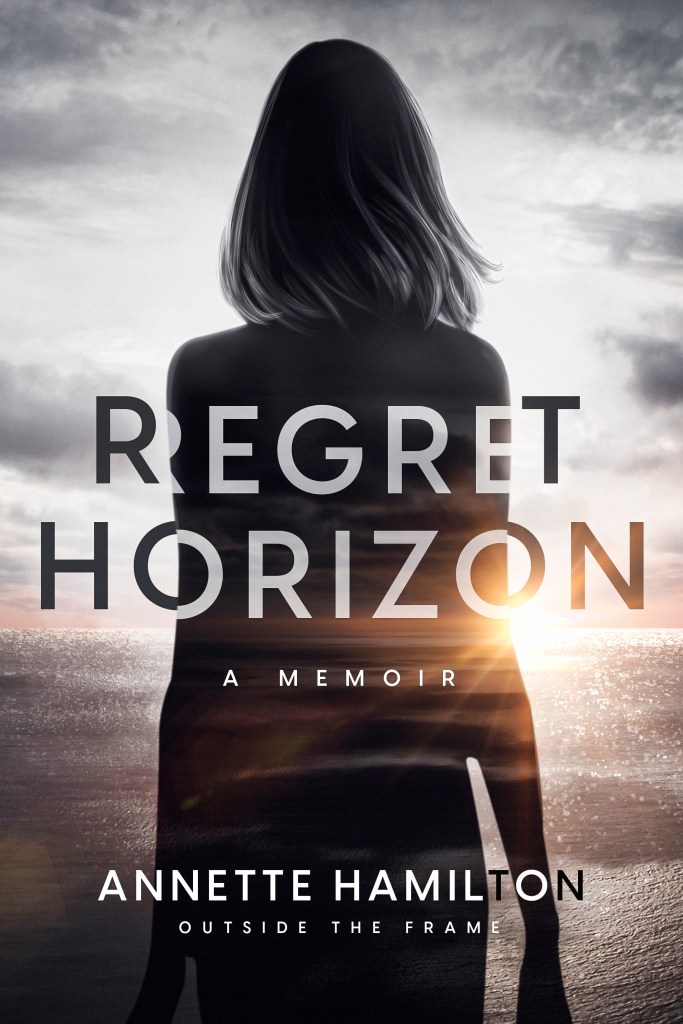
REGRET HORIZON
BOOK ONE IN THE SERIES “OUTSIDE THE FRAME”.
It is a true story of a single year, 2008, when both my mother and my ex-husband died within two weeks of each other. It is a meditation on contemporary rituals of death and its aftermath and the inability of our narratives to prepare us for the impossible dilemmas of mortality.
The narrator, who is and is not “me”, is caught by the desire to be objective and tell the truth, to admit her failings and obsessions, but also to acknowledge the social and medical issues around very old age in our society. It is an exploration of the complicated nature of family loyalties, a book about failure and delusion, inter-generational conflict, and the cruelty of old age.
After some glitches the print (paperback) version of Revolutionary Baby is now available. You can purchase from Amazon.com.au or place an order online with Booktopia. Or go to your local bookstore and order a copy to pick up in person, to save postage.
Revolutionary Baby is a collection of fictional stories about the revolutionary changes people experienced from the mid-twentieth century onwards. Women and men, younger and older, richer and poorer, are caught at moments of decision, unexpectedly resulting in the transformation of their lives. They must confront their past expectations and change the way they look at options in the present and the future. All the stories and characters are entirely fictional. This is not a book of hidden autobiography or memoir in disguise. Nevertheless the stories reflect my own experiences from the 1960s into the 2000s, as a student, an activist, a mother, an academic, a traveller, an onlooker and participant in many elements of those transformative times. These stories reflect an Australian history, culture and awareness, although they are not all set in Australia.
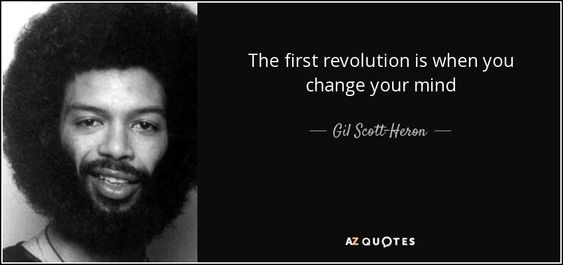
As a preliminary quote for these stories, I was drawn to the words of Gil Scott-Heron, now an almost forgotten figure of Black American consciousness in the sixties and seventies.
“The first revolution is when you change your mindabout how you look at things, and see there might be another way to look at it that you have not been shown. What you see later on is the results of that, but that revolution, that change that takes place will not be televised.”
Listen to his achingly powerful poem/song “The Revolution Will Not Be Televised”, from 1971, readily available on Youtube.
Most of my stories and books were begun before writing software even existed and certainly before it became ubiquitous. I don’t know how long programs like Grammarly and Scrivener have been around, because until recently it never occurred to me that I would ever want to use them. But in the past couple of years I became aware that almost everyone in the independent publishing world now regards writing software as part of their professional toolkit. Online forums, blogs, and writers’ groups take it for granted that everyone uses some program or other. Now suddenly AI has arrived and may soon make existing software programs irrelevant because “it” will write the books using algorithms, based on everything that has been published so far.
Before AI was on the horizon I couldn’t help wondering if writing software would help me produce my many belated volumes more efficiently. I downloaded a couple of test programs and couldn’t believe how they worked and what was going on. Here was a new field of cultural commerce aimed at a the thousands of people who now want to be writers – ironically at a moment when reading is becoming a less and less popular activity. Self-publishing in the Amazon environment has resulted in literally millions of books now being available all competing for pitifully small returns to the authors who, unbelievably, often set zero price for their works. Writers even complain that Amazon won’t let them offer works “permafree” as if giving your books away is a good strategy for an effective writing career – but that’s another issue.
What is an author? I grew up thinking an author wrote their own books. The authors I was brought up on – Thomas Hardy, Joseph Conrad, D.H. Lawrence, Marcel Proust, Franz Kafka, Virginia Woolfe, Ernest Hemingway, John Steinbeck, E.M. Forster, Aldous Huxley, F. Scott Fitzgerald, Jack Kerouac, Simone de Beauvoir, to name a few – wrote their works in pen or pencil on paper or in notebooks and edited them several times over by hand before and after they were even typed. Just look at their manuscripts. At some time or other when book production became a major industry publishers began to insist on using editors, who were trained in the technicalities of writing. Editors had a big role in getting a new book to the market. I don’t know what an editor did or might have done to Jack Kerouac’s original manuscript.
Kerouac”s On The Road manuscript is a 120-foot long scroll consisting ofa series of single-spaced typed twelve-foot long rolls of paper that have been scotched taped together. Kerouac found this method more conducive to his style of writing.
Now independent writers are told that they must work with an editor, or editors, through three or four phases of preparing their book for the chaotic world of self-publishing and pay the cost themselves. It seems generally accepted that editors reshape and often rewrite many of the most popular books published today. And this is without considering the role of ghost-writers. At least these characters are human beings.
Getting one’s book substantially rewritten or revised by an editor is a very expensive process. New authors may find themselves paying hundreds or even thousands of dollars before they push the “publish” button. But then along came writing software which promised to take the worst errors away, so the editorial costs would be reduced (although not eliminated).
Writing software works by submitting writing to a standardized matrix which prescribes a limited approach to sentence construction, grammar and expression. When you actually use the software and find out what alternatives and options are being offered you realise how limited the results will inevitably be. I discovered that writing programs such as Word now have semi-editing functions within their own software which encourages authors to corrects spelling and applies rules which puts commas in, or deletes them, according to some arcane formula developed somewhere in “creative writing” schools presumably.
I am unable to compare different forms of writing software because I stopped trying to use them almost immediately (although I do use the checker functions on Word which has its uses). The mass-production of contemporary writing is going on apace with endless reproduction of the same structures, story arcs, sentence design, and impoverishment of vocabularies. Presumably all these books are being scanned and turned into AI programs so that even more similar books can be produced, this time without authors, or rather, with hallucinated authorial names standing in for pure machine algorithms.
I have long been wondering whether there will be a place in future for books certified to have been written by authors who are actual human beings and edited likewise. At the same time, though, there are powerful currents now swirling around the cultural zones which have no respect for books and writing at all.
“Kanye West has revealed that he feels an aversion to literature, comparing books to Brussels sprouts and explaining that he sees evolved forms of communication as crucial to his vision of an optimised future.
The revelation came in a new episode of the podcast Alo Mind Full, where the rapper joined Alo Yoga co-founder Danny Harris and host Alyson Wilson to “paint a sonic picture of what’s on his mind”. ‘
The replacement of books and writing by visual and graphic communication brings us back to ancient societies using images and pictograms, or not bothering to record things at all other than in poetry and song. Which might not be such a bad thing!
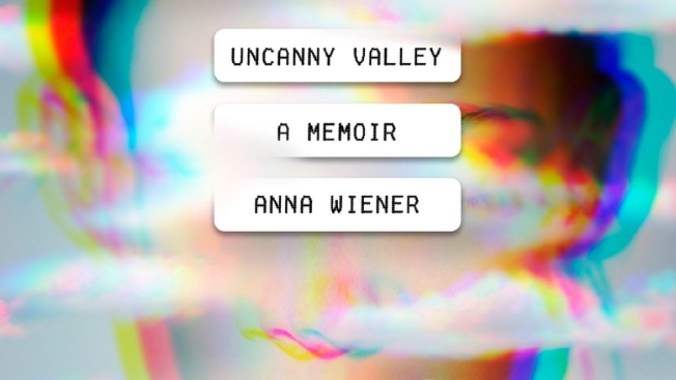
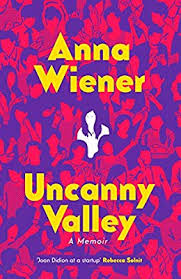
Uncanny Valley: a Memoir. Anna Wiener. Farrer, Straus and Giroux. New York, 2020.
I’ve been trawling through the world of memoir for several years now, with degrees of determination. I’ve written a lot about it in various posts on this blog. I have issues around “truth”, pretence and ethics. So many novels are memoirs in disguise. I love the sense of unvarnished, or at least only once coated, reality that comes with an honest-to-goodness memoir, as far as that can ever really exist. This feels like one. So unexpected, so immediate, so funny, so intelligent, so scary. Yes, sure, names have been changed … places disguised … the usual drill. But the feeling is real.
It’s strange how some books seem to get a buzz right away, you don’t know where it comes from or how it has reached you but there it is, and my favourite New York literary magazine says to click if you want a special deal so you click and a very short time later in the Blue Mountains near Sydney (late ravaged with fire, flood, storm, power and phone outages – we struggle to survive as if in some archaic era) you open a parcel and there is this book, so beautifully produced in pale blue hardback, a sensational cover with raised embossing, you can’t stop touching it, title and author’s name look as if they have been stuck on with labelling tape and you open it and you CANNOT PUT IT DOWN. (Note however there is a hardback edition with a truly horrible cover, don’t bother buying that one! See below)
This is even stranger when you realize what it is about. OK, it’s a memoir about a woman living her life today, right now, she is in her twenties and young and gorgeous, she should be having it all but it turns out her world is every bit as bizarre as the neo-Jurassic which seems to be enfolding us at an ever- increasing rate. And although you would think someone like me would have nothing in common with her, in fact she conveys so wonderfully what it is like to be in a world which itself does not exist, the same fantasmagoria I and thousands, millions, of others have been experiencing for some time and suspect might be one of the main reasons why everything is so decisively ****** up.
So she starts her story as a publishing assistant in New York, a familiar territory even if you have never been there. If you watch a lot of streaming TV you will recognize it from Younger, the show about an “old woman” of forty who tries to pass herself off as a groovy literary publishing assistant in her twenties. I loved that show, at least until it got unbearably soppy, but I love this book a lot more and it would make a far better TV series. Although turns out there is a TV series called Silicon Valley, but I haven’t seen it so don’t know how the two would compare. It was released in 2014, a comedy about a bunch of young guys who go into a tech start-up. Sound familiar?
She likes her New York publishing life just fine, but the writing (“ha-ha”) is on the wall, the wheels are coming off, and the entity she refers to as an online superstore is, by the early 2010s, destroying the existing publishing industry. She avoids ever mentioning a “brand name” throughout this book. I guess that’s to avoid being sued. But we know exactly who she is talking about. Anyway, like all humanist literary types she loathes the very thought of that entity as well as the anonymous other tech giants which have taken over our lives and expresses indignation about it to all her right-on friends like everyone in Australia still does. Meanwhile many of her former friends and schoolmates were making their first millions, hiring wealth advisers and taking out time-shares in Bali.
Something happened to her, mainly being broke. So, hopeful but ignorant, she joined a new e-book start-up based in a loft in NYC. With woefully little knowledge or experience, she became a “techie”. It didn’t work out. It was 2015. Various people told her to go to San Francisco, where she had friends. She didn’t know they too were struggling with the late-capitalist hellscape, rents were spiking, dating websites were flooded with business-management guides and heterosexual digital marketers shared their existential philosophies. Strangely, she was hired by a data-analytics start-up in a customer-support position even thought she had absolutely no background in data-analytics. The main reason they hired her seems to be that she read books, which none of them ever did
This is an auto-ethnography of start-up culture through the brilliant, funny, candid, intelligent gaze of a remarkable young woman. You don’t need to hear the whole story. Well, you do, but buy the book. You can get it on Kindle and in paperback from the US but this is one book I think is really worth buying in hard-back, it just feels so nice to touch and the print is lovely too. It’s what a book used to be. Try to find it in the original cover. The other cover, all red and purple squiggles, is unredeemably naff, which is what you get from the Amazon Australia site (see below).
Check out the various offers. Book Depository seems the best. Angus and Robertson for some unknown reason wants $47.75 for it. I will never understand the logic of book pricing in Australia these days or how it is that international publishing has reverted to an almost identical version of everything the tech revolution was supposed to disrupt. [‘Disruption’ is a big thing in Anna Wiener’s book, everything is supposed to be directed toward it, including camp-ground booking arrangements in US national parks].
This is a gripping tale of a young woman’s adventures in employment, twenty-first century style. It’s not just her story, it’s the story of a generation, of a cultural shift, of the tentacles of invisible industries we can hardly imagine spreading out across the cyberworld and dragging everything into their maw. Of a lifestyle with no people in it, or hardly any. A world where young women earn spectacular salaries and bonuses but spend an awful lot of their time drinking tequila shots and wondering about the current Insta algorithms.
Anna Wiener is a contributing writer for The New Yorker. She has also written for n+1, my favourite magazine, as well as The Atlantic. She still lives in San Francisco. I long to know what she is doing now. I hope she is writing more books. I don’t care if they are memoirs, biographies, essays, short stories. This is a voice so worth hearing and here is a writer engaging with what books can should and ought to be as she drags us with power and humour into the rest of this zany crazy probably insane and possibly terminal century.
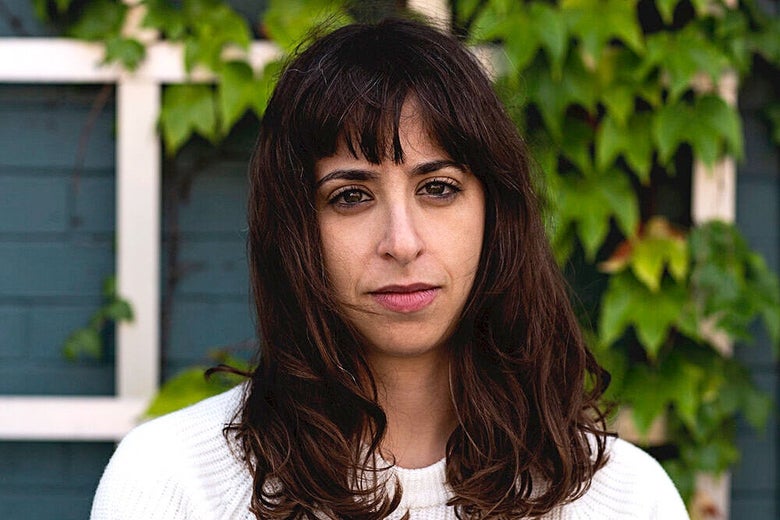
PHOTO BELOW: The Author, Anna Wiener. (A google search for my website may make it look like this is me, Annette Hamilton, but it definitely is not, although I wish I shared her lovely deep sad gaze and dark hair).
NOTE: The image used as the banner of this post is a Wikipedia photograph of Silicone Valley.
The new technologies of communication were supposed to open the literary landscape to everything and make all things possible, but instead the world of writing/reading has been sinking ever deeper into a bog or maybe it’s a quicksand. There needs to be a new way of reading and writing, assuming there is still time in this bizarre and quite possibly doomed century.
Not so long ago I assumed that soon writers and readers would be able to meet each other wherever they chose, around whatever books they preferred. Independent publishing seemed to open up the possibility that everyone could be an author and every reader could find a book (and author) they liked and could afford. Books would become easy and fast to produce. Gatekeepers and cultural brokers from identical backgrounds would no longer determine what was published. To some extent a bit of this vision has come true, but far less than what might have been. The infinite potential of the new technologies has been squandered and a new two-tier publishing world has emerged.
The two publishing worlds have accommodated one another. The Trad Pubs have happily regrouped and concentrated themselves into mega-corporate enterprises, swallowing up small publishers like sardines, cramming writing once again into little boxes marked by gatekeepers ever more vigilant and responsive to the needs of their local ecosystem with its critics, fashions and fame. The so-called “Indies” are dominated by rules and expectations in part set by the publishing industry itself, requiring ever-greater expenditure on processes which independent authors once expected to do themselves.
Many books are no longer even written by their authors. Professional writers do what used to be called “the writing”. Editors do the rest. The degree of uniformity is astonishing. Sentences have shrunk to the minimum. Subordinate clauses have gone to the woodshed. The semi-colon and colon have largely been outlawed. Nobody would ever publish footnotes in a fictional book, or include photos unrelated to the text. In most cases there are hardly any photos at all, even in autobiographies and biographies. Copyright law makes sure song lyrics or poems by someone else cannot be included in a book. Content editors make sure the text conforms to specific “arcs”. Everyone expects three acts and a “hero” protagonist. Writers who still want to author their own books are enjoined to go to courses and learn to write so every book in each genre is as far as possible the same as every other one, apart from title and author name. Cover art, even font-styles, converge around genre expectations.
In Trad Pub the global space is once again divided up into “territories” defined by nation-states. What should have been a free flow of ideas and exchanges across an open planet has fallen into a morass of dot com suffixes with financial consequences attached. Trad Pub still pretends to be terrified of Indie, but it shouldn’t be, because Indie has been more and more mimicking Trad Pub and Trad Pub is making good profits from selling in the online market. Court cases secured publishers’ rights to set absurdly high prices for ebooks while Indie writers continue to destroy their own viability by setting lower and lower prices and indeed give a lot of their writing away for free.
Trad Pub retains the aura of superiority in cultural value. Literary writing conforms to certain expectations about ideology and positioning. Certain themes are “big”, especially if they are to do with those who are ‘Other’ to the publishing enterprise itself. It is sustained by hordes of English majors and over-educated humanities people willing to work for miniscule wages for the privilege of serving the interests of these grossly inflated transnational companies. Some books are mired in complex moral issues, most recently the question of cultural appropriation, when mostly white members of the cultural majority try to write about the experiences of the “less fortunate”. But in truth most of these books, whether worthy or unworthy, are being supported by the publication of one or two or three blockbusters every year from famous authors. If the books can be sold into movie markets or developed for long-form TV series then their success is assured via the feedback loop between viewing and reading.
In the Indie world, genre is King, Queen, Bishop, Knight and Deity. Editors, cover-designers, blurbists and the rest ensure that writers conform to the genre. If you write one book in that genre then woe betide you it you don’t write a series of others, with matching title livery and often the same characters. This is popular mass-market writing, everyone agrees, and there is no room for literary fancies or trans-genre mucking around. In Trad Pub they only want one book a year from their writers, if that, but in Indieland they want two, three, four or more one after the other. Mass production for a mass readership. Now readers don’t even want to read. The big thing is audiobooks so readers become listeners, mainly because the level of literacy in the general population has fallen so low.
Where is writing outside the norm? The most encouraging signs come from small local independent publishers who find all kinds of new (and old) writing worthy of publishing. It is fortunate that many writers can get back their rights to their own works from publishers who have gone out of business, or whose contracts were limited. The new publishing technologies mean these books, long unheard of and forgotten, can be republished and brought to new readers. But what about the countless writers who want to do something different but are being railroaded into the latest trends via K-Lytics and feel obliged to write shape-shifter romances featuring panthers, lions and mongoose (mongeese?) There needs to be a space where they can be published even if they aren’t going to score on the peculiar algorithms used by Amazon and the rest. Books used to appeal to small groups of readers. People didn’t expect to make $50,000 a year or more by writing pot-boilers, although now it seems to be a career path. But it’s all about money and ranking these days, whether Trad or Indie.
Meanwhile I am pushing onwards trying to find some path between the two even though I increasingly think it’s a truly thankless venture.
The whole manuscript is printed and I am about to get into it with a red pen. I couldn’t say how many edits it has had, that is not a meaningful question. I edit all the time as I go along, and I try to keep a version in my files periodically in case I need to go back. I can see why people employ an editor, if only because it costs so much money and you wouldn’t want to mess around with something that already has had so much expensive attention. Maybe I’ll reconsider my position on editors. But every time I have had an editor whether for creative or factual writing they make changes according to some inexplicable principles of their own. I am very aware that all of my stories in Revolutionary Baby use different narrative voices which do not convert into standard grammar, in some cases (as in the voice of one of my young hippies from the Northern Rivers) very far from it. But it is how my characters think, as far as I can write it. It is not a mistake or the product of grammatical infelicity even though grammar checkers don’t like it. Does it work? I am trying to inhabit each of my main characters in their own worlds, and each of their worlds are very different. I guess I will know more when I’ve read all of the stories together while wielding the red pen.
In my last post I mentioned that I was seeking permission to use two lines from a country and Western song sung by Ernest Tubb in 1959 as an opener for my memoir. I still haven’t heard anything back from the copyright holders, a large transnational organisation which holds copyright on a huge number of songs.
This has led me to further musings on copyright as a concept and practice. There are many countries in the world which appear to have no copyright laws or if they do, they don’t enforce them especially if the writing being used comes from somewhere else. Imagine my surprise a couple of decades ago to find my book Nature and Nurture published in a Third World country, in English and pretty much in full although without the photographs and someone else’s name on the cover. But somehow there seemed a rightness to that. The book is unobtainable anywhere as the Australian publishers never republished it, and made no effort to make it available anywhere outside Australia. Practically no libraries in the world hold it. This of course was before self-publishing. If people somewhere else want to read my book, this was a way of doing it, and did it matter that much who was the author?
These libertarian thoughts are very much outside the frame today. Everyone is so precious about their rights over a few sentences that whole books can be pulped for some minor bit of plagiarism. You are legally vulnerable even where the copyright holders don’t answer queries or have gone out of business. This, in an era when visual and written information can be circulated as never before.
Copyright is an issue quite apart from libel and privacy breaches. My inability to finish Regret Horizon is in large part due to my anxieties over privacy issues which remain unresolved.
I wonder how much one would have to change the text to claim that those two lines were no longer subject to copyright? I’ll play with that idea, but somehow it just wouldn’t be the same.
I am very close now to getting the memoir finished. Here’s the draft cover. There are a few different variants. Keith my designer will finalise it. I am so grateful to talented Western Australian photographer Jordan Cantelo for his generous permission to use his photograph Ocean Horizon for the cover image. Visit his site to see more of his outstanding work at http://jordancantelo.com/
The title has changed to Regret Horizon and there are several reasons for that. I sent a semi-final version to one of the main characters in the book and she read it twice in a few days and came back with a lot of changes. She said I’d got quite a few things “wrong”. Some were factual things, some were more interpretations and opinions. But it threw me. How far do I have to go to include the views of the people I am writing about? They are all real people with their own points of view and their own desires and hopes in terms of how they might appear in someone’s book, especially when it’s their own mother/grandmother/partner/ex-partner’s wife/sister and so on. I’m so close to publishing this book, but equally close to abandoning the project altogether. I’m going to wait until I get some other comments and feedback, meanwhile I’m in Procrastination City.
New Year’s Resolution: open an Instagram
account. At least I’d feel I was doing something. Got some great photos since
New Year’s Day so I’ll be seeing you or rather you won’t be seeing me but you’ll
be seeing what I see. Which, in a way, is what a Memoir really is all about.
When I first started learning how to publish on Kindle it was such a struggle. I wrote quickly and fluently, I was a great typist and could use Word with my eyes shut, but the next steps – getting the manuscript right for the various platforms, understanding how to format, what was involved in covers – not to mention ISBNs and uploading and getting manuscripts to conform to arcane and mysterious requirements proved baffling, frustrating and humbling. I was just getting the hang of it when life threw a curved ball and the almost finished books had to languish for most of 2018. Back in action now and I discover everything has suddenly got so much easier. Ingram Spark are falling over backwards now to help the self-publishing author (as well as those micropublishing through their own companies), there are many new cover services available, new international players have appeared in unexpected places (Italy, Finland!), Draft2Digital is flourishing and best of all (for Mac users) Vellum came along with fantastic options for interior designing and trying-out on different platforms.
Amazon
closed down Create Space, that was a surprise, and started its own print arm,
which didn’t help Australian authors since there was no way to get printed
books to Australia and Amazon wasn’t planning to print them here. Local readers
in Australia are still wedded to print books and the local
publishers/booksellers/reviewers are resolutely set on ignoring
self-publishers, so without a print book presence of some kind the Australian
market is very hard to reach.
But
never mind, Ingram Spark is a very good alternative, prints in Melbourne and
has great international distribution. The
print version of my experimental children’s book (The PricelessPrincess)
can be ordered now through Book Depository, Angus and Robertson and others. It
is also available in print from Amazon, although nobody in the US is buying it.
But
even with all the alternatives, publishing on Kindle remains a necessity
although the market is now so hugely competitive. The good old .mobi file was
easy enough to produce but it generally looked pretty ordinary and the
placement of images was a pain. BUT
today Amazon announces a new service called Kindle Create. Seems to have
purloined some of the best features of Vellum, for no cost. So I’m going to
have a go with it for my two books of short stories, ready to come out early
next year, although I’ll still get epub and pdf versions for Ingram Spark made
through Vellum. I feel like I might be onto it at last.
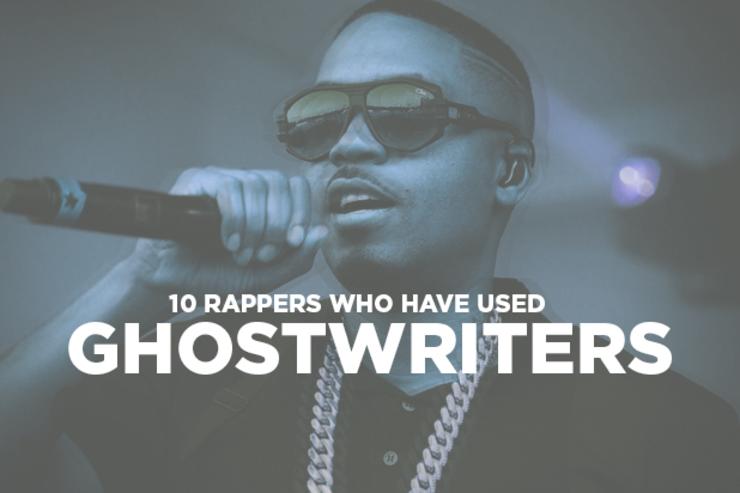
I guess the only thing easier would be if Amazon wrote your books for you. Ghostwriting is already a big business – celebrities and rappers use ghostwriters all the time. But if Amazon could guarantee a good book written from your plot outline, and then marketed it where the old “Other Purchases” used to be, it would raise the career of writing to a whole new level.
Recently my small publication company had offers from several sources to arrange reviews for its Kindle books for an unspecified price. “At least forty reviews” one promised. This is unconscionable. Reviews have become a major element in the success or otherwise of Kindle books, especially those of otherwise unknown authors. I’ve often wondered at the frequently inane and disconnected reviews that turn up for many new titles giving them five stars. Obviously these are not validated purchasers although who knows? When books only cost 99 cents it may work out financially in the end to get the recruited reviewers to buy the books while the author/publisher shells out however much they pay to the review company. No wonder there is so much rubbish around. But given the difficulties now with getting in front of readers’ eyes – why on earth Amazon decided to give up on the “Also Boughts” – it’s not surprising that people will come up with scams of various kinds. Book reviewing itself is a weird business. Check out the comments below by TIME reviewer Lev Grossman from a while back.






 Annette Hamilton - Writer