Copyright: for and against

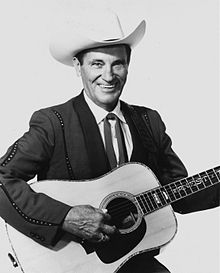
In my last post I mentioned that I was seeking permission to use two lines from a country and Western song sung by Ernest Tubb in 1959 as an opener for my memoir. I still haven’t heard anything back from the copyright holders, a large transnational organisation which holds copyright on a huge number of songs.

This has led me to further musings on copyright as a concept and practice. There are many countries in the world which appear to have no copyright laws or if they do, they don’t enforce them especially if the writing being used comes from somewhere else. Imagine my surprise a couple of decades ago to find my book Nature and Nurture published in a Third World country, in English and pretty much in full although without the photographs and someone else’s name on the cover. But somehow there seemed a rightness to that. The book is unobtainable anywhere as the Australian publishers never republished it, and made no effort to make it available anywhere outside Australia. Practically no libraries in the world hold it. This of course was before self-publishing. If people somewhere else want to read my book, this was a way of doing it, and did it matter that much who was the author?

These libertarian thoughts are very much outside the frame today. Everyone is so precious about their rights over a few sentences that whole books can be pulped for some minor bit of plagiarism. You are legally vulnerable even where the copyright holders don’t answer queries or have gone out of business. This, in an era when visual and written information can be circulated as never before.

Copyright is an issue quite apart from libel and privacy breaches. My inability to finish Regret Horizon is in large part due to my anxieties over privacy issues which remain unresolved.

I wonder how much one would have to change the text to claim that those two lines were no longer subject to copyright? I’ll play with that idea, but somehow it just wouldn’t be the same.

The River of Regret with Ernest Tubb

Ernest Tubb sang “River of Regret” in 1959.

For reasons only a psychoanalyst could clearly state, I don’t seem able to get this book finished. I have promised to send it out to the family members who are mentioned in it for their comments and permission to use their real names. I have asked the designer to stand by to do the covers. I have promised myself it is #1 on the priorities list. But no matter what I do I just can’t get it to a point where I can send it out.

The biggest issue has been endlessly rewriting the first chapter. I realise this is because I don’t really know what I want to project in this so-important introductory bit. I have been struggling between two positions: a kind of grovelling excuse-seeking for having been such a dreadful mother and partner and sister and daughter (and probably everything else) all my life and not having realised it, and the desire to say look here, you guys, I was doing my best! I came from another era! I had a miserable confused childhood just like everybody else who was born close to World War 2! And I think I worked incredibly hard and tried everything to keep the show on the road. If it didn’t turn out so well for you all, I am sorry, but I can’t go to my afterlife taking all the blame! I couldn’t be a perfect person. What a surprise! But I guess I am still regretting that.

If my emotions throughout 2018 seemed unstable, the beginning of 2019 has been even worse. Maybe writing a memoir was not the best idea, under the circumstances. A part of me wants to just forget about it right now, today, put the project aside and go back to painting my landscapes and writing about art. Of course none of it makes the slightest bit of difference and it is dawning on me that nobody, I mean nobody, cares in the least what I write or don’t write. It is, to follow my perpetual aqua-marine metaphorical inclination, all just water under the bridge. Or to quote my recent favourite ballad:

And instead of being someone with the world to win
I’m just driftwood on the river of regret.

This is from a song sung by Ernest Tubb in 1959. The original version is on Youtube here – I think I worked out how to embed a song in a post – always something new to learn!

As this song seems so completely apposite to my memoir I set about finding out how to get permission to use these two lines as opening quote in Regret Horizon. What a fascinating business this copyright stuff is. I will write a post about it when I have an outcome.

Meanwhile I’ll just keep on drifting with Ernest Tubb and try to take the deeper philosophical meanings on board.

Regret Horizon: the Memoir

So my memoir of the year my mother and my ex-husband died is almost finished. Procrastinating about sending it out to the family and trying to do the final edits. Every time I open the file I find myself making changes, not just a few, but a lot. I still don’t feel clear about it. And the question of the title has been holding things up. From the start, the working title was A Dying Year. Feedback? Oh, that sounds so sad/distressing/upsetting. And who is dying? Is it you? Is this yet another PityParty by someone on the way out? No, no, not that! Well, what then?

So it got a new title, and a new slant, because I realised by the time I had finished the penultimate draft that my main feeling about everything was my awfulness, and how much I still don’t understand, and how much I feel regret for what I had done and not done in those last few months.

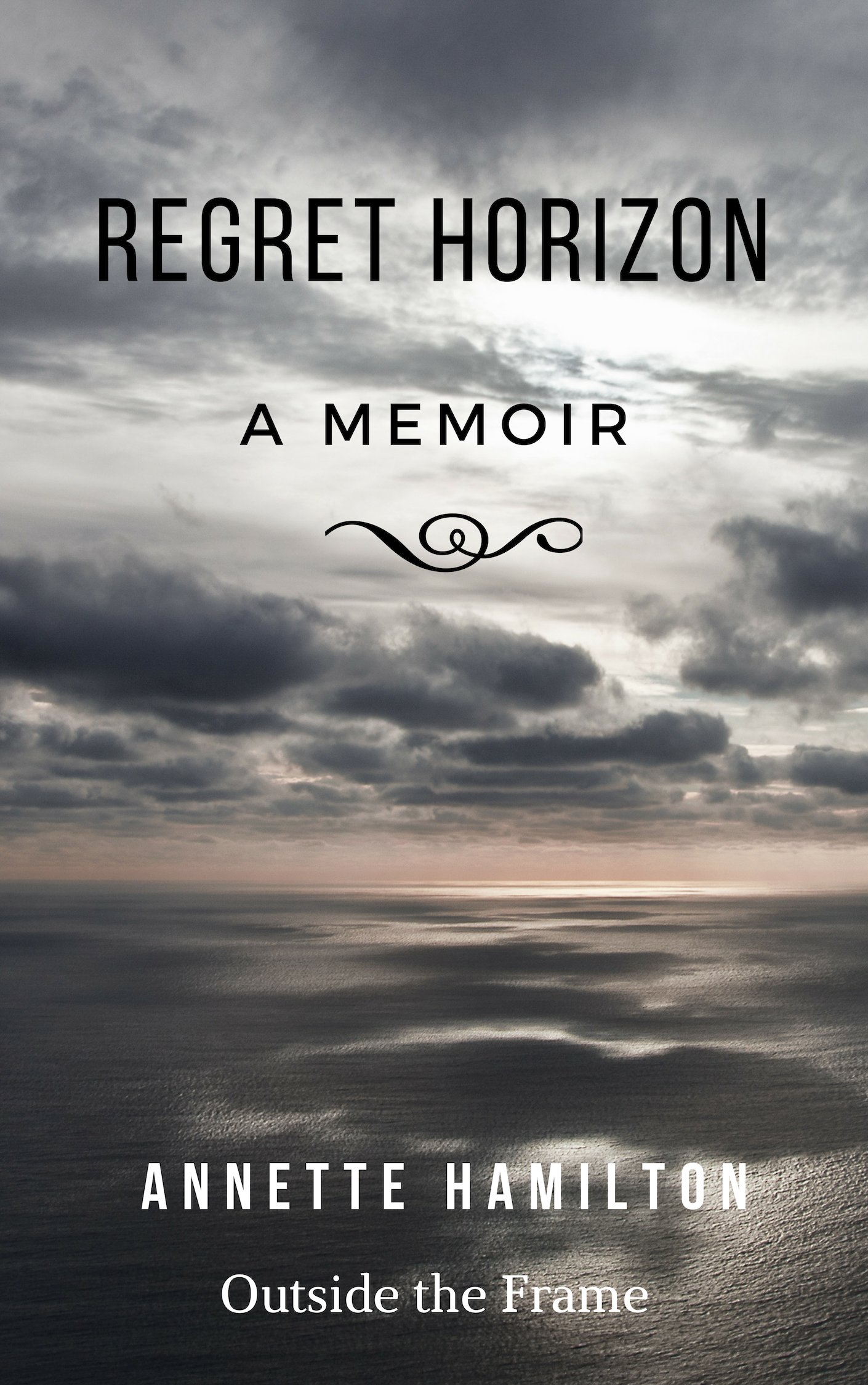
Somehow water, rivers and seas, threaded through everything I felt throughout the process of writing this book. So when I found Jordan Cantelo’s wonderful photograph, “Ocean Horizon”, it spoke to me profoundly. Jordan gave me permission to use it for the cover, and asked for no payment, which was truly generous of him. I love his work. I will write something more about it later.

Draft cover: Regret Horizon.

Memoir: to publish or perish?

I am very close now to getting the memoir finished. Here’s the draft cover. There are a few different variants. Keith my designer will finalise it. I am so grateful to talented Western Australian photographer Jordan Cantelo for his generous permission to use his photograph Ocean Horizon for the cover image. Visit his site to see more of his outstanding work at http://jordancantelo.com/

The title has changed to Regret Horizon and there are several reasons for that. I sent a semi-final version to one of the main characters in the book and she read it twice in a few days and came back with a lot of changes. She said I’d got quite a few things “wrong”. Some were factual things, some were more interpretations and opinions. But it threw me. How far do I have to go to include the views of the people I am writing about? They are all real people with their own points of view and their own desires and hopes in terms of how they might appear in someone’s book, especially when it’s their own mother/grandmother/partner/ex-partner’s wife/sister and so on. I’m so close to publishing this book, but equally close to abandoning the project altogether. I’m going to wait until I get some other comments and feedback, meanwhile I’m in Procrastination City.

New Year’s Resolution: open an Instagram account. At least I’d feel I was doing something. Got some great photos since New Year’s Day so I’ll be seeing you or rather you won’t be seeing me but you’ll be seeing what I see. Which, in a way, is what a Memoir really is all about.

The Memoir, the Relatives: should you Botox your book?

So here it is, two days to Christmas, and the Memoir project remains incomplete. But an end is in sight.

All the issues raised in The Write Nook post on “Writing Your Own Story” are so true. Thanks so much for that.

https://writenook.wordpress.com/2015/10/01/writing-your-own-story/

So Volume 1, Regret Horizons, is almost ready. A cover design is underway with final elements to be provided by Keith. The text is written. After going through the issues haunting Knausgaard (thanks, Uncle Gunnar, for the vital prompt about defamation, invasion of privacy, legal questions) all the most contentious parts have been pared down to the very barest minimum, with only tiny hints instead of full-bodied assertion. Wimpy I know. “Tell your own truth” says my counsellor and I know where he’s coming from and I want to, but I can’t, at least not in this book.

What will happen to my book if I Botox it?

Thought I had covered all bases although there were still a few itchy spots remaining. But I need them in the story for it to make sense for me. I can’t eliminate everything, like some kind of textual Botox. Now it’s time to give it to the rellos to make sure they agree to having their names used, or to indicate otherwise.  Only tried it with one so far and pages of comment about “what really happened” have come back. Needless to say it’s not my version. Now I have to decide how to handle this.

The others will probably have their own comments to throw into the mix. One at least is likely to be even more what – concerned? Outraged? What to do? I understand exactly how Knausgaard felt when he tried to reconcile his recollections of cleaning up his father’s trashed house full of filth and empty bottles with Uncle Gunnar’s totally different version. I’ll probably have to do what he did, and write about that too. Oh god, so the book isn’t finished after all!

The past is never dead. It’s not even past. ~William Faulkner

Kindle Create: how much easier can it get?

When I first started learning how to publish on Kindle it was such a struggle. I wrote quickly and fluently, I was a great typist and could use Word with my eyes shut, but the next steps – getting the manuscript right for the various platforms, understanding how to format, what was involved in covers – not to mention ISBNs and uploading and getting manuscripts to conform to arcane and mysterious requirements proved baffling, frustrating and humbling. I was just getting the hang of it when life threw a curved ball and the almost finished books had to languish for most of 2018. Back in action now and I discover everything has suddenly got so much easier. Ingram Spark are falling over backwards now to help the self-publishing author (as well as those micropublishing through their own companies), there are many new cover services available, new international players have appeared in unexpected places (Italy, Finland!), Draft2Digital is flourishing and best of all (for Mac users) Vellum came along with fantastic options for interior designing and trying-out on different platforms.

Amazon closed down Create Space, that was a surprise, and started its own print arm, which didn’t help Australian authors since there was no way to get printed books to Australia and Amazon wasn’t planning to print them here. Local readers in Australia are still wedded to print books and the local publishers/booksellers/reviewers are resolutely set on ignoring self-publishers, so without a print book presence of some kind the Australian market is very hard to reach.

But never mind, Ingram Spark is a very good alternative, prints in Melbourne and has great international distribution.  The print version of my experimental children’s book (The Priceless Princess) can be ordered now through Book Depository, Angus and Robertson and others. It is also available in print from Amazon, although nobody in the US is buying it.

But even with all the alternatives, publishing on Kindle remains a necessity although the market is now so hugely competitive. The good old .mobi file was easy enough to produce but it generally looked pretty ordinary and the placement of images was a pain.  BUT today Amazon announces a new service called Kindle Create. Seems to have purloined some of the best features of Vellum, for no cost. So I’m going to have a go with it for my two books of short stories, ready to come out early next year, although I’ll still get epub and pdf versions for Ingram Spark made through Vellum. I feel like I might be onto it at last.

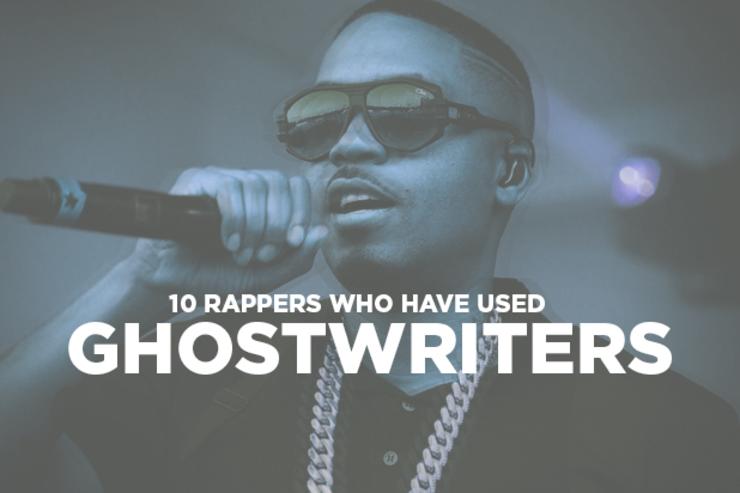
I guess the only thing easier would be if Amazon wrote your books for you. Ghostwriting is already a big business – celebrities and rappers use ghostwriters all the time. But if Amazon could guarantee a good book written from your plot outline, and then marketed it where the old “Other Purchases” used to be, it would raise the career of writing to a whole new level.

How do you get this gig?

Paid Reviews? Who knew?

Recently my small publication company had offers from several sources to arrange reviews for its Kindle books for an unspecified price. “At least forty reviews” one promised. This is unconscionable. Reviews have become a major element in the success or otherwise of Kindle books, especially those of otherwise unknown authors. I’ve often wondered at the frequently inane and disconnected reviews that turn up for many new titles giving them five stars. Obviously these are not validated purchasers although who knows? When books only cost 99 cents it may work out financially in the end to get the recruited reviewers to buy the books while the author/publisher shells out however much they pay to the review company. No wonder there is so much rubbish around. But given the difficulties now with getting in front of readers’ eyes – why on earth Amazon decided to give up on the “Also Boughts” – it’s not surprising that people will come up with scams of various kinds. Book reviewing itself is a weird business. Check out the comments below by TIME reviewer Lev Grossman from a while back.

Reviewing before Kindle

Writing and Defamation

defamation suitsI haven’t posted for a while because I’ve been engaged in a horrible torture which I hadn’t at all expected. No, it’s not another medical procedure, it’s a legal issue, and it’s resulted in weeks of inability to move forward, more drastic editing, and the emergence of a totally new and unexpected project which I can say nothing at all about here, now or ever, well, for the forseeable future anyway.

I have to thank Karl Ove Knausgaard once again.

220px-Karl_Ove_Knausgård

Karl Ove Knausgaard 2011

I’ve said before how important his work has been to my thinking about my memoirs, but lo and behold, his amazing final book, appropriately titled The End, appeared at the exact moment that I finished the first round of edits of my first memoirs book. I thought I was long-winded, but this book is 1100 pages or so. I’ve only managed to read 250 so far and I am desperate to get on with it but because it’s only in print (no e-book format) and because it weighs so much I can’t read it in bed at night which is when I do most of my reading, so I have to read it sitting up in a well-lit room, a few pages at a time. It also has no chapters, breaks or internal subdivisions so if you lose your place it’s damned hard to find it again.

It was published in Norway/Europe in 2011/2012 but English speaking readers had to wait until now – SEVEN YEARS LATER – to read it.

This makes the whole experience very bizarre because he is writing in the present of what is now a long-ago life. A little research reveals that after The End was published he broke up with his wife Linda who has been or still is suffering from a mental illness, he sees his four children in Sweden for a week at a time and lives mainly in London with a new wife, where he is lionized and presumably now very wealthy. All of this is not just aimless gossip, it goes to the heart of what he reveals in Book Six about his entire writing project and where it leads him, how it makes him reconsider who he actually is and what it means to be a writer, and even though he doesn’t know that this will be the outcome while he is writing the words you are reading.

There is so much to say about the Knausgaard effect, about truth and recollection and representation and writing and publishing in the twenty-first century but the thing I have to thank him for is making me truly aware of what can happen when you write about living people using their real names. As is famously known, his Uncle Gunnar, who he thought loved and supported him, went ballistic when an early book in the series appeared. Uncle Gunnar threatened to take him, his publishers and his mother as well to court. It is still not clear to me whether the court case actually took place or only existed in his own imagination, or whether he responded by radically changing his text to meet Uncle Gunnar’s objections. In any case, it was a traumatic irruption of another person’s truth into his creative project which he continues to call a “novel” even though he never claims the people he writes about are fictional and there are no disclaimers at the front of his books.

I have spent weeks now looking into the legal situation of writers of memoirs. The outcome is very sobering. Although laws are different in different countries, there are many commonalities. People who are written about by name in a memoir can object to the publication of the work on various grounds, including the invasion of privacy. “Truth” is not necessarily a defence. Writers are told they should send pre-publication copies to everyone who appears significantly in the book and ask them to indicate in writing that they agree to appear in it. If they ask to be left out altogether, or have their names and identities changed, the author apparently needs to go along with that or face potential consequences. I have been looking at some  recent cases to see how the law has been applied. I understand now why so many apparently autobiographical writings are labeled “fiction” and have vigorous disclaimers at the front.

One of my motivating factors in writing my memoirs has always been to be as much aligned with “the Truth” as possible. Of course I know everyone’s truth is different, but it has seemed to me that writers have not just the right but the duty to avoid the constant hiding-away and dissimulation and self-indulgence which accompanies so much personal narrative.  I am amazed to discover that it’s more or less a legal requirement and my mother was right to say “If you can’t say something nice about someone don’t say anything at all”. Who knew?

Then I found out that defamation suits are being brought against writers of  fiction. Dan Brown is famous for his world-wide best-seller The Da Vinci Code. In his latest book, Origin, he suggests that an Irish cult-monitoring group took money to fight a sect of the Catholic Church. His publisher is being sued. It’s a fascinating case, and also highlights that the mere fact of publication can result in a court case, even if the book was written somewhere else altogether by someone of another citizenship.
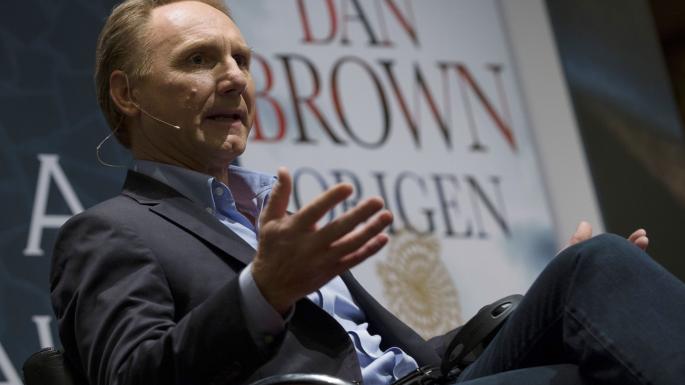
Dan Brown Defamation

https://www.thetimes.co.uk/article/anti-cult-group-sues-over-claims-in-da-vinci-code-author-s-book-08c3t9pnn

So what are you supposed to do? I guess the best thing is to write about life forms on interplanetary galaxies with no resemblance to humans. But I suppose your great-aunt could still take offence and claim that pus-dripping hydra-headed monster you wrote about was “really” her. As if copyright isn’t enough of a nightmare!
Hydra-mythical-creatures-28582631-1134-709

A two-speed economy: How traditional publishers are benefiting from Amazon.

I’ve mentioned before the way Amazon publication has entered new territory since the Big Five managed to get their own way about e-book pricing. It’s become increasingly apparent that conventional publishers have worked out how the maximise their gains from e-books and distributors, and while still bemoaning their existence have seized on the new opportunities now available.

There is no doubt that a traditional publishing deal remains the aim of most writers. Other than genre fiction of a certain kind (explicit erotica, shape-shifters, Space Opera romance and so on) every serious writer still wants a deal with a “real” publisher. But a lot of readers don’t want to buy physical books, and want to buy e-books online.

Now the traditional publishers have worked out that they can offer e-books at the same time as they publish print books, and preserve the powerful traditional ecosystem. By ensuring the price of the e-book version is not far from the print version (which may indeed be available in bookshops and will receive traditional marketing, recognition and publicity) they can make profits from e-books which are virtually cost-free since they only need to prepare the files once, there are no publication costs, distribution costs, warehousing costs or any other costs to speak of. The writers meanwhile have presumably signed contracts for the standard royalties, like 10% or whatever, and the publishers are pocketing the difference. And keeping the e-book costs high for the readers.

So a newly published book, like Liane Moriarty’s Nine Perfect Strangers (2018) is selling on Kindle for $14.99 and in paperback on Amazon.au for $16.00.  And Sydney-based author Shirley Barrett’s The Bus on Thursday (2018) – a most unusual read about a woman who has breast cancer by an author who learns that she does in fact have breast cancer after she has finished writing the book – is published by well-known Australian publisher Allen and Unwin on Kindle for $14.99 and in paperback at $22.99. I have no idea whether these authors have made special royalty deals with their publishers regarding the e-book version, maybe they have and good luck to them.

This process is pushing the distinction between self-published books and books from traditional publishers further and further apart, so most indie books on Kindle are $2.99 or even less and the trad pub books are now well above $10.00.  Do readers know, or care? Well, they probably don’t care about that, as such, but they DO get to hear about the books because the publishers have established methods of publicity which benefit the e-book sales in a way that the randomised chaos of Amazon Kindle at present cannot equal. So the traditional publisher sells lots and lots of e-books but makes the reader pay almost as much as they would for a paperback even though they don’t get to actually “own” the book, can’t lend it to anyone or do anything else with it. But somehow still think they are getting a good deal because it costs less than the paperback they saw in the store.

What a mess it has become. I wish some clever statistical analysis was going on right now to clarify what the effects of all this are. You can glean a bit from services like Alex Newton’s K-Lytics and Data Guy at the Author Earnings Report, but I haven’t found anyone who is tackling the divergent effects of the way traditional publishers are now using the e-book market to enhance their reach while re-consolidating their influence over publishing and pushing independent authors back down to where they think they belong. Is genuine independent publishing doomed? Does anyone know of any updates on this?

More on opportunism: hire an actor!

Since my last post – and thanks so much to everyone who liked it – I have been giving more thought to my writing career.

I realise that I shied away from confronting one of the core realities about the writing career today: namely, who are you? If you have to Put Yourself Out There to Reach Your Readers you have to first work out who those readers might be and then consider what kind of author they want you to be, which means, you have to look like that writer. Once upon a time a writer looked like him/herself, no matter what he/she looked like. Shirley Jackson (below) wrote Gothic horror stories about life in small New England towns. Her publicist would never have let this photo into the public realm if it was today. Actually her story is very interesting, see the link below.

shirley jackson

More on Shirley Jackson

And then there is Charles Bukowski. OK, this is a cheap shot, but hard to resist.

Bukowski Sam Cherry 1970

Cbarles Bukowski, 1970 portrait by Sam Cherry.

Actually when you look at photographs of famous writers going right back to the early twentieth century you can see already the aesthetics of writerly fame were already at work, in parallel with the growth of photography. There are profound existential questions here, but let’s skip them for the moment and go right back to Square One!

Everyone in this game accepts that Marketing involves being someone marketable. These days the author is a product, and like all products it does matter what she/he/they look(s) like and whether or not they fit the current paradigm for successful writers. There are countless guides to how to ensure a successful author photo. I like this one, especially for its analysis of specific published author photos. A certain look, a physically attractive or interesting persona, a hesitant smile that looks great on the back cover,  a certain age, an air of reserve and mystery – possibly the hint of the exotic – that will work. But the thing is, if that is the author in their photo, then it has to be the author in real life as well, in the unlikely event they get asked to appear in public somewhere, like at the Podunk Valley Writers’ Festival.

What do you do when you don’t even dimly resemble any of the persons identified as successful writers in their photos? It has occurred to me that it might be helpful to hire someone. Good training for a budding actor! Hire a young person, able to manage the Internet, look great and make public appearances, that might be a good alternative. After all, the gig economy demands people work in all kinds of different careers so there must be hundreds or thousands of young people who’d love to be writers without having to write any books. As for the writer,  if you can use a pen name, why can’t you use a pen body? There are ghost writers, why not writers’ ghosts?

Is this a good plot or what? I don’t think it’s been done before although back in 1976 Martin Ritt directed a very young Woody Allen in a movie, The Front, about a writer manqué who signs his name to scripts by real writers blacklisted during the darkest days of Hollywood, when J Edgar Hoover determined what would and would not be acceptable from writers and movie makers according to his own warped ideologies.

The Front 1976

And there has been at least one movie about Ghost Writers – Ghost Writer, directed by Roman Polanski, starring Ewan McGregor, 2010.

ghost writer 2010

Maybe there are other movies with similar plots, and that great little series Younger, currently in Season 5 on Stan, takes up the issue of ageism in the publishing world, and the extent to which millenials are currently determining what is published and what isn’t – in tradpubland of course. Incidentally in researching this blog post I came across a list of films about writers  here. I’d love to watch all of them in one big binge! That’s the only thing I might enjoy more than actually writing the stories myself.