Why review? … and the Tentacle Romance.

Over the past several months – say, six or so – I have been reading an inordinate amount as I’ve been ramping up my production schedule. Not that I’ve met it, but I’ve been trying. Several almost complete works just waiting for that semi-final edit, two new stories from my Other Identity swirling around, and here I am in Paris struggling with what feels like a covid cough – oh, wait! Covid doesn’t exist any more … at least nobody tests for it and a whole plane load of coughing passengers on their way from Singapore (nobody masked) was just due to general unspecified viruses. Anyway when I finally called the brilliant SOS Medicins service – can you believe a doctor does a home visit at 11 at night after being called just an hour before ?- he didn’t express any interest in speculating about viral sources and was just very reassuring about cough mixture and the benefits of Paracetomol.

So, back to reading. As part of the effort to better define what ‘genre’ I am writing in, I have been gulping down all kinds of stuff. I joined Kindle Unlimited so I could read lots of books of completely unknown quality really quickly and send them back if I couldn’t stand them. And I did send back a lot. You can only have twelve out at one time. I was sending back two a day at one point. The contemporary writing and reading market is so peculiar. I discovered genres I could never have dreamt up. Well, maybe they are subgenres, whatever. Tentacle Aliens was pretty bizarre.

Their technical identity on Amazon is:
Tentacle Aliens and Monsters Erotic Short Stories

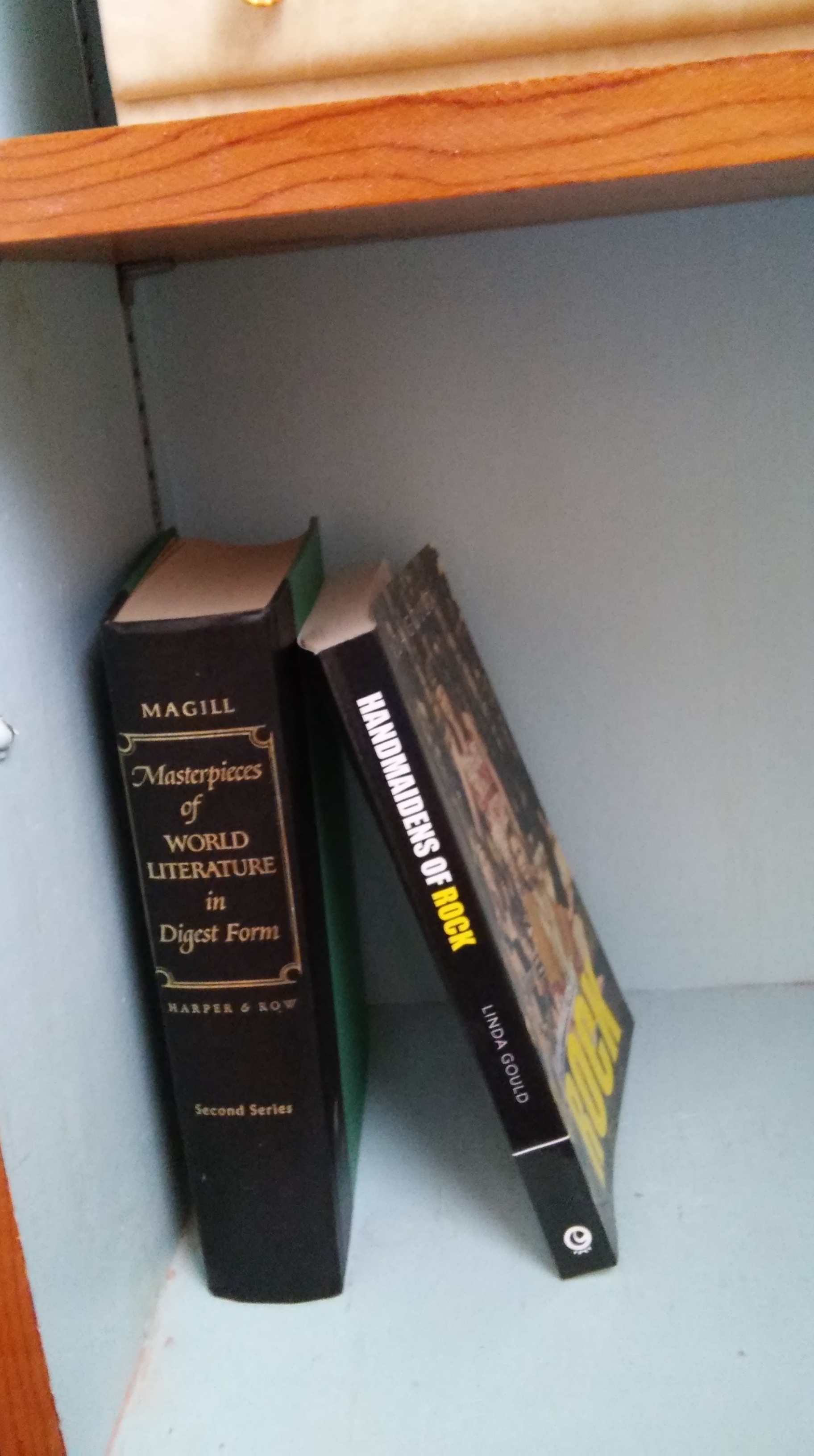
I really liked Rita Indiana’s book, although to be fair, it wasn’t a tentacle romance and it did not evolve within the Amazon ecosystem, being published as an actual book, ie a printed volume, by that excellent British publisher And Other Stories. Check them out!

Here’s what Rita’s blurb says: Plucked from her life on the streets of post-apocalyptic Santo Domingo, young maid Acilde Figueroa finds herself at the heart of a Santería prophecy: only she can travel back in time and save the ocean – and humanity – from disaster. But first she must become the man she always was – with the help of a sacred anemone. Tentacle is an electric novel with a big appetite and a brave vision, plunging headfirst into questions of climate change, technology, Yoruba ritual, queer politics, poverty, sex, colonialism and contemporary art. Bursting with punk energy and lyricism, it’s a restless, addictive trip: The Tempest meets the telenovela.

The real tentacle romances are a different kettle of fish, so to speak – slightly disguised erotic, but some weren’t bad.

I quite enjoyed

Nepenthe: A Tentacle Alien Space Fantasy (We Are Nepenthe Book 1)

by Octavia Hyde

I was cross that she had preempted my intended use of the name Nepenthe as a sub-division of Blackwing Press for experimental and off-the-wall writing. In the light of all this, I have cancelled Nepenthe Books as a concept altogether now. It seems far too tame, given what is out there already.

Moving on from Tentacles, I found that many male writers (at least persons writing under sturdy male-identified names) have been writing about catastrophic colonies on Mars or elsewhere in a decaying universe. Lots of (ditto) girl-sounding people are writing filth about billionaires and dom/sub desires, Mafia romances and Reverse Harem (that is when one woman has three or more men living/playing with her, some of them are bikies and some are cowboys, take your pick).

Paying special heed to post-apocalyptic themes I found a couple of (I think) young players writing not bad series. I downloaded a couple of Kyla Stone’s stories and followed on her blog-site and she was doing a very good marketing job. Sadly I just got completely bored with the stories which all seemed the same. Another was a New Zealand writer who seemed appealing when I watched her on one of the many talk programs run by one of the various online “how to be an author” groups, but I lost interest after realising that although she seemed like a very nice young lady, what she was writing was just too horrible for me.

So these are low-budget Kindle ebooks designed for the Amazon ecosystem. In most cases I didn’t have any compunction about returning the books with only a few pages read. (On Kindle Unlimited the author is paid according to how many pages are read). In a couple of others I could sense a good writer struggling to come out. One in particular was writtten by a Melbourne person (girl/woman self-presentation) and it was very well written and quite gripping in places although the key plot element was obvious from early on and in my view rather ridiculous. I finished it, and for a brief moment considered writing a proper actual review with real words – as against the silly five stars which now appear at the end of each Amazon ebook, uselessly as far as I can see – I never ever click them. But I hesitated. It’s a slippery slope.

An update on Regret Horizon

Things have changed for Regret Horizon, so long delayed, yet again. It is hard to explain briefly, but I have put the publication, due originally for November 2023, on hold again, as some re-edits have led to the need to consult again with some of those appearing in the book. Also, I have realised it is a memoir, not the first in the Outside the Frame series, so that leads to some different authorial comments. There has even been a strong suggestion that I shouldn’t publish it at all, which forced me to think again about why I wanted to do so in the first place. What a series of twists and turns all this leads to! Anyway, a possible publication date has now been pushed out to early next year, and we will see what other options may come up in the meantime.

My Three Favourite Books in 2023

Some of you may have heard of the Shepherd project. It is a new initiative from book-loving genius Ben Fox.

Here’s what he has to say about the project: https://shepherd.com/bboy/2023

“I believe that books build better humans, and I am on a mission to help everyone find the book they didn’t know they were looking for. 

I created Shepherd to add magic and serendipity to online book discovery. 

When I look for a new book online, it feels soulless. Online bookstores sell books like toothpaste or powdered gravy mix. Something about that is profoundly wrong. 

Books are magic.

Books are imagination fuel. 

Books change how we see the world.

Books change the direction of our lives.

Books transport us across time and space. 

Books let us see the world through another person’s eyes and emotions. 

I believe they are one of the biggest net positives in the world. “

I was one of the authors contacted by Ben, invited to contribute to the “three favourite books” of 2023. The Shepherd project aims to provide a new way to help readers find books they otherwise might not come across, using the usual digital approaches eg via an Amazon search. But the Shepherd project aims to be much more than that. Check out the website at shepherd.com and follow the various links on the site. Ultimately, this book discovery site should enable a much richer mix of possible book-searches and the discovery of all kinds of new and exciting writing from an unlimited variety of sources: traditional, independent, online only via a website, and others. Click below to see my three book choices.

https://shepherd.com/bboy/2023/f/annette-hamilton

I found it very hard to decide which books were my favourites. I have very eclectic tastes, obviously, and the choices I ultimately made reflected some of my reading practices during 2023. This was a difficult year for my own writing, trying to do final edits on Revolutionary Baby, to make decisions about whether or not to publish Radiant Sands, who to send the final draft of my memoir Regret Horizon to, and other issues I was wrestling with. I realised I had read well upwards of thirty books during that year, including quite a few paperbacks from Australian authors published by Australian publishers. Then there were the very many books I dipped into thanks to my membership of Kindle Unlimited. I found it very hard to finish most of these. In part, I joined Kindle Unlimited to get a sense of what the contemporary indie writers were doing. I will write a post soon about what I discovered, if I have the heart for it.

Meantime, I am supporting Shepherd as a financial member, although you don’t have to do this to use its program, as I think anything which will re-open the wide world of books and writing beyond the current restrictions imposed by Amazon algorithms and such must be a Very Good Thing!

Trad and Indie: So what’s different in 2020?

The new technologies of communication were supposed to open the literary landscape to everything and make all things possible, but instead the world of writing/reading has been sinking ever deeper into a bog or maybe it’s a quicksand. There needs to be a new way of reading and writing, assuming there is still time in this bizarre and quite possibly doomed century.

Not so long ago I assumed that soon writers and readers would be able to meet each other wherever they chose, around whatever books they preferred. Independent publishing seemed to open up the possibility that everyone could be an author and every reader could find a book (and author) they liked and could afford. Books would become easy and fast to produce. Gatekeepers and cultural brokers from identical backgrounds would no longer determine what was published. To some extent a bit of this vision has come true, but far less than what might have been. The infinite potential of the new technologies has been squandered and a new two-tier publishing world has emerged.

The two publishing worlds have accommodated one another. The Trad Pubs have happily regrouped and concentrated themselves into mega-corporate enterprises, swallowing up small publishers like sardines, cramming writing once again into little boxes marked by gatekeepers ever more vigilant and responsive to the needs of their local ecosystem with its critics, fashions and fame.  The so-called “Indies” are dominated by rules and expectations in part set by the publishing industry itself, requiring ever-greater expenditure on processes which independent authors once expected to do themselves.

Many books are no longer even written by their authors. Professional writers do what used to be called “the writing”. Editors do the rest. The degree of uniformity is astonishing. Sentences have shrunk to the minimum. Subordinate clauses have gone to the woodshed. The semi-colon and colon have largely been outlawed. Nobody would ever publish footnotes in a fictional book, or include photos unrelated to the text. In most cases there are hardly any photos at all, even in autobiographies and biographies. Copyright law makes sure song lyrics or poems by someone else cannot be included in a book. Content editors make sure the text conforms to specific “arcs”. Everyone expects three acts and a “hero” protagonist. Writers who still want to author their own books are enjoined to go to courses and learn to write so every book in each genre is as far as possible the same as every other one, apart from title and author name. Cover art, even font-styles, converge around genre expectations.

In Trad Pub the global space is once again divided up into “territories” defined by nation-states. What should have been a free flow of ideas and exchanges across an open planet has fallen into a morass of dot com suffixes with financial consequences attached. Trad Pub still pretends to be terrified of Indie, but it shouldn’t be, because Indie has been more and more mimicking Trad Pub and Trad Pub is making good profits from selling in the online market. Court cases secured publishers’ rights to set absurdly high prices for ebooks while Indie writers continue to destroy their own viability by setting lower and lower prices and indeed give a lot of their writing away for free.

Trad Pub retains the aura of superiority in cultural value. Literary writing conforms to certain expectations about ideology and positioning. Certain themes are “big”, especially if they are to do with those who are ‘Other’ to the publishing enterprise itself. It is sustained by hordes of English majors and over-educated humanities people willing to work for miniscule wages for the privilege of serving the interests of these grossly inflated transnational companies. Some books are mired in complex moral issues, most recently the question of cultural appropriation, when mostly white members of the cultural majority try to write about the experiences of the “less fortunate”. But in truth most of these books, whether worthy or unworthy, are being supported by the publication of one or two or three blockbusters every year from famous authors. If the books can be sold into movie markets or developed for long-form TV series then their success is assured via the feedback loop between viewing and reading.

In the Indie world, genre is King, Queen, Bishop, Knight and Deity. Editors, cover-designers, blurbists  and the rest ensure that writers conform to the genre. If you write one book in that genre then woe betide you it you don’t write a series of others, with matching title livery and often the same characters. This is popular mass-market writing, everyone agrees, and there is no room for literary fancies or trans-genre mucking around.  In Trad Pub they only want one book a year from their writers, if that, but in Indieland they want two, three, four or more one after the other. Mass production for a mass readership. Now readers don’t even want to read. The big thing is audiobooks so readers become listeners, mainly because the level of literacy in the general population has fallen so low.

Where is writing outside the norm? The most encouraging signs come from small local independent publishers who find all kinds of new (and old) writing worthy of publishing. It is fortunate that many writers can get back their rights to their own works from publishers who have gone out of business, or whose contracts were limited. The new publishing technologies mean these books, long unheard of and forgotten, can be republished and brought to new readers. But what about the countless writers who want to do something different but are being railroaded into the latest trends via K-Lytics and feel obliged to write shape-shifter romances featuring panthers, lions and mongoose (mongeese?) There needs to be a space where they can be published even if they aren’t going to score on the peculiar algorithms used by Amazon and the rest. Books used to appeal to small groups of readers. People didn’t expect to make $50,000 a year or more by writing pot-boilers, although now it seems to be a career path. But it’s all about money and ranking these days, whether Trad or Indie.

Meanwhile I am pushing onwards trying to find some path between the two even though I increasingly think it’s a truly thankless venture.

REVOLUTIONARY BABY: In process.

The whole manuscript is printed and I am about to get into it with a red pen. I couldn’t say how many edits it has had, that is not a meaningful question. I edit all the time as I go along, and I try to keep a version in my files periodically in case I need to go back. I can see why people employ an editor, if only because it costs so much money and you wouldn’t want to mess around with something that already has had so much expensive attention. Maybe I’ll reconsider my position on editors. But every time I have had an editor whether for creative or factual writing they make changes according to some inexplicable principles of their own. I am very aware that all of my stories in Revolutionary Baby use different narrative voices which do not convert into standard grammar, in some cases (as in the voice of one of my young hippies from the Northern Rivers) very far from it. But it is how my characters think, as far as I can write it. It is not a mistake or the product of grammatical infelicity even though grammar checkers don’t like it. Does it work? I am trying to inhabit each of my main characters in their own worlds, and each of their worlds are very different. I guess I will know more when I’ve read all of the stories together while wielding the red pen.

Trads vs. Indies: Will This War Ever End?

Reposted: Traditional publishing and the issue of editing – we need to look more closely at this.

lgould171784's avatarThe Let's Play Ball Blog

0601161425Traditional publishers will probably never embrace independent authors as equals. They will be loath to admit that the terms of engagement in this ongoing battle are changing, that the combatants are becoming more equal, and that some authors even find a way to go “hybrid.” It’s becoming increasingly clear that the trads are losing the high ground they once held in the area of editorial standards.

Examples of bad editing crop up more and more in the traditional world. For example, there are few authors more successful at traditional publishing than Anne Rice. She also specializes in the hottest subjects in fiction, vampires and werewolves. Yet Floyd Orr, editor of the long-running review site PODBRAM, and a rabid Rice fan, reports: “Anne Rice’s 34th book contains more errors than I have ever seen in a top-selling, traditionally published hardback! There are errors of every kind: repeated common words, misused spellings…

View original post 922 more words