It is true that things have gone very quiet again lately. I may be able to explain the total scenario shortly, in the meantime I offer a photo of my right foot for your delectation.
Day 19 Wed 10 December
It is now twenty days since I went under the knife (and the Fentanyl) and I think my brain is working again though in a somewhat disorderly manner. I am instructed to keep my foot extended above the level of my heart. It turns out to be almost impossible to write while doing this except on the IPhone using Notes. I know some people write whole novels on their IPhones but this will never be me. I am now propped up with the foot more or less level with the heart, trusting that is adequate for an hour or three. Afterwards it’s back onto the foam support cushion and a dose of Netflix.
Turns out that while being unable to write actual books a lot of other stuff has been stirring around in the Para-conscious, that limbo just above the Unconscious which Freud et al pointed out is the real sporting field.
For so long now the question has been “Who are you?” or in my case “Who is the author”. As I commented to O this morning, I have probably written a novella’s worth of words just on this topic, instead of writing the books for whose benefit the purported author exists. Because I write across several genres I need to distinguish the authorial identity so people who are looking for deep and meaningful memoirs won’t be confronted by dystopian young adult post-apocalyptic fiction, or vice versa. Not to mention all the rest of the unfinished business, the cookbook, the poems, the realist novels now long out-of-date. As a sidebar, it is now impossible to imagine writing a novel without mobile phones and Internet connections. Turns out it is also impossible to update former novels to include the tech-shit. My old novels are so twentieth century. Their characters send letters and make phone calls and have long conversations in person with each other using big words and long sentences. Moreover they are serious about their relationships.
Somewhere in the recent delirium I think the identities have resolved themselves. Possibly due to the shocks to brain function I know who is writing what. Other things also seem to be clarifying themselves, like ghee emerging from butter, but we’ll see more about that when I get back to Chapter Six of Whatever-it-is-called and confront the final edit of Regret Horizon which are the two cabs currently on the rank.
Merry seasonal greetings to all! And to my fellow writers, may every day be filled with deleted adverbs and serendipitous turns of phrase.
This is a quick ALERT for anyone who uses the international research paper dissemination platform ACADEMIA.EDU. The terms and conditions have changed, such that unless you opt out of the AI options on the platform, you are giving Academia extensive rights over your work, which is referred to as Member Content.
The terms give Academia.edu a worldwide, irrevocable, non-exclusive, transferable license to “use” Member Content and personal information, and to “generate adaptations” in various media (the terms explicitly refer to a podcast as an example). That language is wide enough to allow them to produce audio summaries, synthetic narrations, or other derivative products from your uploaded text. They may use your name/likeness/voice. it isn’t only repurposing the words but also giving them rights over your personal metadata.
The current control is at the account level. If you have uploaded content to the site, you need to go into your account and toggle off the green switch in order to opt out of these new terms and conditions. The ownership, management and use of often publically funded research is now liable to move beyond any control by individual authors or their publishers. Presumably the spoken version, or written summary, of an academic paper will be offered for sale or packaged with other material for use by students, other academics, or anyone willing and able to pay for it.
Academia.edu hosts millions of works and has faced takedowns in the past from major publishers (e.g., Elsevier). Even if Academia.edu’s Terms purport to license content, a publisher with valid copyright can still issue takedowns or pursue enforcement under copyright law. The Terms don’t erase third-party copyright. However most academics with material on the site have uploaded their papers in good faith as a service to other researchers especially those without ready access to University libraries, and as a means of maintaining relationships with other researchers and making connections with others in their fields.
Whether it is defensible to continue to use Academia.edu is now the question. Even if you have opted out yourself, is it right to offer support to an organisation which would follow these predatory practices? At least they did notify people and give the opt-out option.
Microsoft just got into big trouble for seriously upping everyone’s membership payment to include their AI without any notification. They were forced to contact users and offer an opt out. If you use Word or anything else in the Microsoft 365 suite, check that you have chosen the “Classic” version so as not to incur the increased cost.
All these companies (as well as shareholders and the stock exchanges of the world) expect that the use of AI is going to be pretty much unquestioned and automatic and worth a fortune. Do you agree?
An AI generated image of predatory business practices sending academic publishing up in smoke.
I have struggled so much this year just to keep going that I haven’t really been following the AI horrorshow and the latest madness of late modernity, or whatever/wherever this is. But now I am paying attention.
I subscribe to The Atlantic magazine because very little published in Australia can now be regarded as well-informed or useful. The Atlantic has just published an accessible search engine for the new generative AI programs being developed by Apple and Anthropic, listing all the published works currently being “scraped”. So simple. I put my name in and in seconds up came the answer. Thirty six of my published academic articles and reviews, and two other fictional works, were already in the data-base. This led me to check the work of a couple of others close to me. My daughter Obelia Modjeska had been scraped for her main true crime series and one other book. I checked other writers I knew – Australian authors, with no US registered copyright, unless the publishers had filed for copyright on behalf of the authors. Had they? Did it matter? How would you know? And what about everyone who had published in journals or magazines or even online on their own websites?
I have used Chat-GPT several times, mostly about factual things, because its information is more comprehensive than what comes from a Google search. The personalised aspect of it is intriguing, and its responses to weird queries are pretty amazing. In less than a minute I learned all about the history of commercial rolled oats in Australia. It told me things in greater detail than I could have found out by myself without wasting many hours. The information seemed to be coming from other sources on line, including Wikipedia, company statements, newspaper articles and ephemeral sources. Fair enough. Seems helpful.
On the other hand I knew AI had been exploiting the work of creative writers. I had heard about the class action suit in the US to gain compensation for the thousands of writers whose works had already been used by LIBGEN. People in the class action suit were only eligible to participate if their works had been formally recognsed by the US Copyright Office. Australian writers are not eligible to register.
Some comments I have read by disgruntled authors suggest they think it means the companies can publish their books without attribution or payment. No, that is just piracy, which is prevalent and bad enough. It is not the books/stories as such but the actual inner structures of them, sequences of words and phrases for instance, which are fed into some kind of mish-mash machine and then used to generate something “else”, some other written piece.
I began to realise what this means when I asked Chat-GPT if it could write a fictional text for me. Sure, it said, and gave me a few suggestions for guidelines. It could even write a novel. I recollected the many howls of protest from self-published authors on various Facebook chat groups who noted some authors were publishing three books a day or something like that. I didn’t take it any further, obviously, but I am trying to understand what this means for writers currently trying to publish their works, whether fiction or non-fiction. Will everything immediately be fed back into the AI interface/program/platform? Has copyright now disappeared? The Australian Society of Authors is making submissions on this at present and has published Guidelines with clauses to use in publishing contracts. This covers AI licensing and use as well as advice for web content and self-published work. But it seems from some recent decisions or assertions that powerful companies are arguing against the imposition of any such controls. Is there any point in writing anything any more?
I ‘m only writing this to register the existential shock I felt when I realised that so much of the work which I and others close to me have been doing for years and years as writers and researchers and creators and knowledge synthesisers now has no actual protection. But it goes far beyond that. Generative AI is now transforming the idea of “writing” and “creation” and “authorship”. Everything is available for access in an automated mashup bucket which anyone at all can use to produce something else under their own name. Although, ironically, if you get ChatGPT to write your novel for you, it does not have any copyright protection because ChatGPT is not a person. Go figure.
A PERSONAL NOTE FROM ME WHO IS A REAL PERSON AND IS ACTUALLY WRITING THIS:
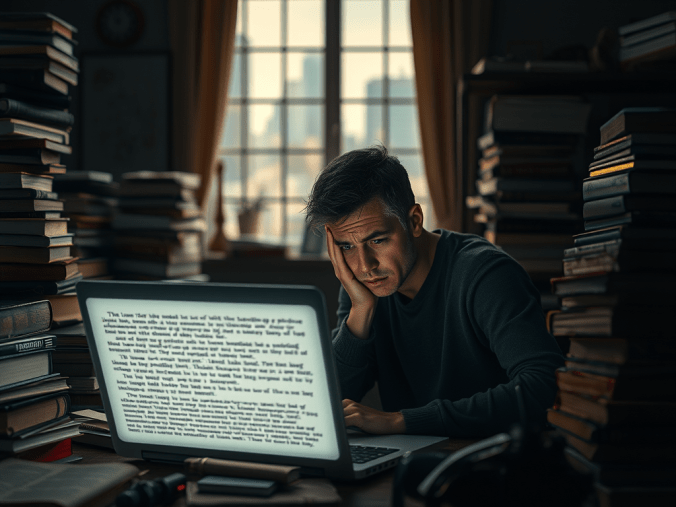
The Generative AI program now attached to WordPress asked me if I’d like it to create an image for me to use in this post. I said yes. I didn’t tell it what to create, it read my post and then described what it thought I wanted it to do.
Create a highly detailed, sharp-focused image illustrating the theme of “Understanding Generative AI’s Effects on Writers.” Feature a distressed writer surrounded by stacks of books and a glowing laptop displaying generative AI text. The setting should be a dimly lit, cluttered home office with a window showing a blurry modern cityscape outside, symbolizing the clash between traditional writing and technological advancements. Use soft, dramatic lighting to highlight the writer’s expressions of concern and contemplation. Ensure the image is high resolution and captures the intricate details of the environment and the emotional weight of the subject.
Writer in Pain: captured by AI
So AI now understands what kind of image I might like to use to illustrate my thoughts on this topic, complete with setting, environment, gender of writer, and even “his” emotional weight. Had I asked AI to write the piece in the first place it would have been able to construct the illustration at the same time. I might try to do my own description and have the image created by Canva, which also has a visual generative AI program.
The Register of the Real seems to have evaporated almost entirely.
I have had occasion recently to review my own book of short stories, Revolutionary Baby. There was a suggestion that it might be serialised on a literary/writing platform currently gaining popularity. Some people still like reading and writing old-fashioned stories which reflect life in a pre-digital pre-influencer pre-Trumpian world, dwindling though this number might be. In this process I received some rather surprising feedback: my stories were accused of “man-bashing”. I was taken aback. As far as I was aware, my stories had been written from a ordinary female viewpoint and reflected an awareness and consciousness which any woman of my era would share.
None of my male characters were vicious or evil or deliberately cruel. They certainly were not violent or criminal or sadistic, unlike a high percentage of male characters who now occupy the fictional arena in ever-increasing numbers, thank you Bret Easton Ellis. If they displayed unkindness, self-obsession, lack of awareness or a failure to understand the women they were involved with, this was nothing remarkable. They, too, were creatures of their time. I feel fond of all of my male characters, in different ways, but I did need to convey the impact that their often thoughtless behaviour had on the women in my stories. In some cases they hardly connected with women at all and mainly hurt themselves.
It occurred to me that before considering any kind of serialization I should write an analysis of what happens in each of the stories and insert a trigger warning or even an apology for any misunderstanding that a male reader might experience as a forward. But on the other hand, there is no obvious evidence that any men have actually read the book, so perhaps that would be entirely superfluous.
This led me to ponder the fragmentation now occurring in literary and even more so popular fiction. Many of literary women of my acquaintance, most of whom would describe themselves as feminists, make a point of not reading books written by men. The question of the gender identity of the author, and ditto of the audience, has become a sore point among many commentators online, in literary magazines, in articles on book prizes and awards. There seems to be emerging a kind of gender-ghetto mentality where each identity is writing for others who share it. The striking emergence of queer fiction is an example. Some of the most interesting writing is coming from authors inhabiting a distinctively queer identity world. Is everyone reading this? Or mainly others similarly self-identified? I noted that women writers are mainly read by other women. No doubt there are exceptions today in strictly literary circles. But what is actually going on here? Does anybody know? Is anyone keeping track of these questions?
I love this piece. It seems like a simple narrative but there is so much deepwork here. He writes about his own writing. He knows his topic. He is trying to write something that doesn’t want to be written. He is in a Citadines apartment in Paris, near Les Halles, all set to direct his errant creativity, until the occurrence of an inexplicable body horror: an eruption, a carbuncle, a papule which swells and grows without explanation on his inner thigh. He describes his confusion, trying to seeking medical care in a place where you don’t have the normal supports. You can feel his rising anxiety as the Thing throbs and expands until it bursts in a surge of blood and pain. And pus no doubt.
It was 2023. He was trying to finish a novel which he had been writing and rewriting, each time reaching a certain length (137 pages) until he had to throw it away and start again. Only after his grisly wound was drained was he able to return to his writing which suddenly became something different. His novel, Minor Black Figures, emerged,due to be published in October 2025.
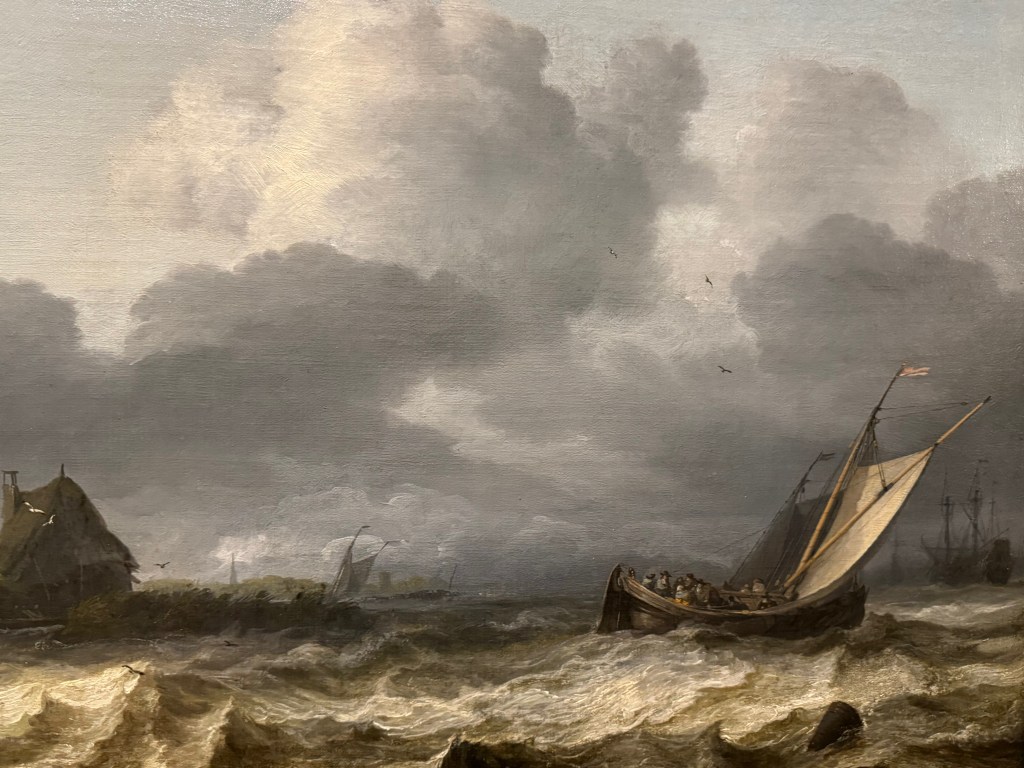
I spent six weeks in Paris in 2024, staying in an old rental apartment. The entire city was going mad in preparations for the Olympics. I was working on a half-drafted novel, a kind of auto-fiction about my experiences in Paris in the early 1980s. It was about woman stuff and the post 70s painting scene and the rise of anti-theory and the “New Philosophers”. But I was too sick to write it, or it was making me sick. I was dizzy all the time and felt constantly confused. I couldn’t manage the stairs and corridors of the metro. The book I had planned refused to co-operate. Too many characters appeared and kept on doing contemporary things, like try to work out how to buy a travel pass from a digital dispenser in an apparently abandoned metro station. Instead of writing my novel I had a major panic attack in Le Petit Palais, a glorious art gallery full of lesser known paintings from the past three centuries.
Le Petit Palais, Paris, May 2025.
There were endless corridors of incredible old paintings. This was one of my favourites. I stood in front of it, wondering at how in the 17th century a virtually unknown painter had produced this picture from his own imagination (since there were no photographs then, remember, no image libraries, no Pixabay) and here it was four centuries later in Paris and so was I, and I couldn’t step away from it.
Allaert van Everdingen. L’Orage (The Storm): oil on linen, 1650.
But suddenly I knew I had to lie down, and there is nowhere to do that in Le Petit Palais. I started to panic. My partner shepherded me around with rising anxiety. I said we had to leave at once. Outside, a set of metal barriers had appeared and no vehicles were allowed to stop in front of the building, or anywhere near it. Police were patrolling up and down. Where to go? What to do? I panicked even more. After what seemed like hours we managed to get back to the apartment. I decided I had to just stay home for a while and not go near that book I had come here to write.
It definitely did not want to be written. It was full of my usual preoccupations about mothers and daughters and trauma and inter-generational rivalries. After a time I decided I had to find a doctor. It was so easy! An amazing midnight home visit by a local doctor provided a diagnosis of a mystery virus and consequent high blood pressure. He gave me a script for some magic pills which were procured next morning from the Green Cross pharmacy across the square. I felt better but still couldn’t write anything other than my diary.
After that, I went back to Sydney and thought maybe my book should be about having a panic attack in Paris. It could still be about that early 1980s era, but instead of a “normal” novel it would be a memoir of the present superimposed on a certain past which may, or may not, have existed in its recollected form. I realised I could salvage my original title, Paris Vertigo, which was perfect for this purpose. It could be any length: a Substack piece, a novella, a novelistic memoir. Not a poem, though.
It would probably push aside my daily diary writing, which in any case is no longer daily, and never has anything very interesting in it because I never have time to write it properly. I am so over-committed. So why not add one more probably unachievable task? Brandon Taylor’s Paris story inspired me to think it might be possible.
BELOW: The lobby of the Hotel de Nice, where some of PARIS VERTIGO takes place.
I have been struggling for years with a problem which has held me back from my literary destiny (ha ha). Fortunately, Joan Didion suddenly if posthumously stepped onto the dancefloor of the writers’ parlour. She died in December 2021, aged 87. Her raw diaries are about to be cooked in April. A segment of her unpublished work, consisting of journal entries addressed to her late husband John Gregory Dunne, will be published. There is a history to the discovery of these diaries and the decision to publish them without further edits but I won’t go into it here. The book titled Notes to John include reflections on her experiences as she attempts to make sense of her husband’s sudden death, her weird and frustrating relationship with her daughter Quintana Roo and her difficulties with work, alcohol, depression and anxiety. Her interactions with her psychiatrist reflect on this.
She left these diaries perfectly arranged so it is reasonable to assume she wanted them to survive and therefore to be read. Don’t we all who keep diaries secretly hope there is some enduring place for them? For many writers, especially women, diaries have been an inseparable part of their identity. Quite a few writers now publish their own diaries, or extracts from them, or cite them in their memoirs.
I know there are “issues” with Joan Didion. She is seen as conservative, pro-Republican, reliant on men, ideologically suspect. I’ve been seeing her more clearly through Lili Anolik’s book Didionand Babitz (2024) and will probably write more about it shortly. For now, though, it is something in Joan Didion’s early work that is on my mind – something I read once and then forgot about, which has just resurfaced.
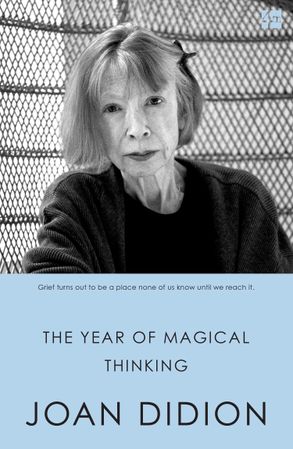
Mostly it was her book The Year of MagicalThinking (2005) which became important to me. She wrote it after the sudden death by heart attack of her husband, at a time when her adult daughter was suffering a severe illness. The atmosphere of her book enfolded me when I first began to write my own mortality memoir Regret Horizon (still unpublished). My mother died in 2008. She didn’t die suddenly but weakened slowly and defiantly until passing away in hospital at 93 after an accident with her dentures. My book turned out nothing like Didion’s: I surprised myself by writing an almost ethnographic account of my mother’s final year of life, my own mismanagement of it, and the immediate consequences of her death.
Later her book Blue Nights (2011) reflected on her life with her daughter, who was born at almost exactly the same time as my first child (in early 1966) and died in 2005 aged 39. I was still trying to draft my book. I didn’t want to go into my relationship with my own children, although that necessarily suffused the story and I couldn’t repress it altogether.
In the recent burst of pre-publicity surrounding her diaries I came across reference to something which hit me with one of those “OMG yes” moments.
Her first collection, Slouching Towards Bethlehem, was published in 1968. In her essay “On Keeping a Notebook” she talked about writing not as a means of recording facts but a way of capturing moments in all their specificity, giving a kind of enduring existence to the flickering and pulsing of emotion and impression before they disappeared altogether. She wrote about the need to recognize the people we used to be.
I read that essay around 1970 while trying to deal with the notebooks I had written while “in the field” doing research in First Nations communities in remote Arnhem Land, carrying out a project for a higher degree. The topic of my research was supposed to be “the women’s point of view” in an indigenous community still closely embedded in the pre-invasion way of life. I tried to do the right thing, to keep accurate accounts of behaviour and conversation, to find out what women thought about traditional marriage arrangements and social organization and struggled to find a way to write that was somehow scientific and objective and academically acceptable. Given that there were no existing examples of such a project that I knew of, I had no guidelines to follow.
I very soon discovered I could not possibly write this kind of thing. Instead, I was writing notes which were more like diaries because of the way I experienced the events I needed to write about. My two-year-old son was with me. I was a mother. There was no way around that, no “objective” position available. The things that happened as day followed day and the dry season became the wet season and I slowly learnt the indigenous language and spent most of my time with other mothers and children created a personal life for us in that community, and outside it as well. This existence seemed to have nothing to do with the “professional” persona through whom I was supposed to be demonstrating my academic and objective research capacities which was the reason for us being there in the first place.
Any anthropologist who did old-school fieldwork in those times experienced something like this, but it was particularly powerful for me, a very young woman, a mother with a small child. Moreover not long I arrived “in the field” I discovered I was pregnant with a second child, conceived just before I left Sydney where my husband was pursuing his own activities. In “researching” women’s lives in that community I became a different self. I was given an identity, with people assigned as my kinfolk and expectations of my behaviour arising from those relationships. My “fieldnotes” became more and more a diary, and I realised that the writer was neither the person living in that community in those moments, nor the person who came from a prestigious University far away in the city. The actual writer was an intermediary being who came into existence at night as the cockroaches scuttled across the concrete floor in the flickering light of a kerosene lamp and my son slept in the old caravan next door.
Time passed, my pregnancy progressed, I had to go back to Sydney for the birth.
Later, trying to make sense of this writing which was neither and both field-notes and diary, a new and different writer emerged. This person had to reflect on the embodied feelings, the conditions of daily existence, the conversations, the rituals shared, the moments remembered, an entirely discontinuous reality which now lay bizarrely in the past. It seemed almost impossible that this was the same person now writing an academic thesis in sunny Sydney, a new baby in a basket and a husband dealing with his own traumas.
What I finally wrote was very distant from the original research proposal. It turned out to be about child-bearing and child-rearing, something most professional anthropologists were completely uninterested in. It was published to almost complete silence. In the confusing times which followed, I wrote academic works. I went to a different “field”, this time with my husband and two young children, and the problem of writing and identity was even worse, capped off by the fact that my son set fire to our tent and caravan, thus incinerating eight months of fieldnotes and diaries.
Much much later my academic career was nearing its end. My mother was dying, and so was my ex-husband. I had to write about, that year and its aftermath. I wrote bits and pieces, draft after draft, various chapters, discarded, rewrote, but couldn’t bring the project to an end. I began a final edit and still didn’t like it. I needed the book to change. I didn’t know who this writer was either and didn’t like any of the versions of her who came forward as “author”.
Then suddenly I rediscovered this quote from Joan Didion’s “On Keeping a Notebook”, from the 1968 collection Slouching Towards Bethlehem.
“I think we are well advised to keep on nodding terms with the people we used to be, whether we find them attractive company or not. Otherwise, they turn up unannounced and surprise us, come hammering on the mind’s door at 4 a.m. of a bad night and demand to know who deserted them, who betrayed them, who is going to make amends.”
I’d had so many bad nights but had not considered that it was those irritating people I used to be hammering at the door. These entities all seemed to have a hand in my book, toiling over paragraphs, edited out superfluities, then put more in. They were all trying to write my book. Outlook and expression and desire, indeed the very reasons for the writing, seemed to be constantly changing. All writers understand that the “author” is not the ”writer”, but what if there are several of them vying for dominance? Perhaps all “authors” suffer from MPD. Except for writers of rapid release genre fiction, who will now be the instruments of AI. But that is another topic.
I had turned it all outwards: I thought it was the real people in my life making demands on me, and I was trying to write this memoir to make amends to them. But it wasn’t them I had to make amends to, it was the old entities who had occupied the placeholder “me”. How Joan Didion, at such an early age (she would she would have been 34 in 1968), could have come to this blasting insight seems amazing. Now Joan is back in my life I am re-reading her with different ears and eyes and maybe I will find out. And if I can keep on good enough terms with those other denizen/components of the authorial entity, I will be able to finally let the book go – publish it, or let it perish.
Some recent notes on Joan Didion:
Nathan Heller. “What we get wrong about Joan Didion”. The New Yorker, 25 Jan 2021.
Karina Longworth (Substack podcast): “Lili Anolik on Joan Didion + John Wayne”. 30Jan 2025.
Cerys Davies. “Joan Didion’s diary of post-therapy notes is going to be published”. LA Times, 5 February 2025.
Daniel Lavery. “A Sneak Peek at the Upcoming and Never-Before-Read Joan Didion Diaries”. The Chantner. Substack. 18 February 2025.
Marissa Vivian. “Hemingway: What Her Words Reveal About the Ethics of Publishing her own Diary”. Substack. 8 February 2025.
BOOK REVIEW: Here One Moment: Pan Macmillan Australia 2024. 528 pages.
(This review is 2300 words long. An edited version is available on my Substack, go to:Substack.com@annettehamilton “Dissatsfied Insects”)
A few years ago, before Covid, maybe it was 2018, my partner and I sat in the modestly sized ballroom at the Carrington Hotel in Katoomba, a picturesque mountain town not far from Sydney, to hear Liane Moriarty being interviewed at the Blue Mountains Writer’s Festival. She was posed on the stage in the glary lights, neat, well-groomed, pleasant looking; and when she spoke she was articulate, thoughtful, kind and agreeable. No OTT farrago of carefully curated authorial persona here. She seemed like any attractive middle-aged well-educated woman from a middle-class Sydney suburb. White, heterosexual, “normal”.
Liane Moriarty Author
Liking Liane Moriarty’s books was, at that time, not acceptable in prevailing literary circles. A convenient statement appeared in a 2016 online review of Truly Madly Guilty by “Wadholloway”
“I shouldn’t have undertaken to review another Liane Moriarty. She’s Sydney, I’m Melbourne. She’s popular, I prefer literary. She’s plain vanilla whitebread middle class bleeding heart first world problems, and I like my reading just a little bit grittier.”
The fact that even then she was probably the best-selling and most successful recent Australian woman writer was not of interest to legit literati.
Her latest book, Here One Moment, is an international hit, pleasing most of her readers, or those who leave reviews on Amazon at least. Ranked #23 in all Books, and #4 in Family Life Fiction (Books) it is #1 in the Amazon “Most Gifted” category.
Her readership has rocketed and she has a huge transnational presence. There are translations in over forty languages. Three of her ten novels have hit the New York Times best seller list (Big Little Lies, NinePerfect Strangers, and Apples Never Fall) and these, as well as most of her other books, have been re-imagined for movies and/or television serialisation. Liane Moriarty is credited as producer.
Her profile in the US has been vastly enhanced by the enthusiasm of Reece Witherspoon and the appearance of Nicole Kidman in a key role in the screen adaptation of Big Little Lies.
I picked up the “buzz” around Liane’s early books. I read most of them with a certain baffled admiration. She wrote well. Her books were all set in Australia, many in suburban Sydney, and described places which I, as a mother of three children living in various suburbs at an earlier time of my life, immediately recognised. She wrote real narratives about familiar people. Her stories and the moral dilemmas behind them were complex and puzzling. She delicately peeled away the appearance of placid stability and determined respectability which so characterise the Australian urban middle class, uncertain about its own security, uneasy about its core values, stitched up around family life, unsure of the best way to negotiate the brutal competition for status and influence. Moriarty gets right inside the churning dissatisfaction which characterises the female experience of wifedom and maternity, developed in the 1950s and preserved well into the 2000s. She takes the reader into the silent region of hopes and fears beating away in the hearts of the guests at the Sunday barbecue or the cheery-if-hungover Dads sizzling sausages on the soccer field. Not really “vanilla” at all, more a chili, smoked kipper and pepperoni flavouring hidden inside what looks like cheesecake.
Just along from us sat an older couple and a younger woman. While waiting for the session to begin, we got to chatting, expressing appreciation of Liane’s work and admiration for her ability to go so carefully into such deep waters. I expressed regret that she didn’t seem to have the impact in literary circles that one might have expected. We laughed together and got on famously. I thought they would make excellent friends with common interests. When I asked hopefully if they lived in the mountains they laughed and said, no, they were Liane’s parents, and this was her very talented sister Jaclyn.
Liane appeared again at the Blue Mountains Writer’s Festival in November 2024. This time, she was a rock star. She spoke in the community hall, the largest space available to the Festival in Katoomba, on the same program as a very different Australian author-heroine with a newly published book, Gina Chick. More on her in another post. There was an air of adoration in that room. These were not middle class white bread etc etc readers, these were women and men from all kinds of backgrounds and demographics, engaged with Australia’s current literary culture. Liane spoke about her new book. Many had already purchased copies which no doubt they hoped she would later sign.
At that point I hadn’t read it. I wasn’t even sure I was going to. I have been so deep in struggle with my own memoir which seems to exist near Moriarty’s terrain, since it is about families and Sydney and women and ambition and sadness and grief. I didn’t want to feel derailed by her ability to say things clearly, I couldn’t emulate her grip on a complex narrative. I thought it might make my own book even harder to finish than it already was, so thought it might be better not to read her latest.
But after that Writer’s Festival appearance I couldn’t avoid it. I downloaded here one moment* onto my Kindle. It turns out to be a long book – in the softcover print version 528 pages. I began reading it and felt baffled again, but differently baffled. This story was even more complex than usual. Unlike most of her books, it was all over the place, and the time, literally. A welter of explanatory philosophical positions are followed by a mathematical function called Kronecker’s Delta. It’s impossible to explain just how this works but it suddenly jolted what had seemed a disjointed and often bizarrely disconnected set of characters and events into a different mind-space where she seemed to be saying something incredibly important even though I still felt I didn’t understand it.
There is some strange typographic font thing going on with her book cover. On the Australian edition the title appears without capital letters. All the reviews and listings for the book use upper case for first letters, as is usual with novels. But I think the book is good in lower case, so to speak. Without a serious and imposing font, it emphasises the qualities of the butterfly wings changing the course of history, even though it was a seagull’s wings in Lorenz’s original formulation, as Moriarty’s main character explains.
SPOILER ALERT:
Cherry, the supposed psychic who sets the events of the tale in motion, wears a particular piece of jewellery which leads to her identity being discovered by the many people affected by her predictions of the timing and reason for their deaths. These predictions are uttered seemingly for no reason on a plane bound from Hobart to Sydney. Her beautiful gold brooch is inscribed with the Kronecker Delta symbol and Cherry has worn it every day since her late husband Ned gave it to her on their first wedding anniversary. Naturally I wanted to find out more about the Kronecker Delta symbol and how this related to the theoretical and spiritual elements of the book and this took me into the realms of algebraic theory, far beyond my comfort zone. One of the characters was called Leopold, and the original Kronecker who developed the Delta symbol was also called Leopold, but I wasn’t sure how important this was.
The Kronecker Delta symbol is concerned with the way one small event can have vast consequences in its ultimate effects. ‘Could the flap of a butterfly’s wings in Brazil set off a tornado in Texas?’ asked the bearded man with a beatific smile …’
(p. 162 in Chapter 38). Later, Cherry tells us that she was the butterfly, although it should have been a seagull. ‘I walked through that plane squawking my predictions, flapping my wings, and my actions had consequences which had consequences which had consequences’ (Chapter 40).
It turns out that Cherry is an actuary, and hence an expert on mathematical measurement of life expectancy, as well as being the daughter of a fortune teller. Whether or not Kronecker’s symbol really has anything to do with what the book is saying, the eventual supposition or interpretation seemed to me to be: basically everything is chance. There is no meaning to it. Nobody can know how one event will lead to another. But nothing is unchangeable. People can interfere based on incorrect assumptions and things may still turn out very well. The type example of this is Timmy, who Cherry predicts will drown at the age of 7. His mother, terrified the prediction will come true, enrols him for baby swimming lessons and devotes incalculable time to making sure he is an excellent swimmer. The prediction does not come true, but instead he, his family and indeed the entire country benefit from these events and he becomes an Olympic swimmer and doubtless gold medallist. This is such a deeply Australian conclusion.
I am not quite sure but am beginning to think that Liane’s latest book is traversing some kind of meta-philosophy of Australian existence. The recent death of her much loved father seems to infuse the book from start to finish, even though she never says anything to indicate this. I could only read it as a deep engagement with life, death and meaning, common but profound existential questions which arise when a loved parent dies while the child is in middle age.
The emergent philosophy seems to be something like: efforts to understand life as the result of fate or destiny or as arising from some supernatural significance are wholly misguided. Whatever happens, happens. You can change it or not, depending on the circumstances, and you never really know how things will turn out even if you apply the best possible methods. You can calculate and have expectations, based on mathematically validated predictions: cohorts of certain kinds of people who do certain kinds of things are likely to die of heart attacks, for instance, but in any given case there is no way of knowing who will defy the expectations and who will succumb. Psychics and others can indicate possible outcomes and sometimes they might be right but if so that is an unpredictable accident. Things do often look bad, you have to be afraid, you can’t control any of it, maybe it’s dumb luck and maybe that is a mistaken concept anyway because what we think of as luck is the outcome of some Brazilian butterfly’s flapping (and I don’t mean a butt-lift, but even that could cause all kinds of outcomes).
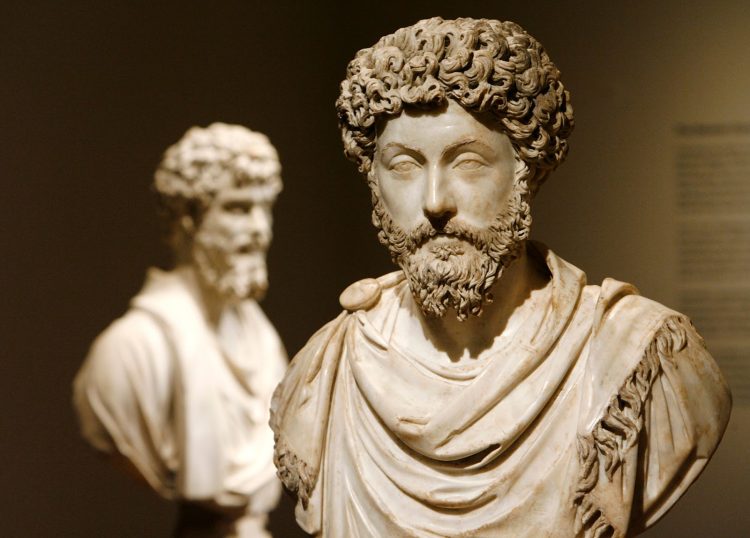
This feels like a very Australian philosophy. It’s the kind of thing my old father would have said, in different words, before he died in 1983. It’s a stoic frame of mind, the kind of world view that accompanied the Australian experience before twentieth century late modernity took hold. It was the view that took people took through the Depression and two World Wars and long before that, in the grinding rural struggle against floods and fire and poverty, untreatable illnesses, the painful unmedicated births and cruel deaths of babies and children. This perspective survives to a degree in the literary legacy, although any contemporary recognition of the harsh settler life is muted by the awareness of what was happening on the indigenous frontier. A term for it might be Ozstoic.
Stoic philosophy has resurfaced lately in Australia. It fits the land, the place, the feelings, the increasingly unpredictable conditions, the endless circuits of wild bushfires and devastating floods that mark everyday life in most parts of Australia, urban and rural. The power goes out for days on end. People have to work out how to exist without the appliances that we have come to take for granted. Having grown up without any of them, since our family house on the Hawkesbury was not connected to electricity until the late 1960s, it’s no shock to me, but for younger people who have experienced the secure abundance of the last few decades it’s a big shock, and worse to come.
Bust of Stoic philosopher Marcus Aurelius (Wikimedia Commons)
We don’t need psychics on planes to tell us to take another look at how we live our lives, at what we can expect, at what we must adjust to, take into account – and to realise the extent to which it is not in our control. It feels like Liane Moriarty’s latest book is holding these realities up to our faces, and we can’t help but see them, even if we try to keep our eyes shut. Yes, anything can happen.
I couldn’t resist using the cover of Australian writer OJ Modjeska’s Gone: Catastrophe in Paradise here. The flight from Hobart to Sydney which is central to Moriarty’s book does not go down: but it could have. That would have been a very different way to end the story. Modjeska’s limpidly acute account of an actual air disaster in Tenerife in 1977 is powerfully imbued with the same awareness as appears in Moriarty’s book. A series of seemingly random events and unpredictable errors results in a horrendous outcome with hundreds of deaths, mostly of people going on holidays. Read it.
(From International Association of Literary Journalism Studies)
As mentioned I have been thinking about inserting the odd Feuilleton here, mainly because I keep finding myself contemplating some strange or remarkable facet of contemporary culture and society which defies inclusion into any other kind of writing I do. By calling it a Feuilleton I hope to indicate that it is a passing phenomenon not of any great social or political importance in itself, although I may be flirting with the Zeitgeist or capturing the temper of the times. My Feuilletons are not about literary culture or contemporary writing or the Kindle or the role of reviewers in the Internet age. But they are not entirely frivolous or meaningless either.
The term Feuilleton comes from French and means something like “little leaf”. Originally it was a small item at the bottom of the literary section of a newspaper, often providing a critique of popular theatre, but in many cases it grew to have its own page. By the 1840s the term roman-feuilleton described a serialized novel published in newspapers, something like today’s internet novelizations, but paid for, not for free. I mean the readers bought the newspapers and the newspapers paid the writers. [Now we barely have newspapers and people publish their writing for free all the time, which seems counterproductive]. The term was used in English by 1845, in the Atheneum.
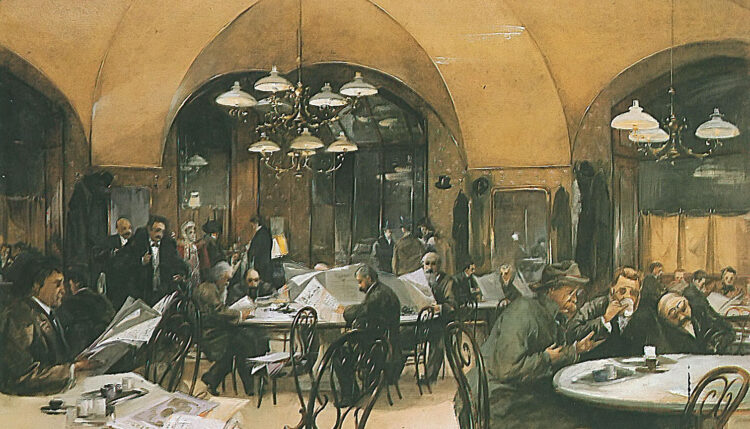
The term was also handy to refer to small one-page advertisements, like handbills, which might be handed out in the street to encourage consumers to visit suppliers, as in this advertisement for a delicious lunch venue the like of which sadly no longer exists.
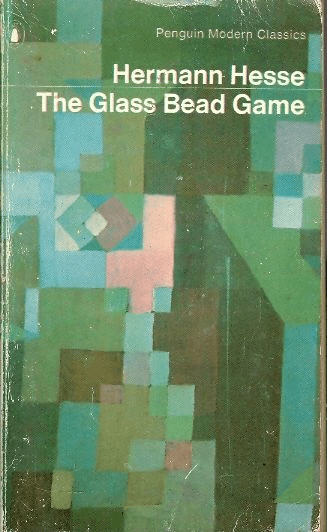
If that all sounds cheery and familiar, we must pause at what Hermann Hesse had to say about it in The Glass Bead Game, regarded as the first and only science fiction novel to win the Nobel Prize (in 1946). He was writing against the decline of humanistic culture brought about by “feuilletonism”, which he saw as the antithesis to true writing, and lampooned viciously. His master-work, The Glass Bead Game, was on the Must-Read list of myself along with almost every other proto-boho-intello in the 1960s, and describes the life of future intellectuals living in a cloistered community trying to circumvent the excesses of the age. Thanks to Huxley for bringing the Feuilleton into the present time as another object of knowledge. (https://huxley.media/en/the-feuilleton-era-we-live-in/)
Hesse described the Feuilleton, printed widely in newspapers and magazines, as a source of “mental pabulum” for readers hoping to soak up culture but unable to actually do so due to the lack of education and motivation, and of course being too busy and far too important to sit down and read actual books.
He said:
Among the favorite subjects of such essays were anecdotes taken from the lives or correspondence of famous men and women. They bore such titles as «Friedrich Nietzsche and Women’s Fashions of 1870,« or «The Composer Rossini’s Favorite Dishes», or «The Role of the Lapdog in the Lives of Great Courtesans» and so on.
Another popular type of article was the historical background piece on what was currently being talked about among the well-to-do, such as «The Dream of Creating Gold Through the Centuries» or «Physico-chemical Experiments in Influencing the Weather» and hundreds of similar subjects… we feel surprise that there should have been people who devoured such chitchat for their daily reading; but what astonishes us far more is that authors of repute and of decent education should have helped to «service» this gigantic consumption of empty whimsies. Significantly, «service» was the expression used; it was also the word denoting the relationship of man to the machine at that time.”
Good heavens! This is exactly the flavour of the endless parade of pablum from our own Machine, the Internet, much of which we now call “clickbait”. But Feuilletonism goes so much deeper than trying to persuade people to buy stuff they don’t need from people they don’t know manufactured by unspecifiable techniques at places which don’t exist. The Age of the Feuilleton is completely dominant today, ever more so with the consequences of AI development and universal internet access on every phone – the mastery of the Machine indeed.
I don’t see my contributions to the Age of the Feuilleton as necessarily despicable, as Hesse might have done. By proposing to include a few remarks under the heading of a Feuilleton, I am going with the diverse flow of contemporary knowledges, and playing a little with the scary bizarritude of the fragments flowing through the ever-open channels of our time. It is true that there may be an academic flavour to the analysis, but maybe that is a necessary correlate of talking about anything in modern culture at all, rather than just participating in it. And a rich and full array it is.
So in my occasional Feuilleton I will remark on various ephemeral incidences, moments or events, usually conveyed in media, sometimes in performance. I notice things as I trawl through my reading and writing. Someone, generally much younger than myself, draws my attention to something I have never thought of before, and didn’t know existed. Or I am struck by some change in the discourse and behaviour in the everyday world around me. Often these moments are so peculiar in flavour and signification that I am reminded of my old father’s frequent exclamation: “Well blimey, you just wouldn’t read about it”. Now, these days, it turns out he was plain wrong. We can read about it, and moreover see it, all the time, every hour of every day. By adding a little more to it I hope to do no harm. I will identify those pieces which belong in the Feuilleton category, so you can skip over them altogether if you like.
Check out Stoddard Martin’s essays, with insights from the old and new literatures of several countries – aesthetics, musicology, mythology, philosophy, poetry, politics, and psychology.
Monstrous Century: Essays in ‘the Age of the Feuilleton’ Paperback – October 15, 2016
Insights from the old and new literatures of several countries jostle for space in this work – not to mention aesthetics, musicology, mythology, philosophy, poetry, politics, and psychology. The subjects, even when unsympathetic in themselves, are viewed in the round, and judged with humanity (from the publisher’s blurb).
«THE GLASS BEAD GAME». FRAGMENT FROM THE WORK
«We must confess that we cannot provide an unequivocal definition of those products from which the age takes its name, the feuilletons. They seem to have formed an uncommonly popular section of the daily newspapers, were produced by the millions, and were a major source of mental pabulum for the reader in want of culture. They reported on, or rather «chatted» about, a thousand-and-one items of knowledge. It would seem, moreover, that the cleverer among the writers of them poked fun at their own work. Ziegenhalss, at any rate, contends that many such pieces are so incomprehensible that they can only be viewed as self-persiflage on the part of the authors.”
Remember back in digital prehistory when Facebook was first a Good Thing? You had “friends” and you could post stuff and they could see it and vice-versa, and as I recall it lasted on your feed for longer than five minutes. It was great for groups interested in the same subject, yes, but it was also great for whatever circles of people you were connected to or inserted in. I don’t know exactly when that changed but now, apart from a couple of still-effective writers groups and one or two painting sites, most of the time all I seem to get is ads for bunion treatments and dodgy looking products introduced by persons in white coats who drone on at length about one of the many infirmities you share. Of all my “friends”, most of whom were actual real people who I knew, and/or relatives, I hear little or nothing. Maybe they have defriended me. I know some of the relatives did. Or maybe they just don’t use Facebook any more.
So when I began to hear about Substack I thought well maybe this was a good way to keep in touch with people you knew, or would like to know, or who knew you, and I imagined lively discussion groups focussing on the usual weird stuff I enjoy thinking about but find it hard to share in the normal run of things lined up at the supermarket or chatting to some bored relative, if you can still find one willing to talk on the phone (therefore must be over 60). So I joined up and only later realised that the primary intention is to get people to pay money to read whatever the writer is wittering on about. Perhaps I haven’t gone into it enough, and perhaps I am not sufficiently committed to supporting the writing of others, but I really can’t see paying regular monthly subscriptions for the privilege. I know this shouldn’t have anything to do with television or streaming services but I can’t help reflecting that I already have to pay dollars and dollars to access Netflix, Stan, Binge etc. and they are seemingly limitless. And the Substack feeds seem limitless but all the same somehow. While I sympathise with the writers for wanting to be paid, I can’t help thinking there is a more important need for places to talk to each other. Sadly, Substack is not it.
Although I mistakenly signed up for two different Substacks with two different email addresses, I am now trying to cancel them. I didn’t sign up to any paid subscriptions so that’s good. But I did want to write things people might read, outside the strict limits of what this blog and site are about, so I thought I would make up my own little Substack thingie and call it a FEUILLETON and put it in my regular POSTS every once in a while. And it will of course be absolutely free to anyone who goes to this website. I haven’t set up a Newsletter so maybe this will do.
The next post will give more on the history and context of the FEUILLETON. Introduced into popular cultural circuits via Herman Hesse’s book The Glass Bead Game, very influential among proto-intellos in the 1950s and 60s, it turns out to be a very powerful way to think about the effects of contemporary information circuits. More soon.
He’s a miserable looking fellow, unfortunately. Likewise so many of those serious Germanic thinkers. But they do seem to dominate the philosophy of the last century.
Hermann Hesse, 1877-1962
I like to think of that Monty Python sketch where they are all playing football.
I have reached a point in my writing and publishing activities where I must seriously ask: why publish at all? I haven’t published much yet but I have a lot of plans and proposals in the mix and several are at the point of fulfilment. Various things have held me up – some in the “real world” but others in that weird interior zone where the writer actually feels most alive but also most threatened and alarmed and fearful and excited, something which I suspect only other similarly benighted souls will understand. There really should be psychiatric services for writers, to help them work out what they are doing and why.
But as time passes, and especially with the impact of AI, the question becomes more acute than ever. There are 32.8 million published titles on Amazon now and more every day. It is possible that AI written books are flooding the market, although there seems to be no way to work out if this is true or not. Amazon now will only allow you to publish something like THREE BOOKS A DAY. Can this be true? Nobody can write three books a day. However the various online writers forums I participate in do seem to have members who think nothing of writing a book in two or three or four weeks: that is from start to finish, including editing, proofreading and maybe designing the covers as well. The fans of these writers are passionate and apparently faithful. They expect the writer’s new books ASAP and pre-order slavishly, or so it seems.
THE DASH AND DOLLY EFFECT
I just finished watching a mystery drama mini-series on Netflix, The Perfect Couple, starring Nicole Kidman as a popular writer, Greer Garrison Winbury, whose books are about the endless romance of Dash and Dolly. The readers imagine these are the writer herself and her husband Tag, played by Liev Schreiber, who in real life is alcoholic, louche, unfaithful and most unattractive. Based on a 2018 novel of the same name by Elin Hildebrand, the story is about the interpenetration of fictional and real life, and its negotiation in contemporary culture. [It’s what my favourite analytic writer of the moment, Hans-Joachim Maaz calls “Die Falsche Leben” – FALSE LIFE. If you speak German there are interviews with him on Youtube: https://www.youtube.com/watch?v=KN6i6MYBbjI but only one of his books has been published in English.]
A brilliantly disturbing scene takes place at the launch of Greer’s 32nd novel in the series, when the “real world” life of Dash and Dolly comes to a crashing end in a bookstore full of passionate fans. As the truth of their relationship emerges – and a horrible truth it is – the fans fall into despair and horror, worse than anything they ever imagined. The scenario of this story emerges from the very peculiar intersection right now between writers and readers, amidst the technical possibilities of rapid production where fictions drawn out into endless series of almost identical stories, become the source of recognition and success for glamorous lady writers in particular, and sites of identity for readers obviously deprived of whatever it is they crave in the way of success, love, happiness and recognition. Readers’ identification with fictional characters is at the heart of this process.
WHY DON’T I WANT TO WRITE BOOKS ABOUT DASH AND DOLLY?
It’s called “writing to market” in online writing circles, and ever since I was first introduced to this term around a decade ago at a seminar at the Australian Society of Authors I have been wrestling with the concept from many angles. It’s the baked beans problem again. The fact is, I want to use the agency and freedom of independent publishing but I don’t want to “write to market”.
I know this raises almost terminal issues. What I write isn’t any of the popular genres which work so well on Amazon. I can’t even work out what genre I am writing in. Some is memoir, yes, and maybe some is literary fiction. most of my books will appeal mainly to “classic” readers, that is, women of a certain age who buy books in book-shops and go to literary events and festivals, but they don’t buy independently published print-on-demand books and they all hate Amazon. My “take” on things doesn’t quite fit the mould either. My perspectives are too diverse, the experiences I draw on are far from the “normal” life, let alone the “false” one which prevails today. I will put a Paypal button on these books for Australian/New Zealand readers who want paperback versions and see if that works for those who don’t or won’t buy through Amazon. The independent bookshops’ prices are absurd: my book Revolutionary Baby finished up costing those who ordered it from their favourite independent bookshop over $30.00, even though I know the cost of production in Australia is in the order of $7.00.
Should I bother going on and publishing the other three novels I have written? They are all set in the 1980s which now feels like a hundred centuries ago. The memoirs are set even earlier: 1960s, 1970s. But I guess that makes them historical. There is a special category for that on Amazon.
As for doing something completely different: I have written the first volume of a series which I plan to publish under a pen name. It is a post-apocalyptic narrative set in 2050 and “stars” two female characters, young women with distinctive talents and histories. It needs a final edit. I don’t plan to spend money on Amazon or Facebook ads.
All I can be sure of is that the books I have written will exist in print and/or electronic copies in a few libraries, and a few will receive them as gifts from me and maybe want to pass them on. Is that enough?











 Annette Hamilton - Writer