On the Philosopher’s Visage: The Eyes of Wittgenstein

Ludwig Wittgenstein (1889-19510

In my previous post I raised the question of the apparently miserable visages of great German writers/thinkers/philosophers. When is a writer a philosopher, and vice-versa? I think of both Hermann Hesse and G. W. Sebald as philosophers. They are more often described as “novelists”. There’s something so wrong with these genre-based descriptions.

In any case, thinking of philosopher’s faces reminded me of the question of Wittgenstein, more particularly his eyes. I hasten to add that Wittgenstein is Austrian, not German, by birth but whether that makes a difference or not is too much to consider here. My fascination with Wittgenstein’s eyes arose originally from those mystifying photographs in G. W. Sebald’s book Austerlitz.

Sebald’s book resurfaced throughout my writing Regret Horizon, which is now finished but not really ready – like so many of my books. One of its main chapters is titled “Austerlitz”, where I try to connect the dots of history, memory, family, loss, fiction, past and present.

I need to go back to Wittgenstein’s eyes before finalising my chapter.
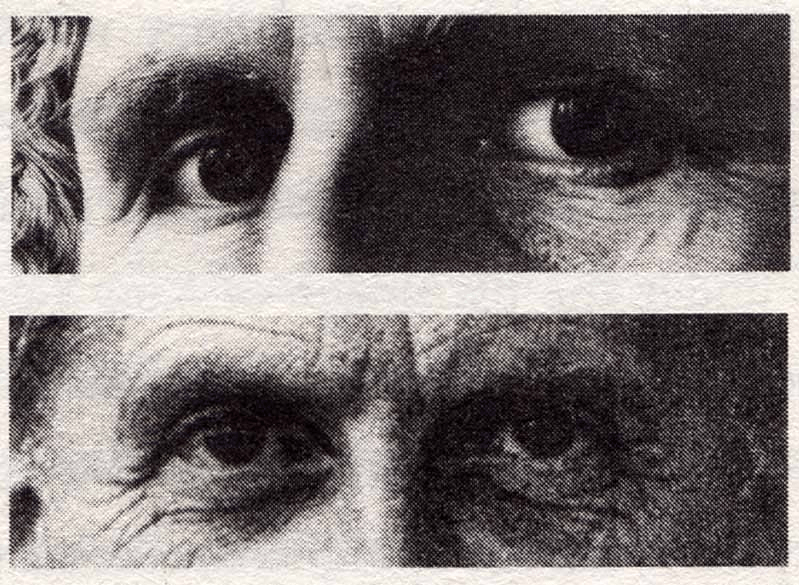
Was I looking at Wittgenstein, or was he looking at me? And what to make of the non-human eyes in that sequence of images? Is that a key to the relationship between writer and reader? I am trying to traverse these ideas in my memoir, clumsily and faintly. That’s why the book probably needs to be rewritten again, and again.

If you fancy dense academic critical commentary, there’s a great paper published a while ago about aspects of this topic.

Nina Pelikan Strauss. “Sebald, Wittgenstein and the Ethics of Memory.” Comparative Literature, vol 61, No 1, Winter 2009.

https://www.jstor.org/stable/40279435

“Austerlitz’s narrator insists on his hero’s ‘personal similarity to Ludwig Wittgenstein,’ noting the ‘horror-stricken expressions on both their faces'”.
SUBSTACK OR FEUILLETON?

Remember back in digital prehistory when Facebook was first a Good Thing? You had “friends” and you could post stuff and they could see it and vice-versa, and as I recall it lasted on your feed for longer than five minutes. It was great for groups interested in the same subject, yes, but it was also great for whatever circles of people you were connected to or inserted in. I don’t know exactly when that changed but now, apart from a couple of still-effective writers groups and one or two painting sites, most of the time all I seem to get is ads for bunion treatments and dodgy looking products introduced by persons in white coats who drone on at length about one of the many infirmities you share. Of all my “friends”, most of whom were actual real people who I knew, and/or relatives, I hear little or nothing. Maybe they have defriended me. I know some of the relatives did. Or maybe they just don’t use Facebook any more.

So when I began to hear about Substack I thought well maybe this was a good way to keep in touch with people you knew, or would like to know, or who knew you, and I imagined lively discussion groups focussing on the usual weird stuff I enjoy thinking about but find it hard to share in the normal run of things lined up at the supermarket or chatting to some bored relative, if you can still find one willing to talk on the phone (therefore must be over 60). So I joined up and only later realised that the primary intention is to get people to pay money to read whatever the writer is wittering on about. Perhaps I haven’t gone into it enough, and perhaps I am not sufficiently committed to supporting the writing of others, but I really can’t see paying regular monthly subscriptions for the privilege. I know this shouldn’t have anything to do with television or streaming services but I can’t help reflecting that I already have to pay dollars and dollars to access Netflix, Stan, Binge etc. and they are seemingly limitless. And the Substack feeds seem limitless but all the same somehow. While I sympathise with the writers for wanting to be paid, I can’t help thinking there is a more important need for places to talk to each other. Sadly, Substack is not it.

Although I mistakenly signed up for two different Substacks with two different email addresses, I am now trying to cancel them. I didn’t sign up to any paid subscriptions so that’s good. But I did want to write things people might read, outside the strict limits of what this blog and site are about, so I thought I would make up my own little Substack thingie and call it a FEUILLETON and put it in my regular POSTS every once in a while. And it will of course be absolutely free to anyone who goes to this website. I haven’t set up a Newsletter so maybe this will do.

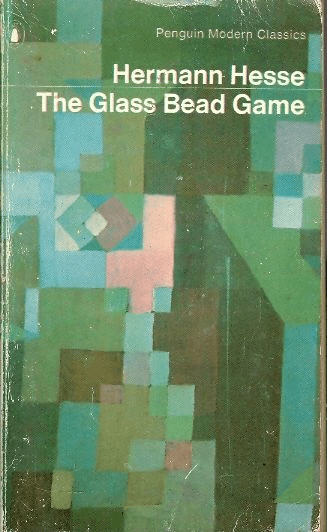
The next post will give more on the history and context of the FEUILLETON. Introduced into popular cultural circuits via Herman Hesse’s book The Glass Bead Game, very influential among proto-intellos in the 1950s and 60s, it turns out to be a very powerful way to think about the effects of contemporary information circuits. More soon.

He’s a miserable looking fellow, unfortunately. Likewise so many of those serious Germanic thinkers. But they do seem to dominate the philosophy of the last century.

Hermann Hesse, 1877-1962

I like to think of that Monty Python sketch where they are all playing football.

https://en.wikipedia.org/wiki/The_Philosophers%27_Football_Match

Watch the match here: https://www.youtube.com/watch?v=8KX-ZFfCn6s