Exploring Gender Perspectives in ‘Revolutionary Baby’

I have had occasion recently to review my own book of short stories, Revolutionary Baby. There was a suggestion that it might be serialised on a literary/writing platform currently gaining popularity. Some people still like reading and writing old-fashioned stories which reflect life in a pre-digital pre-influencer pre-Trumpian world, dwindling though this number might be. In this process I received some rather surprising feedback: my stories were accused of “man-bashing”. I was taken aback. As far as I was aware, my stories had been written from a ordinary female viewpoint and reflected an awareness and consciousness which any woman of my era would share.

None of my male characters were vicious or evil or deliberately cruel. They certainly were not violent or criminal or sadistic, unlike a high percentage of male characters who now occupy the fictional arena in ever-increasing numbers, thank you Bret Easton Ellis. If they displayed unkindness, self-obsession, lack of awareness or a failure to understand the women they were involved with, this was nothing remarkable. They, too, were creatures of their time. I feel fond of all of my male characters, in different ways, but I did need to convey the impact that their often thoughtless behaviour had on the women in my stories. In some cases they hardly connected with women at all and mainly hurt themselves.

It occurred to me that before considering any kind of serialization I should write an analysis of what happens in each of the stories and insert a trigger warning or even an apology for any misunderstanding that a male reader might experience as a forward. But on the other hand, there is no obvious evidence that any men have actually read the book, so perhaps that would be entirely superfluous.

This led me to ponder the fragmentation now occurring in literary and even more so popular fiction. Many of literary women of my acquaintance, most of whom would describe themselves as feminists, make a point of not reading books written by men. The question of the gender identity of the author, and ditto of the audience, has become a sore point among many commentators online, in literary magazines, in articles on book prizes and awards. There seems to be emerging a kind of gender-ghetto mentality where each identity is writing for others who share it. The striking emergence of queer fiction is an example. Some of the most interesting writing is coming from authors inhabiting a distinctively queer identity world. Is everyone reading this? Or mainly others similarly self-identified? I noted that women writers are mainly read by other women. No doubt there are exceptions today in strictly literary circles. But what is actually going on here? Does anybody know? Is anyone keeping track of these questions?

Misleading Google Image Search: Anna Wiener Explained

Dear Readers, this is just a quick note to let you know that if you looked me up on Google you very likely came across a compelling photo of a stunning women with a penetrating, somewhat sad gaze. As the text below it says “Annette Hamilton” you may have been misled into thinking either that I was committing a very heinous sin of disguise, presenting my persona in an entirely misleading way, or that somehow I had undertaken a full head and neck transplant which as far as I know even Drs Dubrow and Nassif could not manage (if you are a fan of Botched you will know who I am talking about).

No, this is a photo of writer Anna Wiener (37) author of Uncanny Valley, a book I strongly recommended in a post in March 2020 (see Posts).

I still recommend her book as a wonderful example of auto-ethnography, but with everything that has happened in the US over the past 4-5 years it can’t help being a bit past-the-moment. She now writes for the New Yorker as a tech correspondent – her latest pieces are “On video game engines” for The New York) and “On office memoirs” for The New Yorker. The photo above comes from her website.

There are plenty of photos of Annette Hamilton on this site and I think you’ll agree there is no mistaking the two.

As a possibly irrelevant aside, you may come across reference to an Annette Weiner (note different spelling). Annette and I did in fact share a number of elements of personal experience which would make this mistaken identity far more cogent.

Annette Weiner, former Dean of the Faculty of Arts, NYU

Annette Weiner was an outstanding and well-known anthropologist; born 1933 in Philadelphia, she died in 1997 in Greenwich Village, of cancer, at the age of 64. She had an extraordinary career, as Kriser Distinguished Professor of Anthropology, chair of the department and dean of the Graduate School of Arts and Sciences at New York University. She wrote a dissertation on the contribution of women to the economy of Trobriand society.

Annette Weiner was a very generous, kind and fun-loving soul who allowed me to stay in her New York apartment on several occasions. We also met up in Paris, but things did not go well between us there and our friendship collapsed under the weight mainly of my bad behaviour. But, as they say, that’s another story! Perhaps to be told in an upcoming auto-fictional memoir, Paris Vertigo, although that’s not on the immediate writing horizon. I have always regretted what happened between us, although it was probably inevitable. How much of “the truth” I can tell in that book remains to be seen. But please do not mistake me for Annette Weiner either!

Amazon and Reviewing.

[The first part of this post was published as part of the previous post: I have been thinking more about reviewing and republish it here as it prompted some more thoughts on this topic].

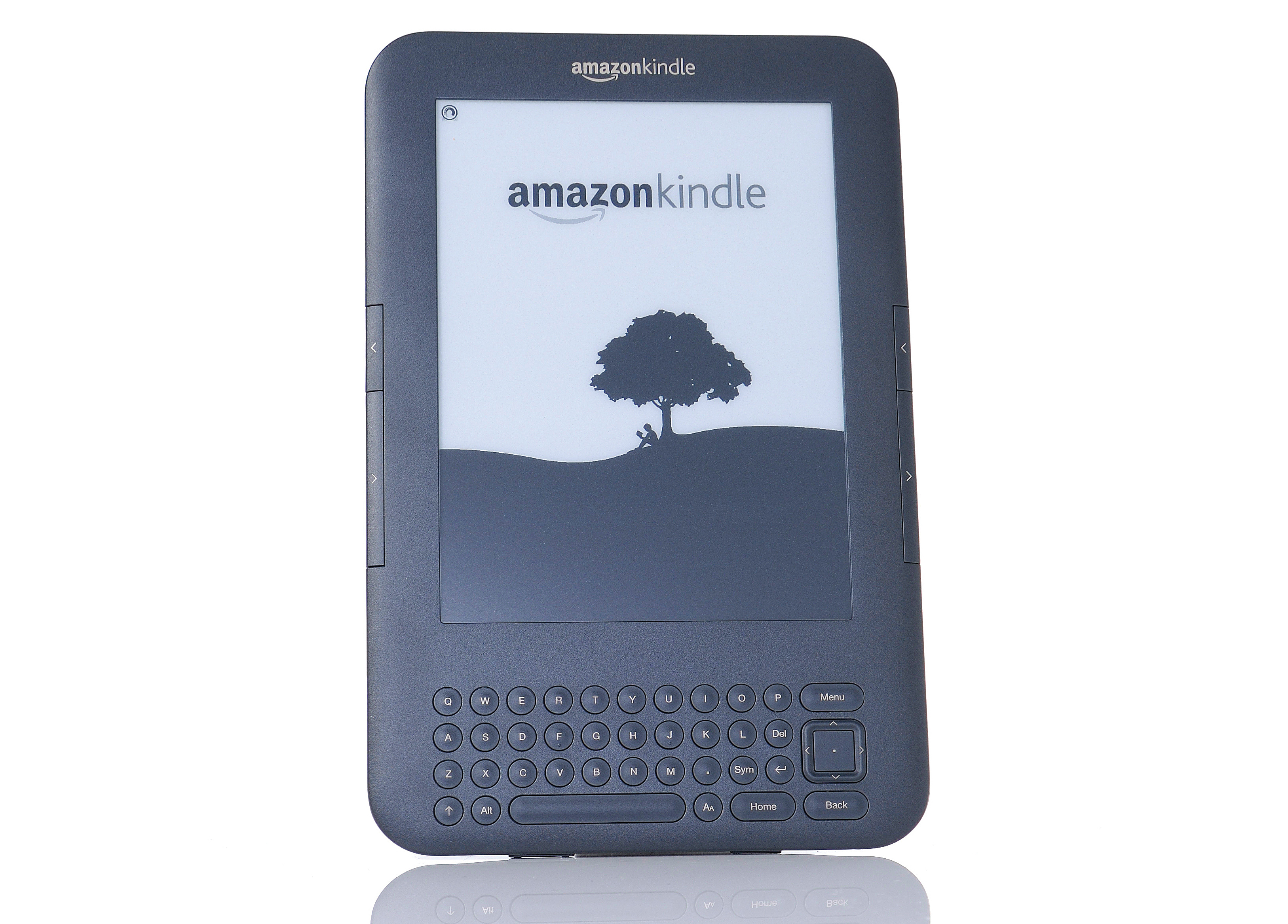
When Amazon Kindle was first a thing you had to buy the books you wanted to read and download them onto an early-generation e-reader, nothing else worked other than your actual computer. Take a look at one of the early Kindle versions here:

You couldn’t put them on your IPhone or on an I-Pad and there was no such thing as Kobo or Apple Books. This led me to feeling very enthused about reviewing. I love to read a well-crafted and considered review, and enjoyed the challenge of writing them myself. I knew an author’s success depended to a great extent on what the reviews said, and as a reader myself I read at least a good selection of reviews, both positive and negative. One’s reviewing name is not one’s own name, so there was some protection of identity when you didn’t like something. I felt it was a kind of community thing, to share views with others. I reviewed certain author’s books without fail. Then there was Goodreads, which at some point was taken over by Amazon, and that became overwhelming, so I stopped using it altogether, although they still send me emails all the time.

I don’t know when it dawned on me that the whole review process had become distorted and corrupt. Review-farming was a thing. Somehow authors could pay money – a lot of money, maybe hundreds of dollars – to have their books reviewed by a group of people who apparently got some reward for reviewing them, although I never knew how that worked, or how it met Amazon’s terms of service. The system became hyper-alert to reviews from anyone even vaguely connected to the author, relative, friend, Facebook contact, whatever and those reviews were banned. Other anonymous people however were free to say whatever they liked and post one star reviews because the book was delivered late, or was about something they hadn’t expected because obviously they hadn’t read the blurb.

Now I don’t review at all. I often feel I would like to comment on books I really like, or make suggestions to authors about something they could do to strengthen the work, or whatever. But I know now that the majority of successful Amazon authors are turning out books once every couple of months. Some are using ghost writers. Others treat writing as a kind of supermarket shelf-stocking – each book a basic product fitting a particular genre run through one or more editing programs to check for grammar and spelling, off to a human editor perhaps, covers designed strictly by genre convention which somehow everyone understands, and book is “launched” with money lavished on Amazon and/or Facebook ads and now Tik-Tok reels three times a day. Why bother reviewing? It is like reviewing cans of identical soup. And authors are devastated if the reviews they do get are not five-star.

This is clearly reflected in the command “Write to Market” which I will talk about in another post.