Over many years I have written short stories and fragments based on our family’s life on the Hawkesbury River. Some parts of the story have gone into the novel Backeddy, although that is a fictional volume and should be read that way.
FLUVIAL: A RIVER LIFE is still in production and should be published by the middle of 2025. It includes “true” stories of the river, some based on historical records, others on oral history and local memory, along with poems, photographs, paintings and short stories, to celebrate the centenary of our family’s dwelling in that place.
As a sample, I publish here two short stories which will appear in the book. They are fictional stories based on memory and oral history. There is no suitable word for this genre of writing but a lot of writers have been exploring it lately. It is a way to tell a story that feels true to the author, even if there is nothing but memory and imagination to support it. I think of it as para-fiction – half-remembered stories, often from childhood, which may or not have had actual objective reality.
“The Other Side” is a good example. The characters in this story are based on real people and the place and situation were real but this narrative fragment is based entirely on imagination.
There were two houses on opposite sides of the river, each occupied by a brother. They were separated first by politics, then by love. After one brother “stole” the other’s wife and son a deadly enmity grew between the households, until World War Two when the men were called up and the women and children left the river. Although both brothers returned from the war they never spoke to each other again and the family never recovered.
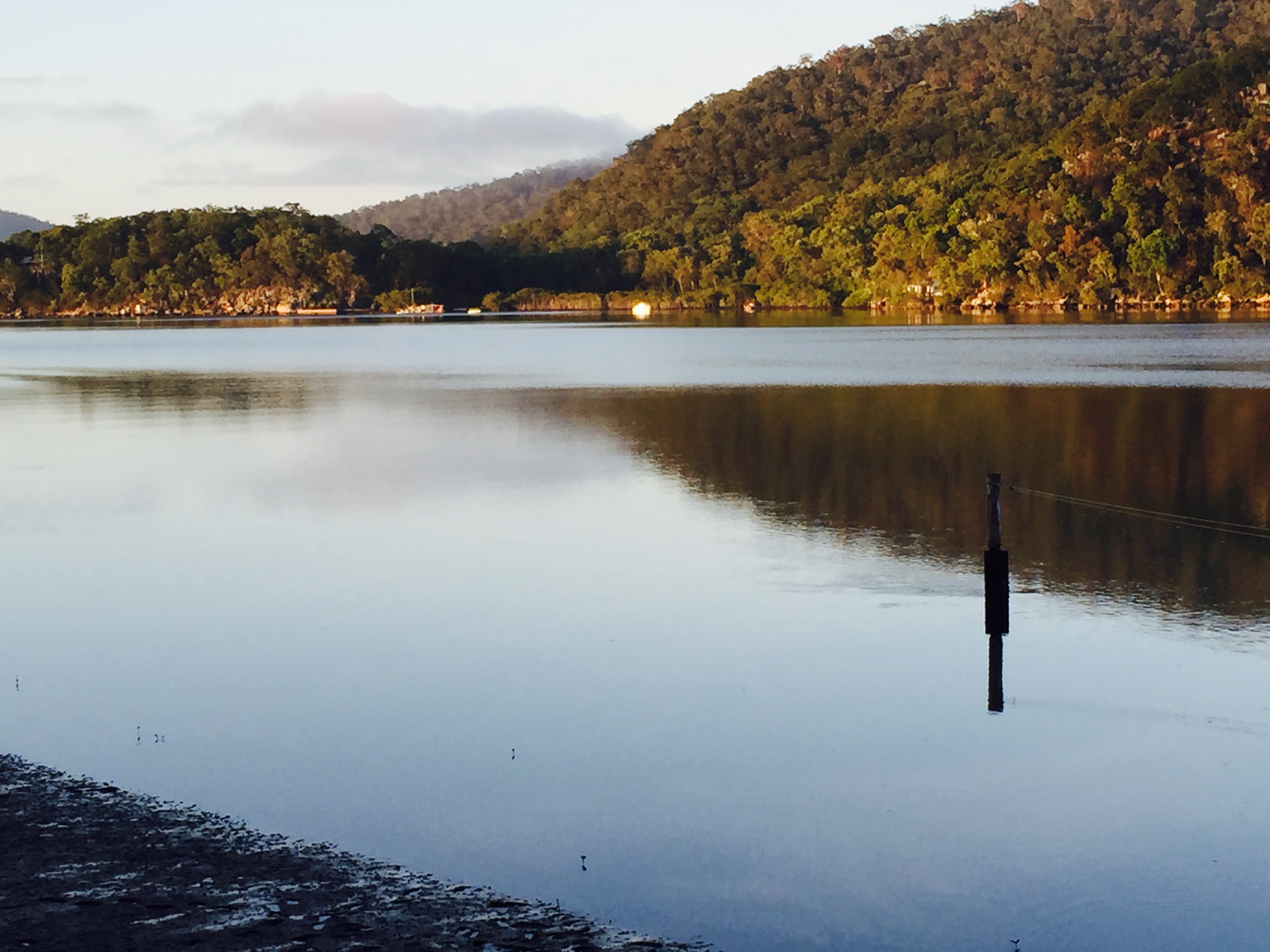
The photograph below shows the site where one of the two houses was located. It was built right on the waterfront, with a “drive in” parking area for the boat. It was demolished around 2014. All that remains is a sturdy sandstone wall.
THE OTHER SIDE
Billy sat on the wharf shivering. His windcheater was warm, but his legs were bare.
It hadn’t been difficult, getting the old binoculars out of the veranda cupboard. No-one noticed. The grown-ups were inside, drinking rum. Dad and Uncle Ben, Freddo Frog the neighbour. Blue, his cousin, sniveling, reading a comic.
The rain had stopped. Everything was black and white, like in a photo.
He could see the warm yellow light across the river, but when he tried to focus the binoculars he couldn’t find it again. Everything was blurry. There were only two houses over there, on the other side. His house – well, it used to be his house – and old Frank Bean’s. He fiddled, twisted one of the screw things, left, right, back again. Now he could see everything along the shoreline clearly but he still couldn’t see the house.
Then suddenly he was right there. The oil lamp was as bright as day. He jumped, as if they could see him watching. They were sitting around the table, playing cards. Someone was walking up and down. There were two ladies at the table: Auntie Myra, who was someone’s girlfriend and not really an aunty at all, and another lady with blonde curls. He thought she must be Julie. He only ever heard bad things about Julie. His mother said what a slut she was. He didn’t know what a slut was and was too afraid to ask.
That was it. He was afraid. He realized he had never been afraid before, not really. He’d been scared a few times, like when the snake was in the toilet, or when Dad had made him climb the huge hill behind the house, but when they got to the top it was so great like seeing across the whole world that it was worth it and he wasn’t scared of climbing any more. But now he didn’t understand anything. What he was supposed to do. Why his mother shouted and drank rum all the time. Why they lived with Uncle George.
Uncle George scared him. It started that night he had come across the river in the motor boat, when his dad was away in town, and his mother had woken him and Johnny and they found their clothes and toys and pushed them into a couple of sugar bags. Uncle George carried the sacks and a large suitcase, while their mum pushed them along down to the wharf and into the boat. Their mother came behind, carrying a smaller bag and some clothes over her arm. Nobody spoke. Uncle George started the engine and it took no time at all before they were over at his place. He made them carry everything out of the boat and into the house. There was a little sleep-out with bunk beds at the back of the house. Their mother told them to go in there and go back to sleep. Next day she told him they were going to live with Uncle George now. “But why?” he begged. “None of your business” said Uncle George, and slapped him over the ear.
Uncle George was very nice to his mother. And she was very nice to him, most of the time at least. But he wasn’t nice to them. Their lives changed completely, but didn’t change at all. They still lived on the river, just on the opposite side of it. Now they saw the sun rising over the mountains, and set behind them. They still went to school on the cargo boat and came home again. Nobody seemed to know that they didn’t live with Dad anymore, or maybe nobody cared.
When his father came back from town there was a terrible fight. He and Johnny ran into the bush and hid in their cave. They heard the voices and the shouting, their mother screaming at their father, their father chasing Uncle George around with the axe. Later on it died down. They saw their father rowing back across the river. They sneaked back into their bedroom and fell asleep without any dinner.
Their father never came across the river again. They could see him coming and going from the wharf, putting the crab-traps out, harvesting prawns at low tide. Then they heard about Julie, that she was living with his Dad. She peroxided her hair. Julie seemed to make her mother very unhappy. Now she started crying every night, and drinking more rum.
Billy could hardly keep the binoculars still because of the shivering. He needed to see his father, to make sure he was there, so close he could be there in fifteen minutes, rowing. Billy had a plan. He was going to borrow a rowboat when Mum and Uncle George were asleep.
Then he saw his father, bending over blonde Julie, putting his arm around her shoulders, kissing the top of her head. She didn’t look like a bad person. In fact she looked really pretty.
The screen door banged. He jumped, tried to hide the binoculars under his windcheater. Uncle George strode down the wharf and pulled him to his feet. “What do you think you’re doing down here you idiot?” he hissed.
“I was just looking….”
Uncle George pulled his windcheater open, pulled the binoculars off his neck.
“You little thief” he said “You’re no better than your bloody father. You’ll get the strap for this”.
“But I didn’t steal them…. I only wanted to look….”
“Look at bloody what?”
“I was looking… I just wanted to see my Dad …”
“Well I wouldn’t mind seeing him too. I’d kick the tripe out of him”.
He started dragging Billy along by his collar.
“Leave me alone” he said. “He is my father”.
“Yeah, well, worse luck for you”.
His mother appeared at the door, pale, her hair in a mess.
“Leave the kid alone” she said. “Just leave him alone”.
Uncle George took a swipe at him but he ducked away and ran round the back of the house.
Later, he heard them arguing again.
“Let him go back to his bloody father then” said Uncle George. “He’s a chip off the old block”.
“Never” said his mother. “Not while that slut Julie’s there”.
“What does it matter?” asked Uncle Ben. “What does it bloody matter?”
“It matters to me”.
“More than I do?”
Things went quiet then. He heard the noises from the bedroom and put the pillow over his head. There was nothing he could do for now. But he knew he was still there, his father. All he had to do was reach him. He would do it too. He was only over there, on the other side.
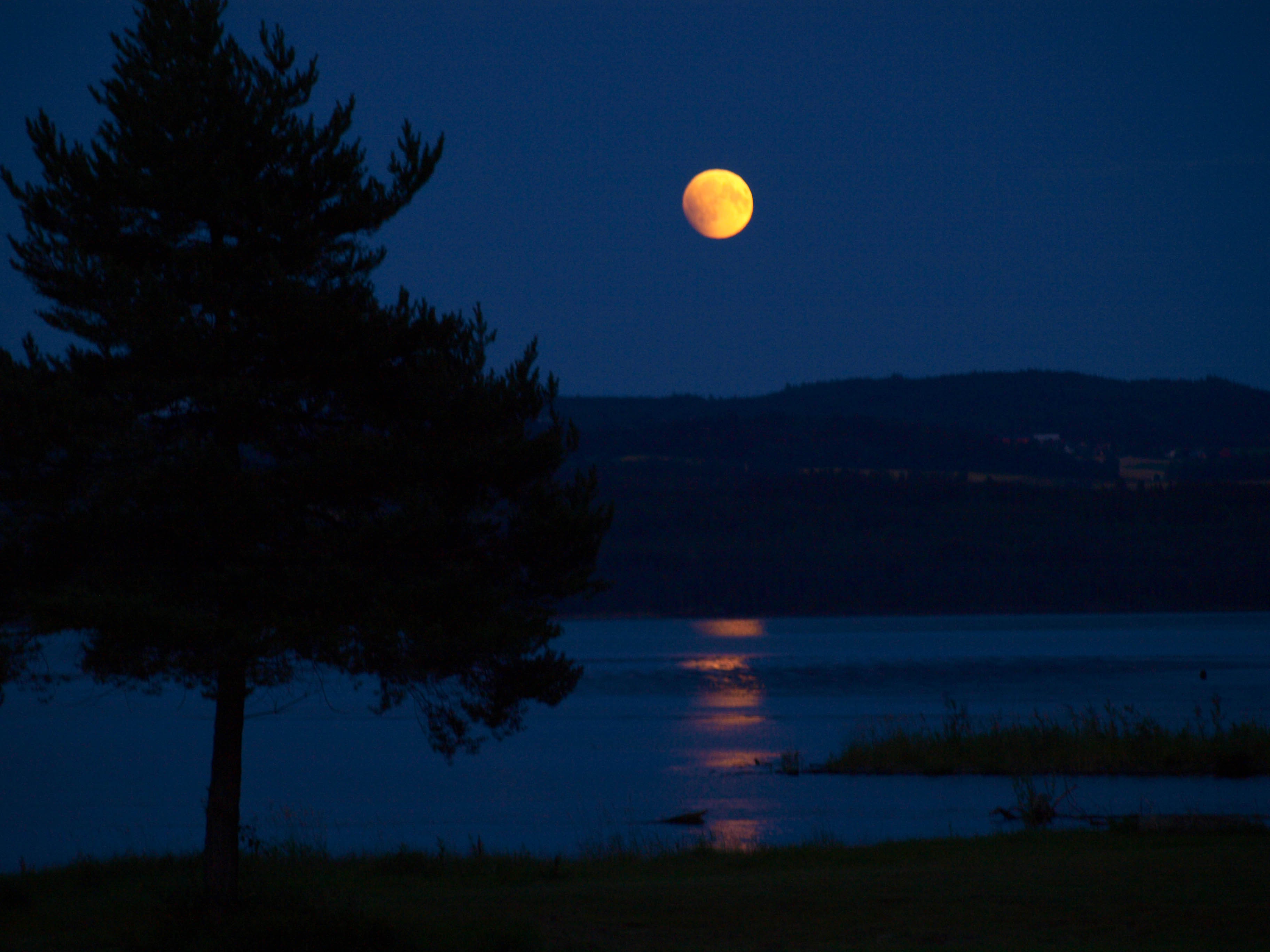
DECEMBER MOON.
Another river story grew from my childhood memories of endless summers spent on the river with my beloved cousin Sandra. She was killed in a horrible car crash when she was just seventeen and eight months pregnant. I still miss her, and wonder what life would have been like if she had lived and we had gone on being together, like sisters. I have written more of her story in the memoir volume Distant Early Warning. This story is dedicated to her.
(First published in The Wild Goose Literary E-Journal, 2016).
Christmas time, day after long day. Cheering relatives pulling up at the wharf in their hand-built boats, four or six men on the oars, crates of beer clinking in the stern while aunties and cousins laugh in the bow. We help put up the stretchers across the veranda, mosquito nets hanging from the roof. The well’s nearly empty, but there’s always clear water bubbling up from the spring along the foreshore. Nobody takes baths. A quick wash in a basin will do, after a dip in the river.
Full moon, Christmas tides. The days are baking. People snooze in the afternoon and get up again when the sun falls below the mountain. Sometimes a southerly wind turns the river wild, waves crashing on the shore, the current pulling the boats off their moorings. It passes, and by midnight the stars are glowing. Things start to happen at dusk. Insects go crazy, drawn by the kerosene lamps. Uncle Dan’s short-wave radio or Auntie Olive’s wind-up gramophone gets going. Very smart and luxurious. No electricity here.
All the neighbours and their families are around. The fish are biting, gunny-sacks full of bream and giant jewfish, soon gutted and scaled and thrown into fry-pans full of dripping, or cooked whole over the open fire. Someone gets oysters off the rocks and spends all afternoon opening them. Loaves of bread fresh from the baker at Brooklyn, apples by the case. Every day we go fishing. Every night we eat the catch. There might be half a dozen mud-crabs still alive to chuck into the boiling water in the black pot. The clink of bottles and deeper tones from the flagons of rum. It is sweet dark scented rum from Queensland, brought down on the train in huge stoneware jars. There is singing, and arguments, maybe a fight, then more singing, songs from the war and popular songs from the radio. Everybody can sing, everybody knows the words. Uncle Dave sings old bush songs in a high cracked tenor which is just right. He sings about bushrangers and convicts and wild Irish lads and sad souls who left their loves to come to Botany Bay. After everyone gets sick of his songs Uncle Dan takes out his clarinet and plays Glenn Miller, which we kids dance to. “In the Mood” is our favourite.
Nobody pays attention to us and we can roam off to the back of the mountain, or sneak around the other side of the bay and hide in abandoned shacks and play house. We’re not supposed to go into the back room though. Today when the adults were sleeping off lunch we did it. It was full of rubbish, old newspapers, tangled fishing lines, bamboo rods, metal bits and pieces which might come in handy, a broken ice-chest, empty rum-jars. In the very back corner, we found a cardboard box tied up with string. Inside, there was a collection of magazines with pictures of people playing ball-games. They had no clothes on. Their dirty bits were all visible. The thrill and shock was too great, and after leafing through one or two and gawping at pictures of fat women with enormous breasts and old bald men with horrible parts we crept out again, flushed and terrified that someone would find us out. We never said anything about it. Those filthy magazines.
Hanging over it all is that moon riding the sky, swelling, then slipping away bit by bit. When the relatives go home we will be left on the river, with our secret. So scary, but we know what we saw. It’s something you wish you could take away but you know you never can. Even if the house burned down, those things would be printed on our eyeballs. Why were they there? What do they mean? Will we ever know, my cousin and me, two skinny girls growing up on this lonely river?
A slightly different version of The Other Side received Second Prize in the Hawkesbury River Writer’s Award. December Moon appeared in a local literary e-journal published in the Blue Mountains in 2016.
 Annette Hamilton - Writer