Amazon’s Australian Site: Authors Beware

skywind-1It’s hard to navigate the dangerous shoals of self-publishing. It took me the better part of a year just to get an already written story ready for the publishing process – editing, formatting,  negotiations over cover (and illustrations), first round of corrections, loading and reloading files, finding and correcting mistakes, reloading files yet again —2016 was coming to an end and I really wanted to get this book out. I had already decided publishing through Amazon was the obvious way to go.

It was my children’s book The Priceless Princess which was the test case. Things got complicated when I had to go into hospital for major knee surgery in early November so I was rushing to get the book ready for Christmas. My dear friends at Ciao Magazine in Sydney gave me some free publicity. The Kindle version went up through KDP, it was easy and gratifying once I worked it out.  There was my book online, with its great cover! I had a Facebook author page! The book had its own website! I had it up here on my main writing site! What could go wrong?

Time went by and suddenly there was a notification of a payment. It definitely wasn’t anything I expected, and not in a good way. I mean, yes, it was a payment, and that was welcome. But there were no sales!  Because the book was enrolled in Kindle Unlimited, US readers could read it and I was paid by the page. Well, it’s a pretty small book, and not many readers read it – and since it’s a children’s book, children themselves could not read it, unless their parents had given them Kindles, or let them read on their own. That’s why I published a print copy on Create Space, so they could order copies for their kids. They didn’t, so I thought they probably didn’t like it that much. Too exotic and scary?

But where were the Australian sales? None at all? It’s a very Australian story. Anyone who looked at the website on Amazon should realise this if only because of the bilbies and green snakes on the front cover. Australians aren’t so into Kindles, and they don’t buy them for their kids. They ought to go for the print version. I thought I’d priced it pretty well for the Australian market. This stuff is all about marketing, the elephant on the keyboard in the new writing world. Hidden traps, a thousand perils, it can make you pretty narky.

I thought I knew what I was doing, but I didn’t. It took weeks to get myself back in gear enough to work out what was happening. Today I discovered for the first time that AMAZON DOES NOT MAKE ANY CREATE SPACE  BOOKS AVAILABLE TO AUSTRALIAN CUSTOMERS  using the Amazon.com.au site.  Since they have been very actively persuading Australian customers to switch to the Australian site, this means that Australian authors who have published on Create Space will not even have the availability of their books noted on the Australian website!  And presumably potential readers are not going to know this, and so will assume there is no print version. Apparently the same has been the case in Canada, another place where I thought customers might like the book.

In the process of checking this out, I then discovered that the Kindle version, which I had originally put at US$2.99 had somehow magically transformed in the Australian Kindle store into something over $6.00. Nobody is going to pay that for a short children’s e-book. I have no idea what made them set that price, but I see that they are in fact at liberty to set any price they like.

So no wonder there haven’t been any sales. Well, there was one, but it was returned. I don’t know what to make of that. Meanwhile I got a batch of copies sent over from Create Space, at considerable expense, and I gave lots away for Christmas presents. Great feedback from the readers who especially enjoy that great cover and the way the illustrations worked with the text. I am not so happy with the internal layout, it is printed too close to the binding, but it’s fine for this first print version. If you happen to read this and want a copy of the book to give your kids, click on the tab above “Children’s Stories” and you will see how to get a real-life print copy of this version for the great price of $A5.50 posted anywhere in Australia. There will be Paypal option soon too.

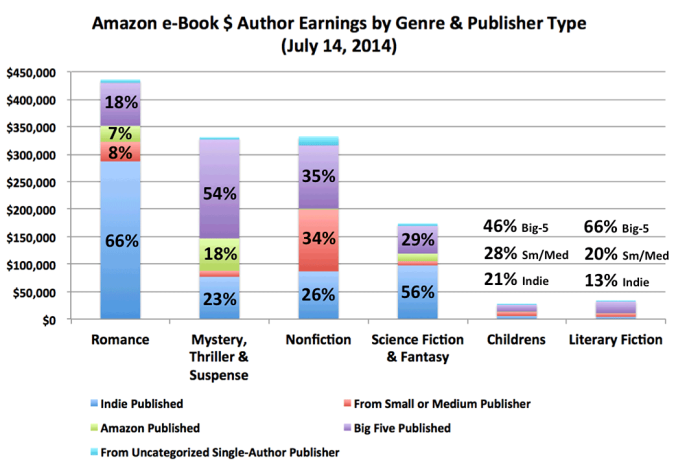
So this is all about learning. Am working now towards getting my first book of short stories ready in the next month or two, and I won’t make the same mistakes this time. I do wish there was a comprehensive site or book specifically for Australian authors wanting to go the self-publishing route. The domination of Amazon in the US and international e-book field has made it pretty much inevitable that writers will go with them more-or-less automatically, but there are a lot of traps there and the complications are vast. And of course the demand for children’s books is infinitesimal anyway, at least beside those staggering Indie romance figures. Even less than literary fiction!
author-earnings-by-genre-and-publisher-type-5

Women in publishing and faux-Knausgaard on “Younger”

INSPIRE YOUR OWN LIFE: BE WHOEVER YOU WANT TO BE! DROP FIFTEEN YEARS AND WORK IN PUBLISHING!

you-inspire-your-life

Thanks to my new exposure to streaming television (thanks,  Stan) I have just started watching a  program about women in the publishing world, “Younger”. The premise is a bit like Suits for Girls: a forty year old woman who used to be in publishing (trad-pub old-style) has been out of the workforce raising her daughter and now wants back in. Ha-Ha. Forget it. Too old! No credits for child-raising or good sense. So she has to pretend she is in her twenties and become a Millenial. Luckily she has great skin and a fabulous figure, with only a few dodgy emergent crows-feet which she can put down to her entirely fake years volunteering  among the despbelieved-she-coulderate and impoverished  in India.
younger-cast

She spins a new identity: long streaked hair, pull-on beanies, short skirts, high boots… you follow. She gets a fake ID and claims she finished an English degree at Dartford or somewhere then spent four years volunteering and writing a novel.  This is a wholly acceptable cv. Yes!!! She gets a job for a horrible mean lady publisher, also in her forties – a kind of Meryl Streep /Anna Wintour but showing it. Liza (our heroine) has to keep up the pretence that she’s young but it’s so HAAARD! Especially when the workmates see the decorations on her lady garden in the gym ( the grey bush which she quickly trades for a landing-strip) and she’s being pursued by a super hot tattoo artist guy who says he “likes things that are old”. He’s referring to vinyl records but we know it’s really old ladies like Liza.

younger-1

Well, the point of the story here is that one of her associates wants to sign up the newest hottest literary writer: they make him a relatively smooth well-dressed Swede but there’s no mistaking he’s meant to be Knausgaard.  swedish-writerim-your-editor


It’s a shame they didn’t make him even more like Knausgaard, would have been lots more room for hilarious comedy.

Haven’t got past Episode Three yet so I don’t know what’s going to happen.  Who knows, maybe Elena Ferrante will be next cab off the New York rank for our “Younger” heroine. But it’s a wry and knowing reflection on the idiocies of the contemporary publishing world. Great script so far.

Indie publishing and the Amazon Maelstrom of Doom

derelict-books

I was a very early adopter of Amazon e-books. I opened an account straight away and I still have a collection of ancient Kindles with their grey screens and clunky keyboards. Once I realised the possibilities of self-publishing through Amazon I thought that might be for me. I knew a lot about conventional publishing especially in the academic field. But I had also looked into commercial publishing and knew some well-known published writers. Drusilla Modjeska is a kind of relation (my second husband’s first wife) and we had talked about the literary scene since the 1970’s. Still talking in the naughties, I tried to persuade her that Indie publishing was the way of the future but she, like most Australian literary figures, considered it completely unacceptable and infra-dig. I couldn’t persuade her of its virtues no matter what I said. Of course she already had a publisher and a secure literary reputation, so I can see why it wouldn’t have appealed.

By the time I was getting ready to publish my fiction and memoirs, it was another scene altogether. Traditional publishing had become almost impossible. The old literary circles were dying off and the Big Five international publishers had swallowed up one after another of the smaller presses. Agents at least in Australia just wouldn’t look at debut authors unless they seemed like literary prize material or were writing self-improvement texts or cookbooks and even then they had to have a profile on TV.

Self-publishing, or publishing through small presses, had indeed picked up the baton and become not merely successful but a huge industry with an entire infrastructure of its own.The demands on the independent writer now included the ability to manage all the things the old trad publishers had done, and as standards increased so did the expenses. And as the number of services for self-published authors bloomed, so did the number of titles, all neatly divided into nifty genres and subgenres which often bore little relevance to the actual book the author had written. There seemed increasing pressure to write to distinctive niches: alpha billionaire S and M, historical vampire fiction, sweet Amish romance, a whole submarket in stories about Mormon polygamy. Marketing became the watchword, but how to achieve it without paying for a marketer, with no guarantee of ever getting your investment back. The old days when the writer handed over a bundle of typed pages and received a cash advance began to look halcyon.

The Amazon publishing ecology is fantastic and offers every support to the writer, except the crucial one, namely, how to persuade readers to buy your book. The rise of Amazon’s own imprints is having another kind of impact, more on that later.

The glories of self-publishing are looking increasingly tarnished right now. In late 2016 the graphs of sales and income for Amazon self-publishers began to drift downwards for the first time in five years. Millions of e-books are washing around on Amazon and a few other platforms. Some estimates suggest that there are 5,000 new books published on Amazon each day. It’s almost impossible for readers to find good quality writing, the kind of book which is not repetitive trash genre fiction. Not to mention the ghastly low standard editing and typos in so much of it.

There is a huge market of people who love to read and appreciate the e-book format and like the low prices knowing most of it is going to the author but they want to read real stories with a certain kind of “truth”.  The enormous success of Sydney writer Liane Moriarty is an example. Liane is a really good Australian writer who tells well-crafted stories about real lives which readers can recognize. I found it at first unbelievable that her stories, set in Australia, were being snapped up by legions of American fans. She is almost completely unknown in Australian literary circles and certainly will never turn up on a literary prize listing. Her readers are not necessarily  part of the cultural elite, but they are still serious readers, who  get lost fast in the wilds of Amazon and will be generally turned off by the oceans of junk and rubbish now swirling about in the maelstrom. It was good luck as well as a good product which brought Liane to her readers at a time when Amazon/Kindle hadn’t reached the stage of terminal bloat and ultimate Doom.

We urgently need some method of curation which doesn’t go through the conventional route and can open a space for e-book publishing for serious readers and writers who want to engage with the new world of online publishing. That’s the number one challenge now, it seems to me.

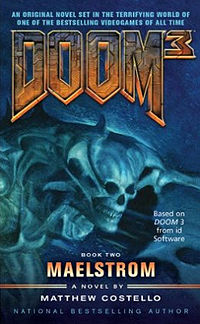
200px-doom_3_maelstrom

Writing and Memoirs

One of my Pages is called “Memoirs”. There I talk about the continuing Memoirs project and its inspiration (or  otherwise) by  the writings of  recent authors. I’m repeating some of that here in this post.

While I still haven’t managed to read the whole of Karl Ove Knausgaard’s opus My Struggle (Volume Six still isn’t published in English anyway and some of them I just haven’t been able to get through) the way he wrote and published has been an inspiration.

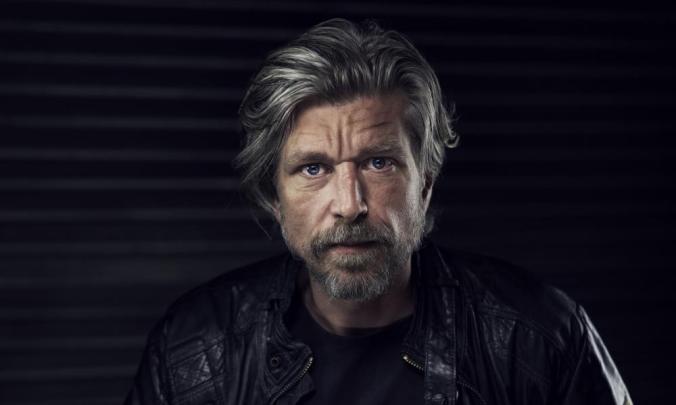
knausgard-1

Karl Ove Knausgard – publicity still

I really appreciate the way he didn’t feel obliged to follow the temporal sequence of his existence, but came out with things in what seemed to be almost episodically random order. The first published in English was A Death in the Family and he was writing it round about the same time as I was writing my own maternal mortality story. His revelations about his father, which caused a violent storm in his native Norway, were pretty gruesome. I had nothing so dramatic to contribute. My mother had done some pretty awful things but she was nothing like the kind of horror Karol Ove described his father to be. If anyone was a horror, it was me. Sixty-three at the time, I was still trying to excel in my career. I thought I was much more important than anybody else. This was not the frame of mind to be in when trying to help a 93 year old woman through the last year of her life.

Like most English readers I was gripped by Knausgaard’s second volume, A Man in Love, about his relation with his second wife and their family. The texture of everyday existence and his internal monologues as he did his best to live in ideologically correct Sweden and please his feminist wife, the only man taking his little child to pre-school singalongs where he spent the time lusting after the kindie teacher – what happens when you want to be a writer but aren’t allowed to – a woman’s story, now by a man.

His other books had less to  say to me, and I haven’t finished them all. Still, they are there on my Kindle and I dip in and out of them every once in a while. For all the sense of alienation and irritation Knausgaard is able to stir in me, I like the way he is trying to grapple with himself and come to terms with what a shit he was most of the time.

The second memoirist I must mention is the insanely popular Elena Ferrante (not. All the hoo-haa about who she “really” is has been quite absurd, unless you subscribe to the Author as Sacred Object school of literary identity). On the other hand there might be something to it because everything she has written seems to me completely fake.  I really and truly cannot read it. I have tried, started one book, then another, tried going into the middle of the first one, then the end of the third and honestly I have to say I just don’t get it.

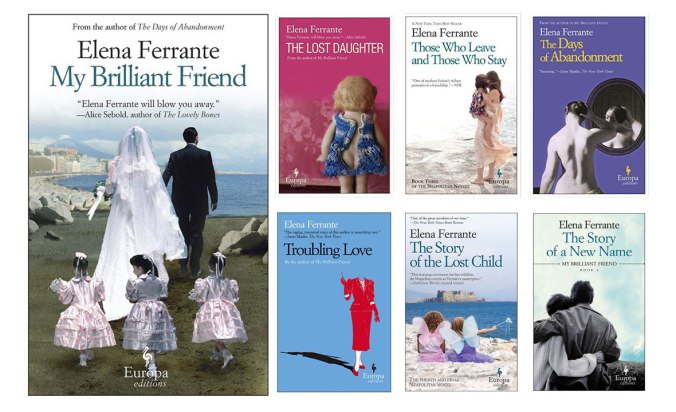
ferrante-book-covers

One of these days I will try again. If Knausgaard is the masculine consciousness of the twenty-first century,  Ferrante is a feminine counterpart. Women seem to read books in order to identify themselves with the narrator, and in line with a lot of feminist theoretical work from the 1970s and 1980s, now largely ignored, it would seem that Ferrante works from the classic masochistic feminine position which a great many women still seem to find compelling and truthful for them.

Knausgaard on the other hand seems to me to exemplify the masochistic hysterical masculinism which our times have produced. This is not the place to conduct a forensic analysis of these writings, looming  large over the “serious” reading scene though they are. But the experience of tangling with them has sharpened up powerfully my sense of what memoirs can, or maybe cannot, do.

Making Contact

I used to love emails and couldn’t wait to visit my in-box for my various email addresses. The commercialisation of everything has degraded the experience. With the endless torrent of emails, mostly trying to get you to spend money, makes it too tiring a task to go through them all every day. Then your email disappears to the bottom of the page and pretty soon disappears altogether. But a letter with a personal signature becomes something I care about and really want to read and respond to. So if you want to find out more, drop me a line using the “Contact” address.

Blackwing Press will have its own website and email address soon, along with a “buy” button so people in Australia can buy books published by the press using PayPal if they don’t have an Amazon account. Meanwhile, drop me a line, send me a postcard, and I’ll respond as soon as I can.

First past the post

In October 6th 2016  my first Kindle publication, The Priceless Princess, appeared. Not long after, the paperback printed through Create Space became available. My first fiction publication!  Actually that’s not quite true, I contributed a story to a very early literary magazine with a number of feminist writers now household names including Drusilla Modjeska. I won second prize in the Hawkesbury Literary competition with one of my river stories and another one was published recently in a Blue Mountains literary journal. I’ll put them both up on my “Fiction” page.

I didn’t want to make a fuss about the Priceless Princess coming out. A few people congratulated me. I gave out paperback copies to various friends and relatives including my granddaughter who inspired it. Can’t say it’s sold many copies although there’s been some reading on Kindle Unlimited. I feel very attached to that story and love Keith’s illustrations, so I’d like to find a way to “market” it more widely, especially in Australia, because although it’s not an Australian story as such it features a lot of Australian animals. I still haven’t finished the work for the additional natural history material I want to put up.

There are so many suggestions about how to manage a writer’s online presence. I have a Page on Facebook  here and The Priceless Princess has her own website here.  My Amazon Author’s page has just gone live here . Different audiences want different things, and different kinds of contact with books and writers. I expect to use the posts on this site for comments on the life of books and writing.

I am fascinated by the alternative writing world which has been opened up by Amazon and on-line publication. The freedom to write and publish whatever you like, and potentially to reach a world-wide audience, is an extraordinary achievement. But it is evident now, after almost a decade of self-publishing, that the quantity is limitless but the quality can be appalling. I have been reflecting more on this in a recent post – Indie publishing and the Amazon Maelstrom of Doom

A small step on a long path, they say.  Still, I’m up for it.