About Substack: email crisis!

This is not a proper Post but a comment for anyone reading this who is newly on Substack. I started a Substack account a few weeks ago, along with many others who don’t feel good about Facebook, Instagram and Techbro world-control. I thought it might be a worthy substitute especially since it is completely ad-free and follows the basic principle that writers should get paid for their writing.

I do love Substack. It is the first thing I turn to every day, sometimes at 3.00 am on the Insomnia Shift. I feel I have learnt more in the past few weeks about what is happening in the Big World than I ever could discover via the Australian legacy media, on Facebook or Instagram. I have never gone for Twitter-X and haven’t bothered with the new Blue thing. I do subscribe to a couple of magazines, in the digital version (Atlantic, New York, N+1) and NLR, for a Brit/Euro perspective. But for a quick ad-free tour of the playground from people I feel close to, Substack has been the goods.

But the downside is: I have realised I can’t manage what’s happening in my email inbox. And, from what I can see on various other chats and comments, other people can’t either. Even my dear one doesn’t want to be on Substack any more because he is getting emails from accounts he didn’t even know existed.

I am drowning in Substack emails from accounts I did subscribe to. I’ve paid for several, and I am glad to hear from those writers via email. It seems only proper. All the rest: I love you, but I can’t afford to pay for you all. I want to read you, but not via my email inbox. That is pretty much reserved now for emergency pleas from alarmed relatives, the occasional “hullo” from a friend, but mostly for official stuff from every agency with which one is obliged to intersect, not to mention dentists, doctors, review-seekers, restaurant-reservation-persons, Paris Metro updates and the company which offers good deals on worm-farm blankets and other real world necessities.* (In order to write this post I have done some instant research on my own in-box, and I think it will take a week of steady work to actually unsubscribe to the advertising junk I have realised is now there).

Substack writing shouldn’t be included as junk, but as I woke up this morning I realised that if I don’t delete all the accounts I am following (the ones I haven’t paid for, I mean), I might have to. I went into my settings (on the computer, not on the phone) and there seemed to be no setting which allows access via App or website only, ie which does not send out an email every time there is a post or a chat or whatever.

I guess like others I had thought Substack would be an alternative to the “get an email newsletter list” instruction. This advice is given to all indie writers, who are told to send out a newsletter once a month to those who have bought their books or followed them in some other way. Subscribing to Substack is not like this. People are posting two or three times a week and sometimes more than once a day, so it is turning into a kind of Facebook but with much longer stories so it takes ages to scan them let alone read them.

Is there an answer? Have I missed something? Off to “research” the problem …

ANSWER: Apparently yes. There are two possible answers, so far I have tried only one.

If you go into your Substack on your IPhone (or equivalent) and go to your Settings, there is a Notification setting. There is a NEWSLETTER DELIVERY heading. Under that is Prefer Push option. There is also Prefer email and both email and push. So I have set “Prefer Push”. I don’t know what that actually means, but I guess I will find out. I don’t even know what a Push email is. I used to be part of a radical social movement in Sydney known as the Push, but I don’t think this has anything to do with them. Everyone’s pretty much dead already. Pushed out you might say.

Another answer: set up your inbox subfolders and instruct your mail provider to deliver all your Substack emails into that folder. That way, they will be there in scores, then hundreds, then thousands, and presumably you can then delete the folder. I haven’t tried this because it seems more protracted and I can bet my boots that I’ll forget to delete them, or will delete the wrong folder.

So I’ll wait and see how it turns out. I know there are some other good discussions on this subject on Substack but am having trouble finding them right now. I don’t want to become a Substack Email Refugee, so let’s hope we can all move towards a manageable system.

*If there happen to be any other worm-farm enthusiasts around, get in touch please! I’d love to have a chat about the ups and downs, triumphs and pains of worm-farming. Or maybe there’s a Newsletter I can follow. I guess another Newsletter won’t hurt!

Healthy plump worms in a perfectly formed soil: sadly mine don’t look like this!

Understanding the Feuilleton: A Reflection on Modern Culture

INTRODUCING THE FEIULLETON

Literary Journalism In Fin-De-Siècle Vienna

(From International Association of Literary Journalism Studies)

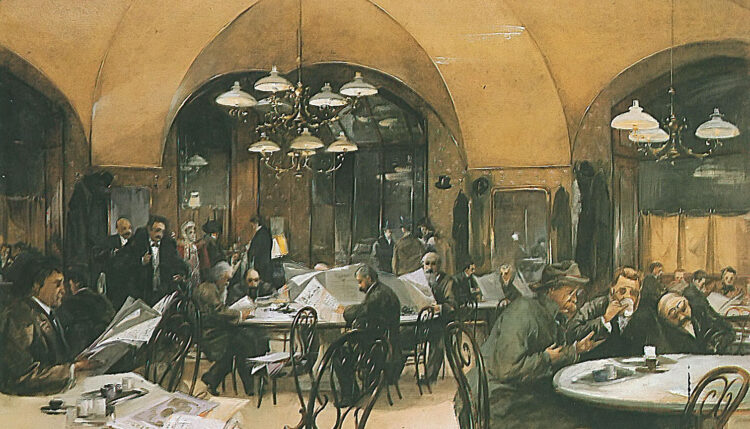
As mentioned I have been thinking about inserting the odd Feuilleton here, mainly because I keep finding myself contemplating some strange or remarkable facet of contemporary culture and society which defies inclusion into any other kind of writing I do. By calling it a Feuilleton I hope to indicate that it is a passing phenomenon not of any great social or political importance in itself, although I may be flirting with the Zeitgeist or capturing the temper of the times. My Feuilletons are not about literary culture or contemporary writing or the Kindle or the role of reviewers in the Internet age. But they are not entirely frivolous or meaningless either.

The term Feuilleton comes from French and means something like “little leaf”. Originally it was a small item at the bottom of the literary section of a newspaper, often providing a critique of popular theatre, but in many cases it grew to have its own page. By the 1840s the term roman-feuilleton described a serialized novel published in newspapers, something like today’s internet novelizations, but paid for, not for free. I mean the readers bought the newspapers and the newspapers paid the writers. [Now we barely have newspapers and people publish their writing for free all the time, which seems counterproductive]. The term was used in English by 1845, in the Atheneum.

The term was also handy to refer to small one-page advertisements, like handbills, which might be handed out in the street to encourage consumers to visit suppliers, as in this advertisement for a delicious lunch venue the like of which sadly no longer exists.

If that all sounds cheery and familiar, we must pause at what Hermann Hesse had to say about it in The Glass Bead Game, regarded as the first and only science fiction novel to win the Nobel Prize (in 1946). He was writing against the decline of humanistic culture brought about by “feuilletonism”, which he saw as the antithesis to true writing, and lampooned viciously. His master-work, The Glass Bead Game, was on the Must-Read list of myself along with almost every other proto-boho-intello in the 1960s, and describes the life of future intellectuals living in a cloistered community trying to circumvent the excesses of the age. Thanks to Huxley for bringing the Feuilleton into the present time as another object of knowledge. (https://huxley.media/en/the-feuilleton-era-we-live-in/)

Hesse described the Feuilleton, printed widely in newspapers and magazines, as a source of “mental pabulum” for readers hoping to soak up culture but unable to actually do so due to the lack of education and motivation, and of course  being too busy and far too important to sit down and read actual books.

He said:

Among the favorite subjects of such essays were anecdotes taken from the lives or correspondence of famous men and women. They bore such titles as «Friedrich Nietzsche and Women’s Fashions of 1870,« or «The Composer Rossini’s Favorite Dishes», or «The Role of the Lapdog in the Lives of Great Courtesans» and so on.

Another popular type of article was the historical background piece on what was currently being talked about among the well-to-do, such as «The Dream of Creating Gold Through the Centuries» or «Physico-chemical Experiments in Influencing the Weather» and hundreds of similar subjects… we feel surprise that there should have been people who devoured such chitchat for their daily reading; but what astonishes us far more is that authors of repute and of decent education should have helped to «service» this gigantic consumption of empty whimsies. Significantly, «service» was the expression used; it was also the word denoting the relationship of man to the machine at that time.”

Good heavens! This is exactly the flavour of the endless parade of pablum from our own Machine, the Internet, much of which we now call “clickbait”.  But Feuilletonism goes so much deeper than trying to persuade people to buy stuff they don’t need from people they don’t know manufactured by unspecifiable techniques at places which don’t exist. The Age of the Feuilleton is completely dominant today, ever more so with the consequences of AI development and universal internet access on every phone – the mastery of the Machine indeed.

I don’t see my contributions to the Age of the Feuilleton as necessarily despicable, as Hesse might have done.  By proposing to include a few remarks under the heading of a Feuilleton, I am going with the diverse flow of contemporary knowledges, and playing a little with the scary bizarritude of the fragments flowing through the ever-open channels of our time. It is true that there may be an academic flavour to the analysis, but maybe that is a necessary correlate of talking about anything in modern culture at all, rather than just participating in it. And a rich and full array it is.

So in my occasional Feuilleton I will remark on various ephemeral incidences, moments or events, usually conveyed in media, sometimes in performance. I notice things as I trawl through my reading and writing. Someone, generally much younger than myself, draws my attention to something I have never thought of before, and didn’t know existed. Or I am struck by some change in the discourse and behaviour in the everyday world around me. Often these moments are so peculiar in flavour and signification that I am reminded of my old father’s frequent exclamation: “Well blimey, you just wouldn’t read about it”. Now, these days, it turns out he was plain wrong. We can read about it, and moreover see it, all the time, every hour of every day. By adding a little more to it I hope to do no harm. I will identify those pieces which belong in the Feuilleton category, so you can skip over them altogether if you like.

Check out Stoddard Martin’s essays, with insights from the old and new literatures of several countries – aesthetics, musicology, mythology, philosophy, poetry, politics, and psychology.

Monstrous Century: Essays in ‘the Age of the Feuilleton’ Paperback – October 15, 2016

by Stoddard (Chip) Martin 

Insights from the old and new literatures of several countries jostle for space in this work – not to mention aesthetics, musicology, mythology, philosophy, poetry, politics, and psychology. The subjects, even when unsympathetic in themselves, are viewed in the round, and judged with humanity (from the publisher’s blurb).

«THE GLASS BEAD GAME». FRAGMENT FROM THE WORK

«We must confess that we cannot provide an unequivocal definition of those products from which the age takes its name, the feuilletons. They seem to have formed an uncommonly popular section of the daily newspapers, were produced by the millions, and were a major source of mental pabulum for the reader in want of culture. They reported on, or rather «chatted» about, a thousand-and-one items of knowledge. It would seem, moreover, that the cleverer among the writers of them poked fun at their own work. Ziegenhalss, at any rate, contends that many such pieces are so incomprehensible that they can only be viewed as self-persiflage on the part of the authors.”

On the Philosopher’s Visage: The Eyes of Wittgenstein

Ludwig Wittgenstein (1889-19510

In my previous post I raised the question of the apparently miserable visages of great German writers/thinkers/philosophers. When is a writer a philosopher, and vice-versa? I think of both Hermann Hesse and G. W. Sebald as philosophers. They are more often described as “novelists”. There’s something so wrong with these genre-based descriptions.

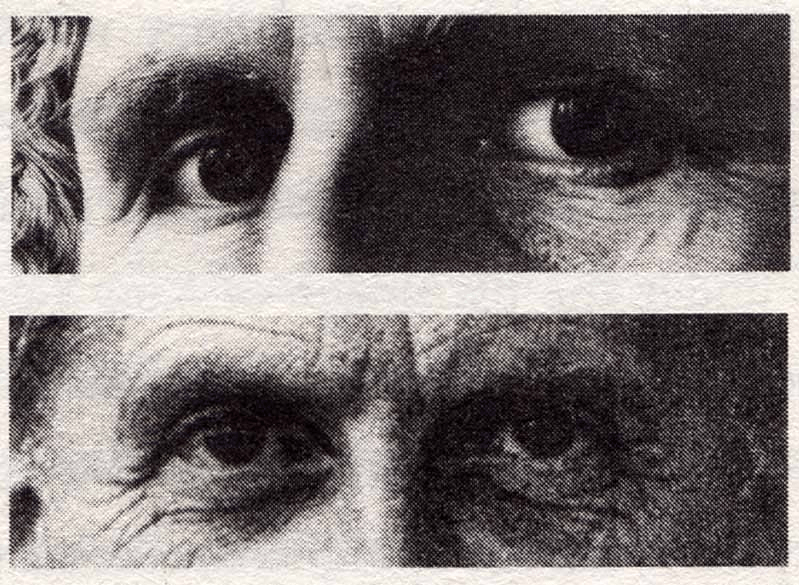
In any case, thinking of philosopher’s faces reminded me of the question of Wittgenstein, more particularly his eyes. I hasten to add that Wittgenstein is Austrian, not German, by birth but whether that makes a difference or not is too much to consider here. My fascination with Wittgenstein’s eyes arose originally from those mystifying photographs in G. W. Sebald’s book Austerlitz.

Sebald’s book resurfaced throughout my writing Regret Horizon, which is now finished but not really ready – like so many of my books. One of its main chapters is titled “Austerlitz”, where I try to connect the dots of history, memory, family, loss, fiction, past and present.

I need to go back to Wittgenstein’s eyes before finalising my chapter.

Was I looking at Wittgenstein, or was he looking at me? And what to make of the non-human eyes in that sequence of images? Is that a key to the relationship between writer and reader? I am trying to traverse these ideas in my memoir, clumsily and faintly. That’s why the book probably needs to be rewritten again, and again.

If you fancy dense academic critical commentary, there’s a great paper published a while ago about aspects of this topic.

Nina Pelikan Strauss. “Sebald, Wittgenstein and the Ethics of Memory.” Comparative Literature, vol 61, No 1, Winter 2009.

https://www.jstor.org/stable/40279435

“Austerlitz’s narrator insists on his hero’s ‘personal similarity to Ludwig Wittgenstein,’ noting the ‘horror-stricken expressions on both their faces'”.

Amazon and Reviewing.

[The first part of this post was published as part of the previous post: I have been thinking more about reviewing and republish it here as it prompted some more thoughts on this topic].

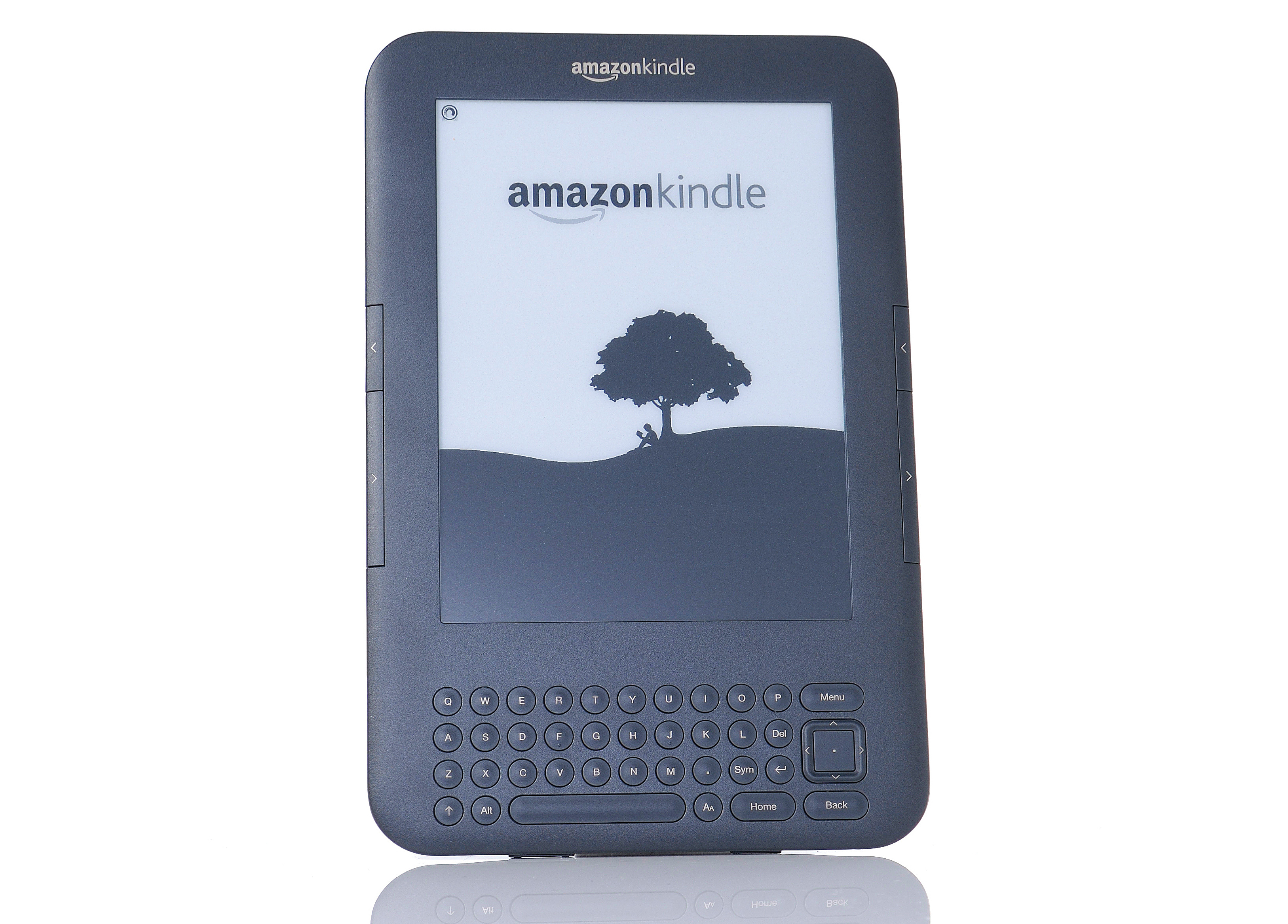
When Amazon Kindle was first a thing you had to buy the books you wanted to read and download them onto an early-generation e-reader, nothing else worked other than your actual computer. Take a look at one of the early Kindle versions here:

You couldn’t put them on your IPhone or on an I-Pad and there was no such thing as Kobo or Apple Books. This led me to feeling very enthused about reviewing. I love to read a well-crafted and considered review, and enjoyed the challenge of writing them myself. I knew an author’s success depended to a great extent on what the reviews said, and as a reader myself I read at least a good selection of reviews, both positive and negative. One’s reviewing name is not one’s own name, so there was some protection of identity when you didn’t like something. I felt it was a kind of community thing, to share views with others. I reviewed certain author’s books without fail. Then there was Goodreads, which at some point was taken over by Amazon, and that became overwhelming, so I stopped using it altogether, although they still send me emails all the time.

I don’t know when it dawned on me that the whole review process had become distorted and corrupt. Review-farming was a thing. Somehow authors could pay money – a lot of money, maybe hundreds of dollars – to have their books reviewed by a group of people who apparently got some reward for reviewing them, although I never knew how that worked, or how it met Amazon’s terms of service. The system became hyper-alert to reviews from anyone even vaguely connected to the author, relative, friend, Facebook contact, whatever and those reviews were banned. Other anonymous people however were free to say whatever they liked and post one star reviews because the book was delivered late, or was about something they hadn’t expected because obviously they hadn’t read the blurb.

Now I don’t review at all. I often feel I would like to comment on books I really like, or make suggestions to authors about something they could do to strengthen the work, or whatever. But I know now that the majority of successful Amazon authors are turning out books once every couple of months. Some are using ghost writers. Others treat writing as a kind of supermarket shelf-stocking – each book a basic product fitting a particular genre run through one or more editing programs to check for grammar and spelling, off to a human editor perhaps, covers designed strictly by genre convention which somehow everyone understands, and book is “launched” with money lavished on Amazon and/or Facebook ads and now Tik-Tok reels three times a day. Why bother reviewing? It is like reviewing cans of identical soup. And authors are devastated if the reviews they do get are not five-star.

This is clearly reflected in the command “Write to Market” which I will talk about in another post.

On Writing Software and AI: is this what they meant by “creative writing?”

Most of my stories and books were begun before writing software even existed and certainly before it became ubiquitous. I don’t know how long programs like Grammarly and Scrivener have been around, because until recently it never occurred to me that I would ever want to use them. But in the past couple of years I became aware that almost everyone in the independent publishing world now regards writing software as part of their professional toolkit. Online forums, blogs, and writers’ groups take it for granted that everyone uses some program or other. Now suddenly AI has arrived and may soon make existing software programs irrelevant because “it” will write the books using algorithms, based on everything that has been published so far.

Before AI was on the horizon I couldn’t help wondering if writing software would help me produce my many belated volumes more efficiently. I downloaded a couple of test programs and couldn’t believe how they worked and what was going on. Here was a new field of cultural commerce aimed at a the thousands of people who now want to be writers – ironically at a moment when reading is becoming a less and less popular activity. Self-publishing in the Amazon environment has resulted in literally millions of books now being available all competing for pitifully small returns to the authors who, unbelievably, often set zero price for their works. Writers even complain that Amazon won’t let them offer works “permafree” as if giving your books away is a good strategy for an effective writing career – but that’s another issue.

What is an author? I grew up thinking an author wrote their own books. The authors I was brought up on – Thomas Hardy, Joseph Conrad, D.H. Lawrence, Marcel Proust, Franz Kafka, Virginia Woolfe, Ernest Hemingway, John Steinbeck, E.M. Forster, Aldous Huxley, F. Scott Fitzgerald, Jack Kerouac, Simone de Beauvoir, to name a few – wrote their works in pen or pencil on paper or in notebooks and edited them several times over by hand before and after they were even typed. Just look at their manuscripts. At some time or other when book production became a major industry publishers began to insist on using editors, who were trained in the technicalities of writing. Editors had a big role in getting a new book to the market. I don’t know what an editor did or might have done to Jack Kerouac’s original manuscript.

Kerouac”s On The Road manuscript is a 120-foot long scroll consisting ofa series of single-spaced typed twelve-foot long rolls of paper that have been scotched taped together. Kerouac found this method more conducive to his style of writing.

Now independent writers are told that they must work with an editor, or editors, through three or four phases of preparing their book for the chaotic world of self-publishing and pay the cost themselves. It seems generally accepted that editors reshape and often rewrite many of the most popular books published today. And this is without considering the role of ghost-writers. At least these characters are human beings.

Getting one’s book substantially rewritten or revised by an editor is a very expensive process. New authors may find themselves paying hundreds or even thousands of dollars before they push the “publish” button. But then along came writing software which promised to take the worst errors away, so the editorial costs would be reduced (although not eliminated).

Writing software works by submitting writing to a standardized matrix which prescribes a limited approach to sentence construction, grammar and expression. When you actually use the software and find out what alternatives and options are being offered you realise how limited the results will inevitably be. I discovered that writing programs such as Word now have semi-editing functions within their own software which encourages authors to corrects spelling and applies rules which puts commas in, or deletes them, according to some arcane formula developed somewhere in “creative writing” schools presumably.

I am unable to compare different forms of writing software because I stopped trying to use them almost immediately (although I do use the checker functions on Word which has its uses). The mass-production of contemporary writing is going on apace with endless reproduction of the same structures, story arcs, sentence design, and impoverishment of vocabularies. Presumably all these books are being scanned and turned into AI programs so that even more similar books can be produced, this time without authors, or rather, with hallucinated authorial names standing in for pure machine algorithms.

I have long been wondering whether there will be a place in future for books certified to have been written by authors who are actual human beings and edited likewise. At the same time, though, there are powerful currents now swirling around the cultural zones which have no respect for books and writing at all.

Kanye West has revealed that he feels an aversion to literature, comparing books to Brussels sprouts and explaining that he sees evolved forms of communication as crucial to his vision of an optimised future.

The revelation came in a new episode of the podcast Alo Mind Full, where the rapper joined Alo Yoga co-founder Danny Harris and host Alyson Wilson to “paint a sonic picture of what’s on his mind”. ‘

The replacement of books and writing by visual and graphic communication brings us back to ancient societies using images and pictograms, or not bothering to record things at all other than in poetry and song. Which might not be such a bad thing!

REVOLUTIONARY BABY: OUT AT LAST

Yes, at long last Revolutionary Baby, the short-story collection which has been so long in development, has appeared. At the moment (24/7/23) it’s only available on-line through all the major ebook distributors including Amazon, Barnes and Noble and many others including in the UK, Europe, the US, India and of course Australia. It is also available through libraries with ebook subscriptions.

The print version is almost ready and has a launch date of 30th July after tweaking some final formatting and printing issues. It will be available for order online through all the main distributors. It is not likely to be stocked on the shelves of most bookstores although some independent stores will carry copies. But you can order directly from any bookstore, using the title of the book, the author’s name and/or the ISBN, which appears below. Shortly a PayPal button will be added to the site for Australian readers who can order directly and receive a signed copy posted anywhere in Australia for $21.99.

Prices depend on where you live and which currency you are using.

Thanks are due especially to talented illustrator/graphic artist Keith Draws who has been a great support at every stage of this long drawn-out process.

If you can, please leave a review.

ISBN: ebook: 978-0-9953633-4-2

ISBN: paperback: 978-0-9953633-5-9

More on republished classics

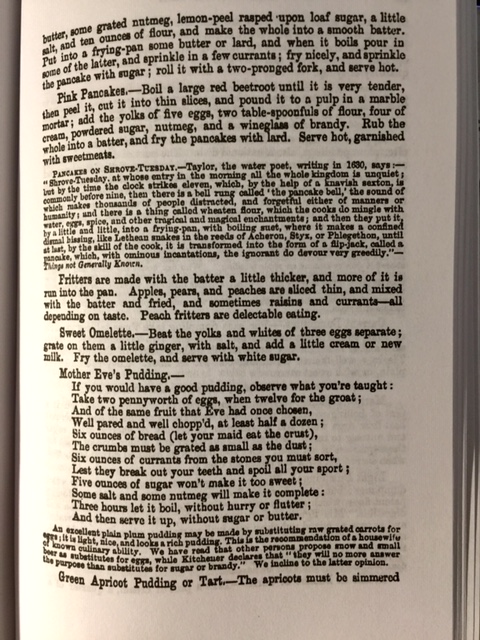
I discussed previously my shock at discovering that some enterprising persons were taking out-of-copyright classics and turning them into new publications on Amazon. The example I discussed was a Jack London book, but now I have found any number of classic cookbooks which are appearing on Amazon for sale, in facsimile editions without any mention of who is in fact selling these books. Some are pretty good – the facsimile of American Cookery, 1796, which seems to be a Dover book reprinted from a facsimile published by Oxford University Press in 1958 looks at least legible. But recently I paid for a print copy of The English and Australian Cookery Book and when it arrived it was indeed a perfect facsimile but so small it was almost impossible to read at all. Someone – but who? – is making money from these books and there is nobody to complain to about the fact that some at least are virtually useless.

One would think Amazon, who is distributing most of them, should take responsibility for the quality of the books they sell. If it is a hapless indie author who has made some mistakes about which readers complain his account is likely to be suspended. What happens to these legal pirates?

Page 53, “Puddings and Pies”, from The English and Australian Cookbook, 1864, anonymous facsimile edition.

Copyright and Communists: the cover art for Revolutionary Baby

When I began to think about the cover for Revolutionary Baby the poster image by Nina Vatolina came to mind. I knew this image but I couldn’t recall where I had seen it. I thought it could be modified easily with title and author information inserted where the Russian text was. It was easy to find via the Big G. It is in the Tate Modern collection, under the following title:

 Fascism – The Most Evil Enemy of Women. Everyone to the Struggle Against Fascism, August 1941; Nina Vatolina 1915-2002; DK0029

Nina Vatolina’s original poster: Fascism: the Most Evil Enemy of Women, 1941.

This powerful image appears all over the Internet and has already been used for the cover of one published book and I naively assumed it would be copyright free. However this was not so. The image is available for purchase from the Tate which has access to it on licence. Reproduction rights are subject to the usual requirements including payment for the use of a high quality image provided by the Tate. However, the Tate itself does not hold full copyright, only the licence to reproduce the image. The picture itself is subject to the artists own artistic copyright.  The situation was investigated by Chris Suthens of the Tate and I would like to thank him for his helpful advice (below, email of July 24th 2019).

I can let you know that the reproduction fee to include the Tate photography DK0029 on the front cover of a single printed edition, plus electronic use on the cover of a parallel e-book edition, world rights, English language, available on demand up to a total combined unit run of 5,000 copies/downloads will be £229.

If you find these terms agreeable and wish to go ahead please do let me know, confirming the name and address to be included on your invoice/licence and I shall send it over as soon as possible?

I’ll then be able to supply the hi res file as soon as payment is received.

I must mention that Nina Vatolina’s work is also still subject to her artistic copyright so you would need to obtain additional permission from the artist’s estate or their representatives. Unfortunately we haven’t been able to locate any contact details available for us to pass on so Tate’s own use has been on a risk management basis. We are happy to proceed and license the reproduction of the Tate image file though must stress that it would be the responsibility of yourselves to ensure that you have made every effort to identify and contact the artistic rights holders where possible and on the understanding that the use in relation to the artistic copyright would be at your risk. In the very unlikely event of a holder coming forward you may need to be able to demonstrate that due diligence has been conducted.

So even if I paid the required fee to the Tate to reuse the image, with my own modifications, I would still be in potential breach of the artist’s own copyright. But without being able to read and write Russian, and/or go to Russia to investigate who might be the holders of her estate, it is impossible to be sure that copyright requirements have been met.

How mad is this? I am sure Nina Vatolina, a sincere and committed Communist, would find it completely bizarre that nobody is now able to reproduce her art-work in any form without paying a fee to an August British art institution in the heartland of Western capitalism. I am grateful that the Tate does hold reproducible images of art works, don’t get me wrong, but I don’t think it would be in the spirit of Nina’s ideological or political thought that her work cannot be shared by others.

So I abandoned all idea of using this image and commissioned my Mexico-based illustrator Keith Johnson [Keith Draws] to create something for me. In the event, he created the cover for the second volume of stories, Radiant Sands, at the same time, and many thanks to him for his great work.

Meanwhile, though, I became fascinated by the situation of Communist artists such as Nina Vatolina, and did some additional research on the subject, shortly to appear on my art-writing site https://annette-hamilton-art-writing.com

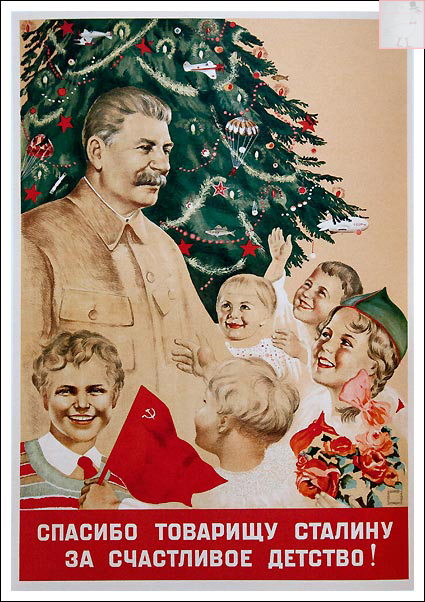
Just as a taste, here is one of her poster illustrations featuring Stalin.

Nina Vatolina: Grandpa Stalin brings Christmas gifts to the children of Mother Russia: lovely bombs and warplanes!

News from the Writing Zone

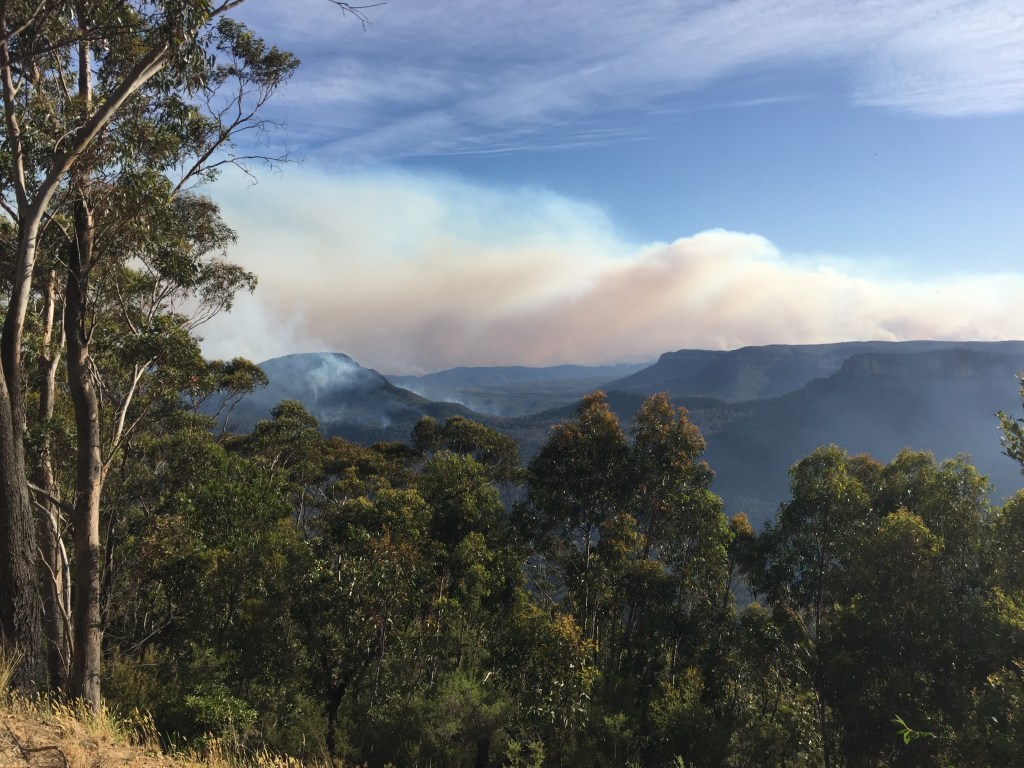
So after weeks of stifling heat, many days over 40 Celsius (104 F), ravaging bushfires, impenetrable smoke, unavoidable dust and ash inhalation causing nausea and headaches, constant obsessive anxiety looking at bushfire maps and a state of acute mourning for the losses, especially the wildlife, we now have buckets of rain, floods, drinking-water fears and blackouts. But there you are, dear friends, this is Australia and here we are and we love it (even though a lot of people have been talking about migrating to New Zealand).

The first sign of the Ruined Castle fire near Katoomba, 3 December 2019: it burnt out 40,000 hectares over the next seven weeks and was not put out finally until 5th February 2020. Photo A. Hamilton.

So as you might gather this was not great for the writing. In fact, I stopped writing altogether. Even my red daily diaries, which I have been assiduously adding to for over two years now, still rest untouched on the bookcase. I wanted to write about how this summer felt, but I just couldn’t. It was too awful, too terrifying yet somehow also familiar. We have been told for years now that the world will end in a conflagration, well here it was and it was right on our doorstep.

The red skies, the relentless approach, flames leaping, everything alight

You have to start asking why you would write at all. If the world is perilously close to a terminal phase, what good is writing? What good are books? If you saw that movie The Day After Tomorrow that scene in the New York Public Library will no doubt be burnished into your synapses: the brave survivors holed up inside tearing up the entire contents of the library, all the world’s books which could at least keep them warm. One old guy was trying to keep the Gutenberg Bible intact, as I recall, but the rest of it was just good for fuel.

What books are really good for … The Day After Tomrrow.

My writing associate Obelia is now completely convinced that are now only a couple of decades left. She stopped writing as well.

But time passes and in spite of doubts and fears I really have to produce the books I have been working on for so long now. In the next couple of months I have plans to see at least two or maybe three of the front-runners hit the deck. The two volumes of short stories and the memoir are pretty much ready to go. So stand by for some more advance notice: covers are done and all that remains is the playing with Vellum which I hope will allow me to pull them all together very quickly.

Another thing I have done over this horror summer is read a number of very interesting memoirs (loosely identified) and I am going to write a little about them, not so much reviews as reflections on the thoughts and feelings they created as I read them in this heightened state of alarm and anxiety, pushing me once again up against the complex questions about what memoir writing really is and can do, and where is the Real in writing.

And so another year …

Yes, it has been a long time since I last wrote here. So much has happened. I have filled up three diaries already and it isn’t over yet. My first book of the memoirs project Regret Horizon seemed to disappear over the Regret Horizon and into the mists of past time. Where I thought this was a final volume, turns out there will need to be at least one more, to take us from the end of Regret Horizon to the actual genuine real end, and we know there will be one. It is one which I can foresee and expect but cannot know when it will arrive, or how it will turn out. Most estimate a few years, but anything can happen. I will write a post or two about this very strange experience when I can, next year probably. And maybe I’ll be writing the actual volume by then.

But here is the good news. I have finished revision of the two books of short stories, Keith has done the covers for the ebooks (still finalising the print books) and all going well they should be available in early November through Amazon in both print and Kindle versions, as well as other ebook retailers and in paperback through Ingram Spark. You can order from your local bookstore if you are in Australia and hopefully there will be a Paypal button on this site at least. Website orders for customers in Australia only.

And Regret Horizon is nearly finished too. I am going to have a special order made from a local printer on quality paper for signed orders and my own gifts and maybe the local independent bookstores will stock some as well. I had such a struggle knowing what to do about getting feedback from the people in it, but finally I decided to give up on that and let the cards fall where they may. Still thinking about the final cover, now it looks pretty boring next to Keith’s fabulous cover art for the short stories (below).

So I guess this is a kind of pre-launch announcement. Congratulations to me – but there is still a way to go before I can push the “publish” button.

Final cover images for Revolutionary Baby and Radiant Sands, September 2019.
Copyright Keith Draws/Annette Hamilton