Exploring Gender Perspectives in ‘Revolutionary Baby’

I have had occasion recently to review my own book of short stories, Revolutionary Baby. There was a suggestion that it might be serialised on a literary/writing platform currently gaining popularity. Some people still like reading and writing old-fashioned stories which reflect life in a pre-digital pre-influencer pre-Trumpian world, dwindling though this number might be. In this process I received some rather surprising feedback: my stories were accused of “man-bashing”. I was taken aback. As far as I was aware, my stories had been written from a ordinary female viewpoint and reflected an awareness and consciousness which any woman of my era would share.

None of my male characters were vicious or evil or deliberately cruel. They certainly were not violent or criminal or sadistic, unlike a high percentage of male characters who now occupy the fictional arena in ever-increasing numbers, thank you Bret Easton Ellis. If they displayed unkindness, self-obsession, lack of awareness or a failure to understand the women they were involved with, this was nothing remarkable. They, too, were creatures of their time. I feel fond of all of my male characters, in different ways, but I did need to convey the impact that their often thoughtless behaviour had on the women in my stories. In some cases they hardly connected with women at all and mainly hurt themselves.

It occurred to me that before considering any kind of serialization I should write an analysis of what happens in each of the stories and insert a trigger warning or even an apology for any misunderstanding that a male reader might experience as a forward. But on the other hand, there is no obvious evidence that any men have actually read the book, so perhaps that would be entirely superfluous.

This led me to ponder the fragmentation now occurring in literary and even more so popular fiction. Many of literary women of my acquaintance, most of whom would describe themselves as feminists, make a point of not reading books written by men. The question of the gender identity of the author, and ditto of the audience, has become a sore point among many commentators online, in literary magazines, in articles on book prizes and awards. There seems to be emerging a kind of gender-ghetto mentality where each identity is writing for others who share it. The striking emergence of queer fiction is an example. Some of the most interesting writing is coming from authors inhabiting a distinctively queer identity world. Is everyone reading this? Or mainly others similarly self-identified? I noted that women writers are mainly read by other women. No doubt there are exceptions today in strictly literary circles. But what is actually going on here? Does anybody know? Is anyone keeping track of these questions?

Revolutionary Baby: views and reviews

Having a kind of fun experimenting with different ways to let people know this book is out now and available to buy as a paperback or download as an e-book. Experimented with making reels or vdos using the images above which were AI generated. Seems lie MP4s using AI images on Canva won’t download to Instagram. No idea why.

Turns out also that Amazon reviews written by readers in the UK don’t show up on the Amazon pages for other Amazon sites. To get a review to show up on Amazon.com it needs to be loaded by someone in the US using a .com account, The whole Amazon ecosystem is so US focussed. I suppose we shouldn’t be surprised, there isn’t anywhere else in the world really. I don’t think my video can be posted here either, but I’ll give it a try.

Feeling super frustrated about the use of social media as it is now. Used to be people following you saw whatever you posted. Now algorithms determine everything and each individual gets things the algorithm thinks they want. Presumably this is to encourage paid advertising on the social sites, which has now become a deluge. There doesn’t seem to be any community or collective environment left any more except in Groups, and there you get kicked out if you try to “advertise” without a commercial account. The immutable logic of the system forces everyone into a straitjacket with $$$$$$$ signs on all sides.

Reviews can be posted on websites, but then only those following the website already can see them. But if you’d like to post a review anyway, positive or otherwise, use the Contact form on this site and I’ll put it up on the Book page.

A REVIEW OF REVOLUTIONARY BABY: from Chris Stevenson, artist and avid reader.

REVIEW: REVOLUTIONARY BABY: Strange Tales from the Twentieth Century

Born in the same year as the author I found some of these stories echoed my own confusion when the personal coincided with the political. These “strange tales” are sometimes gripping, at times nostalgic and always thought-provoking.

Women’s liberation is just one of the “revolutions” addressed in Revolutionary Baby. The author is careful not to side with women only. When Max in the first story attempts to seduce an unwilling young Judith, she is rescued by Gabro who is, perhaps unsurprisingly, European.

As the first female in my family to attend university, I recognised Judith’s mother’s description of university study as “sham-work, not real work” in the first story, “Beyond Engagement”.

Having participated in the anti-Vietnam protest marches, I particularly enjoyed the second story “Revolutionary Baby”. The single-mindedness of a heavily pregnant woman’s insistence on taking part in a violent demonstration is counterpointed by the confusion of her solicitor husband contending with different voices: his father “you can’t let women talk to you like that” or his mother “you shouldn’t have married her, she’s a slut” (p. 42). Hamilton is empathetic with the perspective of both genders ensuring that her book will appeal to both male and female readers.

Locations for the stories are varied and vitally important to the narrative. Hamilton describes the jacarandas “bursting into purple on the Birchgrove waterfront” (p. 68). And evoking Bangkok in another story, “Rain falls in October, the gutters fill, the laneways overflow”. (p 145).

The stories that are most poignant are those set in various Sydney suburbs – or is this bias on my part because I grew up in Sydney? The following passage encapsulates an attitude shared by many women of my generation: “She wanted a revolution all right but it wasn’t one with slogans and arguments and men fighting each other over who was top dog in the park. She wanted a revolution where people looked out for each other … where people took care of the weak … gave each other what they needed”. (p. 37).

I strongly recommend this book to the Baby Boomer generation and the one following it. I’d like to think that the next generation would appreciate learning more about the revolutions both in Australia and abroad that simultaneously stimulated and confused the generations of their parents.

REVOLUTIONARY BABY: paperback now available

After some glitches the print (paperback) version of Revolutionary Baby is now available. You can purchase from Amazon.com.au or place an order online with Booktopia. Or go to your local bookstore and order a copy to pick up in person, to save postage.

Revolutionary Baby is a collection of fictional stories about the revolutionary changes people experienced from the mid-twentieth century onwards. Women and men, younger and older, richer and poorer, are caught at moments of decision, unexpectedly resulting in the transformation of their lives. They must confront their past expectations and change the way they look at options in the present and the future. All the stories and characters are entirely fictional. This is not a book of hidden autobiography or memoir in disguise. Nevertheless the stories reflect my own experiences from the 1960s into the 2000s, as a student, an activist, a mother, an academic, a traveller, an onlooker and participant in many elements of those transformative times. These stories reflect an Australian history, culture and awareness, although they are not all set in Australia.

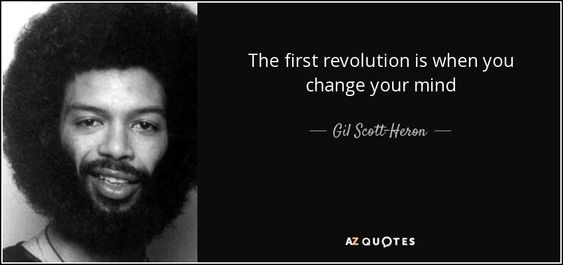
As a preliminary quote for these stories, I was drawn to the words of Gil Scott-Heron, now an almost forgotten figure of Black American consciousness in
the sixties and seventies.

“The first revolution is when you change your mind about how you look at things, and see there might be another way to look at it that you have not been shown. What you see later on is the results of that, but that revolution, that change that takes place will not be televised.”

Listen to his achingly powerful poem/song “The Revolution Will Not Be Televised”, from 1971, readily available on Youtube.

REVOLUTIONARY BABY: paperback now available

After some glitches the print (paperback) version of Revolutionary Baby is now available. You can purchase from Amazon.com.au or place an order online with Booktopia. Or go to your local bookstore and order a copy to pick up in person, to save postage.

What is it about? Revolutionary Baby is a collection of fictional stories about the changes people had to make to their thoughts, beliefs and expectations from the mid-twentieth century onwards. It takes a collection of different characters, women and men, younger and older, and explores aspects or ordinary lives in the moments of transformation, when people had to confront their expectations from the past and change the way they looked at their options in the present and the future. All the stories and the characters in them are entirely fictional, but many aspects reflect my own experiences growing up in the 1960s, being a student, a mother, an academic, a traveller, an onlooker and participant in the many transformations swirling about us. The stories reflect an Australian history, culture and awareness, although they are not all set in Australia and the presence of “overseas” looms large.

As a preliminary quote for these stories, I was drawn to the words of Gil Scott-Heron, now an almost forgotten figure of Black American consciousness in the sixties and seventies.

“The first revolution is when you change your mind about how you look at things, and see there might be another way to look at it that you have not been shown. What you see later on is the results of that, but that revolution, that change that takes place will not be televised.”

Listen to his achingly powerful poem/song “The Revolution Will Not Be Televised”, from 1971, readily available on Youtube.

REVOLUTIONARY BABY: In process.

The whole manuscript is printed and I am about to get into it with a red pen. I couldn’t say how many edits it has had, that is not a meaningful question. I edit all the time as I go along, and I try to keep a version in my files periodically in case I need to go back. I can see why people employ an editor, if only because it costs so much money and you wouldn’t want to mess around with something that already has had so much expensive attention. Maybe I’ll reconsider my position on editors. But every time I have had an editor whether for creative or factual writing they make changes according to some inexplicable principles of their own. I am very aware that all of my stories in Revolutionary Baby use different narrative voices which do not convert into standard grammar, in some cases (as in the voice of one of my young hippies from the Northern Rivers) very far from it. But it is how my characters think, as far as I can write it. It is not a mistake or the product of grammatical infelicity even though grammar checkers don’t like it. Does it work? I am trying to inhabit each of my main characters in their own worlds, and each of their worlds are very different. I guess I will know more when I’ve read all of the stories together while wielding the red pen.