Understanding the Feuilleton: A Reflection on Modern Culture

INTRODUCING THE FEIULLETON
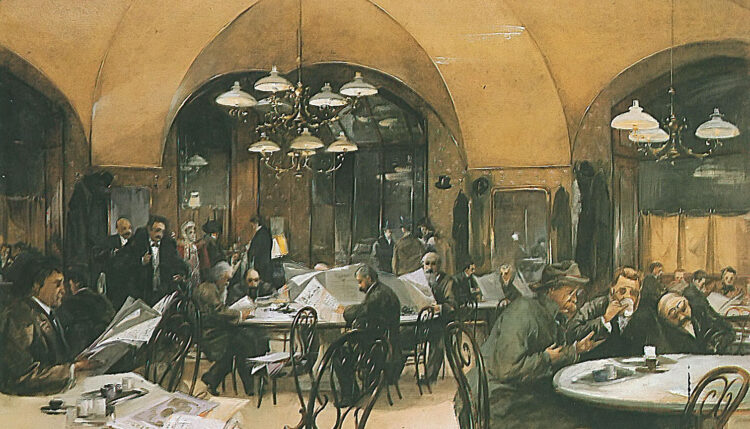
Literary Journalism In Fin-De-Siècle Vienna

(From International Association of Literary Journalism Studies)

As mentioned I have been thinking about inserting the odd Feuilleton here, mainly because I keep finding myself contemplating some strange or remarkable facet of contemporary culture and society which defies inclusion into any other kind of writing I do. By calling it a Feuilleton I hope to indicate that it is a passing phenomenon not of any great social or political importance in itself, although I may be flirting with the Zeitgeist or capturing the temper of the times. My Feuilletons are not about literary culture or contemporary writing or the Kindle or the role of reviewers in the Internet age. But they are not entirely frivolous or meaningless either.

The term Feuilleton comes from French and means something like “little leaf”. Originally it was a small item at the bottom of the literary section of a newspaper, often providing a critique of popular theatre, but in many cases it grew to have its own page. By the 1840s the term roman-feuilleton described a serialized novel published in newspapers, something like today’s internet novelizations, but paid for, not for free. I mean the readers bought the newspapers and the newspapers paid the writers. [Now we barely have newspapers and people publish their writing for free all the time, which seems counterproductive]. The term was used in English by 1845, in the Atheneum.

The term was also handy to refer to small one-page advertisements, like handbills, which might be handed out in the street to encourage consumers to visit suppliers, as in this advertisement for a delicious lunch venue the like of which sadly no longer exists.

If that all sounds cheery and familiar, we must pause at what Hermann Hesse had to say about it in The Glass Bead Game, regarded as the first and only science fiction novel to win the Nobel Prize (in 1946). He was writing against the decline of humanistic culture brought about by “feuilletonism”, which he saw as the antithesis to true writing, and lampooned viciously. His master-work, The Glass Bead Game, was on the Must-Read list of myself along with almost every other proto-boho-intello in the 1960s, and describes the life of future intellectuals living in a cloistered community trying to circumvent the excesses of the age. Thanks to Huxley for bringing the Feuilleton into the present time as another object of knowledge. (https://huxley.media/en/the-feuilleton-era-we-live-in/)

Hesse described the Feuilleton, printed widely in newspapers and magazines, as a source of “mental pabulum” for readers hoping to soak up culture but unable to actually do so due to the lack of education and motivation, and of course  being too busy and far too important to sit down and read actual books.

He said:

Among the favorite subjects of such essays were anecdotes taken from the lives or correspondence of famous men and women. They bore such titles as «Friedrich Nietzsche and Women’s Fashions of 1870,« or «The Composer Rossini’s Favorite Dishes», or «The Role of the Lapdog in the Lives of Great Courtesans» and so on.

Another popular type of article was the historical background piece on what was currently being talked about among the well-to-do, such as «The Dream of Creating Gold Through the Centuries» or «Physico-chemical Experiments in Influencing the Weather» and hundreds of similar subjects… we feel surprise that there should have been people who devoured such chitchat for their daily reading; but what astonishes us far more is that authors of repute and of decent education should have helped to «service» this gigantic consumption of empty whimsies. Significantly, «service» was the expression used; it was also the word denoting the relationship of man to the machine at that time.”

Good heavens! This is exactly the flavour of the endless parade of pablum from our own Machine, the Internet, much of which we now call “clickbait”.  But Feuilletonism goes so much deeper than trying to persuade people to buy stuff they don’t need from people they don’t know manufactured by unspecifiable techniques at places which don’t exist. The Age of the Feuilleton is completely dominant today, ever more so with the consequences of AI development and universal internet access on every phone – the mastery of the Machine indeed.

I don’t see my contributions to the Age of the Feuilleton as necessarily despicable, as Hesse might have done.  By proposing to include a few remarks under the heading of a Feuilleton, I am going with the diverse flow of contemporary knowledges, and playing a little with the scary bizarritude of the fragments flowing through the ever-open channels of our time. It is true that there may be an academic flavour to the analysis, but maybe that is a necessary correlate of talking about anything in modern culture at all, rather than just participating in it. And a rich and full array it is.

So in my occasional Feuilleton I will remark on various ephemeral incidences, moments or events, usually conveyed in media, sometimes in performance. I notice things as I trawl through my reading and writing. Someone, generally much younger than myself, draws my attention to something I have never thought of before, and didn’t know existed. Or I am struck by some change in the discourse and behaviour in the everyday world around me. Often these moments are so peculiar in flavour and signification that I am reminded of my old father’s frequent exclamation: “Well blimey, you just wouldn’t read about it”. Now, these days, it turns out he was plain wrong. We can read about it, and moreover see it, all the time, every hour of every day. By adding a little more to it I hope to do no harm. I will identify those pieces which belong in the Feuilleton category, so you can skip over them altogether if you like.

Check out Stoddard Martin’s essays, with insights from the old and new literatures of several countries – aesthetics, musicology, mythology, philosophy, poetry, politics, and psychology.

Monstrous Century: Essays in ‘the Age of the Feuilleton’ Paperback – October 15, 2016

by Stoddard (Chip) Martin 

Insights from the old and new literatures of several countries jostle for space in this work – not to mention aesthetics, musicology, mythology, philosophy, poetry, politics, and psychology. The subjects, even when unsympathetic in themselves, are viewed in the round, and judged with humanity (from the publisher’s blurb).

«THE GLASS BEAD GAME». FRAGMENT FROM THE WORK

«We must confess that we cannot provide an unequivocal definition of those products from which the age takes its name, the feuilletons. They seem to have formed an uncommonly popular section of the daily newspapers, were produced by the millions, and were a major source of mental pabulum for the reader in want of culture. They reported on, or rather «chatted» about, a thousand-and-one items of knowledge. It would seem, moreover, that the cleverer among the writers of them poked fun at their own work. Ziegenhalss, at any rate, contends that many such pieces are so incomprehensible that they can only be viewed as self-persiflage on the part of the authors.”

WHY PUBLISH? THE DASH AND DOLLY EFFECT.

I have reached a point in my writing and publishing activities where I must seriously ask: why publish at all? I haven’t published much yet but I have a lot of plans and proposals in the mix and several are at the point of fulfilment. Various things have held me up – some in the “real world” but others in that weird interior zone where the writer actually feels most alive but also most threatened and alarmed and fearful and excited, something which I suspect only other similarly benighted souls will understand. There really should be psychiatric services for writers, to help them work out what they are doing and why.

But as time passes, and especially with the impact of AI, the question becomes more acute than ever. There are 32.8 million published titles on Amazon now and more every day. It is possible that AI written books are flooding the market, although there seems to be no way to work out if this is true or not. Amazon now will only allow you to publish something like THREE BOOKS A DAY. Can this be true? Nobody can write three books a day. However the various online writers forums I participate in do seem to have members who think nothing of writing a book in two or three or four weeks: that is from start to finish, including editing, proofreading and maybe designing the covers as well. The fans of these writers are passionate and apparently faithful. They expect the writer’s new books ASAP and pre-order slavishly, or so it seems.

THE DASH AND DOLLY EFFECT

I just finished watching a mystery drama mini-series on Netflix, The Perfect Couple, starring Nicole Kidman as a popular writer, Greer Garrison Winbury, whose books are about the endless romance of Dash and Dolly. The readers imagine these are the writer herself and her husband Tag, played by Liev Schreiber, who in real life is alcoholic, louche, unfaithful and most unattractive. Based on a 2018 novel of the same name by Elin Hildebrand, the story is about the interpenetration of fictional and real life, and its negotiation in contemporary culture. [It’s what my favourite analytic writer of the moment, Hans-Joachim Maaz calls “Die Falsche Leben” – FALSE LIFE. If you speak German there are interviews with him on Youtube: https://www.youtube.com/watch?v=KN6i6MYBbjI but only one of his books has been published in English.]

A brilliantly disturbing scene takes place at the launch of Greer’s 32nd novel in the series, when the “real world” life of Dash and Dolly comes to a crashing end in a bookstore full of passionate fans. As the truth of their relationship emerges – and a horrible truth it is – the fans fall into despair and horror, worse than anything they ever imagined. The scenario of this story emerges from the very peculiar intersection right now between writers and readers, amidst the technical possibilities of rapid production where fictions drawn out into endless series of almost identical stories, become the source of recognition and success for glamorous lady writers in particular, and sites of identity for readers obviously deprived of whatever it is they crave in the way of success, love, happiness and recognition. Readers’ identification with fictional characters is at the heart of this process.

WHY DON’T I WANT TO WRITE BOOKS ABOUT DASH AND DOLLY?

It’s called “writing to market” in online writing circles, and ever since I was first introduced to this term around a decade ago at a seminar at the Australian Society of Authors I have been wrestling with the concept from many angles. It’s the baked beans problem again. The fact is, I want to use the agency and freedom of independent publishing but I don’t want to “write to market”.

I know this raises almost terminal issues. What I write isn’t any of the popular genres which work so well on Amazon. I can’t even work out what genre I am writing in. Some is memoir, yes, and maybe some is literary fiction. most of my books will appeal mainly to “classic” readers, that is, women of a certain age who buy books in book-shops and go to literary events and festivals, but they don’t buy independently published print-on-demand books and they all hate Amazon. My “take” on things doesn’t quite fit the mould either. My perspectives are too diverse, the experiences I draw on are far from the “normal” life, let alone the “false” one which prevails today. I will put a Paypal button on these books for Australian/New Zealand readers who want paperback versions and see if that works for those who don’t or won’t buy through Amazon. The independent bookshops’ prices are absurd: my book Revolutionary Baby finished up costing those who ordered it from their favourite independent bookshop over $30.00, even though I know the cost of production in Australia is in the order of $7.00.

Should I bother going on and publishing the other three novels I have written? They are all set in the 1980s which now feels like a hundred centuries ago. The memoirs are set even earlier: 1960s, 1970s. But I guess that makes them historical. There is a special category for that on Amazon.

As for doing something completely different: I have written the first volume of a series which I plan to publish under a pen name. It is a post-apocalyptic narrative set in 2050 and “stars” two female characters, young women with distinctive talents and histories. It needs a final edit. I don’t plan to spend money on Amazon or Facebook ads.

All I can be sure of is that the books I have written will exist in print and/or electronic copies in a few libraries, and a few will receive them as gifts from me and maybe want to pass them on. Is that enough?

Why review? … and the Tentacle Romance.

Over the past several months – say, six or so – I have been reading an inordinate amount as I’ve been ramping up my production schedule. Not that I’ve met it, but I’ve been trying. Several almost complete works just waiting for that semi-final edit, two new stories from my Other Identity swirling around, and here I am in Paris struggling with what feels like a covid cough – oh, wait! Covid doesn’t exist any more … at least nobody tests for it and a whole plane load of coughing passengers on their way from Singapore (nobody masked) was just due to general unspecified viruses. Anyway when I finally called the brilliant SOS Medicins service – can you believe a doctor does a home visit at 11 at night after being called just an hour before ?- he didn’t express any interest in speculating about viral sources and was just very reassuring about cough mixture and the benefits of Paracetomol.

So, back to reading. As part of the effort to better define what ‘genre’ I am writing in, I have been gulping down all kinds of stuff. I joined Kindle Unlimited so I could read lots of books of completely unknown quality really quickly and send them back if I couldn’t stand them. And I did send back a lot. You can only have twelve out at one time. I was sending back two a day at one point. The contemporary writing and reading market is so peculiar. I discovered genres I could never have dreamt up. Well, maybe they are subgenres, whatever. Tentacle Aliens was pretty bizarre.

Their technical identity on Amazon is:
Tentacle Aliens and Monsters Erotic Short Stories

I really liked Rita Indiana’s book, although to be fair, it wasn’t a tentacle romance and it did not evolve within the Amazon ecosystem, being published as an actual book, ie a printed volume, by that excellent British publisher And Other Stories. Check them out!

Here’s what Rita’s blurb says: Plucked from her life on the streets of post-apocalyptic Santo Domingo, young maid Acilde Figueroa finds herself at the heart of a Santería prophecy: only she can travel back in time and save the ocean – and humanity – from disaster. But first she must become the man she always was – with the help of a sacred anemone. Tentacle is an electric novel with a big appetite and a brave vision, plunging headfirst into questions of climate change, technology, Yoruba ritual, queer politics, poverty, sex, colonialism and contemporary art. Bursting with punk energy and lyricism, it’s a restless, addictive trip: The Tempest meets the telenovela.

The real tentacle romances are a different kettle of fish, so to speak – slightly disguised erotic, but some weren’t bad.

I quite enjoyed

Nepenthe: A Tentacle Alien Space Fantasy (We Are Nepenthe Book 1)

by Octavia Hyde

I was cross that she had preempted my intended use of the name Nepenthe as a sub-division of Blackwing Press for experimental and off-the-wall writing. In the light of all this, I have cancelled Nepenthe Books as a concept altogether now. It seems far too tame, given what is out there already.
Moving on from Tentacles, I found that many male writers (at least persons writing under sturdy male-identified names) have been writing about catastrophic colonies on Mars or elsewhere in a decaying universe. Lots of (ditto) girl-sounding people are writing filth about billionaires and dom/sub desires, Mafia romances and Reverse Harem (that is when one woman has three or more men living/playing with her, some of them are bikies and some are cowboys, take your pick).

Paying special heed to post-apocalyptic themes I found a couple of (I think) young players writing not bad series. I downloaded a couple of Kyla Stone’s stories and followed on her blog-site and she was doing a very good marketing job. Sadly I just got completely bored with the stories which all seemed the same. Another was a New Zealand writer who seemed appealing when I watched her on one of the many talk programs run by one of the various online “how to be an author” groups, but I lost interest after realising that although she seemed like a very nice young lady, what she was writing was just too horrible for me.

So these are low-budget Kindle ebooks designed for the Amazon ecosystem. In most cases I didn’t have any compunction about returning the books with only a few pages read. (On Kindle Unlimited the author is paid according to how many pages are read). In a couple of others I could sense a good writer struggling to come out. One in particular was writtten by a Melbourne person (girl/woman self-presentation) and it was very well written and quite gripping in places although the key plot element was obvious from early on and in my view rather ridiculous. I finished it, and for a brief moment considered writing a proper actual review with real words – as against the silly five stars which now appear at the end of each Amazon ebook, uselessly as far as I can see – I never ever click them. But I hesitated. It’s a slippery slope.

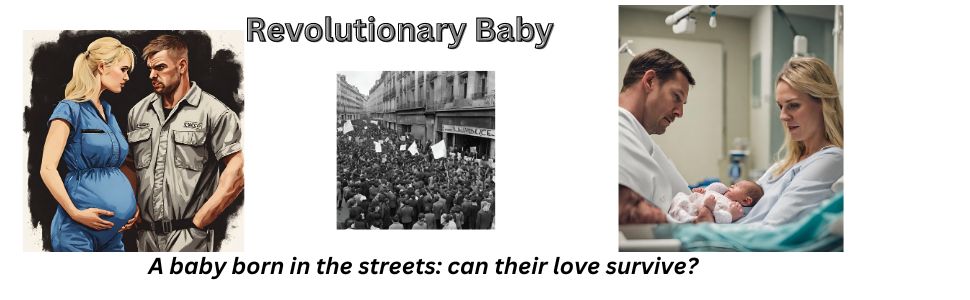
Experiments in AI: A+ Content files for Revolutionary Baby on KDP: the Thumbnail Narrative.

Although I share the general anxiety in the publishing world about the impact of AI, I have to say experimenting with AI images has been rewarding. Amazon’s KDP allows authors/publishers to include quite expansive materials on their book pages. The question is, what to use as the basis for the content?

When the book is a collection of short stories, like Revolutionary Baby, this give an opportunity to give some visual clues as to what some of the stories are about. Brief text-based summaries on the back of the book amount to not much more tha a Table of Contents. In an experimental spirit, I spent a lot of time this week seeing what I could come up with to give some better visual presentation of the narratives. The A+ content also allows the creation of one kind of module with text to go with a set of images, so that is what I have submitted. Whether or not it is accepted is another matter.

Meawhile, here are the three examples I am hoping to use as the visual clues on the book page. They seem to have transferred well using the preferred pixel size recommended by KDP.

If it works out on the Amazon book page each image will have a brief text below it. I chose to paraphrase some of the actual writing from the stories. Some of it could be used verbatim but with condensation and re-expression it became a lot better. It called for a different kind of editing.

Now to find some other ways to circulate these thumbnail narratives.

More on opportunism: hire an actor!

Since my last post – and thanks so much to everyone who liked it – I have been giving more thought to my writing career.

I realise that I shied away from confronting one of the core realities about the writing career today: namely, who are you? If you have to Put Yourself Out There to Reach Your Readers you have to first work out who those readers might be and then consider what kind of author they want you to be, which means, you have to look like that writer. Once upon a time a writer looked like him/herself, no matter what he/she looked like. Shirley Jackson (below) wrote Gothic horror stories about life in small New England towns. Her publicist would never have let this photo into the public realm if it was today. Actually her story is very interesting, see the link below.

shirley jackson

More on Shirley Jackson

And then there is Charles Bukowski. OK, this is a cheap shot, but hard to resist.

Bukowski Sam Cherry 1970

Cbarles Bukowski, 1970 portrait by Sam Cherry.

Actually when you look at photographs of famous writers going right back to the early twentieth century you can see already the aesthetics of writerly fame were already at work, in parallel with the growth of photography. There are profound existential questions here, but let’s skip them for the moment and go right back to Square One!

Everyone in this game accepts that Marketing involves being someone marketable. These days the author is a product, and like all products it does matter what she/he/they look(s) like and whether or not they fit the current paradigm for successful writers. There are countless guides to how to ensure a successful author photo. I like this one, especially for its analysis of specific published author photos. A certain look, a physically attractive or interesting persona, a hesitant smile that looks great on the back cover,  a certain age, an air of reserve and mystery – possibly the hint of the exotic – that will work. But the thing is, if that is the author in their photo, then it has to be the author in real life as well, in the unlikely event they get asked to appear in public somewhere, like at the Podunk Valley Writers’ Festival.

What do you do when you don’t even dimly resemble any of the persons identified as successful writers in their photos? It has occurred to me that it might be helpful to hire someone. Good training for a budding actor! Hire a young person, able to manage the Internet, look great and make public appearances, that might be a good alternative. After all, the gig economy demands people work in all kinds of different careers so there must be hundreds or thousands of young people who’d love to be writers without having to write any books. As for the writer,  if you can use a pen name, why can’t you use a pen body? There are ghost writers, why not writers’ ghosts?

Is this a good plot or what? I don’t think it’s been done before although back in 1976 Martin Ritt directed a very young Woody Allen in a movie, The Front, about a writer manqué who signs his name to scripts by real writers blacklisted during the darkest days of Hollywood, when J Edgar Hoover determined what would and would not be acceptable from writers and movie makers according to his own warped ideologies.

The Front 1976

And there has been at least one movie about Ghost Writers – Ghost Writer, directed by Roman Polanski, starring Ewan McGregor, 2010.

ghost writer 2010

Maybe there are other movies with similar plots, and that great little series Younger, currently in Season 5 on Stan, takes up the issue of ageism in the publishing world, and the extent to which millenials are currently determining what is published and what isn’t – in tradpubland of course. Incidentally in researching this blog post I came across a list of films about writers  here. I’d love to watch all of them in one big binge! That’s the only thing I might enjoy more than actually writing the stories myself.


Opportunism and opportunity: on building a writing career

Only a bit over three months left of 2018 and the silly season is almost upon us. Everyone in Australia knows that the country shuts down in early November with the Melbourne Cup and doesn’t start up again until the end of January.

Melbourne_Cup_Finish,_Melbourne,_Vic._-_1905_(31511457514)

As I don’t go to the races, have no travel plans for the summer and don’t drink alcohol this annual idiocy-fest should not affect me. But I am filled with fear and trepidation because I have so many writing projects which were going to be released “by the end of the year”. Score so far: NIL.

It’s not as if I haven’t written them. Almost all have been through several edits, I have a production method in hand, cover artists lined up … one final edit each, I say to myself, and they will be ready to go. I so much want to do this, because there are new writing projects I want to start. Sure, there are lots of things that get in the way of finishing books, ordinary life stuff. That’s bad enough. But now I am suffering a crisis of confidence. Maybe I should just embrace the silly season and forget about writing altogether, apart from dumb “Season’s Greeting” cards. Or I should take a leaf out of my own (unpublished) cook book and get going on the cakes and puddings. At least I could sell them at a cake stall!

christmascakes

A few short years ago  independent publishing seemed so clearly the way to go. But it seems more and more difficult to get any purchase at all with the reading (buying) public without a huge effort in marketing strategy and general non-writing activity. Writing itself takes second place. I need to get serious, not about writing, but about the “writing career”.

Everyone says you have to do it, and lots of people tell you how. Using the Internet strategically is obviously top of the list these days. Don’t get me wrong, I love the Internet and have done ever since it debuted back in prehistory, well, the early 90s or whenever it was. I love my blogs, both the writing and art sites, it feels truly creative putting them together, but I do that because I love it, not to build a following or expand an email list. I am a member of the Alliance of Independent Authors and they put out some great stuff. but tweeting is troppo mucho and Facebook gives me a kind of hysterical indigestion, yes, I know, I shouldn’t have subscribed to those I-Love-Cats sites but there was a reason for that, believe it or not, although I won’t go into it here.

writing books is like military strategy

No, the real problem is I can’t wholly see myself as someone “building a writing career”. I am a writer, I love to write, writing is what I do. If I have any time at all, like those precious two or so hours before the world wakes up in the morning, I want to spend it writing or editing or thinking about better turns of phrases for titles or thinking about how to improve a story or how to introduce some new themes. I don’t want to spend it building my email list or tweeting or whatever. It’s bad enough that I have had to go through so much time just working out how to produce a workable manuscript which will go through the publication process smoothly, and identifying useful information sites to follow. But now I see I have to see I have to Put Myself Out There as well.

This morning I came across an article by Wendy Jones called How Being an Opportunist Helps Build Your Writing Career (republished 5 September 2018) here.

This article really made me realise that I just didn’t have the right frame of mind to be a successful Independent Author. Just not opportunistic enough. Read it and weep!

On the other hand maybe I should go to the Melbourne Cup and hand out leaflets urging punters to buy my books! Now that’s an opportunity.

Melbourne_cup_1881


Trads vs. Indies: Will This War Ever End?

Reposted: Traditional publishing and the issue of editing – we need to look more closely at this.

lgould171784's avatarThe Let's Play Ball Blog

0601161425Traditional publishers will probably never embrace independent authors as equals. They will be loath to admit that the terms of engagement in this ongoing battle are changing, that the combatants are becoming more equal, and that some authors even find a way to go “hybrid.” It’s becoming increasingly clear that the trads are losing the high ground they once held in the area of editorial standards.
Examples of bad editing crop up more and more in the traditional world. For example, there are few authors more successful at traditional publishing than Anne Rice. She also specializes in the hottest subjects in fiction, vampires and werewolves. Yet Floyd Orr, editor of the long-running review site PODBRAM, and a rabid Rice fan, reports: “Anne Rice’s 34th book contains more errors than I have ever seen in a top-selling, traditionally published hardback! There are errors of every kind: repeated common words, misused spellings…

View original post 922 more words

The Perils of Publishing

It’s been a while and I’ve gone through a lot in the writing and publishing world lately. I’ve been thinking about new strategies, doing a lot of re-editing, and working on the Memoirs. This has led to a long silence on the blog, for which I apologise.

But I was moved  to write today by yet another story about a writer who wanted to be published and parted with a lot of money thinking it was to a “real” publisher, only to discover that although her book – an illustrated children’s book – was lovely, no bookstores would stock it.

Ever since I launched myself into this world I have become aware of the many people who want to be writers and are determined to do it. Social media has made it so much easier to get in touch with these people and get to know them online. So many are looking for support and advice, but almost everything they can learn about the process leads them to part with their money. Advice to self-publishers is everywhere but so much of it is motivated by someone offering a service. It is obvious that a huge market exists and a lot of writers have discovered that there’s more money to be made by “helping” others publish their books than by publishing their own.

IF YOU ALREADY KNOW ALL ABOUT THIS STUFF, DON’T BOTHER READING ON. But if you are pretty confused about what is involved in getting your book out into the world, you might find a bit of clarity here. It is based in part on my own experience, as well as looking into the minefield of services on offer to would-be authors which are getting more difficult to understand by the day.

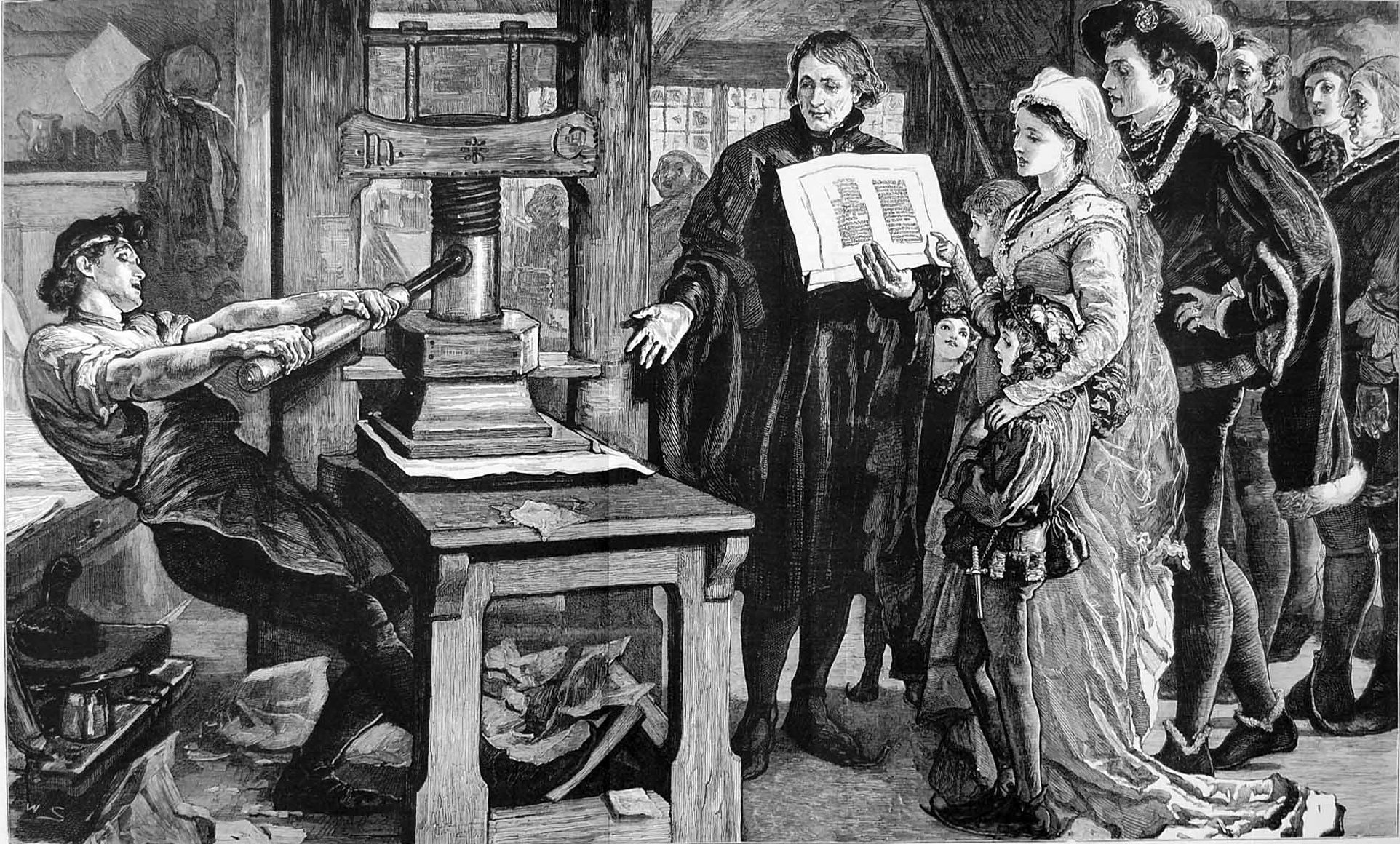
engraving publishing

You can get your book published entirely by yourself, if you have the skills. You start with a manuscript you have written. It will have to be written on a computer in a recognised program such as Word which is the standard. If you are still writing by hand on a yellow note-pad, you’ll have to pay to have it typed up.

What you need at the end of the day is a set of files in multiple formats. In theory you can do all of this yourself and it will cost you nothing, or almost nothing (some distributors such as Ingram Spark require a payment for each book being uploaded to your account). The files have to be laid out in particular ways and conform to certain requirements. If you only want ebooks they can be loaded one by one to different distributors or you can use an aggregator service. Your ebook can become a print book using Amazon’s Create Space or another print on demand service. Once the files are ready and in an acceptable form, you have a book all ready to go, it has cost you nothing to produce, you load your files onto the sales site and sit back and wait for someone to buy it online through Amazon, Kobo, I-Books or some other site.

You may have ordered some print copies for your friends and family and be happy to hold your real printed book in your hands. Does it look as good as the book you paid $30 for at the bookshop? Probably not. The paper will be thinner, the interior layout may be boring or clunky, and looking at the cover it doesn’t look quite how you expected. But still, it does look like a book and you know it’s great. But it won’t get into the bookshop, it won’t be reviewed in the paper, and nobody will get to hear about it unless you yourself undertake a crash course in Internet marketing because that is the only way it will actually exist for your readers.

Some people think that bookshops won’t take books printed by POD technologies. Print on Demand (POD) means a copy is made only when it is ordered. This is a huge advantage since there is no need to print multiple copies in advance, to store and ship them. Traditional publishers may use POD technologies for books which do go into bookshops, and it is not use of that technology which makes it unacceptable to bookshops.

Caxton self publishing

It is the fact that the book has not entered the circulatory system of traditional publishing which was designed a hundred years ago and has hardly changed since.  This requires a manuscript to pass through multiple selection channels. Most publishers won’t take a book unless it has been referred to them by an agent. Even where they will accept a submission, it will be read by someone very low down the totem pole. Some say that 90% of manuscripts are rejected by the end of the first page, and 98% by the end of the first chapter. There is a network of connections which create mutually agreed standards or expectations for what kind of book is worth publishing, when and by whom.

Self-publishing has been seen as a way to get around the archaic and outdated structures which still prevail. But it’s damned hard to do on your own. Not surprisingly many authors seek help to get their manuscript into an acceptable form. There are all kind of services to help you. They may offer to edit, to create your book cover, get all the files into the correct formats and then they may actually upload the files for you. You can engage and pay a different professional to help with any of these tasks, or you can find a single company who outsources the work or does it in-house. Most of them offer several options, or packages, which get more expensive as they include more items. It’s easy to see why many choose to go with the company which offers a comprehensive service even if it costs them up to several thousands of dollars.

But when you do it this way, you are still a self-publisher.

Hang on! That’s not what you had in mind. You want a publisher! Here is where the real danger lies. There are an increasing number of organisations which call themselves publishers and will accept your manuscript for publication. They have a name, Suchansuch Publishers or Ifonly Books. They will produce print and often ebook versions as well. They advertise on the web, you will find them whenever you Google “Publishers”. Wow, you think, I have a publisher. The catch is, they will ask you for money. A lot of money. They may produce a near-perfect book, far better than the book you can produce on Create Space or through Ingram Spark. They may even offer to market your book for extra money. But still your book will not appear in the bookshops.

Because you paid for it. The entire structure of book publishing prevents these kinds of books from entering into commercial circulation. The publisher has to pay you – usually what’s known as an advance, which used to commonly be between $5000 and $10000 (if you are lucky). You don’t get any royalties back until that full cost has been recovered by the publisher. If a publisher offers to publish you for money they are by definition not a “real” publisher and you won’t ever get your money back. Most people who publish this way finish up with a garage full of printed books which they cannot sell.

360_hoarders_0423

The rise of self-publishing has meant that anybody who wants to publish a book can do so. But that does not mean that anybody can be a recognised author whose books will be found in a bookshop. The many inexperienced writers who don’t realise this are easy prey for those who can convince them otherwise. Almost all the books by self-published authors are sold on Amazon, mostly for $2.99 or less. Some cover their costs and make some profit but many don’t. Becoming a best-selling author on Amazon has become ever more difficult. There are two or more million titles now and each year thousands more are added.

A recent phenomenon is the way traditional publishers issue expensive ebook versions of their conventionally published books through Amazon Kindle and others. At one time, the Kindle versions only turned up a year or more after the print books came out. Now the are issued more or less at the same time, but the publishers set a very high price, way above anything normally found on Kindle. This happened after a bitter court case brought by international giant Hachette against Amazon. The authors of the books don’t make any more out of it than they do from the print book – say, 10% in royalty payments – and the publishers keep the rest. So a two-tier structure is emerging in the e-book market where self-published ebooks are super cheap, or even free, while Kindle versions of recognised publishers’ print books are available at grossly inflated prices, often around the same price as a paperback. Meanwhile buyers who go to bookshops or order through companies like Booktopia are purchasing conventionally published print books since the ebook version won’t be much of a saving. This reinforces the power of traditional publishers and makes self-published writers very much second (or third? or fourth?) class citizens.

Without extensive marketing using all the bells and whistles of the Internet (Facebook groups, Good Reads, BookBub, paid review sites, email groups, increasingly Twitter and Instagram) very few self-published authors make it. There are spectacular exceptions which I will write about in another post. But the thousands of would-be authors who don’t know better, especially older people who don’t have much idea of how the new digital landscape works, are easy marks for those who offer the hope of authorship, especially the dream of “real” publishing.

So no matter how much you want to be an author, don’t part with any money until you fully understand what is being offered. Just because someone says they are a publisher and can send you good quality printed copies of your masterwork does not mean you are on an even footing with those who have benefited from the system of preferment and patronage so common in the publishing world today. You still won’t get into the bookshops, or be distributed to libraries, or reviewed in the newspaper, or invited to speak at a Writer’s Festival. If you want to get your work into circulation somehow, anyhow, you’ll do best to DIY or find someone you can absolutely trust to do the technical stuff for you.


First past the post

In October 6th 2016  my first Kindle publication, The Priceless Princess, appeared. Not long after, the paperback printed through Create Space became available. My first fiction publication!  Actually that’s not quite true, I contributed a story to a very early literary magazine with a number of feminist writers now household names including Drusilla Modjeska. I won second prize in the Hawkesbury Literary competition with one of my river stories and another one was published recently in a Blue Mountains literary journal. I’ll put them both up on my “Fiction” page.

I didn’t want to make a fuss about the Priceless Princess coming out. A few people congratulated me. I gave out paperback copies to various friends and relatives including my granddaughter who inspired it. Can’t say it’s sold many copies although there’s been some reading on Kindle Unlimited. I feel very attached to that story and love Keith’s illustrations, so I’d like to find a way to “market” it more widely, especially in Australia, because although it’s not an Australian story as such it features a lot of Australian animals. I still haven’t finished the work for the additional natural history material I want to put up.

There are so many suggestions about how to manage a writer’s online presence. I have a Page on Facebook  here and The Priceless Princess has her own website here.  My Amazon Author’s page has just gone live here . Different audiences want different things, and different kinds of contact with books and writers. I expect to use the posts on this site for comments on the life of books and writing.

I am fascinated by the alternative writing world which has been opened up by Amazon and on-line publication. The freedom to write and publish whatever you like, and potentially to reach a world-wide audience, is an extraordinary achievement. But it is evident now, after almost a decade of self-publishing, that the quantity is limitless but the quality can be appalling. I have been reflecting more on this in a recent post – Indie publishing and the Amazon Maelstrom of Doom

A small step on a long path, they say.  Still, I’m up for it.