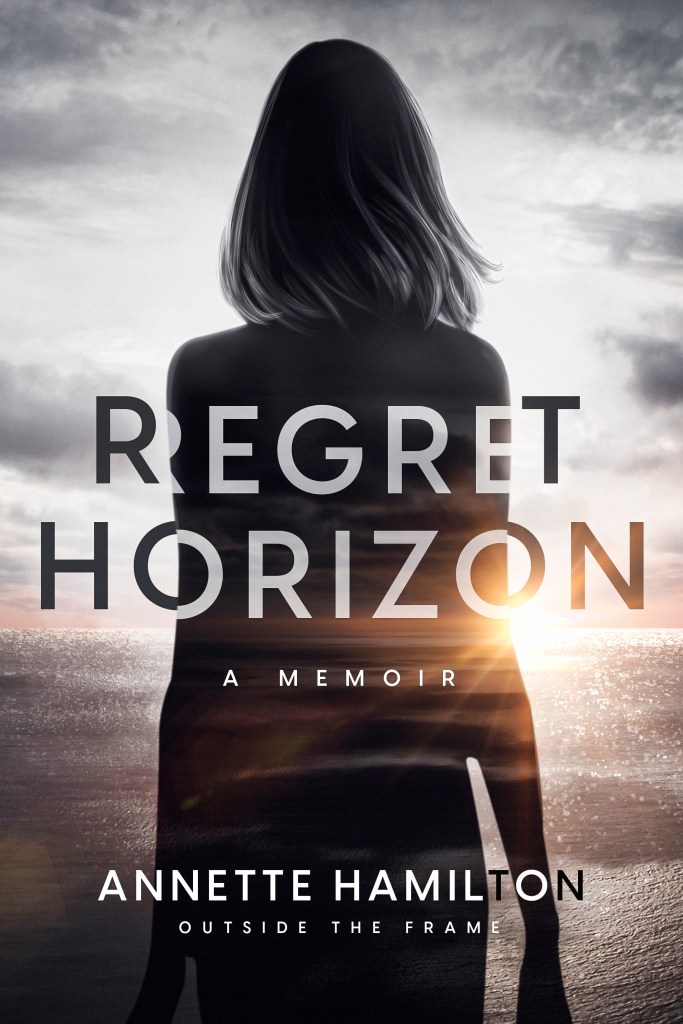
Things have changed for Regret Horizon, so long delayed, yet again. It is hard to explain briefly, but I have put the publication, due originally for November 2023, on hold again, as some re-edits have led to the need to consult again with some of those appearing in the book. Also, I have realised it is a memoir, not the first in the Outside the Frame series, so that leads to some different authorial comments. There has even been a strong suggestion that I shouldn’t publish it at all, which forced me to think again about why I wanted to do so in the first place. What a series of twists and turns all this leads to! Anyway, a possible publication date has now been pushed out to early next year, and we will see what other options may come up in the meantime.
“I believe that books build better humans, and I am on a mission to help everyone find the book they didn’t know they were looking for.
I created Shepherd to add magic and serendipity to online book discovery.
When I look for a new book online, it feels soulless. Online bookstores sell books like toothpaste or powdered gravy mix. Something about that is profoundly wrong.
Books are magic.
Books are imagination fuel.
Books change how we see the world.
Books change the direction of our lives.
Books transport us across time and space.
Books let us see the world through another person’s eyes and emotions.
I believe they are one of the biggest net positives in the world. “
I was one of the authors contacted by Ben, invited to contribute to the “three favourite books” of 2023. The Shepherd project aims to provide a new way to help readers find books they otherwise might not come across, using the usual digital approaches eg via an Amazon search. But the Shepherd project aims to be much more than that. Check out the website at shepherd.com and follow the various links on the site. Ultimately, this book discovery site should enable a much richer mix of possible book-searches and the discovery of all kinds of new and exciting writing from an unlimited variety of sources: traditional, independent, online only via a website, and others. Click below to see my three book choices.
I found it very hard to decide which books were my favourites. I have very eclectic tastes, obviously, and the choices I ultimately made reflected some of my reading practices during 2023. This was a difficult year for my own writing, trying to do final edits on Revolutionary Baby, to make decisions about whether or not to publish Radiant Sands, who to send the final draft of my memoir Regret Horizon to, and other issues I was wrestling with. I realised I had read well upwards of thirty books during that year, including quite a few paperbacks from Australian authors published by Australian publishers. Then there were the very many books I dipped into thanks to my membership of Kindle Unlimited. I found it very hard to finish most of these. In part, I joined Kindle Unlimited to get a sense of what the contemporary indie writers were doing. I will write a post soon about what I discovered, if I have the heart for it.
Meantime, I am supporting Shepherd as a financial member, although you don’t have to do this to use its program, as I think anything which will re-open the wide world of books and writing beyond the current restrictions imposed by Amazon algorithms and such must be a Very Good Thing!
Planned for publication in November 2023, this is a project I have been working on for several years. It has changed over the time of writing, and I have changed along with it.
REGRET HORIZON
BOOK ONE IN THE SERIES “OUTSIDE THE FRAME”.
It is a true story of a single year, 2008, when both my mother and my ex-husband died within two weeks of each other. It is a meditation on contemporary rituals of death and its aftermath and the inability of our narratives to prepare us for the impossible dilemmas of mortality.
The narrator, who is and is not “me”, is caught by the desire to be objective and tell the truth, to admit her failings and obsessions, but also to acknowledge the social and medical issues around very old age in our society. It is an exploration of the complicated nature of family loyalties, a book about failure and delusion, inter-generational conflict, and the cruelty of old age.
After some glitches the print (paperback) version of Revolutionary Baby is now available. You can purchase from Amazon.com.au or place an order online with Booktopia. Or go to your local bookstore and order a copy to pick up in person, to save postage.
Revolutionary Baby is a collection of fictional stories about the revolutionary changes people experienced from the mid-twentieth century onwards. Women and men, younger and older, richer and poorer, are caught at moments of decision, unexpectedly resulting in the transformation of their lives. They must confront their past expectations and change the way they look at options in the present and the future. All the stories and characters are entirely fictional. This is not a book of hidden autobiography or memoir in disguise. Nevertheless the stories reflect my own experiences from the 1960s into the 2000s, as a student, an activist, a mother, an academic, a traveller, an onlooker and participant in many elements of those transformative times. These stories reflect an Australian history, culture and awareness, although they are not all set in Australia.
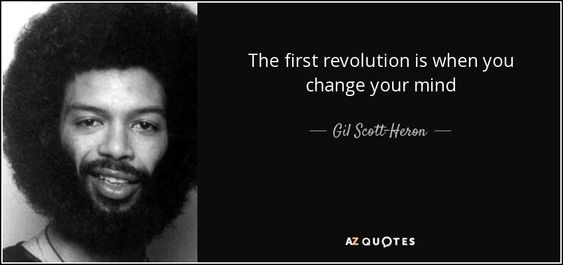
As a preliminary quote for these stories, I was drawn to the words of Gil Scott-Heron, now an almost forgotten figure of Black American consciousness in the sixties and seventies.
“The first revolution is when you change your mindabout how you look at things, and see there might be another way to look at it that you have not been shown. What you see later on is the results of that, but that revolution, that change that takes place will not be televised.”
Listen to his achingly powerful poem/song “The Revolution Will Not Be Televised”, from 1971, readily available on Youtube.
After some glitches the print (paperback) version of Revolutionary Baby is now available. You can purchase from Amazon.com.au or place an order online with Booktopia. Or go to your local bookstore and order a copy to pick up in person, to save postage.
What is it about? Revolutionary Baby is a collection of fictional stories about the changes people had to make to their thoughts, beliefs and expectations from the mid-twentieth century onwards. It takes a collection of different characters, women and men, younger and older, and explores aspects or ordinary lives in the moments of transformation, when people had to confront their expectations from the past and change the way they looked at their options in the present and the future. All the stories and the characters in them are entirely fictional, but many aspects reflect my own experiences growing up in the 1960s, being a student, a mother, an academic, a traveller, an onlooker and participant in the many transformations swirling about us. The stories reflect an Australian history, culture and awareness, although they are not all set in Australia and the presence of “overseas” looms large.
As a preliminary quote for these stories, I was drawn to the words of Gil Scott-Heron, now an almost forgotten figure of Black American consciousness in the sixties and seventies.
“The first revolution is when you change your mind about how you look at things, and see there might be another way to look at it that you have not been shown. What you see later on is the results of that, but that revolution, that change that takes place will not be televised.”
Listen to his achingly powerful poem/song “The Revolution Will Not Be Televised”, from 1971, readily available on Youtube.
Most of my stories and books were begun before writing software even existed and certainly before it became ubiquitous. I don’t know how long programs like Grammarly and Scrivener have been around, because until recently it never occurred to me that I would ever want to use them. But in the past couple of years I became aware that almost everyone in the independent publishing world now regards writing software as part of their professional toolkit. Online forums, blogs, and writers’ groups take it for granted that everyone uses some program or other. Now suddenly AI has arrived and may soon make existing software programs irrelevant because “it” will write the books using algorithms, based on everything that has been published so far.
Before AI was on the horizon I couldn’t help wondering if writing software would help me produce my many belated volumes more efficiently. I downloaded a couple of test programs and couldn’t believe how they worked and what was going on. Here was a new field of cultural commerce aimed at a the thousands of people who now want to be writers – ironically at a moment when reading is becoming a less and less popular activity. Self-publishing in the Amazon environment has resulted in literally millions of books now being available all competing for pitifully small returns to the authors who, unbelievably, often set zero price for their works. Writers even complain that Amazon won’t let them offer works “permafree” as if giving your books away is a good strategy for an effective writing career – but that’s another issue.
What is an author? I grew up thinking an author wrote their own books. The authors I was brought up on – Thomas Hardy, Joseph Conrad, D.H. Lawrence, Marcel Proust, Franz Kafka, Virginia Woolfe, Ernest Hemingway, John Steinbeck, E.M. Forster, Aldous Huxley, F. Scott Fitzgerald, Jack Kerouac, Simone de Beauvoir, to name a few – wrote their works in pen or pencil on paper or in notebooks and edited them several times over by hand before and after they were even typed. Just look at their manuscripts. At some time or other when book production became a major industry publishers began to insist on using editors, who were trained in the technicalities of writing. Editors had a big role in getting a new book to the market. I don’t know what an editor did or might have done to Jack Kerouac’s original manuscript.
Kerouac”s On The Road manuscript is a 120-foot long scroll consisting ofa series of single-spaced typed twelve-foot long rolls of paper that have been scotched taped together. Kerouac found this method more conducive to his style of writing.
Now independent writers are told that they must work with an editor, or editors, through three or four phases of preparing their book for the chaotic world of self-publishing and pay the cost themselves. It seems generally accepted that editors reshape and often rewrite many of the most popular books published today. And this is without considering the role of ghost-writers. At least these characters are human beings.
Getting one’s book substantially rewritten or revised by an editor is a very expensive process. New authors may find themselves paying hundreds or even thousands of dollars before they push the “publish” button. But then along came writing software which promised to take the worst errors away, so the editorial costs would be reduced (although not eliminated).
Writing software works by submitting writing to a standardized matrix which prescribes a limited approach to sentence construction, grammar and expression. When you actually use the software and find out what alternatives and options are being offered you realise how limited the results will inevitably be. I discovered that writing programs such as Word now have semi-editing functions within their own software which encourages authors to corrects spelling and applies rules which puts commas in, or deletes them, according to some arcane formula developed somewhere in “creative writing” schools presumably.
I am unable to compare different forms of writing software because I stopped trying to use them almost immediately (although I do use the checker functions on Word which has its uses). The mass-production of contemporary writing is going on apace with endless reproduction of the same structures, story arcs, sentence design, and impoverishment of vocabularies. Presumably all these books are being scanned and turned into AI programs so that even more similar books can be produced, this time without authors, or rather, with hallucinated authorial names standing in for pure machine algorithms.
I have long been wondering whether there will be a place in future for books certified to have been written by authors who are actual human beings and edited likewise. At the same time, though, there are powerful currents now swirling around the cultural zones which have no respect for books and writing at all.
“Kanye West has revealed that he feels an aversion to literature, comparing books to Brussels sprouts and explaining that he sees evolved forms of communication as crucial to his vision of an optimised future.
The revelation came in a new episode of the podcast Alo Mind Full, where the rapper joined Alo Yoga co-founder Danny Harris and host Alyson Wilson to “paint a sonic picture of what’s on his mind”. ‘
The replacement of books and writing by visual and graphic communication brings us back to ancient societies using images and pictograms, or not bothering to record things at all other than in poetry and song. Which might not be such a bad thing!
Yes, at long last Revolutionary Baby, the short-story collection which has been so long in development, has appeared. At the moment (24/7/23) it’s only available on-line through all the major ebook distributors including Amazon, Barnes and Noble and many others including in the UK, Europe, the US, India and of course Australia. It is also available through libraries with ebook subscriptions.
The print version is almost ready and has a launch date of 30th July after tweaking some final formatting and printing issues. It will be available for order online through all the main distributors. It is not likely to be stocked on the shelves of most bookstores although some independent stores will carry copies. But you can order directly from any bookstore, using the title of the book, the author’s name and/or the ISBN, which appears below. Shortly a PayPal button will be added to the site for Australian readers who can order directly and receive a signed copy posted anywhere in Australia for $21.99.
Prices depend on where you live and which currency you are using.
Thanks are due especially to talented illustrator/graphic artist Keith Draws who has been a great support at every stage of this long drawn-out process.
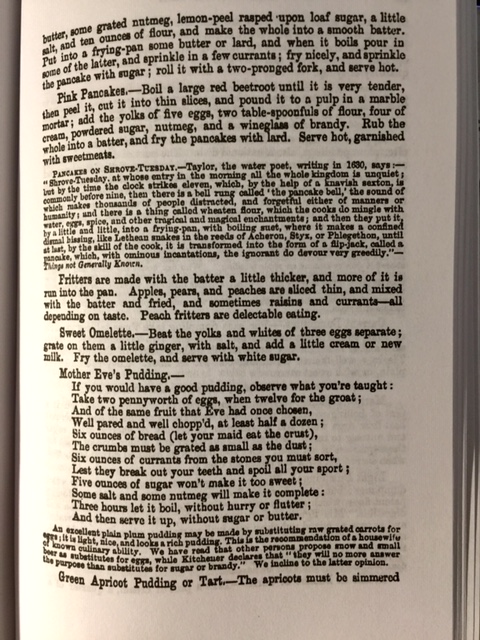
I discussed previously my shock at discovering that some enterprising persons were taking out-of-copyright classics and turning them into new publications on Amazon. The example I discussed was a Jack London book, but now I have found any number of classic cookbooks which are appearing on Amazon for sale, in facsimile editions without any mention of who is in fact selling these books. Some are pretty good – the facsimile of AmericanCookery, 1796, which seems to be a Dover book reprinted from a facsimile published by Oxford University Press in 1958 looks at least legible. But recently I paid for a print copy of The English and Australian Cookery Book and when it arrived it was indeed a perfect facsimile but so small it was almost impossible to read at all. Someone – but who? – is making money from these books and there is nobody to complain to about the fact that some at least are virtually useless.
One would think Amazon, who is distributing most of them, should take responsibility for the quality of the books they sell. If it is a hapless indie author who has made some mistakes about which readers complain his account is likely to be suspended. What happens to these legal pirates?
Page 53, “Puddings and Pies”, from The English and Australian Cookbook, 1864, anonymous facsimile edition.
I’ve attached myself to a number of author’s groups lately, a couple on Facebook and some semi-professional commentary services (which you pay for). To my surprise the Facebook groups have been a great source of interest and support, in a strangely tangled way. One of the groups often publishes reports by Amazon authors showing how much money they have made in the past few months while the world goes completely insane. This is amazing but also galling when you realise that what is now selling so hugely is aimed at highly specific genre audiences of which the average literary author would not have heard in a million years. My latest find is Reverse Harem Romance (RHR). Wait a bit and I will write more about it soon. What a discovery!
However this morning – a beautiful cool spring morning in the blossoming Blue Mountains, I started thinking about how the various levels of lockdown and state-mandated or recommended forms of isolation have affected the average writer and reader. Thinking of an image, I recalled Caspar David Friedrich’s famous painting, Wanderer Above the Sea of Fog, 1818, whch seemed to represent exactly the way things seem to be right now. I have used a bit of it in the banner headline above.
Over the next few weeks I thought of writing about this strange reality, the sense of being stranded before an unknown world which swirls upwards and threatens to engulf you even while you are still thinking and working and trying to ignore it.
Certainly working: I am struggling to finish the editing, organisation and fussbudgeting involved in publishing my two books of short stories and the memoir, all in the genre of semi-auto-ethno-fiction. Not to mention the putting together and final editing of two other semi-ethno-factual projects, a cookbook based on Australia history and a personal narrative/collection about the Hawkesbury River, my heartland place.
The intensity of work that has been going on as COVID-19 stretches on and bids fair to hit the twelve month mark (or more) has raised some deeply personal issues about retreat, aloneness, isolation, the loss of family, solitude in loved places, and a state of enthusiastic defiance which says: no, even now, with a horrendous potential death drowning in my own fetid lung juices clearly a possibility, even so, I won’t stop, I won’t stop writing and I won’t stop reading and I hope you won’t either.
The last time I saw my lovely granddaughter Lily Luna was in Melbourne in June 2019, when I took many photographs, none so prescient as the one below, a representation of the future which is now with us, the Melbourne Lockdown. Meanwile Lily is stranded in Thailand with her fiance Alfie and we have no idea when we will see each other again.
I read all kind of books all the time but this one was even more of an outlier than usual. I won’t go into why but I wanted to read the original text of Jack London’s The People of the Abyss, about life in the slums of East London in the early 1900s. Jack London is one of those writers who people over fifty think they might have heard of. His books were mostly published between 1903 and 1914, and are remarkable for being based on the author’s first hand research in the places he wrote about. He is an early populist anthropologist who mostly used his fact for fiction. People loved his sensationalist stories serialised in newspapers and later published as books. Probably his best known is The Call of the Wild (1903). London spent over a year living in the Yukon to research his story. Set during the 1890s Klondike gold rush its central character is a dog named Buck. Buck was stolen from his comfortable home and forced to become a sled dog in Alaska.
First edition cover of The Call of the Wild, New York, Macmillan Company, 1903. cover art by Paul Bransom (1885-1979) or possibly Charles Bull (1874-1932) –
I don’t recall reading this book as a child but it would have been right up my alley. It certainly has echoes in my own novelette Suburban Gigolo, about a cat stolen from his home in Sydney’s Inner West in order to become a Facebook model. Sadly it’s never had the popularity of TheCall of the Wild but you can order it from Amazon.
Remember if you are in Australia you need to order from the amazon.com.au site: see brief extract and link at the end of this post.
I would like to write more about Jack London but that will have to wait. This post is about what I found when I tried to locate The People of the Abyss online. Like TheCall of the Wild it is out of copyright (1923 is the current cut-off) and early editions are rare and expensive. But I thought someone might have rescued it so off to Amazon I went and there I found several editions mostly with el cheapo dodgy covers. Luckily I used the Look Inside feature and discovered that this book which seemed to be Jack London’s was a fake. I think it has been translated from some other language into English by a bot (automated translation program) and some enterprising scammer(s) have put it on sale for around $5.00. It is almost completely unreadable. Here is a sample sentence from near the beginning of the book:
“And they waved their palms vaguely inside the route where the sun on rare activities can be visible to upward thrust”.
Yes, I agree there is a certain beauty and poetic wonder to be had from reading these bot translations. It is another form of emerging literature, perhaps. But that’s not what one expects when paying $5 for a Kindle download of an English-language classic. There is no publisher credited. I then discovered the whole original text is available for free from Project Gutenberg.
I’ve already suggested to Amazon that this book should be taken down at once. It is a horrible misrepresentation of an important original text. If there is any way of checking on these republications of out-of-print works it should be implemented immediately. I imagine Amazon and other e-book publishers/distributors will be flooded by this kind of rip-off as more and more books come out of copyright. In the meanwhile, make sure to check the text before you hit the Pay button.
POSTSCRIPT: (6th June 2020) A couple of days after sending a review notice to Amazon I discovered that the offending text was no longer available there. But there were several other versions and as I started to check them it was apparent that some were also mock-ups or distorted versions of the original text, each issued under a different cover, none credited with publishers. The flood of fakes and distortions makes it almost impossible for a purchaser to know what they are buying.
Buy this version
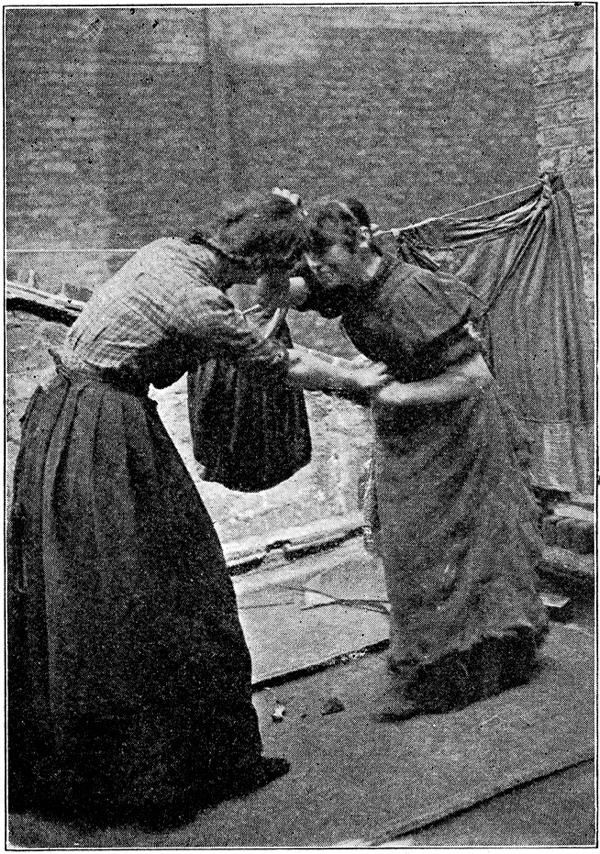
There is one genuine reproduction of the original text with notes and wonderful photographic illustrations, for $A3.95, and it is a real bargain. Here are a couple of images from the book. Apparently Jack London himself took his own photographs. He was even more of a pioneering ethnographer than I originally imagined.
Locals of East LondonNot sure what this image refers to: needs closer reading/researchTwo drunken women fighting: I am sure this is a staged photoAn engraving – possibly used for a newspaper article based on an original Jack London photograph







 Annette Hamilton - Writer