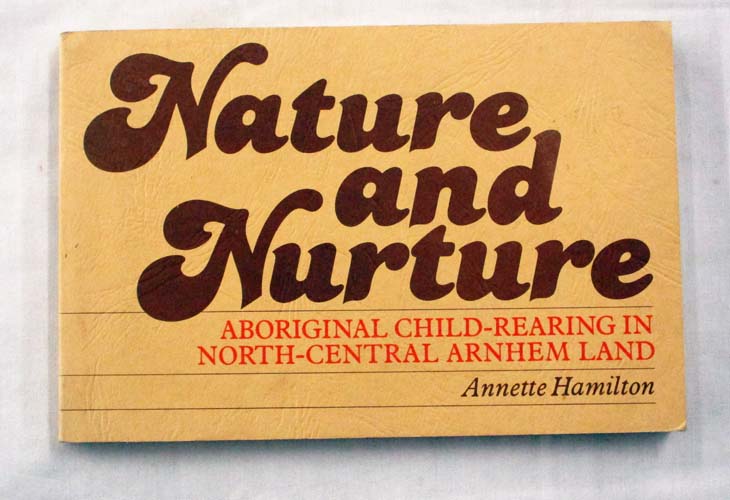
My first published book Nature and Nurture (1981) was based on research for my Masters Degree in 1967-8. It has long been out of print although Australian academic and public libraries have copies. A reprint was issued by Humanities Press. It is one of very few books published on the way First Nations people raised their children and although it is still widely cited it was never given much credence in the academic world. A book by a woman about child-rearing? What is there to say about that? It was published in a weird format, many referring to it as a kind of “cook book”. I am delighted to see the extent to which this book is now being referenced by scholars of indigenous societies around the world, especially in Latin America.
My PhD research in Central Australia never turned into a book. There are many reasons for this, some of which are touched on in my on-going memoirs. The thesis is still on restricted access due to the fact that it contains materials about women’s secret ceremonies. However there are several copies in university libraries as well as at AIATSIS in Canberra.
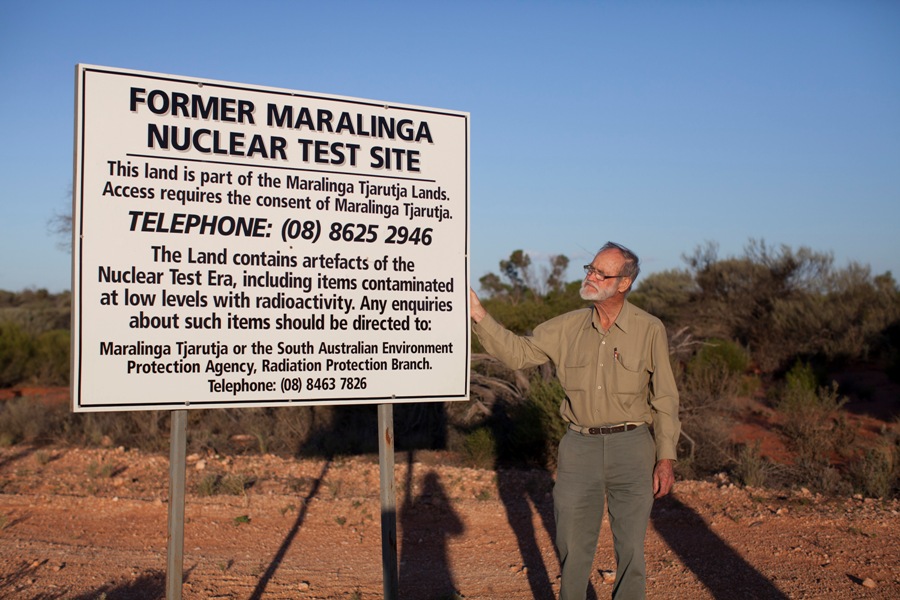
I published over forty papers on indigenous studies as well as preparing one Land Claim (Lake Amadeus) and reports on countless other claims for the Central Land Council and for judges and courts. I was the Consultant Anthropologist on the Royal Commission into British Nuclear Testing in Australia in 1984. This was a traumatic experience for almost everyone involved and although the traditional owners of the Maralinga lands did eventually obtain rights over it, the damage done to the peoples of the desert has never been fully acknowledged. Now it has become one among many world-wide nuclear tourism sites. My long short story about an entirely fictional character, a lone Patrol Officer in the early 1950s, to be published in RADIANT SANDS, tries to capture the enormity of the Maralinga story from the viewpoint of a white man forced to make impossible choices.
After the Royal Commission in 1984, and other entanglements, I became completely disillusioned with the relationship between academic anthropology, the legal system and the indigenous world. I felt I could not go on contributing to the developing tragedy of indigenous aspirations as the Australian government and its agents continued to pervert the hopes and dreams behind the legal recognition of Aboriginal land ownership. One emblem of continuing colonial power was the introduction of satellite television across the last of the Aboriginal cultural strongholds in remote Australia in the mid-1980s.
It took many years and great efforts by path-breaking First Nations people such as Freda Glynn who founded CAAMA (Central Australian Media Organisation in 1980) for an indigenous voice to gain a place in the Australian broadcasting environment. The success of First Nations people in film and media production is a source of on-going pride. I was pleased to have played a small part in it so many year ago.
The question of culture and media led me to many years of research in Thailand, one of the few nations which developed its own media systems and did not permit foreign media onto its airwaves. I became particularly interested in the development of Thai cinema and published many papers on that subject.
From the mid-2000s I began research on the little known history of Cambodian cinema which I continue working on. One paper was recently published by Plaridel, a scholarly journal from the Philippines, under the title “Fragments in the archives: the Khmer Rouge years”. It is about the way the preservation of archival memory can lead to very distorted interpretations of important historical events.
Click to access 2018-01-A-Hamilton.pdf
http://www.plarideljournal.org/article/fragments-in-the-archive-the-khmer-rouge-years/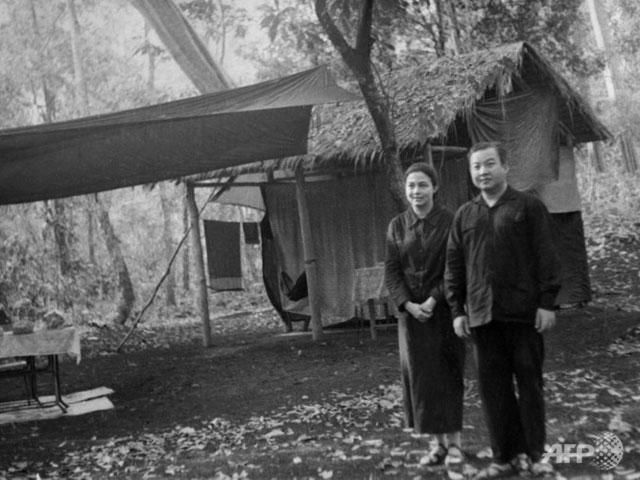
Ex-King Norodom Sihanouk and his wife Princess Monique dressed as Khmer Rouge functionaries in a film made by the KR in 1973.
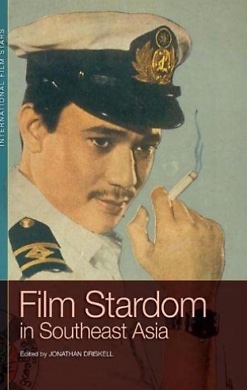
My most recently published cinema paper is titled “Spectral Stars, Haunted Screens: Cambodian Golden Age Cinema”, published in Film Stardom in South East Asia, edited by Jonathon Driskell. Edinburgh University Press, 2022.
It is about stardom in the 1960s, the Golden Age of Cambodian Cinema, and the curious intersections between traditional folk traditions, monarchy and modernity during the brief period prior to the overthrow of the Kingdom by the Khmer Rouge in 1975.
It includes a discussion of King Norodom Sihanouk as filmmaker and star, and the legacies remaining of Khmer cinema as a source of fantasy and identity.
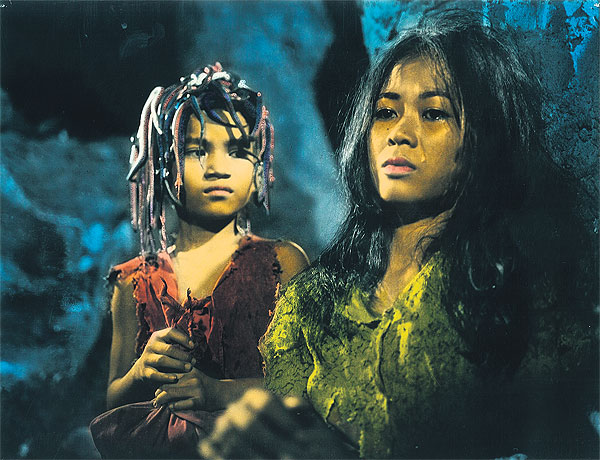
Still from the movie “The Snake King’s Child”, made in the 1960s, starring Dy Saveth. A recent version co-produced with Thai filmmakers remains popular.

[Right: composite image: King Norodom Sihanouk, film-maker]
[Below] Cover : FILM STARDOM IN SOUTHEAST ASIA
A BOOK ON CAMBODIAN CINEMA?
Although there are a number of works now available on cinema in Cambodia they are hard to locate and very expensive. I intended to publish a collection of my own published and unpublished papers and make them available to a wide audience through POD as well as in ebook versions. At the moment most of the academic works on Southeast Asian cinema are in unaffordable print volumes published mainly for a University Library and specialised scholarly market. Younger Asian film scholars should have better access to the film histories of the region. However copyright issues makes it extraordinarily difficult to publish images from the films. Text without images just doesn’t work well. Not sure how to overcome this problem. The publication of just one single still from a Khmer movie of the late 1960s in my most recent paper prompted a welter of difficult and painful correspondence with the elderly daughter who holds rights over her long-dead father’s film legacy. It is not an experience I am comfortable with at this stage of my life.
 Annette Hamilton - Writer