
In my previous post I raised the question of the apparently miserable visages of great German writers/thinkers/philosophers. When is a writer a philosopher, and vice-versa? I think of both Hermann Hesse and G. W. Sebald as philosophers. They are more often described as “novelists”. There’s something so wrong with these genre-based descriptions.
In any case, thinking of philosopher’s faces reminded me of the question of Wittgenstein, more particularly his eyes. I hasten to add that Wittgenstein is Austrian, not German, by birth but whether that makes a difference or not is too much to consider here. My fascination with Wittgenstein’s eyes arose originally from those mystifying photographs in G. W. Sebald’s book Austerlitz.

Sebald’s book resurfaced throughout my writing Regret Horizon, which is now finished but not really ready – like so many of my books. One of its main chapters is titled “Austerlitz”, where I try to connect the dots of history, memory, family, loss, fiction, past and present.
I need to go back to Wittgenstein’s eyes before finalising my chapter.
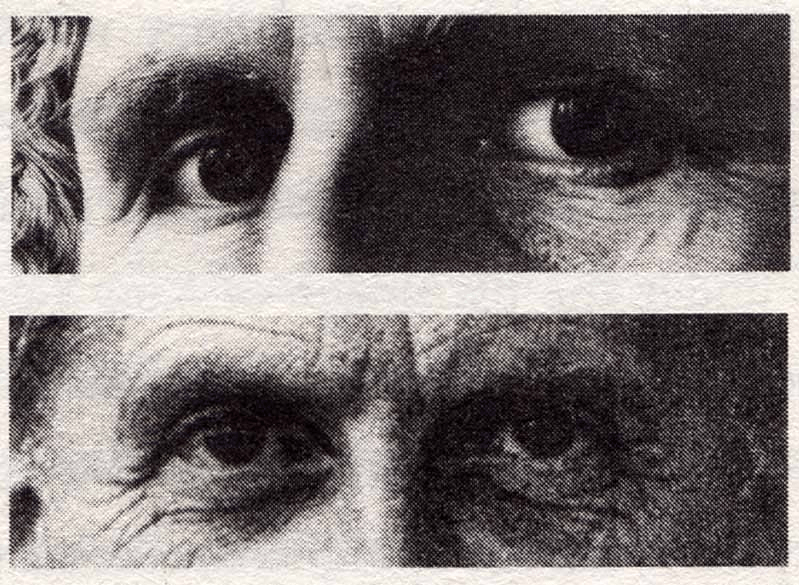
Was I looking at Wittgenstein, or was he looking at me? And what to make of the non-human eyes in that sequence of images? Is that a key to the relationship between writer and reader? I am trying to traverse these ideas in my memoir, clumsily and faintly. That’s why the book probably needs to be rewritten again, and again.
If you fancy dense academic critical commentary, there’s a great paper published a while ago about aspects of this topic.
Nina Pelikan Strauss. “Sebald, Wittgenstein and the Ethics of Memory.” Comparative Literature, vol 61, No 1, Winter 2009.
https://www.jstor.org/stable/40279435
“Austerlitz’s narrator insists on his hero’s ‘personal similarity to Ludwig Wittgenstein,’ noting the ‘horror-stricken expressions on both their faces'”.
 Annette Hamilton - Writer