In my previous post I raised the question of the apparently miserable visages of great German writers/thinkers/philosophers. When is a writer a philosopher, and vice-versa? I think of both Hermann Hesse and G. W. Sebald as philosophers. They are more often described as “novelists”. There’s something so wrong with these genre-based descriptions.
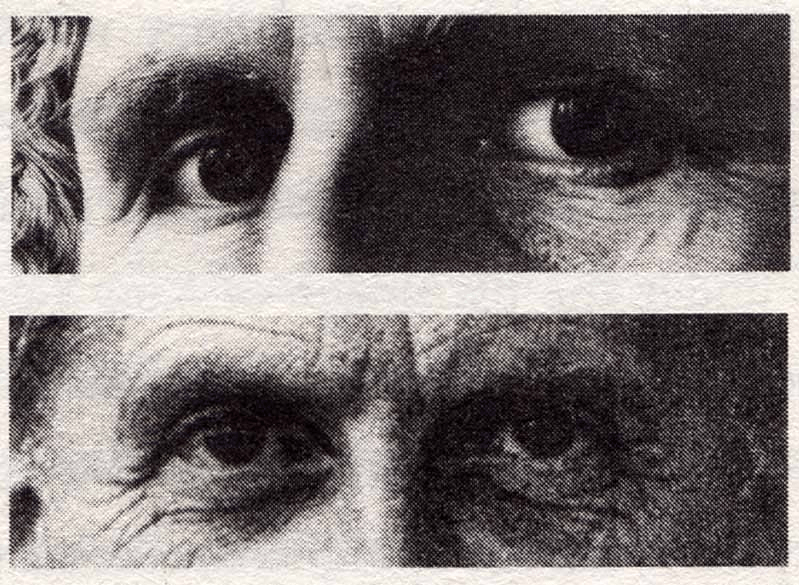
In any case, thinking of philosopher’s faces reminded me of the question of Wittgenstein, more particularly his eyes. I hasten to add that Wittgenstein is Austrian, not German, by birth but whether that makes a difference or not is too much to consider here. My fascination with Wittgenstein’s eyes arose originally from those mystifying photographs in G. W. Sebald’s book Austerlitz.
Sebald’s book resurfaced throughout my writing Regret Horizon, which is now finished but not really ready – like so many of my books. One of its main chapters is titled “Austerlitz”, where I try to connect the dots of history, memory, family, loss, fiction, past and present.
I need to go back to Wittgenstein’s eyes before finalising my chapter.
Was I looking at Wittgenstein, or was he looking at me? And what to make of the non-human eyes in that sequence of images? Is that a key to the relationship between writer and reader? I am trying to traverse these ideas in my memoir, clumsily and faintly. That’s why the book probably needs to be rewritten again, and again.
If you fancy dense academic critical commentary, there’s a great paper published a while ago about aspects of this topic.
Nina Pelikan Strauss. “Sebald, Wittgenstein and the Ethics of Memory.” Comparative Literature, vol 61, No 1, Winter 2009.
“Austerlitz’s narrator insists on his hero’s ‘personal similarity to Ludwig Wittgenstein,’ noting the ‘horror-stricken expressions on both their faces'”.
Remember back in digital prehistory when Facebook was first a Good Thing? You had “friends” and you could post stuff and they could see it and vice-versa, and as I recall it lasted on your feed for longer than five minutes. It was great for groups interested in the same subject, yes, but it was also great for whatever circles of people you were connected to or inserted in. I don’t know exactly when that changed but now, apart from a couple of still-effective writers groups and one or two painting sites, most of the time all I seem to get is ads for bunion treatments and dodgy looking products introduced by persons in white coats who drone on at length about one of the many infirmities you share. Of all my “friends”, most of whom were actual real people who I knew, and/or relatives, I hear little or nothing. Maybe they have defriended me. I know some of the relatives did. Or maybe they just don’t use Facebook any more.
So when I began to hear about Substack I thought well maybe this was a good way to keep in touch with people you knew, or would like to know, or who knew you, and I imagined lively discussion groups focussing on the usual weird stuff I enjoy thinking about but find it hard to share in the normal run of things lined up at the supermarket or chatting to some bored relative, if you can still find one willing to talk on the phone (therefore must be over 60). So I joined up and only later realised that the primary intention is to get people to pay money to read whatever the writer is wittering on about. Perhaps I haven’t gone into it enough, and perhaps I am not sufficiently committed to supporting the writing of others, but I really can’t see paying regular monthly subscriptions for the privilege. I know this shouldn’t have anything to do with television or streaming services but I can’t help reflecting that I already have to pay dollars and dollars to access Netflix, Stan, Binge etc. and they are seemingly limitless. And the Substack feeds seem limitless but all the same somehow. While I sympathise with the writers for wanting to be paid, I can’t help thinking there is a more important need for places to talk to each other. Sadly, Substack is not it.
Although I mistakenly signed up for two different Substacks with two different email addresses, I am now trying to cancel them. I didn’t sign up to any paid subscriptions so that’s good. But I did want to write things people might read, outside the strict limits of what this blog and site are about, so I thought I would make up my own little Substack thingie and call it a FEUILLETON and put it in my regular POSTS every once in a while. And it will of course be absolutely free to anyone who goes to this website. I haven’t set up a Newsletter so maybe this will do.
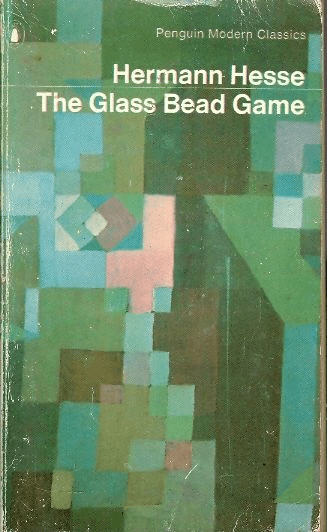
The next post will give more on the history and context of the FEUILLETON. Introduced into popular cultural circuits via Herman Hesse’s book The Glass Bead Game, very influential among proto-intellos in the 1950s and 60s, it turns out to be a very powerful way to think about the effects of contemporary information circuits. More soon.
He’s a miserable looking fellow, unfortunately. Likewise so many of those serious Germanic thinkers. But they do seem to dominate the philosophy of the last century.
Hermann Hesse, 1877-1962
I like to think of that Monty Python sketch where they are all playing football.
I have reached a point in my writing and publishing activities where I must seriously ask: why publish at all? I haven’t published much yet but I have a lot of plans and proposals in the mix and several are at the point of fulfilment. Various things have held me up – some in the “real world” but others in that weird interior zone where the writer actually feels most alive but also most threatened and alarmed and fearful and excited, something which I suspect only other similarly benighted souls will understand. There really should be psychiatric services for writers, to help them work out what they are doing and why.
But as time passes, and especially with the impact of AI, the question becomes more acute than ever. There are 32.8 million published titles on Amazon now and more every day. It is possible that AI written books are flooding the market, although there seems to be no way to work out if this is true or not. Amazon now will only allow you to publish something like THREE BOOKS A DAY. Can this be true? Nobody can write three books a day. However the various online writers forums I participate in do seem to have members who think nothing of writing a book in two or three or four weeks: that is from start to finish, including editing, proofreading and maybe designing the covers as well. The fans of these writers are passionate and apparently faithful. They expect the writer’s new books ASAP and pre-order slavishly, or so it seems.
THE DASH AND DOLLY EFFECT
I just finished watching a mystery drama mini-series on Netflix, The Perfect Couple, starring Nicole Kidman as a popular writer, Greer Garrison Winbury, whose books are about the endless romance of Dash and Dolly. The readers imagine these are the writer herself and her husband Tag, played by Liev Schreiber, who in real life is alcoholic, louche, unfaithful and most unattractive. Based on a 2018 novel of the same name by Elin Hildebrand, the story is about the interpenetration of fictional and real life, and its negotiation in contemporary culture. [It’s what my favourite analytic writer of the moment, Hans-Joachim Maaz calls “Die Falsche Leben” – FALSE LIFE. If you speak German there are interviews with him on Youtube: https://www.youtube.com/watch?v=KN6i6MYBbjI but only one of his books has been published in English.]
A brilliantly disturbing scene takes place at the launch of Greer’s 32nd novel in the series, when the “real world” life of Dash and Dolly comes to a crashing end in a bookstore full of passionate fans. As the truth of their relationship emerges – and a horrible truth it is – the fans fall into despair and horror, worse than anything they ever imagined. The scenario of this story emerges from the very peculiar intersection right now between writers and readers, amidst the technical possibilities of rapid production where fictions drawn out into endless series of almost identical stories, become the source of recognition and success for glamorous lady writers in particular, and sites of identity for readers obviously deprived of whatever it is they crave in the way of success, love, happiness and recognition. Readers’ identification with fictional characters is at the heart of this process.
WHY DON’T I WANT TO WRITE BOOKS ABOUT DASH AND DOLLY?
It’s called “writing to market” in online writing circles, and ever since I was first introduced to this term around a decade ago at a seminar at the Australian Society of Authors I have been wrestling with the concept from many angles. It’s the baked beans problem again. The fact is, I want to use the agency and freedom of independent publishing but I don’t want to “write to market”.
I know this raises almost terminal issues. What I write isn’t any of the popular genres which work so well on Amazon. I can’t even work out what genre I am writing in. Some is memoir, yes, and maybe some is literary fiction. most of my books will appeal mainly to “classic” readers, that is, women of a certain age who buy books in book-shops and go to literary events and festivals, but they don’t buy independently published print-on-demand books and they all hate Amazon. My “take” on things doesn’t quite fit the mould either. My perspectives are too diverse, the experiences I draw on are far from the “normal” life, let alone the “false” one which prevails today. I will put a Paypal button on these books for Australian/New Zealand readers who want paperback versions and see if that works for those who don’t or won’t buy through Amazon. The independent bookshops’ prices are absurd: my book Revolutionary Baby finished up costing those who ordered it from their favourite independent bookshop over $30.00, even though I know the cost of production in Australia is in the order of $7.00.
Should I bother going on and publishing the other three novels I have written? They are all set in the 1980s which now feels like a hundred centuries ago. The memoirs are set even earlier: 1960s, 1970s. But I guess that makes them historical. There is a special category for that on Amazon.
As for doing something completely different: I have written the first volume of a series which I plan to publish under a pen name. It is a post-apocalyptic narrative set in 2050 and “stars” two female characters, young women with distinctive talents and histories. It needs a final edit. I don’t plan to spend money on Amazon or Facebook ads.
All I can be sure of is that the books I have written will exist in print and/or electronic copies in a few libraries, and a few will receive them as gifts from me and maybe want to pass them on. Is that enough?
[The first part of this post was published as part of the previous post: I have been thinking more about reviewing and republish it here as it prompted some more thoughts on this topic].
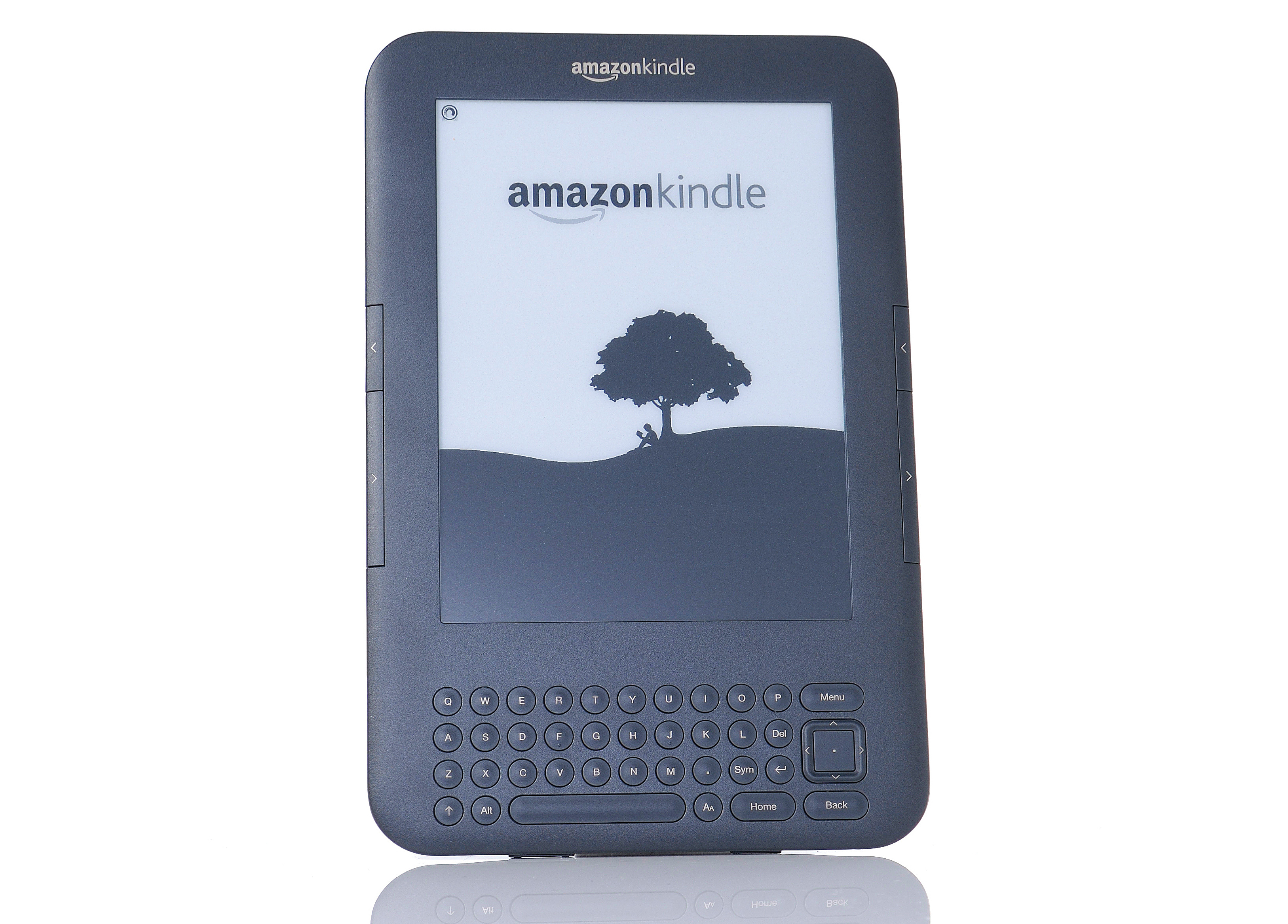
When Amazon Kindle was first a thing you had to buy the books you wanted to read and download them onto an early-generation e-reader, nothing else worked other than your actual computer. Take a look at one of the early Kindle versions here:
You couldn’t put them on your IPhone or on an I-Pad and there was no such thing as Kobo or Apple Books. This led me to feeling very enthused about reviewing. I love to read a well-crafted and considered review, and enjoyed the challenge of writing them myself. I knew an author’s success depended to a great extent on what the reviews said, and as a reader myself I read at least a good selection of reviews, both positive and negative. One’s reviewing name is not one’s own name, so there was some protection of identity when you didn’t like something. I felt it was a kind of community thing, to share views with others. I reviewed certain author’s books without fail. Then there was Goodreads, which at some point was taken over by Amazon, and that became overwhelming, so I stopped using it altogether, although they still send me emails all the time.
I don’t know when it dawned on me that the whole review process had become distorted and corrupt. Review-farming was a thing. Somehow authors could pay money – a lot of money, maybe hundreds of dollars – to have their books reviewed by a group of people who apparently got some reward for reviewing them, although I never knew how that worked, or how it met Amazon’s terms of service. The system became hyper-alert to reviews from anyone even vaguely connected to the author, relative, friend, Facebook contact, whatever and those reviews were banned. Other anonymous people however were free to say whatever they liked and post one star reviews because the book was delivered late, or was about something they hadn’t expected because obviously they hadn’t read the blurb.
Now I don’t review at all. I often feel I would like to comment on books I really like, or make suggestions to authors about something they could do to strengthen the work, or whatever. But I know now that the majority of successful Amazon authors are turning out books once every couple of months. Some are using ghost writers. Others treat writing as a kind of supermarket shelf-stocking – each book a basic product fitting a particular genre run through one or more editing programs to check for grammar and spelling, off to a human editor perhaps, covers designed strictly by genre convention which somehow everyone understands, and book is “launched” with money lavished on Amazon and/or Facebook ads and now Tik-Tok reels three times a day. Why bother reviewing? It is like reviewing cans of identical soup. And authors are devastated if the reviews they do get are not five-star.
This is clearly reflected in the command “Write to Market” which I will talk about in another post.




 Annette Hamilton - Writer